Decision Model Evaluation: How Typed Output Powers Programmatic Decision-Making
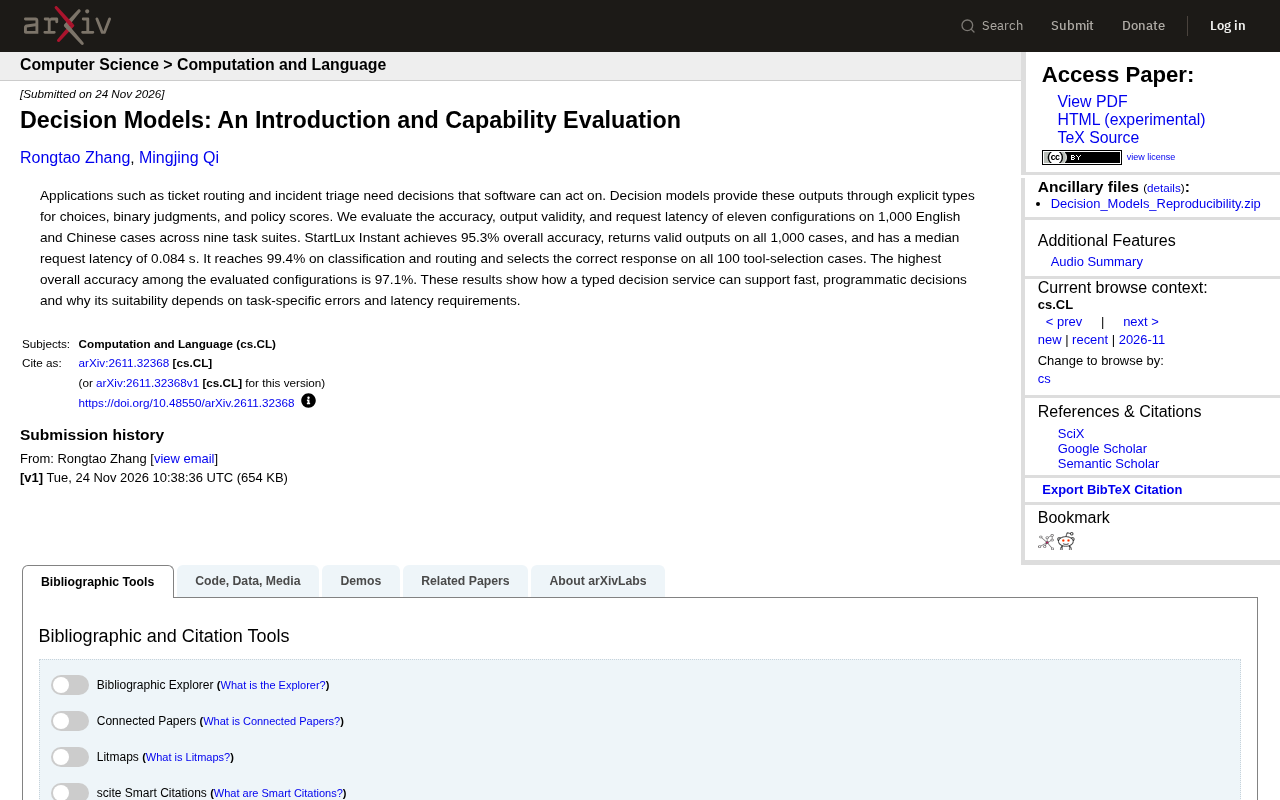
Decision models use typed output so software can execute decisions directly; top configuration hits 95.3% accuracy with all-valid output at 0.084s median latency.
The article introduces the decision model, an engineering-oriented model form that returns explicit typed results—selection options, binary judgments, and policy scores—instead of natural language, letting downstream systems use them directly for branching and routing without fragile text parsing. The evaluation covers nine task suites, a thousand Chinese and English test cases, and eleven configurations, comparing accuracy, output validity, and latency. StartLux Instant reaches 95.3% overall accuracy, all-valid output, 0.084s median latency, and 99.4% on classification and routing, with the highest accuracy at 97.1%. It stresses examining error distribution, output stability, and latency budget rather than just the overall score.
When software systems need to handle tasks like ticket routing and incident triage, what they need is not an open-ended chat response, but a clear result that can be written directly into a code branch. The Decision Model is designed precisely for this—by making output types explicit (choice options, binary judgments, and policy scores), downstream systems can "read" and execute the results. A capability evaluation of decision models provides a side-by-side comparison of eleven configurations and offers a quantifiable reference for the engineering value of "typed decision services."
What Is a Decision Model: From Natural Language to Executable Output
A standard large language model call returns natural language text, and the engineering side often has to write another round of parsing logic to convert phrases like "recommend escalating to P1" into an enum value. This process is both fragile and hard to test—a slight change in the model's wording can break the parser.
The core difference of a decision model lies in its output structure. It narrows tasks into several explicit return forms: a single-choice selection result (e.g., assigning a ticket to a particular queue), a binary judgment (e.g., yes/no whether human intervention is needed), and a policy score (used for ranking or threshold decisions). For the caller, what comes back is no longer text that needs reinterpretation, but a value that can directly participate in if/else checks and routing-table lookups. This "typed" design confines uncertainty inside the model while exposing a stable contract to the outside.
From an engineering perspective, this solves a long-standing pain point: chat-style interfaces are hard to make idempotent and regression-testable, whereas every output of a typed decision can be asserted against.
Typed Output is the key mechanism here. Traditional LLM calls return free text, whereas typed output requires the model to generate results according to a predefined schema (such as JSON Schema or a function signature). Common implementations include constrained decoding and structured output APIs. Constrained decoding masks tokens that don't conform to the schema during sampling, guaranteeing format validity at the generation level; structured output APIs typically combine prompting with post-processing validation. The value of typed output lies in turning "is the format correct" from a runtime risk into a contract that can be statically defined and unit-tested. But note: the more complex the schema, the harder it often is for the model to get the semantics right—format validity does not equal correct decisions.
Evaluation Design: Nine Task Types, a Thousand Chinese and English Samples
The evaluation sets up nine task suites covering a thousand English and Chinese test cases, testing eleven model configurations under a unified protocol. Three dimensions are measured: accuracy, output validity (whether the returned result conforms to the predefined type, rather than being unparseable garbage text), and request latency.
These three dimensions map exactly onto real production concerns. Accuracy determines business outcomes, output validity determines whether the system will throw exceptions at runtime, and latency determines whether this decision step can be embedded in a real-time pipeline. Looking only at accuracy while ignoring the other two is the starting point of many model-selection pitfalls.
Output Validity and accuracy are two independent metrics. Accuracy measures "is the answer right," while output validity measures "can the returned thing be consumed by a program"—for example, whether it is parseable JSON, whether enum values fall within the allowed set, and whether required fields are missing. In production systems, a format failure usually throws a parse exception directly and causes the request to fail, and its impact is often more severe than an "incorrect answer with correct format," because the latter can at least fall back to degradation logic. Therefore, listing output validity separately is effectively measuring the lower bound of service availability, not the upper bound of effectiveness.
Key Data: 95.3% Accuracy and All-Valid Output
In the evaluation, the StartLux Instant configuration deserves a separate breakdown:
- Overall accuracy of 95.3%, with valid output returned on all one thousand test cases and no format failures;
- Median request latency of 0.084 seconds, within the range that can be placed on a synchronous call path;
- 99.4% on classification and routing tasks;
- The correct response was selected on all 100 tool-selection test cases.
What's interesting is the gap between the high scores on classification and routing tasks and the overall score—this shows that difficulty is not evenly distributed across task types. Routing tasks usually have limited options and clear semantic boundaries, making them easy for the model to get right; tasks involving open-ended judgment or policy scoring see a noticeably higher error rate.
Another figure called out is that the highest overall accuracy among all evaluated configurations is 97.1%. In other words, there is a perceptible gap between the top configurations, and one should not assume "they're all about the same" when selecting a model.
Median Latency refers to the middle value after sorting all request response times. Compared with the average, it is less skewed by a few long-tail requests, and thus better represents the typical call experience. 0.084 seconds is on the order of under a hundred milliseconds, suitable for synchronous calls; but in a production pipeline you must also add network round-trips, concurrent queuing, and downstream service time. When selecting a model, besides the median, you should also look at P95/P99 latency, because tail latency is the main cause of timeouts and degraded user experience. For real-time scenarios like incident triage, the tail-latency budget often determines more than the median whether the architecture needs to go asynchronous.
The Engineering Significance of Typed Decision Services
The fact that output validity passed across the board may have its value underestimated. In actual deployment, parse exceptions caused by incorrect model output formats are often more troublesome than accuracy being a few percentage points lower—the former is a production incident, the latter is a fluctuation in effectiveness. A decision service with zero format failures across a thousand test cases means callers can save a lot of defensive code, and also makes automated regression testing feasible.
The latency data is equally critical. A median latency of 0.084 seconds means such a service can handle the first round of triage when a ticket enters the system, without needing to queue asynchronously. For response-time-sensitive scenarios like incident triage, this magnitude determines whether it can truly replace manual first-pass screening.
Selection Advice: What Else to Look At Beyond Accuracy
The original conclusion points to a pragmatic judgment: the suitability of a decision service depends on task-specific errors and latency requirements, not a single overall score ranking. Specifically, three things should be examined separately when selecting a model.
First, error distribution. The overall accuracy of 95.3% is 99.4% on routing tasks, but may be noticeably lower on other tasks. If the business mainly runs routing, a high-scoring configuration can be used directly; if policy scoring is involved, you need to separately verify whether the error rate on that task type is acceptable.
Second, output stability. All-valid output across a thousand test cases is a strong signal, but before going live you should still validate formats against your own input distribution—different languages and phrasing habits may trigger different failure modes.
Third, latency budget. 0.084 seconds is the median in the evaluation environment; in a real pipeline you must add the effects of network and concurrency. For scenarios with extremely high real-time requirements, leave headroom.
Typed decision services represent a pragmatic direction: not pursuing a comprehensive showcase of model capabilities, but narrowing a single step, making it stable, and turning it into a programmable interface. For scenarios where software must execute decisions directly, this convergence is itself the value.
One-line Summary
Decision models use typed output to let software execute decisions directly; the evaluation shows the top configuration achieves 95.3% accuracy, fully valid output, and 0.084-second median latency.
Paragraph Summary
The article introduces the decision model as an engineering-oriented model form: it does not return natural language, but outputs explicit typed results such as selection options, binary judgments, and policy scores, so downstream systems can use them directly for branching and routing, avoiding fragile text parsing. The evaluation covers nine task suites, a thousand Chinese and English test cases, and eleven configurations, comparing them across three dimensions: accuracy, output validity, and request latency. StartLux Instant achieves 95.3% overall accuracy, valid output on all thousand cases, 0.084-second median latency, and 99.4% on classification and routing tasks, with the highest accuracy among all configurations at 97.1%. The article emphasizes that model selection should separately examine error distribution, output stability, and latency budget rather than just the total score.
Related articles
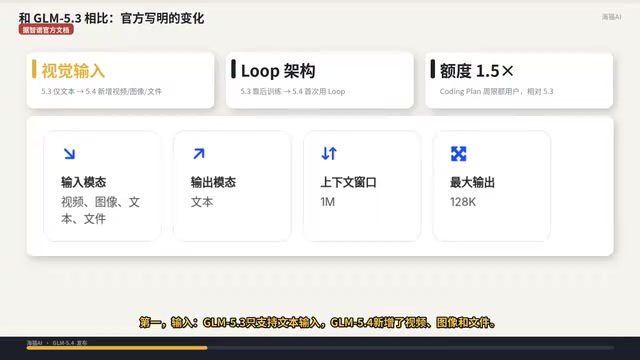
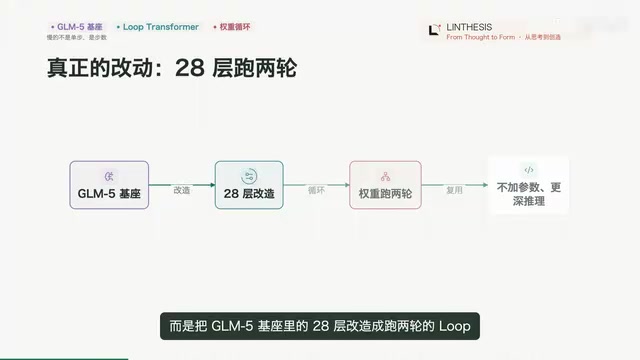
Zhipu GLM-5.4 Released: Loop Transformer Runs 28 Layers Twice
Zhipu releases GLM-5.4, the first Loop Transformer flagship: 28 layers run twice for 2-3T-equivalent intelligence, plus video and image input. API and open weights not yet released.
GLM-5.4 Coding Test 4.6x Slower? Unpacking the Loop Transformer Architecture
GLM-5.4 coding test took 431 minutes vs. competitor's 109, 4.6x more steps. We analyze its Loop Transformer architecture, KingBench4 score of 55.3, Max tier's 1.04M token cost, and tier selection advice.

Zhipu GLM-5.4 Quietly Released: A Debut for Loop Transformer Architecture
Zhipu GLM-5.4 quietly lands in coding plans: first Loop Transformer flagship with 750B params, 1M token context, AIM math up from 19.2 to 30.4, and native vision for coding from screenshots.