Deconstructing Coze 3.0 Agent Core Capabilities: From Beginner to AI Talent in Three Months

Deconstructing the Coze 3.0 three-step learning path: prompts as foundation, RAG for advancement, agent practice—with a rational view of the three-month employment promise.
Using Coze 3.0 as a backdrop, this article breaks down an employment-oriented AI application development learning path: first master prompt engineering and API principles through a copy generator project; then understand RAG data cleaning, chunking, and vector databases plus knowledge graphs for multi-hop reasoning; finally practice ReAct-based single-agent tool calling and multi-agent collaboration. It also notes that "three months to sought-after talent" is marketing rhetoric—enterprises value solution design, RAG engineering, and multi-agent debugging, with core competitiveness from business abstraction and real projects.
Why Coze 3.0 Is Worth Your Attention
In the AI application development space, Coze has evolved from a simple chatbot-building tool into a complete agent platform covering workflow orchestration, knowledge base management, and multi-agent collaboration. Coze 3.0's core capabilities align precisely with the three major demands enterprises currently have for AI talent: prompt engineering, retrieval-augmented generation (RAG), and hands-on agent development.
According to a learning path shared by a Bilibili creator, this capability breakdown is condensed into a "three months from zero to employment" route. While the time commitment is somewhat aggressive, the technical roadmap is worth examining carefully.
Step 1: Build the Foundation — Prompts and API Fundamentals
Many beginners want to jump straight into model training, which is exactly the biggest misconception. The creator explicitly states: "Don't start with model training. First, learn to write prompts clearly and get a rough understanding of how APIs work."
Prompt engineering is the foundation of agent development. In Coze 3.0, system prompts, user prompts, and tool-calling prompts together define the behavioral boundaries of an agent. Understanding the request-response mechanism of APIs helps developers quickly integrate external services without getting bogged down in underlying model details.
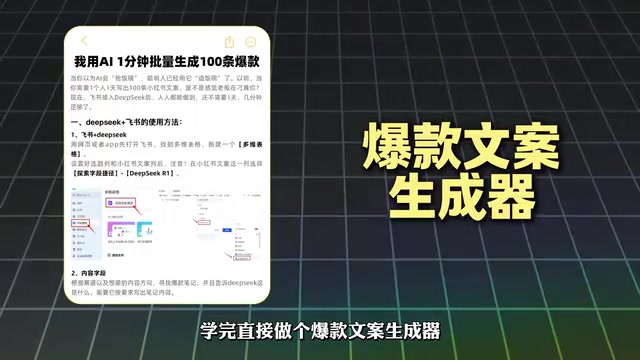
After completing this step, a practical starter project is a "viral copy generator." Though small, this project covers three key aspects: prompt design, variable injection, and output format control. The creator puts it bluntly: "This is enough to start taking freelance copywriting gigs."
API (Application Programming Interface) is a agreed-upon communication method between different software systems. In AI application development, developers typically call large model services via HTTP requests: sending JSON data containing prompts and parameters (such as temperature and max token count), and receiving text or structured results returned by the model. Understanding the request-response mechanism, authentication methods (such as API keys), rate limits, and error handling is a prerequisite for integrating any external service. Coze 3.0 encapsulates these underlying details into visual plugins and tool calls, but developers still need to understand what happens behind a tool call in order to diagnose problems when they occur and design reasonable timeout and retry strategies.
Step 2: Learn to Do the Work — RAG and Agent Knowledge Systems
RAG (Retrieval-Augmented Generation) is currently the most mainstream technical approach for enterprises implementing AI. Coze 3.0's knowledge base feature supports document upload, automatic chunking, and vector storage. Developers need to understand data cleaning, chunking strategies, and the basic usage of vector databases.
The creator summarizes this stage as: "Understand how to build RAG, how to clean data, how to use vector databases, and take a look at agent knowledge graphs along the way." Knowledge graphs are introduced so that agents can perform multi-hop reasoning when answering complex questions, rather than relying solely on similarity search.
The goal of this stage is: when users ask questions, the agent can provide accurate, evidence-based answers rather than vague generalizations.
Vector databases are the retrieval core of the RAG architecture. They convert text into high-dimensional vectors through embedding models and use approximate nearest neighbor (ANN) algorithms to quickly find semantically similar content. Unlike keyword search, vector search can match passages that "mean the same thing but use different words." In practice, chunking strategy directly affects retrieval quality: chunks that are too large introduce noise, while chunks that are too small lose context. A common approach is to split along semantic boundaries and retain overlapping windows. Additionally, attention must be paid to embedding model selection, index update mechanisms, and ranking and filtering of retrieved results—these engineering details determine whether a RAG system can reliably answer questions from an enterprise knowledge base.
Knowledge graphs form structured networks of entities and relationships, complementing vector retrieval. Vector retrieval excels at finding semantically similar text fragments but struggles with questions requiring multi-hop associations, such as "the department of A's manager." Knowledge graphs support multi-hop reasoning through predefined entity relationships, allowing agents to query step by step along relationship chains. In Coze 3.0, knowledge graphs typically serve as a supplement to knowledge bases for scenarios requiring precise relational reasoning, such as enterprise org-chart Q&A or product troubleshooting. Building a knowledge graph requires entity recognition, relationship extraction, and graph database storage, which costs more than ordinary document knowledge bases, making it better suited for business domains with dense relationships and complex query logic.
Step 3: Hands-On Practice — Single-Agent and Multi-Agent Collaboration
The core of the practical stage is understanding the ReAct pattern: alternating between Reasoning and Acting, letting the AI decide which tool to call. Coze 3.0's workflow orchestrator visualizes this process, allowing developers to clearly see each decision the agent makes.
Once a single agent works, multi-agent collaboration is the next step. The creator mentions: "Then try multi-agent collaboration. After completing this step, building a chatbot or drafting an AI proposal for your company is basically no problem." The key to multi-agent collaboration lies in role division and message-passing mechanisms, which require developers to have a clear understanding of the business scenario.
The ReAct pattern consists of alternating Reasoning and Acting phases: the model first outputs its thought process, determines what information it needs next, then selects a tool to call (such as search, calculator, or database query), observes the returned result, and continues reasoning until it produces a final answer. This pattern enables agents to dynamically adjust strategies based on intermediate results rather than being limited to one-shot generation. In Coze 3.0 workflows, each node corresponds to a reasoning step or tool call. Developers can debug the agent's decision logic by examining execution traces and optimize tool descriptions, parameter constraints, and failure fallbacks.
Employment Orientation: What Enterprises Really Need
The creator directly links the learning path to employment: "Three months is enough to go from beginner to AI talent that companies are eager to hire." This claim should be viewed rationally. When enterprises recruit for AI application development positions, they typically look for: the ability to independently design agent solutions, understanding of RAG engineering implementation, and experience debugging multi-agent systems.
Coze 3.0 lowers the barrier to agent development, but true competitiveness comes from the ability to abstract business scenarios. The creator's mention of "drafting an AI proposal for your company" is essentially about requirements analysis and solution design capabilities, which are more valuable than simply dragging and dropping workflows.
A Rational View of the "Three-Month Employment" Promise
It must be pointed out that the original material's claim of "employment upon completion" is marketing rhetoric. Three months can build a complete knowledge framework for Coze 3.0, but reaching enterprise-level project delivery standards requires real project experience.
However, the structure of this learning path is reasonable: first build a foundation with prompts and APIs, then advance to RAG and knowledge bases, and finally practice with agents. For zero-foundation learners, this is a clear and actionable path. The accompanying videos and practical projects provided by the creator can serve as reference materials for self-study.
Coze 3.0's value lies in encapsulating the complex engineering of agent development into visual workflows, allowing learners to focus on prompt design, knowledge base construction, and agent logic orchestration. These are exactly the capabilities most needed by talent in the current AI application layer.
One-line Summary
Deconstructing the Coze 3.0 three-step learning path: prompts as the foundation, RAG for advancement, and agent practice—with a rational view of the three-month employment promise.
Paragraph Summary
Using the Coze 3.0 agent platform as a backdrop, this article breaks down an employment-oriented learning path for AI application development. Step one builds the foundation: mastering prompt engineering and API request-response principles, verified through a copy generator mini-project. Step two advances: understanding RAG data cleaning, chunking strategies, and vector database usage, supplemented by knowledge graphs for multi-hop reasoning. Step three is hands-on: mastering single-agent tool calling under the ReAct pattern, then advancing to role division and message passing in multi-agent collaboration. The article also notes that "three months from beginner to eagerly sought-after" is marketing rhetoric; what enterprises truly value is agent solution design, RAG engineering implementation, and multi-agent debugging experience, with core competitiveness coming from business scenario abstraction and real project delivery.
Related articles

Free Unlimited Claude Code Solution: Agnes AI + CC Switch Setup Guide
No paid subscription needed — pair the free AI platform Agnes AI with the open-source tool CC Switch to provide a backend for Claude Code, enabling unlimited free calls to text, image, and video models. This guide covers the full setup, test results, and usage boundaries.

A Complete Zero-Cost Guide to Getting Started with Claude Code for Beginners in China
A beginner's guide to Claude Code for users in China: two installation methods (command line and IDE plugin), full configuration steps for replacing the official API with the free domestic LongCat model, and a hands-on demo of building a small tool with natural language, plus tips.

When the NSA Gets Involved: The AI Supply Chain Crisis Behind Open-Source CVEs and API Key Hijacking
Multiple open-source projects disclosed severe CVEs in one day, PHP flaws alarmed the FBI, and Railway and OpenCode were breached with API keys stolen. This article breaks down the vulnerability window, AI-accelerated exploitation, and the AI supply chain crisis behind the API key black market, with a developer defense checklist.