Decoupled Descent: A New Theoretical Framework for Training Error to Precisely Track Test Error
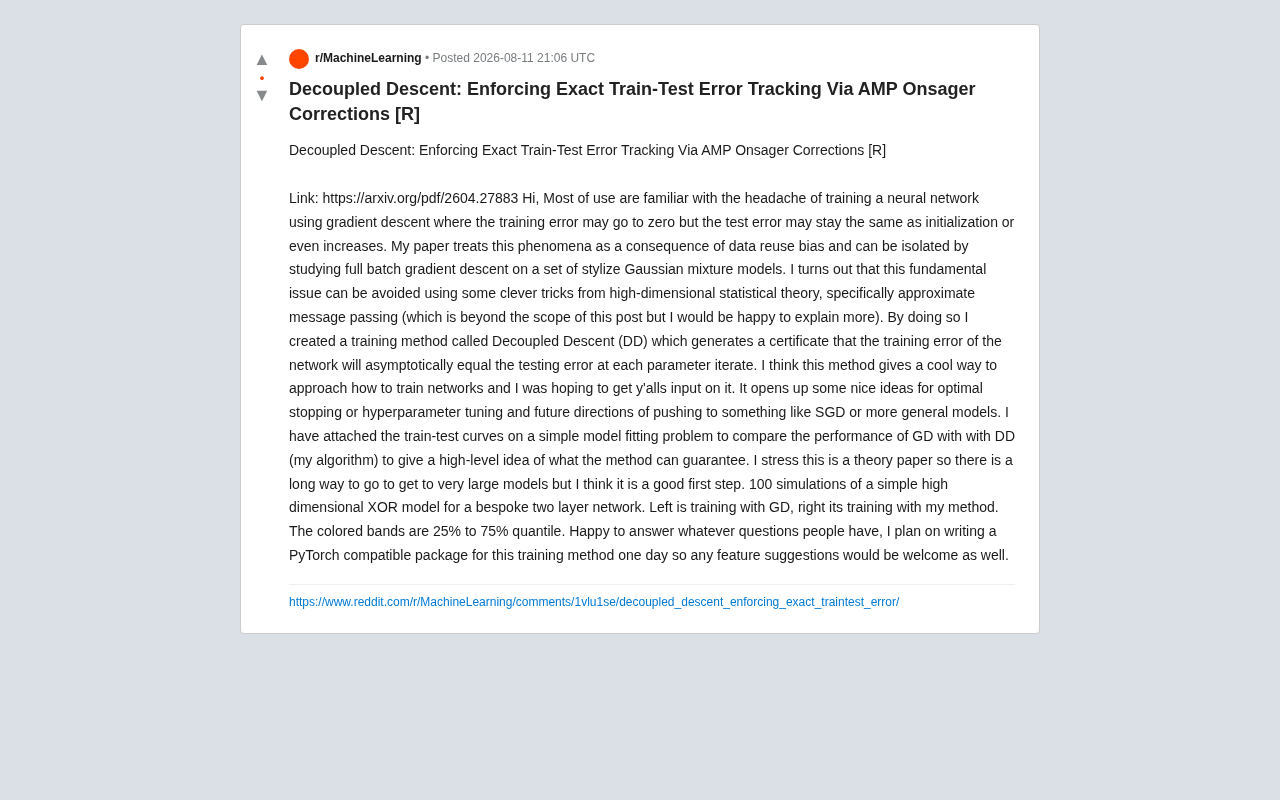
A theoretical framework using AMP to make training error reliably predict test error by debiasing data reuse
Decoupled Descent addresses the generalization gap by eliminating data reuse bias through Onsager correction terms from AMP theory. Built on Gaussian mixture models and full-batch GD, it provides provable guarantees that training error asymptotically tracks test error, potentially enabling validation-free early stopping and more efficient hyperparameter tuning.
The Generalization Gap: An Enduring Challenge in Deep Learning
Anyone who has trained a neural network has likely encountered this frustrating scenario: training error drops steadily toward zero, while test error remains stuck near initialization or even worsens. This phenomenon is known as the "generalization gap" in machine learning and is a direct manifestation of overfitting.
The generalization gap is one of the core challenges in machine learning. From a statistical learning theory perspective, a model's generalization ability depends on the balance between its hypothesis space complexity and the number of training samples. Classical VC dimension theory and Rademacher complexity theory provide upper bound analysis, but in the deep learning era, these classical tools often yield overly pessimistic estimates. Modern neural networks typically have far more parameters than training samples (the overparameterized regime), yet still achieve good generalization—a phenomenon known as "double descent." Understanding the causes of the generalization gap and methods to eliminate it has been a critical bottleneck connecting theory and practice.
Recently, a theoretical study published on arXiv offers a novel perspective. The author shared this work in Reddit's machine learning community, naming it Decoupled Descent (DD). The core contribution of this paper is not another technique that improves accuracy by a few percentage points, but rather a provable answer to the fundamental question "when can training error reliably predict test error," grounded in high-dimensional statistical theory.
Data Reuse Bias: Root Cause Analysis of the Generalization Gap
The authors provide a clear diagnosis of the generalization gap: this phenomenon is fundamentally the result of data reuse bias.
What is Data Reuse Bias
During gradient descent, the same batch of training data is repeatedly used to update parameters. With each iteration, the model "peeks" at the specific samples in this batch, gradually fitting the noise in the training set as well. As iterations progress, parameters become increasingly dependent on the specific realization of training samples rather than the true underlying distribution. This causes systematic deviation between training error and test error—training error continues to drop as it adapts to sample details, while test error stagnates or worsens due to noise overfitting.
This bias has a broader counterpart in statistics: it is essentially a problem of "adaptive analysis." When data is used simultaneously for both model selection and model evaluation, the evaluation results inevitably carry optimistic bias. This parallels the problem of "data snooping" in clinical trials—if researchers decide on hypothesis testing after seeing the data, p-value reliability suffers. In the optimization context, each gradient update implicitly makes a "selection" based on training data, and the cumulative effect of thousands of iterations makes training error a severely biased estimator of generalization ability.
Isolating the Problem with Gaussian Mixture Models
To cleanly study this mechanism theoretically, the authors chose a class of stylized Gaussian mixture models (GMMs) as analysis objects and examined full-batch gradient descent running on them.
Gaussian mixture models are classical analysis objects in high-dimensional statistical theory. In this setting, data is generated by mixing several Gaussian distributions in certain proportions, with each Gaussian component corresponding to a category. Choosing GMM as the theoretical entry point has deep tradition: under the high-dimensional asymptotic framework (where data dimension d and sample size n both tend to infinity with their ratio d/n approaching some constant γ), the statistical properties of GMM can be precisely characterized through random matrix theory. In recent years, numerous theoretical breakthroughs regarding high-dimensional classification, phase transitions, and neural network learning dynamics have been built on GMM or its variants, as it captures key statistical structures of real data while maintaining mathematical tractability.
The advantage of this setting is: it's simple enough for precise high-dimensional asymptotic analysis, yet typical enough to reproduce generalization difficulties encountered in real training. Through this "laboratory-grade" simplified model, the authors can isolate data reuse bias from complex engineering details for focused study.
Core Principle of Decoupled Descent: Approximate Message Passing and Debiasing Mechanism
The core method proposed in the paper builds on Approximate Message Passing (AMP), a high-dimensional statistical tool.
The AMP algorithm was first introduced into compressed sensing by David Donoho, Andrea Montanari, Arian Maleki and others around 2009, with intellectual roots tracing back to Belief Propagation algorithms and TAP (Thouless-Anderson-Palmer) equations in statistical physics. AMP's core advantage lies in its "State Evolution" property: under high-dimensional random matrix assumptions, the algorithm's behavior at each iteration step can be precisely described by a deterministic low-dimensional recursive equation. This means we can precisely predict the algorithm's statistical performance at any iteration step without actually running it. This property makes AMP a powerful theoretical tool for analyzing high-dimensional optimization and estimation problems.
Debiasing Effect of the Onsager Correction Term
AMP originates from statistical physics and compressed sensing, with its essence being the introduction of the so-called Onsager correction term. The intuitive meaning of this correction term is: at each iteration step, actively subtract the self-correlation bias introduced by "data reuse," making the information used in the current iteration statistically behave as if it were "fresh" samples. In other words, the Onsager correction allows the algorithm to "debias" at each step, avoiding excessive parameter dependence on training samples.
The Onsager correction term is named after physicist Lars Onsager, but in the AMP context, it more directly relates to TAP equations in statistical physics. TAP equations are corrections to mean-field approximation in spin glass models, proposed by Thouless, Anderson, and Palmer in 1977. At the algorithmic level, the Onsager correction term is a seemingly simple retrospective correction: it subtracts from the current iteration's output a term proportional to the previous step's input, with coefficient determined by the average derivative of the nonlinear function. This correction term's effect is statistically profound—it eliminates accumulated self-correlation in the iterative process, making AMP's residuals follow a Gaussian distribution in the high-dimensional limit, thus enabling precise theoretical analysis. Without this correction, residuals in standard iterative algorithms would carry complex historical dependencies, making theoretical tracking infeasible.
Theoretical Certificate for Training Error Tracking Test Error
By applying AMP ideas to the training process, Decoupled Descent can generate a certificate: it theoretically guarantees that at every parameter iteration point, the network's training error will asymptotically equal test error.
This is quite a strong property. It means we no longer need an independent validation set to estimate model generalization performance—training error itself becomes a reliable proxy for test error. The authors provide comparison curves on a simple fitting problem: the left shows standard gradient descent (GD) training-test curves, the right shows Decoupled Descent curves. The experiment is based on 100 high-dimensional XOR model simulations using a custom two-layer network, with colored bands representing 25% to 75% quantile intervals. Results intuitively demonstrate how DD keeps the two error curves synchronized rather than diverging.
The XOR (exclusive or) problem is a milestone benchmark in neural network research history. In 1969, Minsky and Papert proved in their book "Perceptrons" that single-layer perceptrons cannot learn the XOR function, a conclusion that led to over a decade of neural network research "winter." The essence of the XOR problem lies in its nonlinear class boundary—two classes are interleaved in the input space and cannot be separated by any linear hyperplane. Therefore, solving the XOR problem requires at least one hidden layer, making it a minimal test case for verifying nonlinear model learning capability. In this paper's context, the high-dimensional XOR model generalizes this classical problem to Gaussian mixture settings in high-dimensional space, preserving the core difficulty of nonlinear separability while allowing precise analysis using high-dimensional asymptotic tools.
Potential Applications and Practical Limitations
Why Decoupled Descent Matters
If training error can precisely track test error, many problems that have long troubled practitioners would be resolved:
- Optimal stopping: No need for validation-set-based early stopping strategies; directly judging when to stop based on training error achieves best generalization. Early stopping is one of the most commonly used regularization techniques in deep learning, with the core idea of terminating training when validation error starts rising to prevent overfitting. However, this requires setting aside valuable labeled data as a validation set, which is particularly costly in data-scarce scenarios (such as medical imaging or rare language processing). If training error itself can reliably reflect generalization performance, this data can return to the training set, simultaneously improving data utilization efficiency and model performance.
- Hyperparameter tuning: The tuning process can be more efficient since training metrics themselves reflect true performance.
- Theoretical insights: It provides an analyzable mathematical framework for understanding "how training dynamics affect generalization."
Soberly Viewing Theoretical Boundaries
The author is very candid in emphasizing that this is a theoretical paper, still far from application to large-scale models. Current guarantees are built on several strong assumptions—stylized Gaussian mixture data, full-batch gradient descent, and high-dimensional asymptotic limits. Real-world deep learning uses complex data distributions, stochastic gradient descent (SGD), and far larger model structures.
Full-batch gradient descent uses all training samples to compute gradients at each step, while stochastic gradient descent (SGD) uses only one or a small batch of samples per step. In theoretical analysis, full-batch GD is easier to handle because gradients are deterministic (given current parameters and fixed dataset), whereas SGD introduces an additional source of randomness—mini-batch sampling noise. However, SGD in practice is not only a computational efficiency choice but is also widely believed to have implicit regularization effects: SGD's gradient noise tends to guide optimization toward flatter minima regions, which typically correspond to better generalization. Extending the AMP framework from full-batch GD to SGD requires handling the interaction between this additional sampling randomness and data reuse bias, which is a non-trivial technical challenge.
The author also clearly points out future directions: extending this framework from full-batch GD to SGD and supporting more general model architectures. These are key to determining whether this method can move beyond the theoretical sandbox.
Outlook: From Theoretical Research to Practical Tools
Worth mentioning, the author reveals plans to develop a PyTorch-compatible training method package in the future and publicly solicits feature suggestions from the community. This open stance makes this work not just mathematical proofs on paper, but potentially a tool that practitioners can actually experiment with. As one of the most mainstream frameworks in current deep learning research, PyTorch has a vast developer ecosystem and rich extension interfaces. Implementing Decoupled Descent as a PyTorch-compatible package means researchers can conveniently integrate the Onsager correction term into their optimization loops without changing existing training workflows, thereby validating the theory's applicability boundaries on various practical tasks.
A Research Direction Worth Long-term Tracking
From a more macro perspective, Decoupled Descent represents a valuable path in machine learning theory research: not blindly pursuing empirical performance improvements, but returning to first principles to understand generalization—the most essential puzzle in deep learning. Although a vast chasm lies between XOR toy models and GPT-level large models, as the author states, this is "a good first step." For researchers interested in machine learning theory, optimization algorithms, and generalization theory, the technical approach of AMP and Onsager correction is worth continued attention.
In fact, the AMP framework has demonstrated expansion potential in multiple frontier directions in recent years: from matrix factorization and tensor estimation to high-dimensional analysis of generalized linear models, AMP and its variants (such as Vector AMP, Multi-layer AMP) are becoming a general analytical language for high-dimensional statistical inference. Decoupled Descent introduces this tool for the first time to analyze neural network training dynamics, potentially opening a new bridge from high-dimensional statistical theory to deep learning generalization understanding.
Key Takeaways
- The generalization gap stems from data reuse bias: repeated use of training data causes parameters to overfit sample-specific noise
- Decoupled Descent leverages AMP theory's Onsager correction term to debias at each iteration, making training error asymptotically track test error
- Theoretical guarantees currently hold under stylized settings (GMM, full-batch GD); extending to SGD and real architectures is the key challenge
- If realized, DD could enable optimal stopping without validation sets and more efficient hyperparameter tuning
- The author plans to release a PyTorch-compatible package, making this theoretical framework accessible for practical experimentation
Related articles
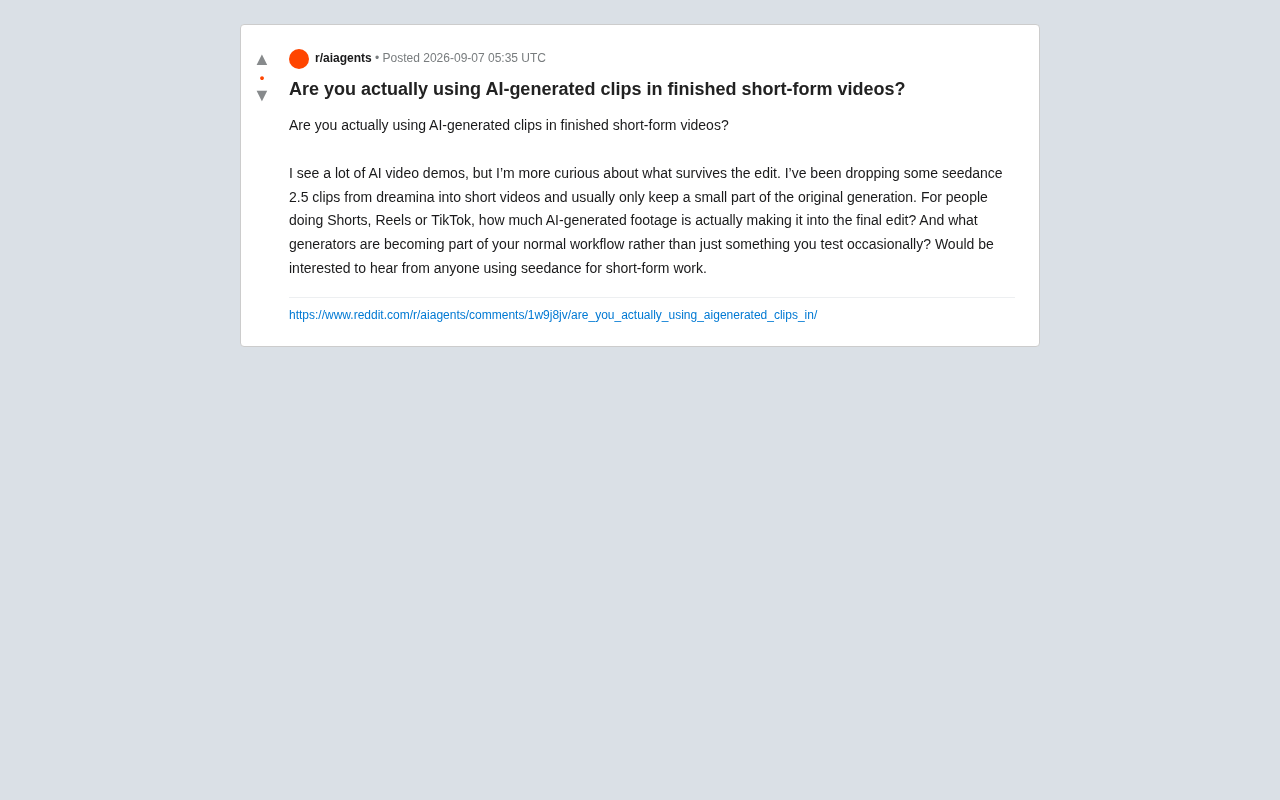
How Short-Form Video Creators Are Using AI Video Generation Tools
Exploring the real-world application of AI video generation tools in short-form video creation. From Seedance to Runway, how do creators integrate AI assets? Revealing the gap between demos and production use.

Home Data Center Setup Guide: A Complete Self-Hosted Private Cloud Implementation
Deep dive into building a home data center: hardware selection, software architecture, cost analysis, and operational challenges. From data sovereignty to technical implementation, build your private cloud infrastructure and control your digital assets.
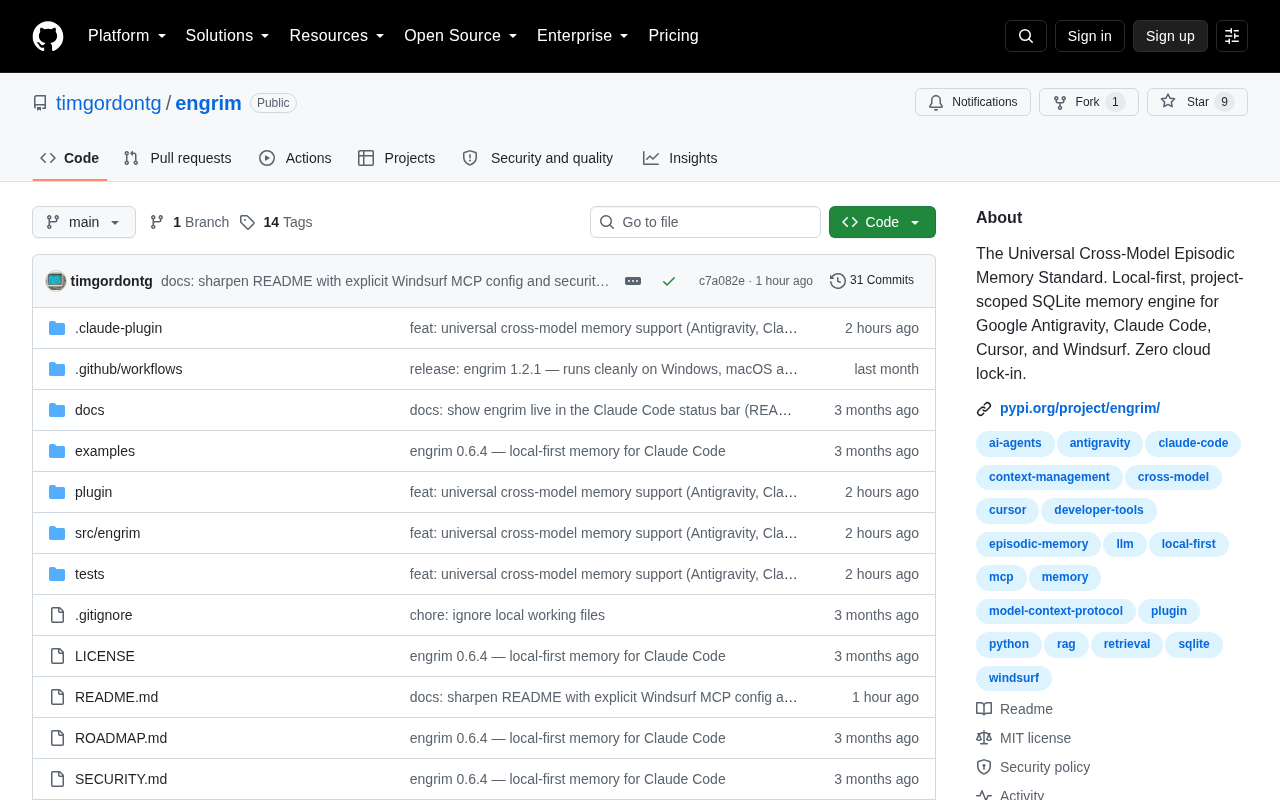
Engrim: A Local Memory Engine Solution for AI CLI Tools
Engrim is an open-source, local-first SQLite memory engine built for AI CLI tools like Claude Code and Aider, solving context loss while keeping data private.