Deep Dive into Alibaba's AgentScope 2.0: ReAct Agent Pattern and Security Defense Core Capabilities
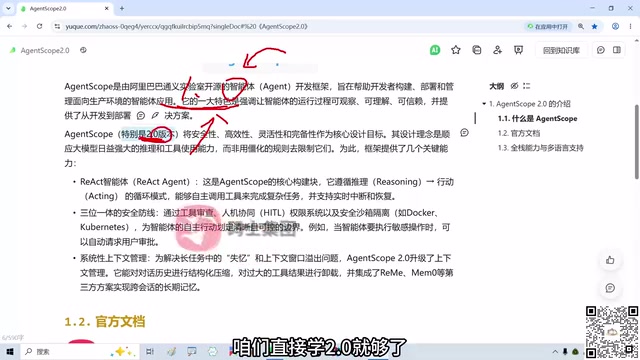
Deep dive into AgentScope 2.0's ReAct agents, three-layer security defense, and context management.
This article provides an in-depth analysis of Alibaba's AgentScope 2.0 agent development framework, covering three core capabilities: the ReAct (Reasoning + Acting) pattern for intelligent agent construction, a three-dimensional security defense system combining tool review, human-in-the-loop collaboration, and sandbox isolation, and systematic context management strategies to maintain long-running agent performance. Developers are advised to start directly with version 2.0 for its production-grade maturity.
What is AgentScope?
Before discussing AgentScope, we need to clarify a fundamental question: What's the essential difference between an Agent and a regular chatbot?
A regular chatbot only answers questions — you ask, it responds, and that's it. An Agent, on the other hand, can not only converse but also think autonomously, invoke tools, and execute tasks. Here's a typical example: you assign an Agent the task "Analyze today's sales data, generate a report, and email it to the manager." The Agent will automatically read the sales data, call Python analysis functions, generate the report, and finally invoke an email tool to send out the results.
The concept of an Agent originates from classic research in the field of artificial intelligence, traceable back to explorations of autonomous software agents in the 1990s. In the contemporary context of Large Language Models (LLMs), an Agent refers specifically to an AI system capable of perceiving its environment, making autonomous decisions, and executing actions. Compared to traditional chatbots, the core distinction of an Agent lies in two key capabilities: "Tool Use" and "Planning" — Tool Use enables the Agent to call external APIs, execute code, operate file systems, and more; Planning capability allows the Agent to decompose complex tasks into executable sub-steps. Beyond AgentScope, other mainstream Agent frameworks in the industry include LangChain, AutoGen, CrewAI, Dify, and others, all attempting to solve the engineering challenges of taking Agents from prototype to production.
As Agents become capable of doing more and more, problems inevitably arise: How do we develop them, control them, and ensure they don't make mistakes? And when something goes wrong, how do we diagnose the issue? It's precisely to solve these engineering challenges that various agent development frameworks have emerged, and AgentScope is a production-grade framework released by Alibaba.
In simple terms, AgentScope is a development framework that helps developers manage the entire lifecycle of Agent building, deployment, management, and operation. Its core mission is to enable developers to manage agents efficiently and reliably.
Why You Should Start with Version 2.0 Directly
AgentScope 2.0 underwent extensive refactoring compared to 1.0 — many APIs have been deprecated, and the scope of changes is nothing short of "destructive." This means if you previously learned 1.0, you'll find that your prior knowledge needs to be almost entirely discarded when learning 2.0.
Therefore, the recommendation for new learners is crystal clear: There's no need to start with 1.0 — jump straight into 2.0. Version 2.0 is mature enough and has reached production-grade standards.
AgentScope Core Capability #1: The ReAct Agent Pattern
AgentScope offers several key core capabilities, and the first is the ReAct Agent. The "ReAct" here is not the frontend React framework — it's a combination of the initials from Reasoning + Acting.
The ReAct pattern was first proposed by Princeton University and Google Brain in the 2022 paper "ReAct: Synergizing Reasoning and Acting in Language Models." The paper's core finding was that neither pure reasoning (such as Chain-of-Thought prompting) nor pure action execution alone performs as well as alternating between the two. This approach draws inspiration from cognitive science research on human decision-making — when solving problems, humans naturally alternate between "think a step, do a step, observe a step." Before ReAct, the field already had reasoning enhancement techniques like Chain-of-Thought and Tree-of-Thought, but they lacked the ability to interact with external environments. ReAct's breakthrough was introducing the Observation step, allowing the model to correct its reasoning path based on real external feedback, thereby significantly reducing the impact of LLM "hallucination" problems.
Let's use an example to understand this pattern. Suppose you tell an Agent: "Check today's weather in Beijing, and if it's raining, remind me to bring an umbrella." The LLM itself doesn't know whether it's raining in Beijing today, so the Agent goes through this cycle:
- Reasoning: To determine whether to bring an umbrella, I first need to know the weather
- Acting: Call the weather query tool
- Observation: The tool returns "It's raining in Beijing today"
- Further Reasoning: Since it's raining, I should remind the user to bring an umbrella
- Return Result: "It's raining in Beijing today. I suggest you bring an umbrella."
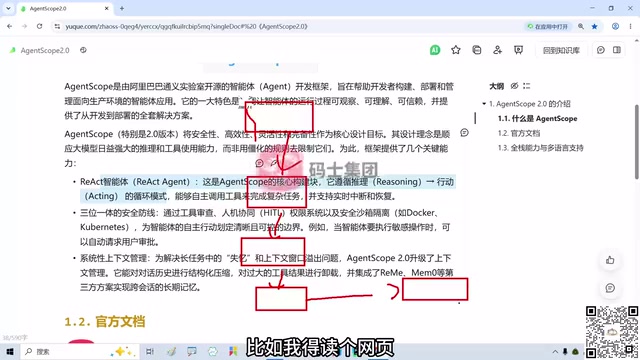
This is the ReAct cycle — thinking while acting, then continuing to think based on action results. For complex tasks, this cycle may execute multiple times: thinking leads to a tool call, observing results reveals the need to read a webpage, further thinking triggers Python code execution for data analysis... progressing layer by layer until the task is complete.
AgentScope uses ReAct as the most fundamental approach to Agent construction, building around it capabilities like tool invocation, streaming execution, and interrupt recovery to better accommodate complex task scenarios.
AgentScope Core Capability #2: Three-Dimensional Security Defense
When an Agent only answers questions like "What's the weather in Beijing?", the security risk is minimal. But when an Agent has high-privilege capabilities such as deleting files, executing code, operating databases, sending emails, and accessing internal company systems, the situation is entirely different.
Consider this scenario: you ask an Agent to "clean up useless files in the project," and the Agent misjudges certain files as useless and directly executes an rm -rf command — a single wrong judgment could have catastrophic consequences in a production environment. Agents always have a certain probability of error; while it's not high, a single mistake could trigger a disaster.
To address this, AgentScope designed a "three-dimensional" security defense:
First Line of Defense: Tool Review Mechanism
Not all tools can be freely invoked. When an Agent prepares to call ordinary tools (like weather queries), it can execute directly. But when it attempts to invoke sensitive tools (such as deleting database content), the system automatically performs security checks to prevent high-risk operations from being executed without review.
Second Line of Defense: Human-AI Collaborative Decision-Making
Agents can work autonomously, but humans have the final say on critical steps. For example, when an Agent is about to execute a high-risk SQL statement like DELETE FROM, execution is paused and the administrator is asked: approve or reject? If approved, it continues; if rejected, it stops or adjusts. This mechanism doesn't restrict the Agent's autonomy — rather, it preserves human final decision-making authority over high-risk actions.
Human-in-the-Loop (HITL) is an important paradigm in AI system design, with the core philosophy of retaining human review and decision-making authority at critical nodes in automated workflows. This concept is not a new invention of the Agent era — it's widely applied in traditional MLOps, autonomous driving (L3 level requires drivers to take over at any time), medical AI-assisted diagnosis, and other fields. In the Agent context, the challenge of HITL lies in precisely identifying "which steps require human intervention" — too much intervention reduces efficiency, while too little increases risk. AgentScope achieves a dynamic balance between automated execution and human approval by classifying tools according to risk levels. It's worth noting that as Agent systems scale up, relying entirely on human approval becomes infeasible, so the industry is also exploring approaches where another AI Agent serves as the "approver" — the so-called "AI aligning AI" strategy.
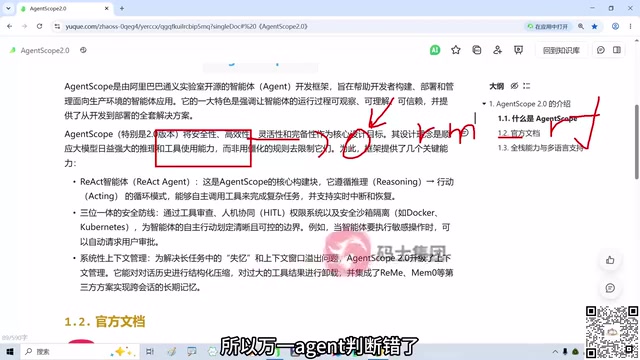
Third Line of Defense: Sandbox Isolation
Even with tool review and human-AI collaboration, human approval can still be fallible. Therefore, a more fundamental safeguard is needed — sandbox isolation. A sandbox provides the Agent with an isolated execution environment where, whether executing code or processing files, nothing affects external systems. This mechanism is employed in many mainstream frameworks.
A sandbox is an isolation technology originating from the operating system security domain, initially widely used in browser security and malware analysis. Its core principle is restricting a process's permission scope so that it can only run in a controlled virtual environment without accessing critical resources on the host system. In the Agent domain, sandboxes are typically implemented using virtualization technologies such as Docker containers, gVisor, and Firecracker. For example, when an Agent needs to execute user-provided Python code, the code runs in a resource-limited, network-isolated container — even if the code contains malicious instructions (such as deleting system files or launching network attacks), it cannot affect the host machine. Products like OpenAI's Code Interpreter and Anthropic's Computer Use employ similar sandbox mechanisms. This "Principle of Least Privilege" is one of the cornerstones of computer security.
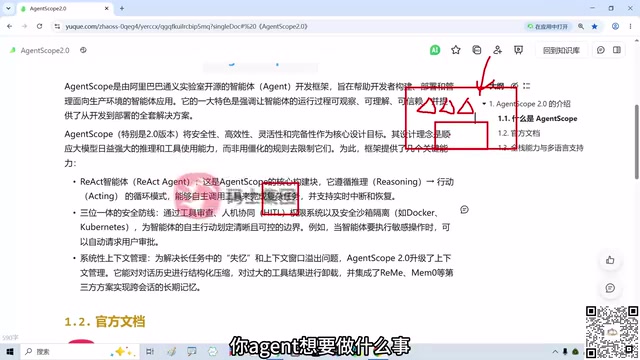
These three layers of mechanisms can be used in combination for complex scenarios: Tool review addresses "can it be done," human-AI collaboration addresses "should it be done," and sandbox isolation addresses "where to do it safely." Together, they form AgentScope's complete security protection system.
AgentScope Core Capability #3: Systematic Context Management
Consider a practical problem: an Agent has been working for two hours, during which it searched 20 web pages, invoked tools 30 times, and read dozens of files. These operations continuously accumulate massive amounts of context — the first call returns 5,000 characters, the second returns 10,000... As the task progresses, the context grows ever larger.
However, an LLM's context window is not infinite. The context window refers to the maximum number of tokens a model can process in a single inference — GPT-4 Turbo supports 128K tokens, Claude 3.5 supports 200K tokens, and Gemini 1.5 Pro even reaches 1 million tokens. Although windows keep expanding, research shows that models suffer from the "Lost in the Middle" problem — when the context is too long, the model's attention to and recall of information in middle positions drops significantly. Additionally, longer context means higher inference costs (token-based billing) and slower response times.
When the context becomes too large, much important information gets "drowned out," causing noticeable degradation in Agent performance. Therefore, AgentScope provides systematic context management tools to address this issue. Common context management strategies include: summary compression (condensing conversation history into summaries), sliding window (retaining only the most recent N rounds of dialogue), RAG (storing historical information in a vector database for on-demand retrieval), and importance scoring (prioritizing information based on relevance). AgentScope combines these strategies to ensure that long-running Agents maintain efficiency and accuracy.
AgentScope's Multi-Language Support: Python and Java Dual Versions
The AgentScope framework offers both Python and Java versions. Current mainstream tutorials primarily focus on the Python version, but the official team also provides complete Java version documentation for developers who need it. Additionally, the official documentation supports switching between Chinese and English, making it convenient for developers of different backgrounds to learn directly from the official website.
Summary
As Agents become increasingly powerful and capable of autonomously completing complex tasks, their autonomy brings two core challenges: security issues (risks from high privileges) and long context issues (performance degradation from information accumulation).
AgentScope addresses these pain points by providing a comprehensive set of production-oriented Agent engineering capabilities:
- ReAct pattern as the core approach to agent construction
- Three-dimensional security defense to ensure operational safety
- Systematic context management to maintain efficiency during long-running tasks
For developers looking to enter the multi-agent development space, starting directly with the feature-complete, production-grade AgentScope 2.0 is the most efficient learning path.
Related articles
Qwen3 Next Flash Hands-On Review: An In-Depth Evaluation of the Qwen4 Architecture Preview Model
In-depth review of Alibaba's Qwen3 Next Flash preview model covering pixel-level visual replication, C++ 3D game generation, Blender+Godot tool invocation, and analysis of its Ngram embedding MoE architecture and local 4-bit quantized performance.
Alibaba's Qwen3.8-Max-0902 Tops Code Arena Leaderboard
Alibaba's Qwen3.8-Max-0902 tops Code Arena with 1691 points, featuring a 2.4T MoE architecture, 128K context, surpassing Claude Opus 3.5 in coding and cost-efficiency.
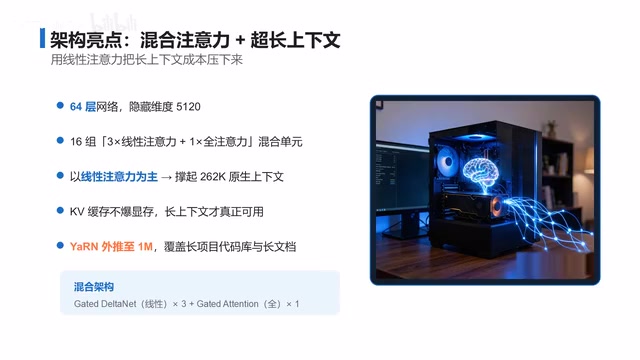
Qwen3 27B Open-Sourced: A Multimodal Agent Model That Runs on a Single GPU
Alibaba open-sources Qwen3 27B dense multimodal model with image/video understanding and GUI control. 4-bit quantized needs only 17GB VRAM. Apache 2.0 licensed.