Deep Dive into Claude Code Mode's Internal Mechanisms: A New Paradigm for AI Programming
Breaking down the three internal mechanisms of Claude Code Mode: tool calling loops, permission boundaries, and context management.
Based on a Hacker News discussion thread and observable product behavior, this article analyzes the internal technical logic and product implications of Claude Code Mode. It argues that Code Mode transforms the model from a passive responder into an active explorer facing project files and runtime results, with mechanisms spanning multi-turn tool calling loops, permission and security boundaries, and an on-demand context loading strategy of index-first-then-read. The competition among AI programming tools is shifting from model capability to engineering packaging.
Claude Code Mode is one of the most noteworthy designs in the current AI programming landscape. Although the Hacker News discussion about its internal mechanisms is brief, it touches on a core question: how AI evolves from "single-turn Q&A" into a collaborative role that "persistently resides within the codebase." Based on that discussion thread and combined with observable product behavior, this article breaks down the technical logic and product implications of this mode.
What Is Claude Code Mode
As the name suggests, Code Mode is not a simple chat window but rather embeds Claude's capabilities directly into the code editing and execution environment. Users no longer need to repeatedly copy and paste code snippets; instead, the model directly faces project files, directory structures, and runtime results.
The key shift in this mode lies in the source of context: traditional chat-based programming relies on users manually providing context, whereas Code Mode lets the model proactively retrieve file contents, dependency relationships, and error output from the repository. The model transforms from a "passive responder" into an "active explorer"—this is the starting point of the internal mechanism design.
According to clues mentioned in the Hacker News discussion, Code Mode's internal implementation revolves around tool calling and permission control. The model reads files and executes commands through controlled interfaces, then feeds the results back into the reasoning loop.
Key Design Elements of the Internal Mechanisms
Tool Calling Loop
The core of Code Mode is a multi-turn tool calling loop. After receiving user instructions, the model first plans which files need to be examined, then reads content through tool interfaces, and decides the next action based on the results. This is fundamentally different from traditional single-turn completion: the model needs to maintain an internal task state and gradually approach the goal across multiple rounds of interaction.
This loop places high demands on the model's instruction-following capabilities. Once the model misjudges a file path or misinterprets an error message at some step, subsequent rounds will deviate from the direction. Therefore, internal mechanisms typically include formatting processing for tool return results to reduce the model's parsing cost.
Tool Use / Function Calling is the foundational mechanism through which large models interact with the external world: developers describe available tools (names, parameters, return formats) using structured schemas, the model outputs call requests conforming to those schemas during inference, and the host program executes them and feeds the results back to the model as new messages, forming a closed loop. In Anthropic's Messages API, tool calls alternate between two content block types, tool_use and tool_result, and the model can issue multiple parallel calls within a single response. It is precisely this mechanism that allows models to break through the boundaries of pure text generation—reading real files, running shell commands, and querying databases. Understanding tool calling is a prerequisite for understanding Code Mode—the so-called "loop" is essentially extending a single tool call into multiple consecutive rounds of tool_use/tool_result exchanges until the model determines the task is complete.
Permissions and Security Boundaries
Letting AI directly operate on a codebase entails risk. Code Mode's internal mechanisms necessarily include a permission layer: which directories are readable, which commands are executable, and whether user confirmation is required. The clues in the Hacker News discussion suggest that such boundary design is a prerequisite for productization, not an afterthought patch.
From an engineering perspective, permission control is not only a security requirement but also part of the product experience. Overly permissive settings discourage users from using the tool, while overly strict settings cause the model to frequently interrupt and wait for confirmation, disrupting collaborative flow.
Human-in-the-Loop confirmation is the default safety design for such tools: for operations with side effects—writing files, executing shell commands, accessing the network—the tool pauses before execution and requests user approval, and the user can choose to allow a single instance or trust a category of operations for the current session. This is typically paired with sandbox and allowlist mechanisms—restricting accessible directory scopes and executable command sets, or even isolating execution within containers or virtual machines to prevent the model from accidentally deleting files or executing dangerous instructions. It is worth emphasizing that prompt injection risks are particularly prominent in such scenarios: if malicious instructions are embedded in files being read or command output, they may induce the model to perform unauthorized operations. Therefore, the permission layer must enforce restrictions independently of the model's judgment rather than relying solely on the model's "voluntary compliance."
Context Management Strategy
Codebases often far exceed the model's context window. Code Mode needs to decide when to read files, when to discard old content, and how to summarize historical operations. Context management within internal mechanisms directly affects model performance: retaining too many irrelevant files dilutes attention, while discarding key information leads to redundant work.
A reasonable strategy is on-demand loading: the model first locates relevant files through directory listings and searches, then reads specific content. This "index first, read closely later" approach aligns with how human developers browse unfamiliar codebases.
Context window refers to the upper limit of total tokens a model can receive in a single inference, including system prompts, conversation history, tool return content, and model output. Current mainstream model windows are on the order of hundreds of thousands of tokens, while the source code of a medium-sized repository often reaches millions of tokens—a difference of orders of magnitude. Therefore, tool-based programming assistants cannot "fit the entire repository in at once" and must perform context engineering: filtering information through directory trees, grep searches, and file summaries, and leveraging prompt caching to reuse stable system prompts and already-read file prefixes, reducing repeated billing and latency; when history grows too long, truncation or summarization compression is also needed. These trade-offs directly determine whether the model can maintain a sense of direction during long tasks and are one of the main sources of experience differences among Code Mode-style products.
Product Implications for AI Programming Tools
Claude Code Mode's internal mechanisms reveal a trend in AI programming tools: the focus of competition is shifting from model capability to engineering packaging. With the same underlying model, different tool calling designs, permission strategies, and context management approaches will produce vastly different user experiences.
For developers, this means that when evaluating AI programming tools, one should not only look at model benchmark scores but also at how the tool interacts with the codebase. For product teams, the Code Mode approach can be transferred to other domains: letting the model proactively acquire information in a controlled environment rather than waiting for users to feed it.
The discussion volume on this topic on Hacker News is modest, indicating that such internal mechanism details have not yet been widely discussed. However, as AI programming tools become more widespread, tool calling loops, permission boundaries, and context strategies will become key dimensions distinguishing product quality.
Conclusion
Claude Code Mode's internal mechanisms unfold along three main threads: tool calling, permission control, and context management. It represents the evolution of AI programming from "conversational assistance" toward "environment residency." Understanding these mechanisms helps developers use such tools more effectively and provides design references for building similar products.
One-line Summary
Breaking down the three major internal mechanisms of Claude Code Mode: the tool calling loop, permission boundaries, and context management.
Paragraph Summary
Based on clues from a Hacker News discussion and combined with observable product behavior, this article analyzes the internal technical logic and product implications of Claude Code Mode. The article points out that the essence of Code Mode is transforming the model from a "passive responder" into an "active explorer" that directly faces project files, directory structures, and runtime results. Its internal mechanisms unfold along three main threads: the multi-turn tool calling loop requires the model to maintain task state and gradually approach the goal; permissions and security boundaries are prerequisites for productization and require a balance between security and collaborative flow; context management adopts an on-demand loading strategy of "index first, read closely later." The article further argues that the focus of competition in AI programming tools is shifting from model capability to engineering packaging and interaction design.
Related articles
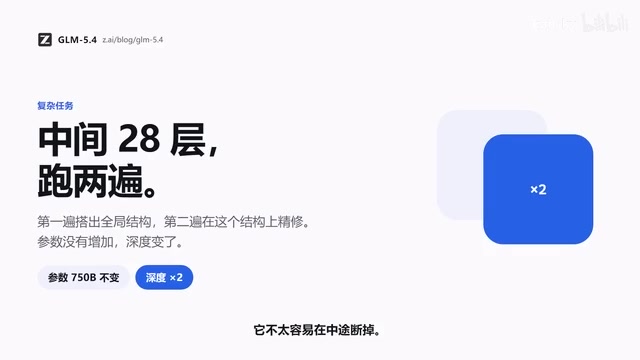
GLM-5.4 Released: How a 750B Model Achieves Stronger Reasoning
Zhipu AI releases GLM-5.4, a 750B model that boosts reasoning by running the middle 28 layers twice. GPQA Diamond rises from 47.58 to 56.26, with 1M token context and weights to be open-sourced after safety hardening.

Understanding GLM 5.4 in 8 Minutes: How Loop Transformer Makes AI Smarter Without More Parameters
GLM 5.4 didn't grow its parameters yet got smarter. Using the memorizer-vs-reasoner analogy, this article explains how Loop Transformer runs the middle 28 steps twice, how gated progressive update and two other techniques stabilize the second pass, and how generalized Coding uses code to command 3D, mechanical design, and game development — with official comparison data and open questions.
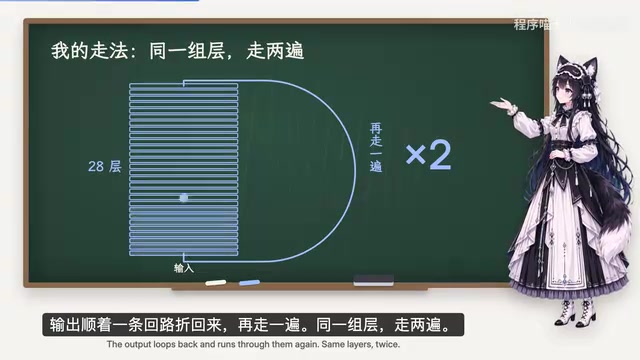
GLM-5.4 Released: An In-Depth Look at Zhipu's First Loop Transformer Flagship Model
Zhipu releases GLM-5.4, its first Loop Transformer flagship. Built on GLM-5 with 28 layers looped twice—no extra params, ~10% more compute, stronger math and long-context reasoning.