Deep Dive into Microsoft's AI Security Tools: Does Performance Really Surpass the Competition?

A critical analysis of Microsoft's new AI security tools and whether they truly outperform competitors.
Microsoft has released enterprise AI security tools claiming performance superiority over competitors. This article examines the claims critically, analyzing the AI security arms race, Microsoft's ecosystem advantages through integration with Azure and Office 365, the risks of vendor centralization, and key evaluation criteria enterprises should consider including real-world detection rates, TCO, and independent third-party testing.
Microsoft Doubles Down on the AI Security Track
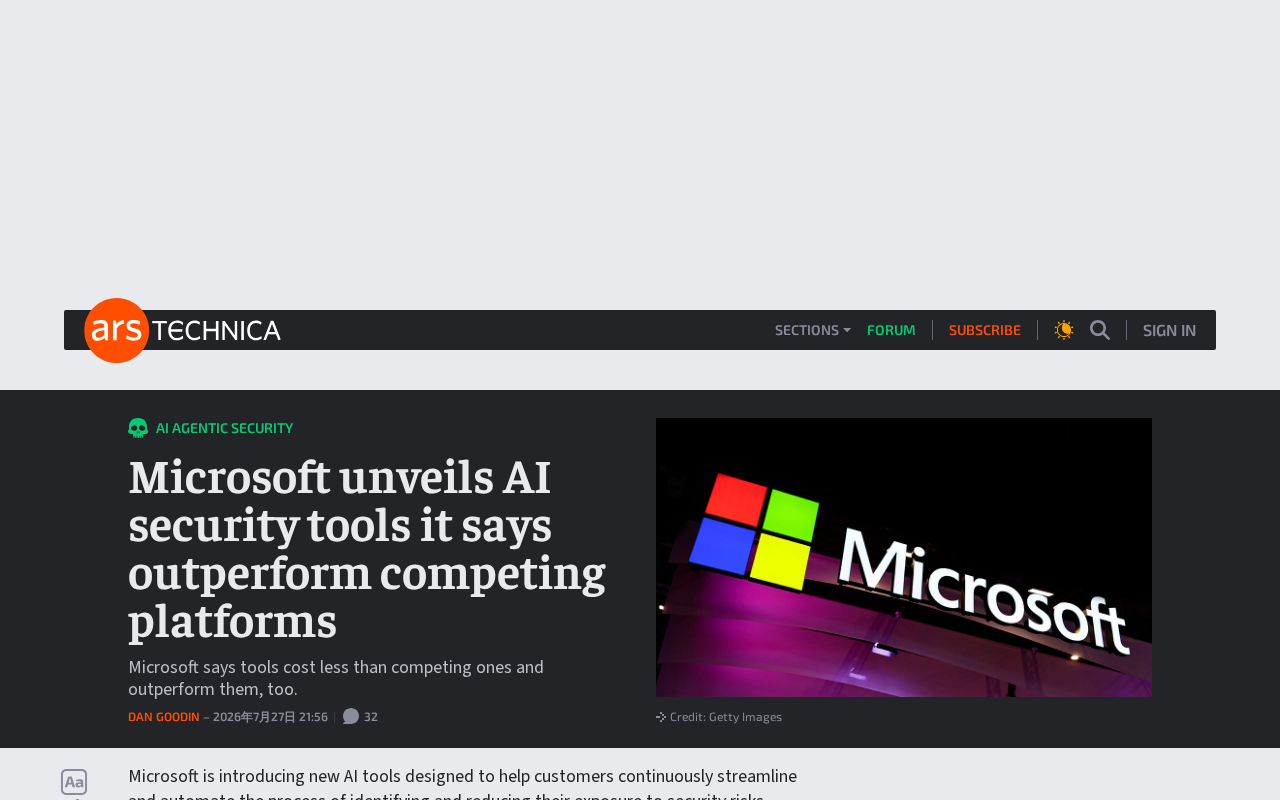
Microsoft has officially launched a series of enterprise-focused AI security tools, publicly claiming that their performance surpasses competing platforms currently on the market. This move signals the tech giant's deeper commitment to cybersecurity and reflects an industry trend where AI is evolving from an "assistive tool" into a "core defense engine."
As enterprises face an ever-expanding attack surface and increasingly complex threat landscapes, traditional rule-based security systems are struggling to keep up. Traditional security relies primarily on signature matching and predefined rules—such as firewall access control lists (ACLs) and intrusion detection system (IDS) known-attack signature databases. The core logic is "define threat characteristics first, then match and block." While effective against known threats, these systems often fall short against zero-day vulnerabilities, polymorphic malware, and advanced persistent threats (APTs). Attackers can bypass signature detection with minor modifications to malicious code, and rule updates simply can't keep pace with the speed of threat mutation. The tools Microsoft has released aim to leverage large language models and AI reasoning capabilities to learn normal behavioral baselines from massive logs and traffic, identify suspicious activities that deviate from those baselines, and fundamentally reshape the efficiency and response speed of security operations.
Why AI Security Has Become a Strategic Battleground
Exploding Threat Complexity Drives Demand for AI Defense
As generative AI becomes widespread, attackers themselves are leveraging AI capabilities to launch stealthier, more scalable attacks. Generative AI (such as large language models) gives attackers unprecedented automation capabilities: for phishing attacks, AI can automatically generate highly personalized phishing emails based on a target's social media information—grammatically natural and contextually coherent—making them nearly impossible for traditional email gateways' keyword filters to detect. For malware, AI can automatically generate code variants that produce different hash values with each compilation, rendering signature-based antivirus engines ineffective. Even more alarming, tools like WormGPT and FraudGPT—large models specifically trained for malicious purposes—have already appeared on the dark web, further lowering the technical barrier to cybercrime. A report from security research firm SlashNext shows that phishing emails have increased approximately 1,265% since ChatGPT's release, confirming the real-world threat of AI weaponization. This means defenders must also use AI to counter AI, forming a new paradigm of "fighting AI with AI."
Microsoft's strategic emphasis on AI security tools is essentially about positioning in this offensive-defensive arms race. Whoever can deliver higher detection accuracy, lower false positive rates, and faster response times will capture a larger share of enterprise security budgets.
The Leap from Threat Detection to Automated Response
The value of next-generation AI security tools lies not just in "discovering threats" but in "automated remediation." By embedding large models into Security Operations Center (SOC) workflows, security analysts can query alerts in natural language, quickly pinpoint root causes, and even have AI agents automatically execute certain remediation actions—dramatically shortening the window from detection to response.
It's worth understanding that a SOC is the nerve center of enterprise cybersecurity defense, typically staffed by security analysts on a 24/7 basis who monitor alerts, investigate incidents, and coordinate responses. However, modern SOCs face severe "alert fatigue"—a mid-sized enterprise SOC may receive thousands or even tens of thousands of security alerts daily, many of which are false positives or low-priority events, forcing analysts to spend enormous amounts of time on manual classification and filtering. Microsoft's Security Copilot and similar AI tools directly address this pain point, leveraging large language models' natural language understanding and reasoning capabilities so analysts can ask questions in everyday language (e.g., "What anomalous login behaviors occurred in the past 24 hours?"). The system automatically correlates multi-source logs and generates incident summaries, compressing investigations that once took hours down to minutes. Gartner predicts that by 2026, AI will help SOCs reduce manual analysis workload by approximately 50%.
The "Outperforming Competitors" Claim Requires Critical Examination
Interestingly, Microsoft's emphasis that its tools are "superior to competing platforms" is not uncommon in the industry. Security vendors like CrowdStrike, Palo Alto Networks, and SentinelOne are all investing heavily in AI capabilities, and each showcases leadership advantages on benchmarks favorable to their own products.
From a competitive landscape perspective, each vendor has different strengths: CrowdStrike is a leader in endpoint detection and response (EDR), with its Charlotte AI assistant capable of explaining threats in natural language and providing remediation recommendations—its core advantages being its lightweight agent architecture and global threat intelligence network Falcon OverWatch. Palo Alto Networks has built the Cortex XSIAM platform through acquisitions of multiple AI security startups, covering network, cloud, and endpoint, positioning itself as an AI-driven unified platform integrating SIEM (Security Information and Event Management) and SOAR (Security Orchestration, Automation, and Response). SentinelOne's Purple AI similarly employs generative AI technology, focusing on automated threat hunting and incident investigation. CrowdStrike excels in endpoint protection depth, Palo Alto Networks in network security breadth, while Microsoft's differentiation lies in native integration with enterprise infrastructure like Office 365 and Azure AD.
For enterprise procurement decision-makers, truly meaningful evaluation criteria should include:
- Detection rates and false positive rates in real-world environments, not ideal laboratory data
- Integration complexity with existing IT infrastructure
- Data privacy and compliance, especially whether sensitive data enters model training
- Total Cost of Ownership (TCO), including licensing, operations, and personnel investment
Regarding TCO, this is a dimension often underestimated when enterprises evaluate security investments. Beyond the obvious software licensing fees, TCO includes deployment costs (system integration, data migration, policy configuration), operational costs (day-to-day monitoring, rule tuning, version upgrades), training costs (security team skill development), and opportunity costs (security capability gaps during migration). In the AI security tools space, additional cost factors include AI model inference compute resource consumption—large model real-time inference has significant GPU/compute requirements, which in cloud deployment scenarios directly translates to increased cloud service costs. Research from the Ponemon Institute shows that hidden costs of security products typically account for 40%-60% of TCO, meaning that comparing only license prices can lead to severe decision-making bias.
Therefore, Microsoft's "superiority" claim should be viewed more as marketing positioning rather than a definitive conclusion. Enterprises still need independent third-party evaluations and POC (Proof of Concept) testing to verify actual effectiveness. In cybersecurity product selection, independent third-party evaluation organizations play a critical role. The MITRE ATT&CK Evaluation is one of the industry's most recognized authoritative benchmarks, simulating complete attack chains of APT groups based on real-world attack tactics and techniques to test each security product's detection and protection capabilities. Additionally, AV-TEST, SE Labs, Forrester Wave, and Gartner Magic Quadrant are commonly referenced evaluation sources. A POC is the process of field-testing candidate products in real or simulated environments, typically lasting 2-4 weeks, examining detection effectiveness, deployment complexity, operational burden, and performance overhead in specific business scenarios. Experience shows that vendor-produced benchmark results often differ significantly from independent evaluations, making POC an indispensable verification step in procurement decisions.
Microsoft's Ecosystem Advantage and Potential Concerns
The Core Appeal of an Integrated Ecosystem
Microsoft's greatest competitive moat lies in its massive product ecosystem. From Windows and Azure cloud platform to the Microsoft 365 office suite, countless enterprises are already deeply embedded in its ecosystem. Seamlessly integrating AI security tools into this ecosystem provides customers with an "out-of-the-box" unified protection experience that many independent security vendors simply cannot match.
Furthermore, Microsoft commands an enormous global threat intelligence data scale, processing tens of trillions of security signals daily, providing an unparalleled data foundation for training its AI models.
Systemic Risk from Security Centralization
However, "putting all eggs in one basket" carries inherent concerns. When security protection, operating systems, and cloud platforms are highly bound to a single vendor, any vulnerability or service disruption from that vendor will have extraordinarily wide-reaching impact.
Supply chain centralization risk is not mere theoretical speculation—multiple major incidents in recent years serve as evidence. In the 2020 SolarWinds supply chain attack, attackers compromised SolarWinds Orion's software update package, infiltrating approximately 18,000 organizations including the U.S. Treasury Department and Department of Homeland Security in one stroke. The July 2024 CrowdStrike incident triggered a global IT outage—a single flawed content update caused approximately 8.5 million Windows devices to blue-screen crash, paralyzing critical industries including aviation, healthcare, and finance, with economic losses estimated at billions of dollars. These incidents profoundly demonstrate that when security infrastructure is highly concentrated among a few vendors, single points of failure can trigger catastrophic chain reactions—this is the fundamental reason why "defense in depth" and multi-vendor strategies are repeatedly emphasized in security architecture design.
Implications for Enterprise Security Strategy
Microsoft's release once again confirms that AI has become the core variable in the next phase of cybersecurity industry competition. The future security market landscape will largely depend on who can achieve the optimal balance among AI capabilities, data scale, and ecosystem integration.
For enterprise users, the rational approach is to embrace the efficiency gains AI security delivers while maintaining critical judgment of vendor claims, and to avoid over-reliance on any single vendor through diversified security strategies. After all, in the security domain, no single tool can provide a "silver bullet" of perfect protection.
Note: This article is based on publicly reported information. The specific technical details and performance data of Microsoft's tools still await further official documentation and third-party verification.
Related articles
Altman: Taking OpenAI Public This Year Would Be 'Ill-Advised'
OpenAI CEO Sam Altman says going public this year would be 'ill-advised,' even as the company has confidentially filed IPO paperwork. Here's what it means for AI.

An Open Letter to Dario: If AI Safety Is Real, Open the Model Weights
Developer Jacob's open letter to Anthropic CEO Dario Amodei went viral on Hacker News, challenging the contradiction between AI safety rhetoric and closed-source models: if safety truly matters, why not open the weights?
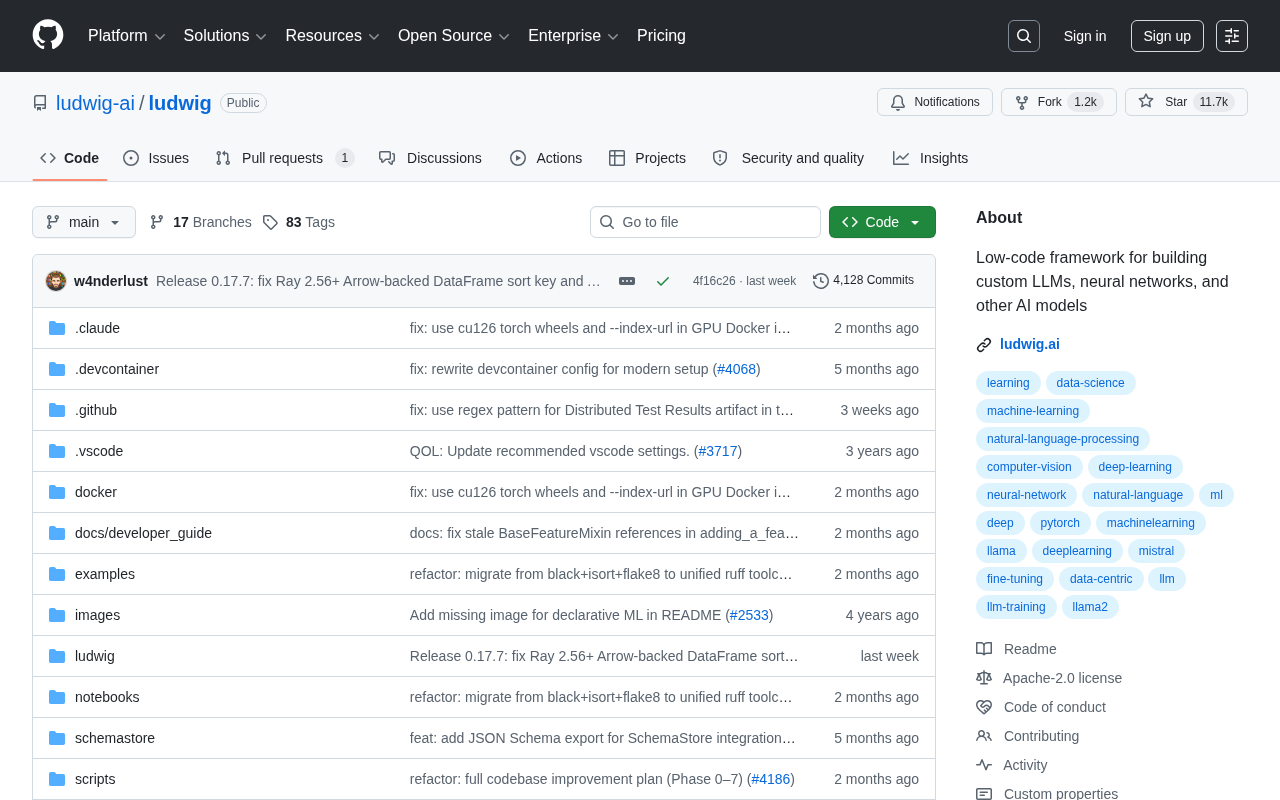
Ludwig: Building Custom LLMs and Neural Networks with Declarative Low-Code Configuration
Ludwig is an open-source low-code ML framework that builds custom LLMs and neural networks via declarative YAML config — no boilerplate training code required.