Deep Dive into the Midterm Elections: The Collapse of Moderates Is the Real Driver of Democratic Party Transformation

The Democratic establishment's collapse, not progressive strength, is the real driver of the party's leftward shift.
This analysis reframes the narrative around Democratic midterm primaries, arguing that the true story isn't the progressive rise but the systematic collapse of moderates and the establishment. Structural factors—small-dollar fundraising platforms, social media disruption, and ideological exhaustion—have created a leadership vacuum that progressives naturally fill. Understanding this causal reordering is key to predicting the party's future direction.
A Misread Political Narrative
Every election night, we hear the same talking point: socialists are on the rise, and progressives are taking over the Democratic Party. The narrative seems plausible—progressive candidates have indeed achieved a series of eye-catching victories in Democratic primaries across the country. However, this interpretation may only capture half the story.
If we focus solely on the surface-level "rise of progressives," we miss a deeper and more critical structural shift. The real question worth asking isn't why progressives are so strong, but why moderates and the establishment are so powerless.

Understanding Democratic Primaries and the Party's Political Spectrum
To understand the nature of this intra-party competition, we first need to clarify how American Democratic primaries work and how various factions are positioned. A U.S. Democratic primary election is a direct competition among candidates within the party, with the winner going on to represent the party in the general election. Within the Democratic Party, the political spectrum from left to right can roughly be divided into three camps: Progressives advocate for structural reforms such as Medicare for All, free public college, and the Green New Deal; Moderates favor incremental change, emphasizing bipartisan cooperation and pragmatic governance; and the Establishment represents the traditional power structure that has long controlled resource allocation and organizational networks within the party.
Alexandria Ocasio-Cortez's 2018 defeat of senior Democratic Congressman Joe Crowley in New York's 14th district was widely seen as a landmark moment for the progressive rise. Since then, every progressive primary victory has sparked heated debate about the party's directional battle. But these discussions tend to over-focus on the strength of the winning side while ignoring the systemic problems of the losing side.
The Collapse of Moderates: Deep Trends Revealed by Midterm Primary Elections
The Establishment's Overall Rout
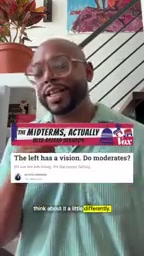
Since the 2024 election, the most noteworthy phenomenon in primaries has not been progressive strength, but the overall rout of the moderate camp. The establishment seems unable to consolidate its own forces, failing to produce competitive candidates or a unified strategy.
This shift in perspective is crucial. In the traditional narrative, progressives are portrayed as the aggressors, storming the gates; but from another angle, progressive victories have largely filled the vacuum left by the establishment. When moderates cannot offer voters a convincing alternative, progressives naturally occupy that space.
The Candidate Quality Dilemma
Looking at the candidates the establishment has put forward in these elections, the problem becomes immediately apparent. Andrew Cuomo in New York City, Janet Mills in Maine, and the Wisconsin gubernatorial primary all reflect the same issue: the establishment lacks fresh talent capable of inspiring voter enthusiasm and representing a future direction.
These candidates often carry the baggage of old politics and struggle to address voters' core concerns. When a party's mainstream faction can only rely on this type of candidate, its lack of internal organizational capacity and sense of direction becomes glaringly obvious.

Structural Roots of the Establishment's Organizational Decline
The Democratic establishment's organizational decline is not accidental but the result of multiple structural factors working in concert. First, the rise of small-dollar donation platforms (such as ActBlue) has fundamentally transformed the political fundraising ecosystem. Progressive candidates can reach millions of small-dollar donors directly through social media, bypassing traditional fundraising networks and Political Action Committees (PACs), undermining the economic leverage the establishment long wielded through funding allocation.
Second, social media has altered the power structure of political communication. Traditional party endorsements and mainstream media exposure are no longer the sole pathways to voter attention—a single viral tweet can be more effective than millions of dollars in television advertising. Third, since Hillary Clinton's 2016 defeat, Democratic moderates have failed to articulate a clear ideological vision suited to the Trump era; the slogan of "return to normalcy" struggles to ignite grassroots voter engagement. Together, these factors have created systematic shortcomings in the establishment's grassroots mobilization and candidate development.
The Vacuum Effect: Reordering the Causal Relationship of the Progressive Rise
Who Is Creating Political Opportunity
The key to understanding political dynamics lies in clarifying causation. On the surface, it appears that progressive offense has caused moderate retreat; but a more accurate reading may be that the moderates' self-dissolution has created the vacuum that enabled progressives to rise.
This analytical framework has deep theoretical foundations in political science. The Political Vacuum is an important concept in political science, referring to how when existing political forces cannot effectively respond to social needs, emerging forces naturally fill the gap. Italian political theorist Antonio Gramsci's theory of hegemony offers a classic articulation—when old political hegemony loses legitimacy but new hegemony has not yet been established, an "interregnum" emerges, a state where "the old is dying and the new cannot be born." In American political history, this vacuum effect has appeared multiple times: in the 1960s, the civil rights movement filled the space left by the decline of Southern conservative Democrats, while in the 1980s, the Reagan Revolution exploited the ideological vacuum left by the collapse of the Democratic New Deal coalition.
In other words, progressive victories are to a considerable extent a result, not a cause. If the establishment could regroup, put forward more attractive candidates, and articulate a clearer political agenda, the political space available to progressives might narrow significantly.

Progressive Rise and Moderate Collapse: Two Sides of the Same Coin
"You cannot tell one story apart from the other." The rise of progressives and the collapse of moderates are two sides of the same coin. Any analysis that emphasizes only one side will reach partial or even misleading conclusions.
This is particularly important for understanding the midterms. If media and commentators continue focusing on "the rise of socialism," they may underestimate the organizational crisis within the Democratic establishment itself—which is the more fundamental factor shaping the electoral landscape.
Midterm Election Outlook: Can the Establishment Fill the Leadership Vacuum
For observers tracking the direction of American politics, this perspective shift provides a more explanatory analytical framework. Midterm election outcomes depend not only on how many supporters progressives can mobilize, but more importantly on whether the establishment can address its own leadership vacuum and candidate quality problems.
If moderates continue to be mired in internal friction and unable to unite, the continued expansion of progressives is almost inevitable—not because their ideas are so mainstream, but because their opponents have absented themselves from the competition. Conversely, if the establishment can rebuild its organizational capacity, electoral dynamics might present a picture dramatically different from the current narrative.
Understanding this requires us to set aside the simplistic "progressives vs. moderates" confrontational framework and instead focus on the mechanisms by which power vacuums form within a party. This may be the correct key to interpreting American political transformation.
Key Takeaways
Related articles

EmbeddedSass for .NET: A Sass Compilation Solution Without Node.js Dependencies
EmbeddedSass for .NET uses the official Embedded Sass Protocol, enabling .NET developers to compile Sass/SCSS natively without Node.js. Learn how it works and integrates with ASP.NET.

San Francisco to Singapore Time Difference: The Trans-Pacific Routine of Silicon Valley Tech Workers
SF and Singapore are 15-16 hours apart, and frequent travel between them is now routine for tech workers. Explore the time difference challenges, AI industry globalization, and talent flows.

Anthropic Launches Official Claude Code Plugin Directory: A Curated High-Quality Extension Ecosystem
Anthropic launches claude-plugins-official, a curated directory of high-quality Claude Code plugins. Learn about its positioning, core value, and impact on the AI coding ecosystem.