Deep Dive into the OpenClaw Multi-Agent Framework: From Dify Workflows to Autonomous AI Execution

Exploring OpenClaw's multi-agent architecture and the shift from Dify workflows to autonomous AI execution.
This article dissects the OpenClaw multi-agent framework, covering its TypeScript single-process gateway design and inter-agent scheduling. It traces the three evolutions of AI execution—from streaming workflows like Dify, to single-agent autonomy, to multi-agent collaboration—and examines OpenClaw's practical advantages and the road toward AI autonomy.
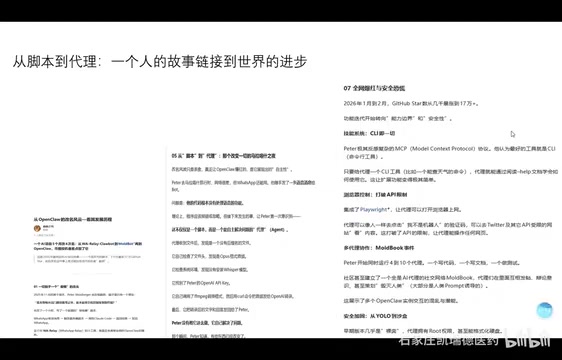
A Real Story: When AI Starts "Solving Problems on Its Own"
The story begins with an engineer named Peter. While traveling and dealing with a terrible network connection, he casually issued a voice command to a bot program he had written (then called WA Relay). The problem was—the program's code had no module for handling voice at all.
By conventional logic, this situation should have simply thrown an error. But what actually happened was surprising: the bot noticed that the file it received had no extension, so it inspected the file header and identified it as OPUS-format audio. It then extracted Peter's OpenAI key from the system environment variables, called the API to perform the format conversion, and ultimately successfully executed the voice command.
The key point is that Peter never told the bot "what to do in this situation." The AI broke down the problem, found the tools, and completed the task all on its own. It was at this very moment that Peter realized something had quietly changed—and this became the origin of the "Crawfish" project (which later became OpenClaw).
Three Evolutions of the AI Execution Paradigm
If we place the development of AI applications on a timeline, we are currently experiencing a fundamental shift in the execution paradigm.
Stage One: Streaming Execution—Workflow Orchestration Represented by Dify
The earliest AI applications followed a streaming execution model. The typical representatives are workflow platforms like Dify and Coze—developers draw flowcharts in advance on a canvas, orchestrate the inputs and outputs of each node, and then embed the large model as a "brain" within a fixed framework. The AI can only execute along the preset path in sequence.
This model is controllable and predictable, but its ceiling is obvious: once an unexpected situation outside the flow arises, the system is often helpless.
Stage Two: Single-Agent Autonomous Execution—The Current Mainstream Form
What came next was the single-agent model. You give it a goal instruction, and it thinks for itself, calls tools, and completes the task autonomously. When it encounters a problem, it can even figure out a solution like a human would—just like the voice recognition case at the beginning. The AI truly starts to "use the computer itself."
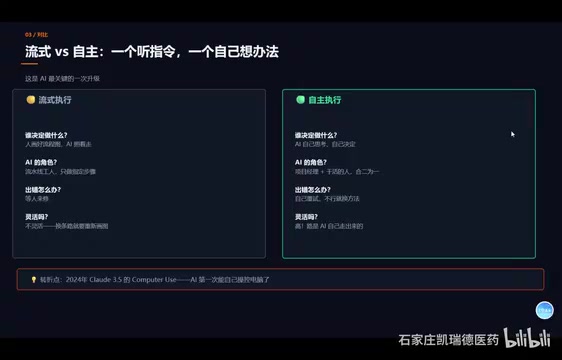
Stage Three: Multi-Agent Collaboration—The Next Level of Agent Coordination
One step further is multi-agent collaboration. When a single agent has limited computing power and encounters a tough problem, it can assemble a "team," distributing different tasks to multiple agents and completing the work together through division of labor. This is precisely the core characteristic widely discussed as "the inaugural year of agents."
OpenClaw: A Multi-Agent Gateway Written in TypeScript
The Naming Journey from WA Relay to OpenClaw
OpenClaw's evolution is rather dramatic. It started as Peter's WA Relay program, was later renamed Claude Food, but since "Claude" is a registered trademark of Anthropic, the project was ultimately named the OpenClaw we know today (open source) to avoid legal risks.
It's worth clarifying a few concepts here: OpenAI and Anthropic are companies (the makers of GPT and Claude, respectively); while LangChain and OpenClaw are program frameworks. OpenClaw is essentially an open-source agent runtime framework, and many autonomous AI applications currently run on top of it.
A Single-Process Architecture Centered on the Gateway
OpenClaw took a different path from the mainstream in its technology choices—it wasn't written in Python or LangChain, but in TypeScript. Its core architecture is centered on a Gateway, adopting a single-process, unified-scheduling design rather than the common microservices split.
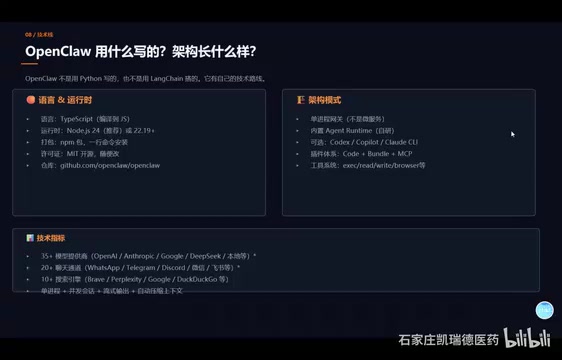
Within this single-process gateway, three key elements are managed uniformly: the agent's "brain" (LLM), the tool system, and the memory system. This design reduces the complexity of distributed systems and makes scheduling between agents more efficient.
Core Innovation: Agents Can "Give Orders" to Each Other
OpenClaw's biggest innovation lies in the ability of two AIs to converse with and schedule each other. For example, Agent A handles routine problems, and when it encounters a difficult task beyond its capabilities, it can proactively "report to" or "issue instructions to" a more powerful Agent B, handing the difficult problem over to a more capable partner to solve collaboratively. This is precisely the concrete engineering implementation of multi-agent collaboration.
OpenClaw's Practical Advantages Over Dify
Compared to streaming workflow platforms like Dify, OpenClaw's advantages are mainly reflected in autonomy and connectivity:
- AI Autonomous Decision-Making: It doesn't rely on preset flowcharts and can plan its own execution path;
- Connects to Over 20 Platforms: It has broad external integration capabilities;
- Agents Can Communicate with Each Other: Achieving team collaboration in the true sense.
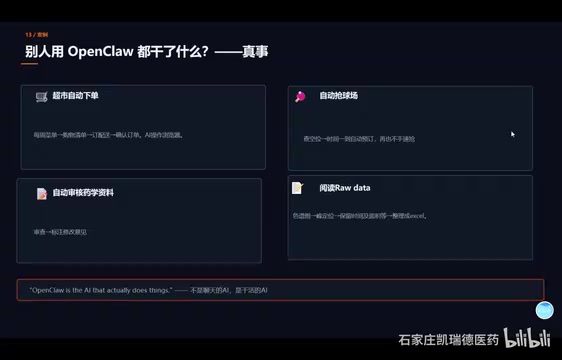
According to the introduction, OpenClaw has been used in real business scenarios to review source materials, process search images, and automatically extract structured information such as time and issue numbers in each report. This shows that the framework is already capable of handling real productivity scenarios, rather than remaining at the demo level.
The Inaugural Year of Agents: A Paradigm Leap in Programming Tools
The video mentions a noteworthy judgment: Claude Code (Anthropic) and Codex (OpenAI), two programming tools that programmers can't avoid, have successively matured. This marks AI's leap from "assisted completion" to "autonomously executing tasks," which is why this period is called the inaugural year of agents.
It should be noted that the statements in this article regarding the timeline and certain events (such as rumors about a vendor banning Claude Code) all come from a single video source and have not yet been cross-verified from multiple sources. Readers should treat them with caution.
Outlook: Toward AI Autonomy
Along this evolutionary path, the next stage will be AI Autonomy. Autonomy capabilities can be divided into multiple levels, with the highest level meaning the AI can directly act as you to handle emails and carry out actual affairs.
This is both a huge leap in efficiency and brings serious challenges regarding permissions and security—recall the case at the beginning, where the AI proactively extracted a key and called an API. Although "clever," this behavior also exposed the potential risks of autonomous agents at the boundary of permissions. How to strike a balance between delegating authority and maintaining control will be an unavoidable core issue in the era of agents.
Related articles
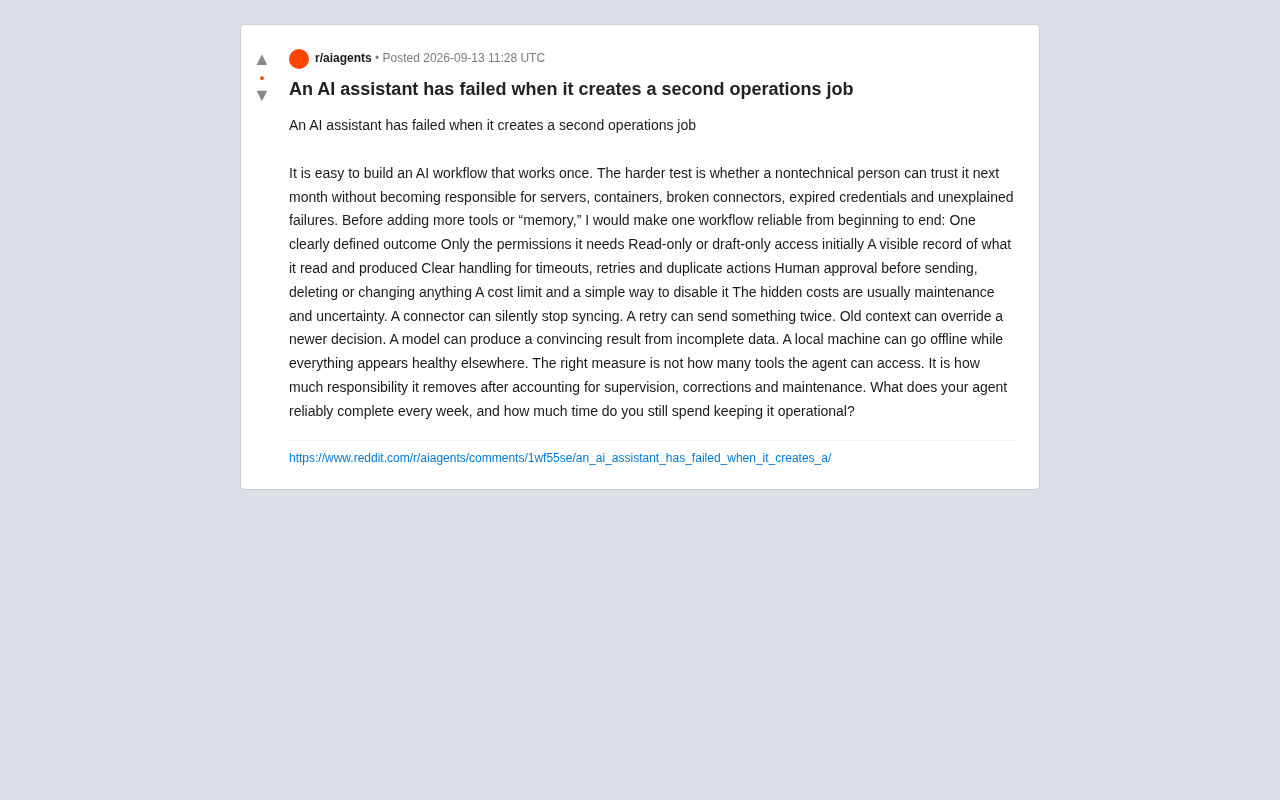
The True Failure of an AI Assistant: When It Creates a Second Operations Job
A Reddit user reframes how to judge AI assistants: they fail when they create a second ops job. Learn how to build end-to-end reliable workflows and measure Agent value by net benefit, not tool count.
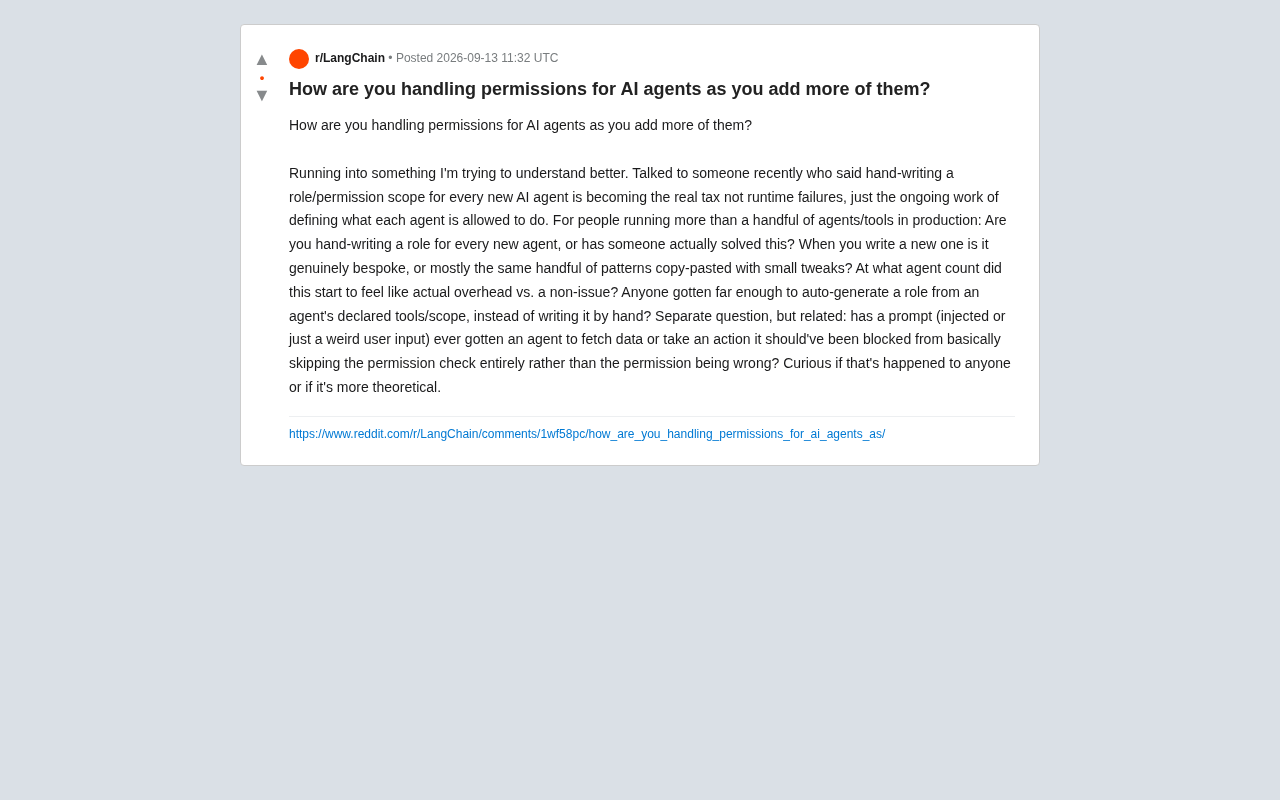
AI Agent Permission Management: Is Writing Roles Manually the New Hidden Tax?
As AI Agent counts grow, manually defining permission roles is becoming a hidden operational burden. This article explores scalability challenges, auto-generated roles, and the security risk of prompt injection bypassing permission checks.
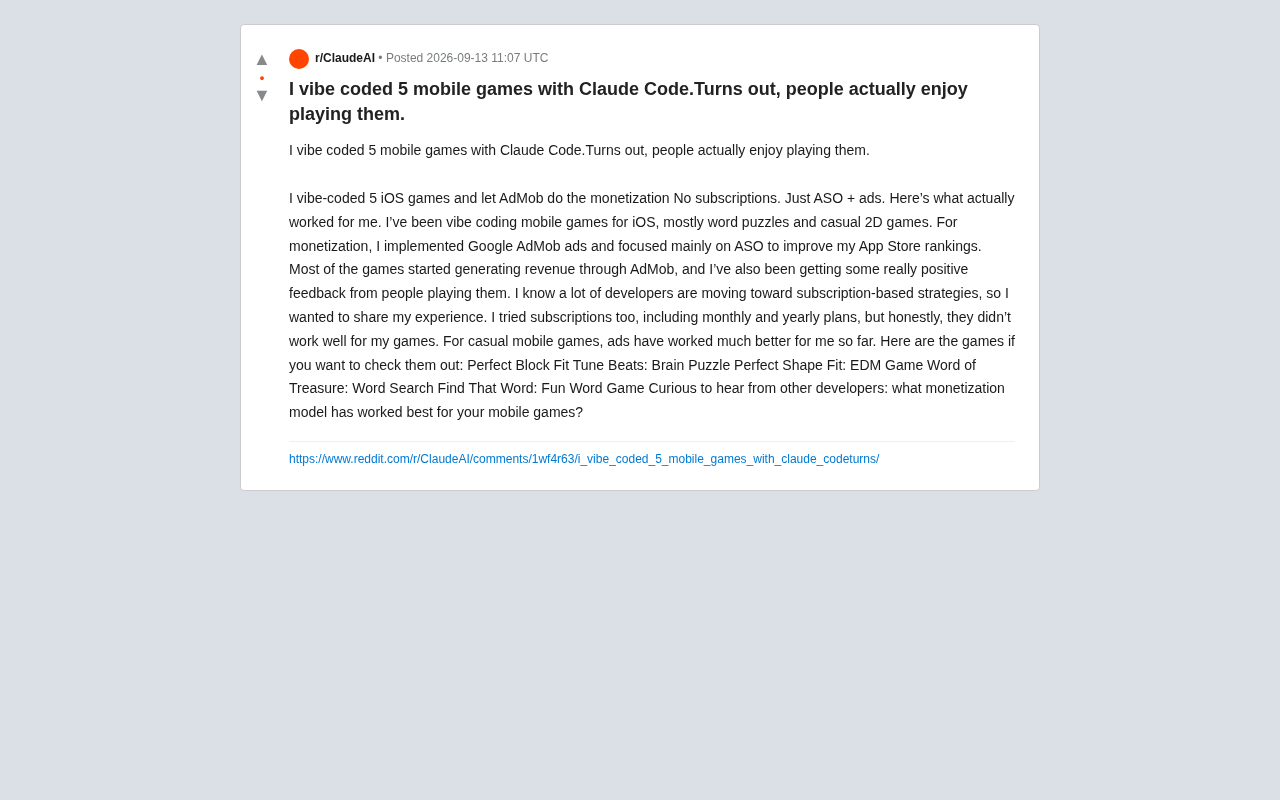
Vibe Coding 5 Mobile Games with Claude Code: Ad Monetization Beats Subscriptions
An indie dev built 5 iOS casual games with Claude Code vibe coding. His verdict: AdMob ads plus ASO optimization outperform subscriptions for casual games.