DeepMind Genie 4 Released: Turn a Single Image into a Playable World with Ambient Sound
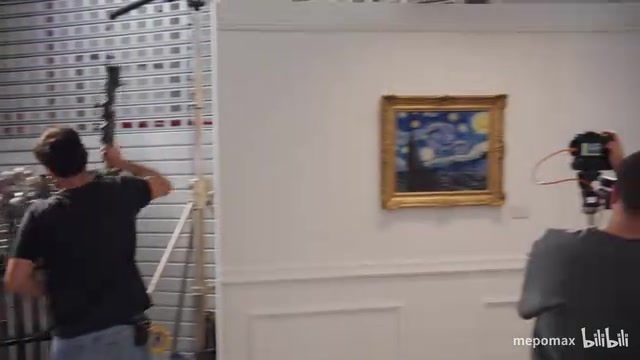
Genie 4 turns images or text into real-time controllable dynamic worlds with ambient sound, pushing world models toward interactivity.
Google DeepMind releases Genie 4, calling it the most realistic and interactive world model to date. With one image or text prompt, users enter a real-time explorable dynamic environment within seconds, fully controlling their character, moving the camera, directing details, and hearing ambient sound matched to the visuals. Its mechanism is "continuous prompting + real-time evolution," pursuing causal coherence and interactivity rather than mere visual coherence, distinguishing it from traditional video generation models. Genie 4 is also explicitly positioned for virtual robot training, providing low-cost, parallelizable simulated scenarios for embodied intelligence. The article argues this marks a shift in world model competition from visual quality to interaction depth, approaching a hybrid of "game engine + generative model," though real-time stability, long-horizon consistency, and compute cost remain key obstacles to productization.
From Static Image to Controllable World: What Genie 4 Brings
Google DeepMind recently released Genie 4, which it calls "the most realistic and interactive world model to date." Based on the demos, users only need to provide an image or a text prompt, and Genie 4 transforms it into a dynamic environment that can be explored in real time, complete with ambient sound. This means the output of a world model is no longer just a video clip, but an interactive space that can be controlled, altered, and "played."
The key line in the official description is "Keep prompting and Genie 4 will work out what happens next" — keep giving prompts, and the model figures out what happens next on its own. This "prompt-driven + real-time evolution" mechanism distinguishes Genie 4 from traditional video generation models: the latter pursue visual coherence, while the former pursues causal coherence and interactivity.
Core Capabilities: Hearable, Visible, Shapeable
Real-Time Exploration and Character Control
The most intuitive breakthrough of Genie 4 is the sense of "being inside." In the demo, a few seconds after a text description, users find themselves inside the scene with full control over their character. The official copy reads: "A few seconds later, you're inside it, with full control over your character." Behind this is the combination of real-time generation, low-latency rendering, and interactive response — the world model must generate the next frame the instant the user acts, rather than pre-rendering a fixed video.
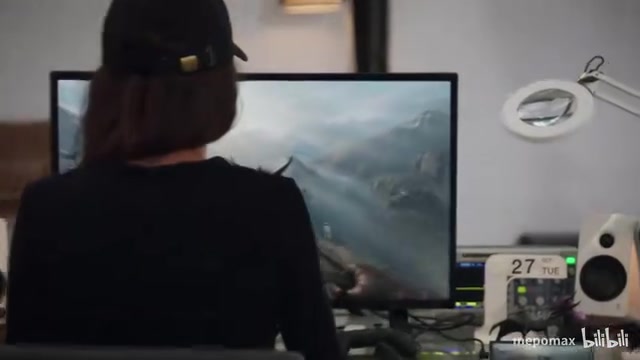
Judging from the technical path, the Genie series continues the "generative interactive environment" approach, but Genie 4 brings sound into the generation scope as well. Adding ambient sound is more than a nice touch: it means the model has a deeper understanding of the scene's physical properties, materials, and spatial relationships — otherwise it would be hard to generate sound that matches the visuals.
World Model is a class of generative models that learn the dynamics of an environment and can predict "given the current state and action, how the next state changes." Unlike video generation models that only pursue visual coherence, world models emphasize action conditioning: the output must respond causally and consistently to user input (movement, turning, interaction), and is therefore often regarded as an internal simulator for agents to plan, imagine, and make decisions. Mainstream implementation paths include diffusion-based frame-by-frame generation, autoregressive token-based sequence prediction, and latent-space dynamics models. The key metrics for evaluating a world model are not only image quality but also long-horizon consistency, action controllability, physical plausibility, and inference latency — these are precisely what determine whether it can move from demo to interactive product.
Real-time generation and low-latency inference are the core engineering constraints that distinguish interactive world models from offline video generation. Video generation can be batch-rendered and tolerate tens of seconds of waiting; an interactive environment requires every frame to be produced within tens of milliseconds of user action, or the sense of "being inside" immediately collapses. This typically relies on few-step distillation (compressing multi-step diffusion into very few sampling steps), caching and incremental generation (reusing previous-frame features rather than generating from scratch), key-value caching, and operator optimization for inference hardware. There is tension between latency and consistency: the fewer steps, the more prone the image is to jitter and drift, and errors accumulate over long interactions, causing the scene to "collapse." Therefore, real-time performance, stability, and compute cost often need to be weighed jointly.
Scene Simulation and Robot Training
The official announcement explicitly mentions that Genie 4 can simulate scenes to help robots practice tasks in virtual environments so they can eventually perform work in the physical world. This is one of the most imaginative application directions for world models: providing embodied intelligence with a low-cost, massively parallel training ground.
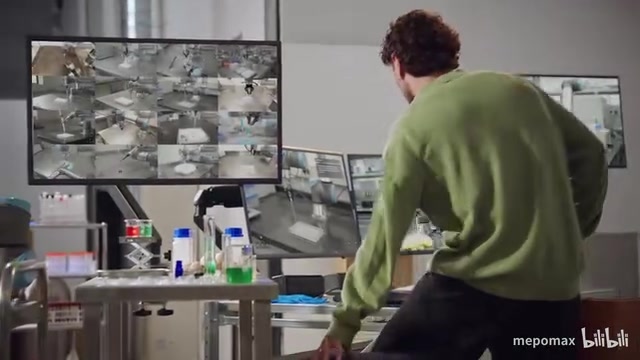
Compared with collecting data in the real world, virtual environments can generate rare scenarios on demand, adjust physical parameters, and repeatedly execute dangerous tasks — this is hugely significant for robot learning. However, sim-to-real transfer remains an industry challenge, and public information is currently insufficient to judge whether the "world" generated by Genie 4 is physically accurate enough to support reliable robot training.
Sim-to-real refers to the process by which policies or models trained in simulation environments retain performance after being transferred to the real physical world. The core difficulty is the "reality gap": simulators struggle to accurately reproduce real-world physical parameters (friction, deformation, sensor noise, lighting changes, etc.), causing policies that perform well in virtual environments to fail on real machines. Common mitigation methods include domain randomization (randomly perturbing physical parameters and visual appearance during training to force the policy to learn robustness), system identification (calibrating simulation parameters with real data), and online adaptation. For world models, in addition to physical accuracy, there are also the inconsistencies and hallucination problems of the generated content itself; therefore, if Genie 4 is to be truly used for robot training, it must demonstrate that the "world" it generates is credible enough in key dimensions such as contact dynamics and object permanence.
The World Model Race Enters the "Interactive" Stage
The release of Genie 4 pushes the focus of world model competition from "visual quality" to "interaction depth." Over the past year, many organizations have been exploring the shift from video generation to playable environments, but most results remain at the level of short clips and low interactivity. Genie 4's claimed real-time control, camera movement, ability to "direct every detail," and instant world changes point to a hybrid form closer to a "game engine + generative model."
You may not have noticed that the official copy repeatedly emphasizes "worlds you can hear, see, and shape," highlighting a creative paradigm: users are no longer viewers but directors of the world. This positioning naturally fits scenarios such as games, film and television previsualization, and educational simulation. But it should also be noted that the demo content is carefully curated, and generation stability in real use, consistency over long interactions, and compute cost remain key variables determining whether it can be deployed.
How Far Are We from "Everyone Can Build Worlds"
The direction Genie 4 demonstrates is clear enough: one image, one sentence, and you can generate a world you can hear and play. But from demo to productization, there are still several hurdles. Real-time generation places extremely high demands on inference latency, long interactions tend to accumulate errors and cause the world to "collapse," and semantic alignment between ambient sound and visuals also requires finer control.
DeepMind concludes its copy with: "What happens next? It's up to you." This sentence is both a product manifesto and a statement of the essence of world models — what it delivers is not content, but a space of possibilities. Whether this space can be delivered stably, cheaply, and reliably to ordinary creators and robotics engineers will be the most noteworthy question after Genie 4.
Related articles
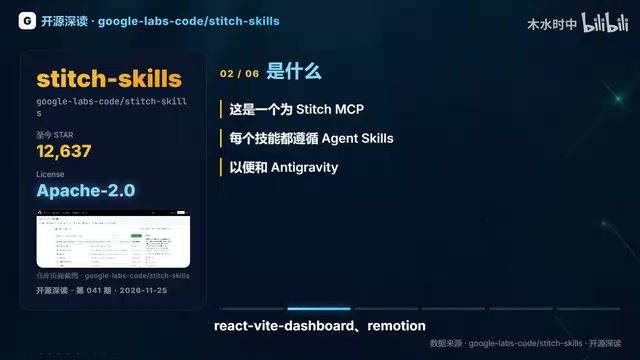
Google Stitch Skills: Connecting Coding Agents to the Design Workflow
Google Stitch Skills is an Agent Skills library following the open standard, adding a design-to-code workflow to the Stitch MCP Server. This article breaks down its three skill groups, SKILL.md directory structure, installation paths, and dependency pitfalls.

40.5-Inch Color E-Paper Art Frame: An Art Display You Charge Once a Year
The Ink Poster Tella 40.5-inch color e-paper art frame uses the E Ink Spectra 6 full-color solution: A1 format, no backlight, no noise, about one charge a year, 2,000+ licensed artworks built in, and automatic adaptation of phone photos.

Jingle Jam Memories: RT's Awkward First Encounter with Lewis
RT shares his awkward first Jingle Jam experience: unexpectedly pushed into the studio, meeting Lewis and Yogg's cast, and Toddy appearing in armor.