DeepMind Releases Genie4 World Model: Real-Time Reshaping and Breakthroughs in Robot Training
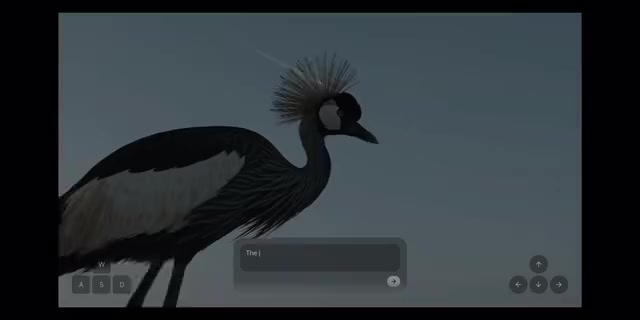
DeepMind releases Genie4 world model, highlighting interactive image-generated environments and virtual robot training.
DeepMind has released Genie4, a next-generation interactive world model whose promotional video shows it can turn static images into explorable dynamic environments with ambient audio, with generation latency reduced to an interactive level. It supports real-time scene reshaping, character interaction, and chain reactions between behavior and scene logic. Beyond entertainment, it is positioned as a virtual robot training tool for sim-to-real transfer. However, parameters, training data, and release timing remain undisclosed, and generation quality and long-horizon physical consistency still need verification.
DeepMind recently released its next-generation interactive world model, Genie4. The official promotional video showcases a range of capabilities, from generating explorable environments from images and real-time scene reshaping to virtual robot training. As the current "most realistic and most interactive" world model, Genie4 attempts to push the "prompt is a world" experience to new heights.
From Image to Dynamic World: Genie4's Core Capabilities
The promotional video opens by stating Genie4's positioning: building environments and simulated worlds requires only continuous prompting, and the model will infer subsequent developments. Users can transform a static image into a dynamic environment and immediately enter it to explore. According to the video description, the generated environments also come with ambient sound effects, meaning vision and hearing are modeled in sync.
This "image-to-explorable-world" pipeline dramatically lowers the barrier to 3D scene creation. Traditional games or simulation environments require collaboration across art, modeling, engine, and many other stages, whereas Genie4 compresses this process into a single prompt and a few seconds of waiting. The promotional video emphasizes "seconds later, you're in it," suggesting that generation latency has been brought within an interactive range.
World Model refers to a class of generative models capable of learning and predicting how environment states evolve with actions or time, rather than merely fitting static data distributions. It typically conditions on observations and actions from several past frames to predict future frames or latent states, enabling an agent to simulate and plan "in its head." Compared with video generation models, world models place greater emphasis on action controllability and causal consistency—each input step from the user or agent should produce predictable, continuable environmental changes. The Genie series follows exactly this line of thinking, transforming video generation capabilities into an interactive environment simulator, so its evaluation criteria include not only visual realism but also long-horizon consistency, physical plausibility, and response latency.
Real-Time Interaction and Scene Reshaping
Another key word for Genie4 is "real-time." Users can not only create scenes, move the camera, and guide details, but also observe the world changing in real time during operation. The video shows interactive segments such as a character entering a castle and encountering traps, indicating that the model can handle the chain reactions between character behavior and scene logic.

This real-time reshaping capability is of great significance to content creators and game prototyping. In the past, adjusting a scene required re-rendering or manual editing, whereas Genie4 allows direct changes to world states during exploration, merging "playing" and "creating" into one. The line in the promotional video, "What happens next? You decide," summarizes this interaction paradigm.
Autoregressive generation and long-horizon consistency are the core difficulties of real-time interactive world models. If the model generates subsequent frames or chunks based on historical context, errors accumulate over time, leading to scene drift, disappearing objects, or texture mutations. To solve this problem, explicit memory mechanisms, keyframe anchoring, or state compression and updating in latent space are usually required to keep spatial layout and object identity stable over minutes or even longer interactions. The demonstrations of "real-time reshaping" and "chain reactions" in the Genie4 promotional video essentially test this ability to maintain causal chains under continuous prompting, rather than single-frame image quality.
Virtual Robot Training: From Games to Reality
Genie4's application scenarios go beyond entertainment. The promotional video explicitly states that the model can simulate scenarios to help robots practice tasks in virtual environments so they can perform work in the physical world in the future. This direction aligns closely with a hotspot in current embodied intelligence research: training robot policies at low cost and safely in simulation, then transferring them to real environments.
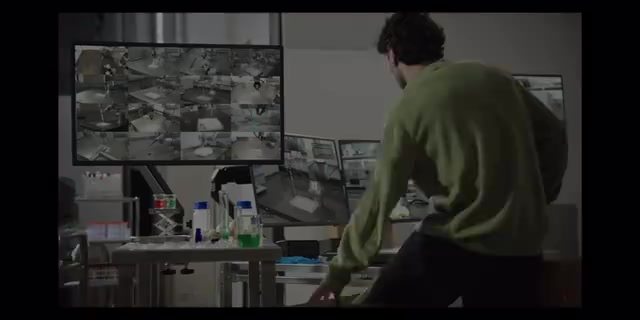
World models provide robots with more than static scenes—they provide interactive, simulatable dynamic environments. Robots can repeatedly trial and error within them, learning object manipulation, navigation, and task planning. If Genie4's realism and real-time performance continue to improve, it is expected to become an important tool in robot training pipelines.
The Sim-to-Real Gap is a classic problem in embodied intelligence: policies trained in virtual environments often fail due to differences in rendering appearance, physical parameters, sensor noise, and the real world. World models are regarded as a potential solution because they can directly learn environmental dynamics from real video data, generate interactive scenes closer to the real distribution than traditional graphics engines, and support domain randomization—changing lighting, materials, and object layouts to enhance policy robustness. However, world models themselves may also introduce unrealistic physical hallucinations, so their value in robot pipelines depends on the consistency between generated environments and the real world in key dimensions such as contact mechanics and occlusion relationships.
Multimodal Experience and Creative Expression
Beyond robots and games, Genie4 also targets broader storytelling and interactive experiences. The promotional video shows segments such as role-playing and attacking scenes, suggesting that the model supports users intervening in narratives in first person or third person.
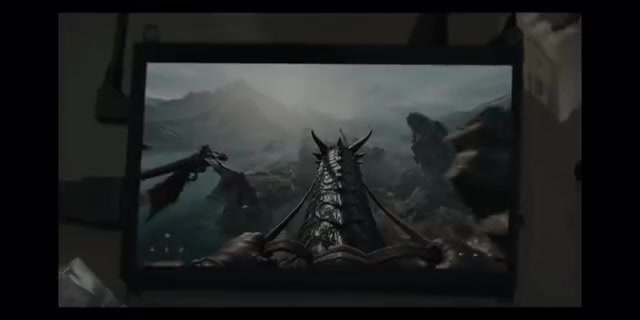
From "describing an interactive experience" to "seconds later you're inside it," Genie4 attempts to blur the boundary between creation and experience. For fields such as film previsualization, educational simulation, and immersive entertainment, this capability may give rise to new content forms. However, the promotional video does not disclose the model's specific parameters, training data, or release timeline, and actual usability and generation quality still need subsequent verification.
A New Signal in the World Model Race
Genie4's release continues DeepMind's布局 in the world model direction. From the Genie series to broader generative environment research, its goal has always pointed to "an interactive general-purpose world simulator." The end of the promotional video mentions that "our first world is also constantly evolving," alluding to the feedback loop between the real world and the virtual world.
Currently, the world model track is highly competitive, with many organizations exploring the combination of video generation and interactive simulation. The real-time reshaping, ambient sound effects, and robot training emphasized by Genie4 form a differentiated combination of capabilities. But the promotional video is essentially a capability demonstration, and there is still a gap before developers can actually call it. Whether the model can stably generate long-horizon interactions that conform to physical laws will be the key test of its value.
One-line Summary
DeepMind releases the Genie4 world model, featuring image-to-interactive-environment generation and virtual robot training.
Paragraph Summary
DeepMind has released its next-generation interactive world model, Genie4. The promotional video shows that it can transform static images into explorable dynamic environments with ambient sound effects, with generation latency reduced to an interactive level. The model supports real-time scene reshaping during exploration, drives character interactions, and handles chain reactions between behavior and scene logic. Beyond entertainment and content creation, Genie4 is also positioned as a virtual robot training tool, allowing robots to learn through trial and error in simulated environments before transferring to the physical world. Its "prompt is a world" interaction paradigm blurs the boundary between creation and experience, but the official team has not disclosed parameters, training data, or release timing, and actual generation quality and long-horizon physical consistency remain to be verified.
Related articles
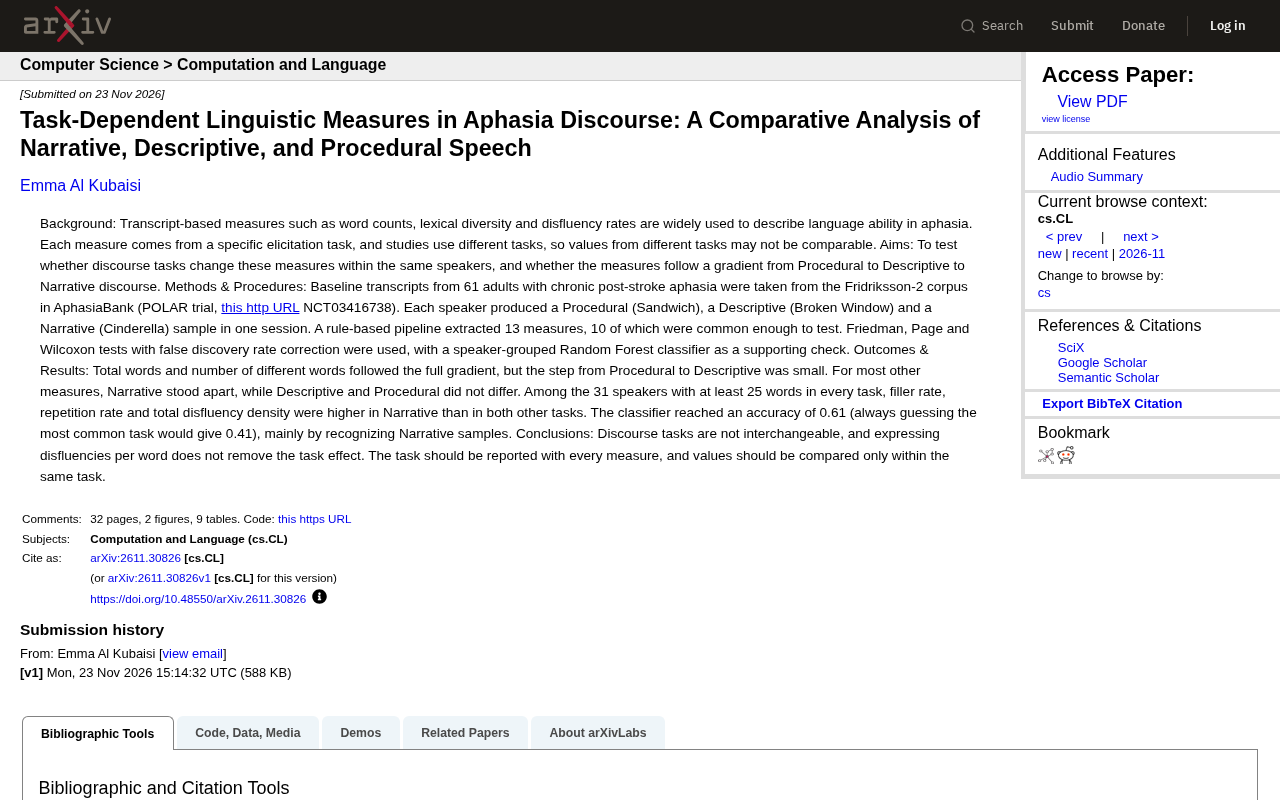
Aphasia Discourse Analysis: Language Metric Differences Across Tasks
A study of 61 adults with aphasia found that narrative, descriptive, and procedural discourse tasks yield non-interchangeable language metrics. Total words and lexical diversity show a gradient; disfluency is higher in narrative tasks. Each metric must be labeled by task type and compared only within the same task.
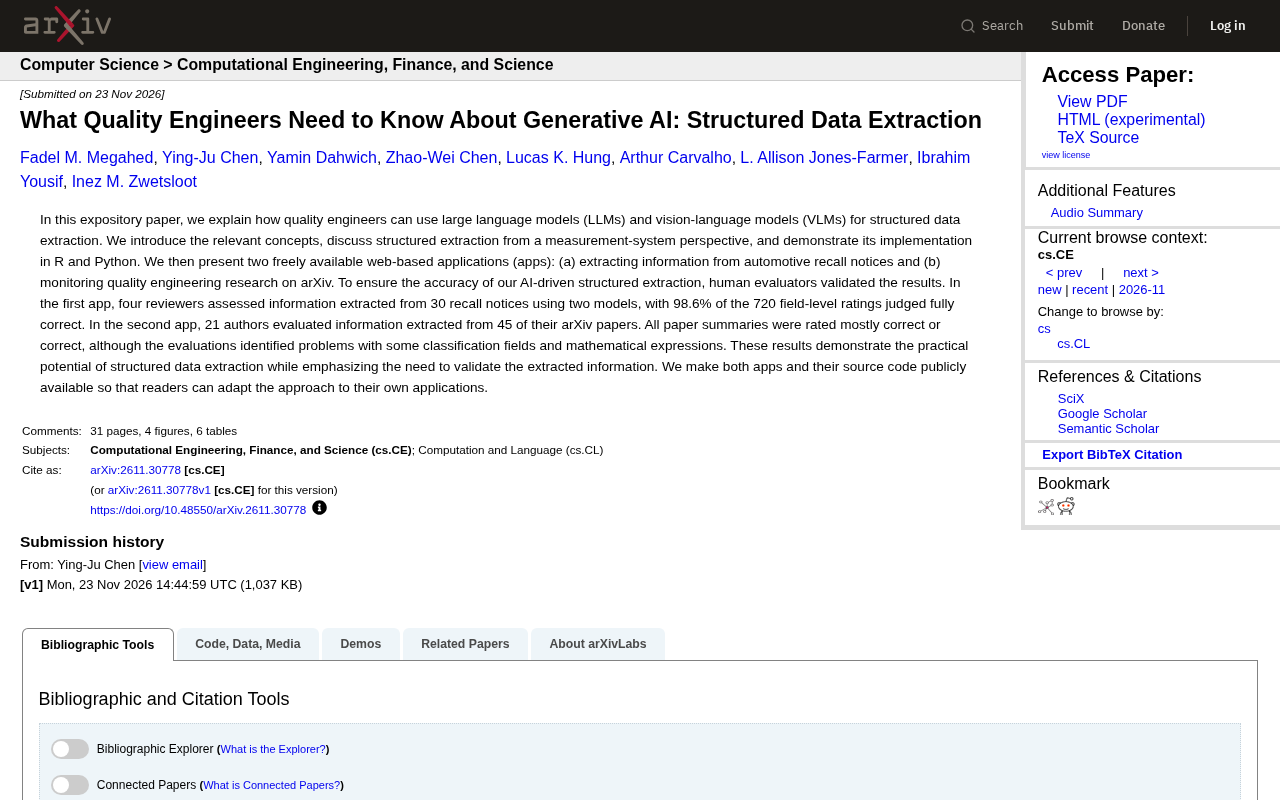
Must-Read for Quality Engineers: A Practical Guide to Structured Data Extraction with Generative AI
A paper shows how quality engineers use LLMs and VLMs for structured data extraction, validated through two web apps, with R and Python implementations.

CocoonBench: Can Multilingual Search Agents Break Out of the Language Information Cocoon?
CocoonBench evaluates whether multilingual search agents can escape the language information cocoon. Tests show 10 advanced models range from 33.8% to 69.7% accuracy, with the strongest system still below 70%, revealing key challenges in connecting cross-lingual evidence.