DeepSeek Harness Goes Open Source: An AI Agent Foundation Where Everything Is a Plugin
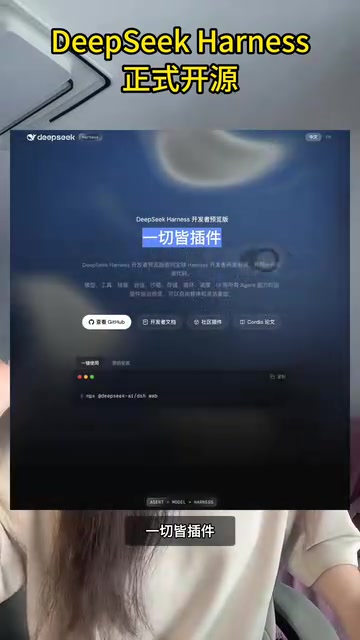
DeepSeek Harness open-sources a fully plugin-based AI agent framework supporting 20+ LLM providers.
DeepSeek Harness is an open source AI agent framework built around the philosophy of "everything is a plugin." Its kernel architecture abstracts models, tools, skills, image generation, sandbox scheduling, and even UI logic into freely composable plugins, eliminating the tight coupling that plagues traditional agent frameworks. It supports 20+ LLM providers for true vendor neutrality and launches a local Web UI with a single command. Its core value lies in making an enterprise-grade AI agent foundation available to all developers as open source.
DeepSeek Harness quickly became a hot topic in the AI developer community after officially launching on GitHub. According to coverage by content creators on Bilibili, the project attracted intense community attention the moment it went live. Its design philosophy can be distilled into a single phrase: everything is a plugin. For developers who have long struggled with tightly coupled agent frameworks, this thoroughly modular approach is worth a closer look.
Note: GitHub star counts mentioned in the source material are from a single secondary source. Please refer to the official repository for accurate figures — this article makes no claims about specific numbers.
Core Design: Everything Is a Plugin
The most striking aspect of DeepSeekAd Harness is how deeply it commits to the plugin model at the foundational level. The project is built on a kernel architecture (referred to in the original material as the Cardis kernel — please consult official documentation for the definitive naming). On top of this kernel, models, tools, skills, image generation, sandbox scheduling, and even the UI and runtime logic are all abstracted into freely composable plugins.
This means developers no longer need to touch the underlying code just to swap out a capability. Want to change the model? Just swap the plugin. Want to add a tool? Mount a new module — no need to modify the core runtime. This design brings a "building-block" development experience to the agent framework level, dramatically reducing the cognitive overhead of customization and maintenance.
From an engineering perspective, the greatest value of this kind of decoupling is long-term sustainability. Traditional agent projects tend to have model interfaces, tool calls, and UI logic so tightly intertwined that upgrading one part ripples across the entire system. A plugin-based architecture lets each capability unit evolve and be replaced independently — a critical advantage for production environments that need to be maintained over time.
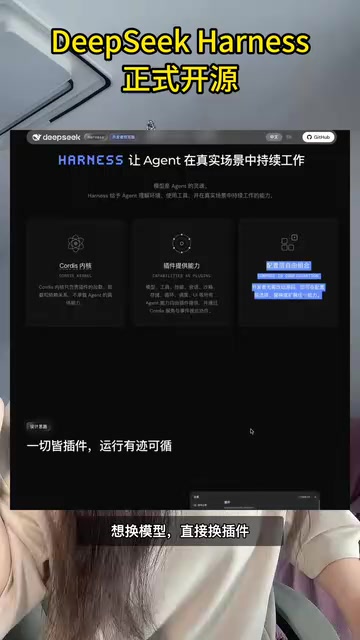
Plugin Architecture is a mature software engineering pattern whose core idea is to decompose system functionality into independent modules that communicate through standardized interfaces, with no dependency on each other's internal implementations. This pattern is especially important in AI agent frameworks: traditional frameworks often deeply couple model calls, tool execution, memory management, and conversation logic into a single code path, meaning that replacing any one component requires understanding and modifying the entire call chain. Early versions of LangChain are a good example — swapping the underlying LLM sometimes required simultaneously updating prompt templates, output parsers, and chain logic, precisely because of this tight coupling. Harness treats its kernel as a pure orchestration layer with no concrete capabilities of its own. All capabilities are mounted as peer-level plugins, severing this coupling at the architectural level.
Multi-Model Support: Not Just DeepSeek
Despite the DeepSeek branding, Harness is not limited to DeepSeek's own models. According to the project's introduction, it supports integration with over 20 mainstream LLM providers, giving developers the freedom to switch based on actual needs.
This is a pragmatic stance in today's LLM ecosystem. Different tasks call for different trade-offs around cost, speed, and capability. Making models themselves into swappable plugins means developers can flexibly orchestrate multiple providers within the same framework, without being locked into a single vendor. For teams working on AI benchmarking, comparative experiments, or multi-model collaboration scenarios, this openness directly determines how broadly the framework can be applied.

Why Vendor Neutrality Matters
Vendor neutrality is not a new concept, but frameworks that truly implement it at the foundational level are rare. When both models and tools become peer-level plugins, the framework itself is reduced to a pure orchestration and scheduling layer, maximizing the developer's freedom of choice. This is a key differentiator between Harness and closed solutions that are bound to a single model.
Vendor lock-in is a well-known risk for enterprises adopting cloud services or AI platforms: once the underlying model interface, data format, or billing logic is deeply bound to a specific provider, the cost of migration can become prohibitively high. In the LLM space, this problem is especially acute — different providers have varying API signatures, context length limits, and function-calling formats, meaning that even switching between models with similar capabilities can require rewriting substantial amounts of adapter code. The widespread adoption of OpenAI-compatible API standards is the community's de facto response to this problem. By encapsulating models as peer-level plugins, Harness effectively enforces interface standardization at the framework layer — developers only need to maintain the plugin adapter, and business logic never needs to be aware of differences between underlying models.
Getting Started: Launch with One Command
Harness has also lowered the barrier to entry. A single command is all it takes to launch the local Web UI, making it truly out-of-the-box. Developers can have an interactive agent workbench running without any complex configuration.

This kind of "zero-friction" first experience is critical for an open source project's adoption. Many technically excellent frameworks have lost large numbers of potential users simply due to cumbersome deployment. The combination of a local Web UI and a one-line launch command minimizes the cost of that first encounter, allowing even non-hardcore developers to quickly evaluate what the framework can do.
Why This Matters
To put it plainly, DeepSeek Harness is more than just another open source agent framework. It essentially makes an "enterprise-grade AI agent foundation" available to every developer. In the past, this kind of infrastructure was typically a closely guarded, closed-source core asset for large companies. Open sourcing it means that small teams and individual developers can now build on top of a mature architecture from day one.
For developers building AI evaluation tools or coding assistants, this plugin-based foundation provides a unified experimental platform: models are swappable, tools are pluggable, the UI is customizable — virtually every layer has room for extension. Of course, real-world stability, documentation quality, and the health of the community ecosystem will all take time to prove out. Interested developers are encouraged to visit the official repository directly to verify and evaluate.
"AI agent infrastructure" (Agent Infrastructure) typically refers to the framework layer that provides foundational capabilities such as multi-turn conversation management, tool-call orchestration, memory and state persistence, and multi-model routing. Building this layer involves handling a large number of engineering details: how to ensure idempotency in tool calls, how to compress context in long conversations, how to coordinate multiple concurrent subtasks, and more. The infrastructure that large companies have built up internally is typically battle-tested at production scale but invisible to the outside world. When this kind of foundation is released as open source, small and medium-sized teams can skip months of foundational work and focus directly on business logic. That is its core value to the developer community — not a new chatbot, but a proven engineering bedrock.
Summary
Built around the philosophy of "everything is a plugin," DeepSeek Harness achieves full-stack modularity across models, tools, skills, and UI through its kernel architecture. It supports free switching among 20+ LLM providers and lowers the barrier to entry with a one-command local Web UI launch. For developers looking to build AI applications on an open, extensible foundation, this is an open source project worth watching — and worth trying out firsthand.
Related articles
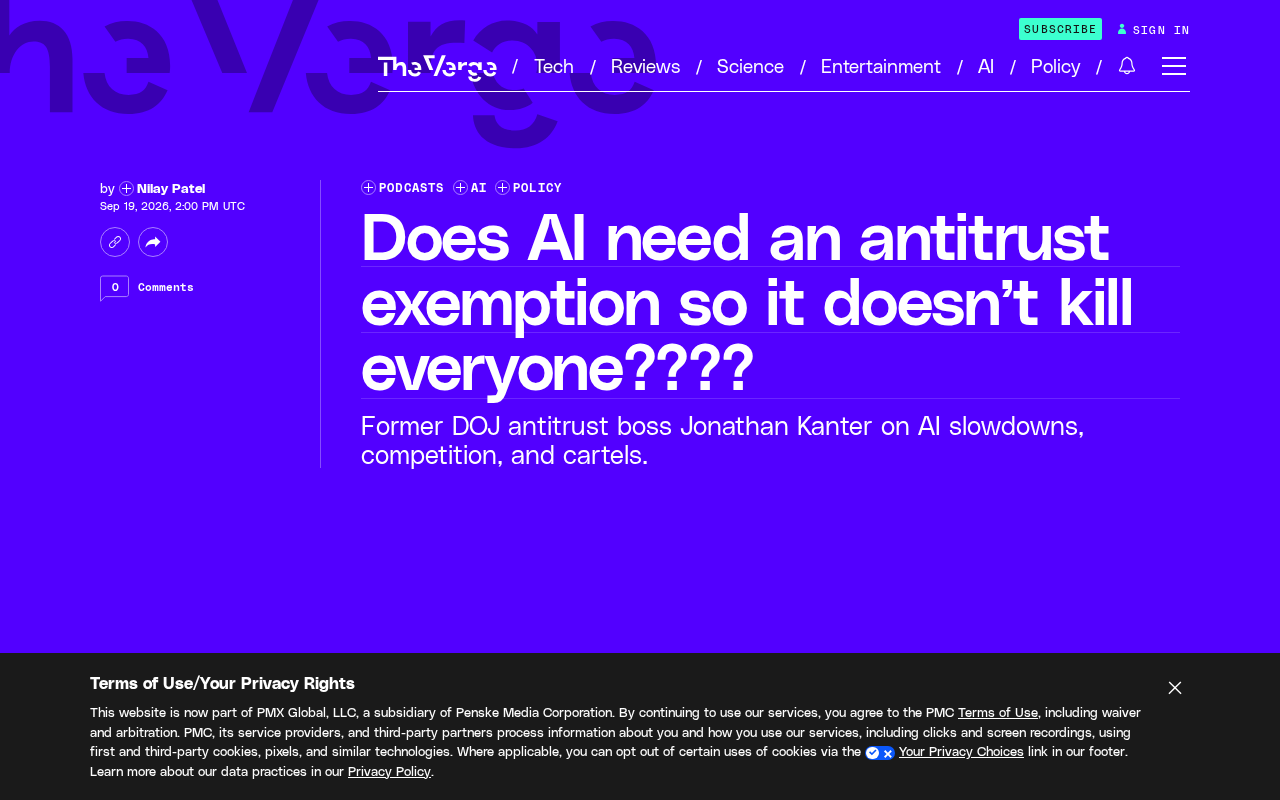
Does AI Need Antitrust Immunity to 'Avoid Destroying Humanity'? A Warning from the Former DOJ Antitrust Chief
Former DOJ Antitrust Chief Jonathan Kanter warns on the Decoder podcast: should AI companies get antitrust immunity for 'safety'? A deep dive into the risks.
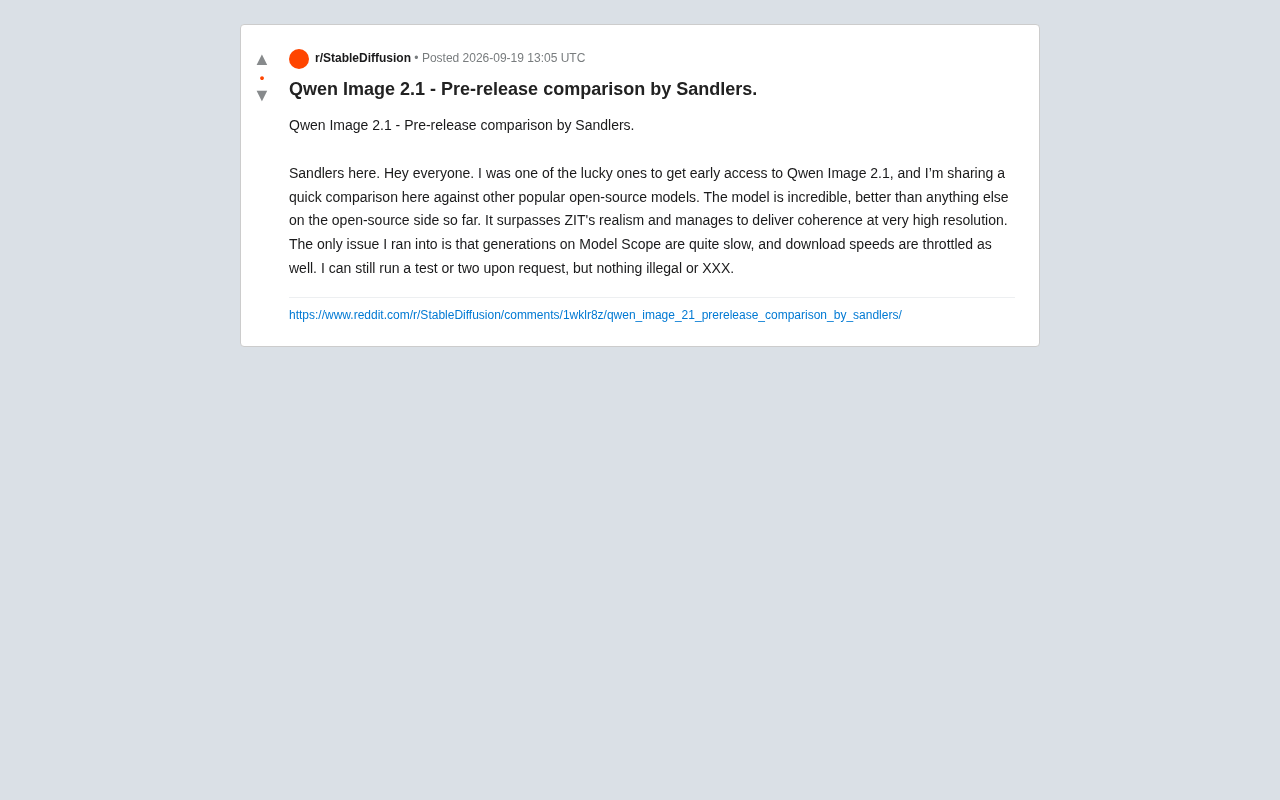
Qwen Image 2.1 Early Access: A New Benchmark for Open-Source Image Generation?
Reddit user Sandlers shares an early look at Qwen Image 2.1, praising its realism over ZIT and high-res coherence, while noting slow speeds and throttling on ModelScope.

DraftKings Uses AI to Target the Most Likely Losers: The Ethics Debate Behind the Algorithm
DraftKings reportedly uses AI to identify and target the most loss-prone gamblers. A technology that could protect addicts is being weaponized for precision marketing — raising urgent AI ethics questions.