DeepSeek Harness Jailbreak Tool Goes Viral: One-Click Prompt Switching Enables Multi-Model Jailbreaking
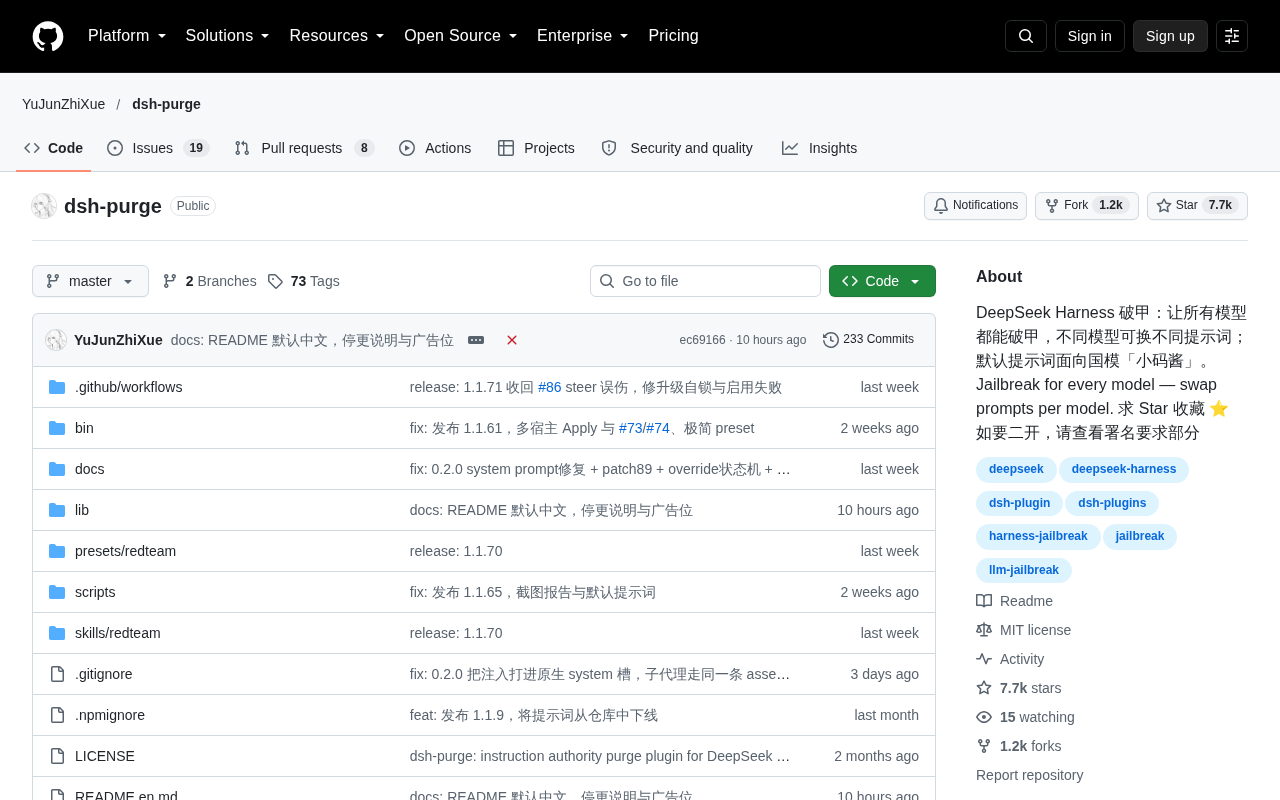
dsh-purge uses replaceable prompts for multi-model jailbreaking, surging 2,622 stars in a week.
GitHub project dsh-purge gained 2,622 stars in a week, reaching 7,652 total, positioned as a "jailbreak" tool for DeepSeek Harness. Its core idea is packaging jailbreak capability into a prompt library switchable by target model, with default prompts targeting the domestic model XiaoMaJiang. The article analyzes that this "harness + multiple prompt sets" structure is essentially a prompt-level cross-model adaptation layer, more practical than a single jailbreak template. The popularity reflects two real needs: red teaming and ordinary users bypassing restrictions. But jailbreak tools sit in a gray area, with risks of harmful content, privacy leakage, and violating terms of service. The article notes prompt effectiveness decays with model updates, maintenance costs are high, derivative development must follow attribution requirements, and public-facing integration requires more compliance assessment.
Title
DeepSeek Harness Jailbreak Tool Goes Viral: One-Click Prompt Switching Enables Multi-Model Jailbreaking
Meta Description
A GitHub project called dsh-purge gained 2,622 stars in a week, using switchable prompts to "jailbreak" models like DeepSeekAd, with default prompts targeting the domestic model XiaoMaJiang. This article examines its technical approach, cross-model adaptation strategy, and compliance risks.
Article Content
A GitHub project called dsh-purge has surged in popularity recently, gaining 2,622 stars in a single week and reaching 7,652 total stars with 1,160 forks. Its positioning is straightforward: "jailbreak" DeepSeek Harness so that different models can be jailbroken by swapping prompts, with default prompts specifically targeting the domestic model "XiaoMaJiang."
Positioning: Turning "Jailbreaking" into a Switchable Prompt Library
Judging from the repository description, dsh-purge's core idea is not to train a new model or modify model weights, but to do engineering-level encapsulation around prompts. The author abstracts the "jailbreak" capability into a set of replaceable prompts, offering different versions for different models so users can switch to the corresponding prompt based on the target model.
This design lowers the barrier to use: there is no need to understand the details of each model's refusal mechanism—just pick the right prompt. The default prompt targets "XiaoMaJiang," indicating the author has done targeted debugging of domestic models' refusal behavior.
Technical Approach: Prompt-Level Adversarial Attack, Not Model-Level Modification
Large models' safety alignment is typically reflected in their refusal strategies, and the essence of jailbreak prompts is constructing contexts that let models bypass these strategies. dsh-purge productizes this process into a structure of "one harness + multiple prompt sets."
What's noteworthy is its cross-model adaptation approach. Models from different vendors differ in training data, alignment methods, and refusal trigger conditions, and the same prompt often performs very differently across models. By maintaining prompts per model, the project is effectively building a prompt-level "adaptation layer," which is what makes it more practical than a single jailbreak template.
Jailbreaking and Refusal Mechanisms
After pre-training, large models typically undergo safety alignment (such as RLHF, DPO, or rule-based refusal training) so that they output refusals or safety warnings when encountering sensitive requests. "Jailbreaking" refers to carefully crafted inputs that let the model bypass this refusal layer and respond according to its original instruction-following capability. Common techniques include role-playing, nested fictional scenarios, step-by-step inducement, encoding obfuscation (such as Base64), and language switching. Jailbreaking does not change model parameters; it only changes the "context" in which the model operates during inference, which is why the same model can exhibit vastly different safety behavior under different prompts. This also explains why prompt-level attack and defense is highly dynamic: once a vendor adds targeted defenses during training or in the system prompt, old jailbreak templates often quickly become ineffective.
Prompt Adaptation Layer
"Adaptation layer" borrows a concept from software engineering, referring to an intermediate layer that converts between different target systems. In jailbreaking scenarios, different models vary in alignment strength, refusal trigger words, and how they use their context window, making it hard for a single universal template to work across all models. Maintaining multiple prompt sets per model is equivalent to tuning parameters separately for each target model, shifting from "one template for all" to "select a template per model," thereby improving success rate and stability. The cost of this approach is that maintenance cost grows linearly with the number of models, and each model version upgrade may require re-debugging.
Behind the Popularity: The Ongoing Tug-of-War Between Jailbreak Demand and Security Boundaries
A growth rate of 2,622 stars in a week shows that such tools meet real demand. Part of it comes from research and red teaming scenarios that need to verify model security boundaries; another part comes from ordinary users dissatisfied with model output restrictions.
But jailbreak tools always sit in a gray area. Bypassing model safety policies can bring risks such as generating harmful content and privacy leakage, and most model vendors' terms of service explicitly prohibit such use. The project description mentions "if you want to do derivative development, please check the attribution requirements section," indicating the author has set attribution constraints for derivative work but has not provided further restrictions on usage scenarios.
Red Teaming
Red teaming originates from the military and security fields, referring to an independent team playing the attacker role to actively find system vulnerabilities. In the AI field, red teaming is a standard step in evaluating safety before a model is launched: testers try to make the model output harmful content through jailbreaking, inducement, or adversarial samples, and vendors use the results to patch their alignment strategies. Compliant red teaming is usually conducted within an authorized scope, with results used to improve the model rather than publicly releasing harmful content. This is why some researchers view jailbreak tools as having "legitimate uses"—the line between it and malicious abuse depends mainly on the user's identity, purpose, and how results are handled, rather than the tool itself.
Notes on Usage and Derivative Development
For developers who want to try it, there are several practical issues to weigh. Prompt effectiveness will decay as model versions update; after vendors fix refusal vulnerabilities, existing prompts may become ineffective, and maintenance costs are not low. Cross-model switching is convenient, but output quality and stability vary significantly across models, so it cannot be applied uniformly.
Regarding derivative development, the project is written in JavaScript, and the author requires checking the attribution requirements section before doing derivative work. If you plan to integrate such capabilities into a product, you also need to assess compliance risks, especially in scenarios providing services to the public.
Model Terms of Service and Compliance Risks
Mainstream model vendors' user agreements generally prohibit bypassing safety mechanisms, generating illegal or harmful content, and using models for automated attacks and similar scenarios. Violating the terms may lead to account bans and revocation of API access, and in serious cases may also touch on local laws and regulations (such as generating illegal information or infringing on others' rights). If jailbreak capabilities are integrated into products facing the public, the responsible party shifts from the individual user to the service provider, and compliance review becomes stricter, involving content safety assessments, filing, and log retention requirements. Therefore, when evaluating such tools, beyond technical feasibility, it is also necessary to clarify usage boundaries and legal consequences.
Conclusion
The popularity of dsh-purge reflects a reality: prompt-level attack and defense has become part of the large model ecosystem. For researchers, it is a tool to test security boundaries; for vendors, it is a signal reminding them that alignment strategies still have vulnerabilities. The tool itself is neutral, but how it is used determines whether it falls on the side of red teaming or违规滥用.
One-line Summary
dsh-purge uses replaceable prompts to enable multi-model jailbreaking, surging 2,622 stars in a week.
Paragraph Summary
GitHub project dsh-purge gained 2,622 stars in a week, reaching 7,652 total stars, positioned as a "jailbreak" tool for DeepSeek Harness. Its core idea is not training models or modifying weights but encapsulating jailbreak capability into a prompt library switchable by target model, with default prompts targeting the domestic model "XiaoMaJiang." The article analyzes that this "harness + multiple prompt sets" structure is essentially a prompt-level cross-model adaptation layer, more practical than a single jailbreak template. The project's popularity reflects two real needs: red teaming and ordinary users bypassing restrictions. But jailbreak tools sit in a gray area, with risks of harmful content, privacy leakage, and violating terms of service. The article notes that prompt effectiveness decays with model version updates, maintenance costs are high, derivative development must follow attribution requirements, and public-facing integration requires even more compliance assessment.
Related articles
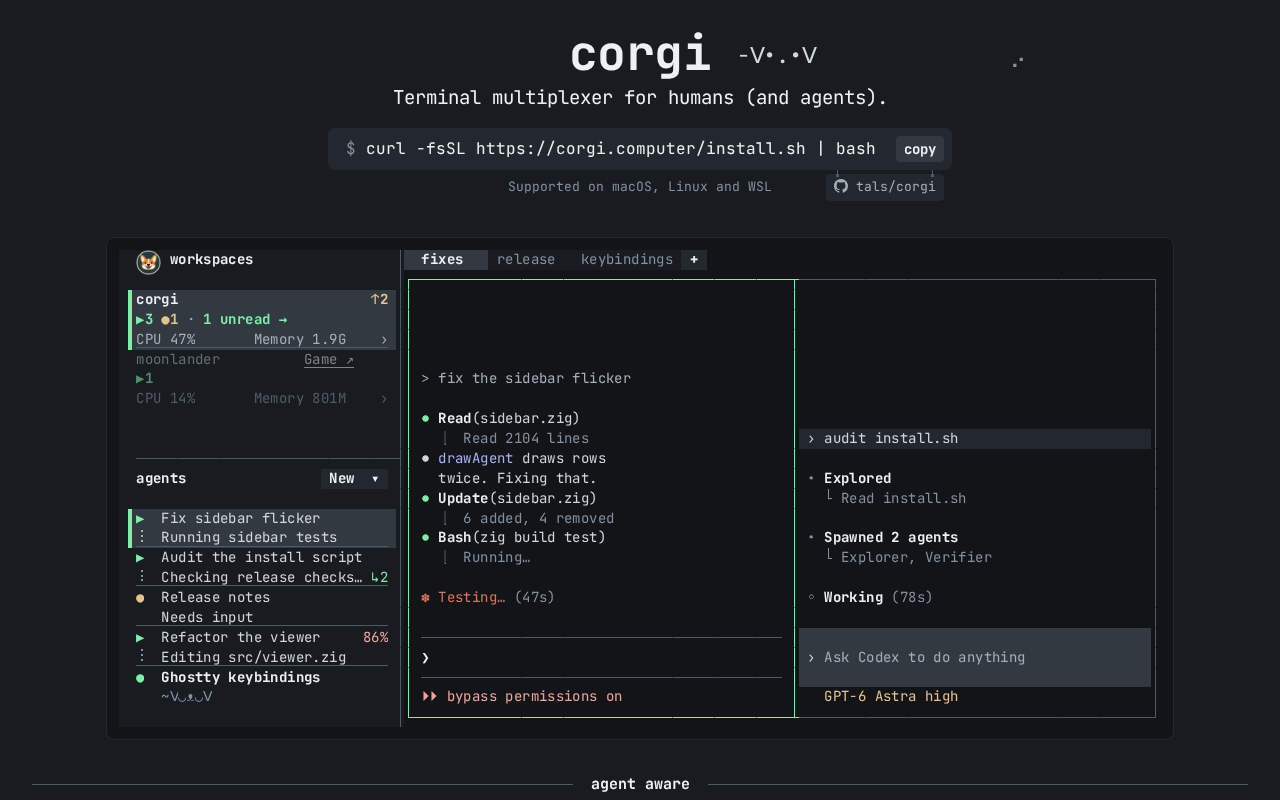
Corgi: A Terminal Multiplexer for AI Agents
Corgi, a new Show HN project, is a multiplexer for AI agents and terminals, aiming to solve session management when multiple coding agents run in parallel. This article analyzes its positioning, potential value, and early-stage risks.

LLaMA-Factory in Practice: A Complete No-Code Guide to Fine-Tuning Large Models
An introduction to LLaMA-Factory, the open-source fine-tuning tool: its 60.1K-star background, supported models and algorithms, local vs. cloud deployment, and CUDA setup steps.

Zeng Ming's Deep Retrospective: Why OpenAI May Not Be the Ultimate Winner — and Why the Corporate System Will Disappear
Zeng Ming's deep retrospective on the AI endgame: model companies are just infrastructure, OpenAI and Anthropic won't be the final winners; the next battle is the Agent entry point standard; the corporate system will disappear as AI restructures collaboration, and only mission-driven companies can survive the cycle.