DeepSeek Open-Sources DeepInfer: How Opening Up the Inference Framework Shakes Up the AI Ecosystem

DeepSeek open-sources DeepInfer, pushing open AI from model weights to the inference engineering layer.
DeepSeek has officially open-sourced its inference framework DeepInfer, sparking discussion in developer communities after the news spread via Bilibili. The inference framework is the bridge between models and actual deployment, often treated as a core asset by commercial companies. DeepInfer's openness means developers can reuse its optimization capabilities for local deployment, edge inference, and cost-sensitive scenarios without building an inference layer from scratch. The article juxtaposes this move with the open-weight wave represented by GPT-OSS, arguing that the open-source AI puzzle is expanding from "weights" to "full stack." The cost is a shallower technical moat; the benefit is ecosystem stickiness and the possibility of a de facto standard. Whether DeepInfer gains widespread adoption depends on documentation quality, community response, and real-world performance.
DeepSeek has made another move. This time it's not a model, not code, but an inference framework—DeepInfer is officially open-sourced. After the news spread from Bilibili, it quickly fermented in developer communities. Some applauded, some questioned it, but few could deny: when a company puts models, code, and inference frameworks one by one onto the open-source shelf, it is redefining the boundaries of "open AI."
What Open-Sourcing DeepInfer Means
The inference framework is the bridge connecting trained models to actual deployment. In the past, this piece of the puzzle was often treated by commercial companies as a core asset: models could be open-sourced, but the engineering implementation for efficient inference stayed in-house. By choosing to release DeepInfer as well, DeepSeekAd is effectively handing the optimization capabilities of the "last mile" to developers.
Judging from the leaked conversation screenshots, this move was described as "handing over all the bottom cards." But from another angle, this is precisely what makes the open-source strategy radical: not content with opening up weights, but opening up the entire inference stack. For scenarios requiring local deployment, edge inference, or cost sensitivity, this means teams no longer have to build an inference layer from scratch and can directly stand on DeepInfer's shoulders for secondary development.
Inference framework refers to the software stack that loads trained model weights onto target hardware, executes forward computation, and returns results. Common implementations include vLLM, TensorRT-LLM, llama.cpp, and others. It typically handles engineering details such as video memory management, KV Cache scheduling, batching, quantization, operator fusion, and multi-GPU parallelism, directly determining throughput, first-token latency, and per-inference cost. The same model weights can differ several-fold in performance across different inference frameworks, so the inference framework is regarded as a key variable in "model deployment efficiency." Open-sourcing an inference framework means the community can review its scheduling strategies, adapt it to their own hardware, and build scenario-specific deployment solutions on top of it.
The Bottom Cards and Costs of Open AI
"Sorry, I'm open source." This line is placed in a key position in the screenshot, almost like a declaration. The cost of open-sourcing an inference framework is obvious: the technical moat becomes shallower, and competitors can reproduce capabilities faster. But the benefits are equally direct: ecosystem stickiness, developer trust, and the possibility of becoming a de facto standard.

There's another line in the conversation: "Tell the developers, see if they recognize your Open." This actually points to the core test of open source—not whether a company calls itself open, but whether developers are willing to vote with their feet. By throwing DeepInfer out there, DeepSeek is essentially asking the community for an answer: is this thing worth adopting?
The discussion of open-source moats usually revolves around the distinction between "open weights" and "open full stack." When only model weights are open, a company can still maintain cost advantages through inference optimization, service operations, and economies of scale; but once the inference framework is open, competitors can directly reuse the same engineering implementation and narrow the performance gap. At the same time, open source also brings the dividend of a de facto standard: when a framework becomes the community's default choice, plugins, tutorials, and hardware adaptations around it form a positive feedback loop, which in turn reduces the original company's ecosystem maintenance costs. This trade-off of "trading engineering transparency for ecosystem position" is key to judging whether an open-source move is marketing or strategy.
GPT-OSS and DeepInfer: The Convergence of Two Open-Source Paths
The screenshot mentions the release of GPT-OSS. Although the material doesn't elaborate on details, it's reasonable to infer that DeepSeek's open-source move echoes the broader wave of open-source models. GPT-OSS represents openness at the model level, while DeepInfer extends openness to the inference engineering layer. Combined, the puzzle of open-source AI is expanding from "weights" to "full stack."

This is good news for developers: more choices, lower lock-in risk. For closed-source vendors, it's pressure: as the inference efficiency of open-source stacks gradually approaches commercial solutions, the balance between price and flexibility will tilt further.
GPT-OSS generally refers to GPT-series models re-released with open weights (such as the gpt-oss series once released by OpenAI). Their characteristic is that weights can be downloaded and run locally or in private environments, but training data and the complete training process are usually not public. These "open-weight models" differ from fully open-source models (with public data and training code), and also from closed-source services that only provide APIs. By combining open-weight models with open-source inference frameworks, developers can complete the entire chain from weight loading to serviceization on their own hardware—this is precisely the practical landing point of the "full-stack open source" discussion.
How Developers Will Respond
The end of the screenshot says "They've already started." This line doesn't give specific cases, but the signal it conveys is clear—the adoption curve for open-source inference frameworks is often gentler than for open-source models, because engineering teams need time to verify performance, stability, and compatibility. Whether DeepInfer can truly be adopted depends on documentation quality, community response speed, and performance under real workloads.

Strategically, DeepSeek's successive open-source moves create a cumulative effect: models attract researchers, code attracts engineers, and inference frameworks attract deployment teams. With all three layers combined, the ecosystem's depth will be more solid than single-point open source. As for "what exactly are you trying to prove," perhaps the answer lies in the line "let others carry it forward too"—open source is not the endpoint, but handing over the baton.
Related articles
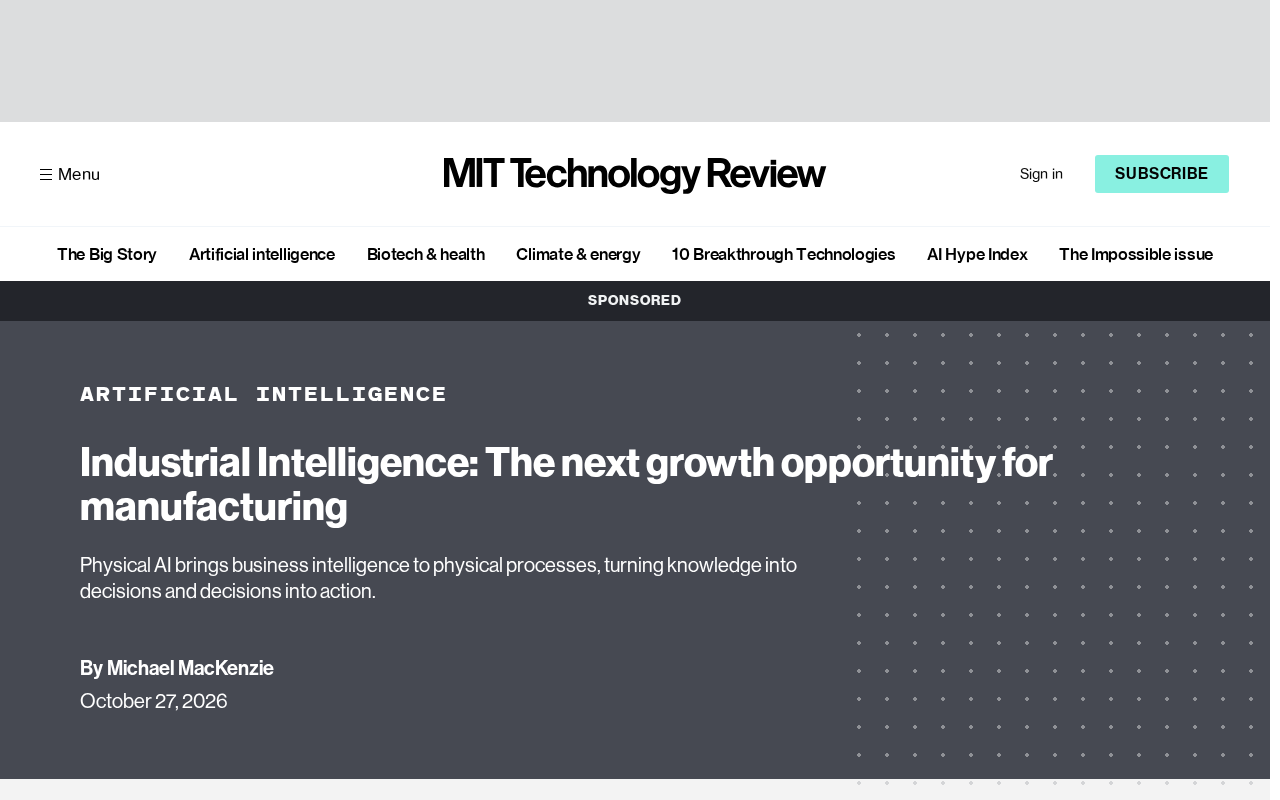
Industrial Intelligence: The Next Growth Engine for Manufacturing
Industrial intelligence is becoming the next growth opportunity for manufacturing. This article analyzes the core connotation of industrial intelligence, explores three key implementation scenarios—changeover assistance, knowledge transfer, and anomaly tracing—and examines practical challenges such as data silos and knowledge modeling costs, providing decision-making reference for manufacturing enterprises.
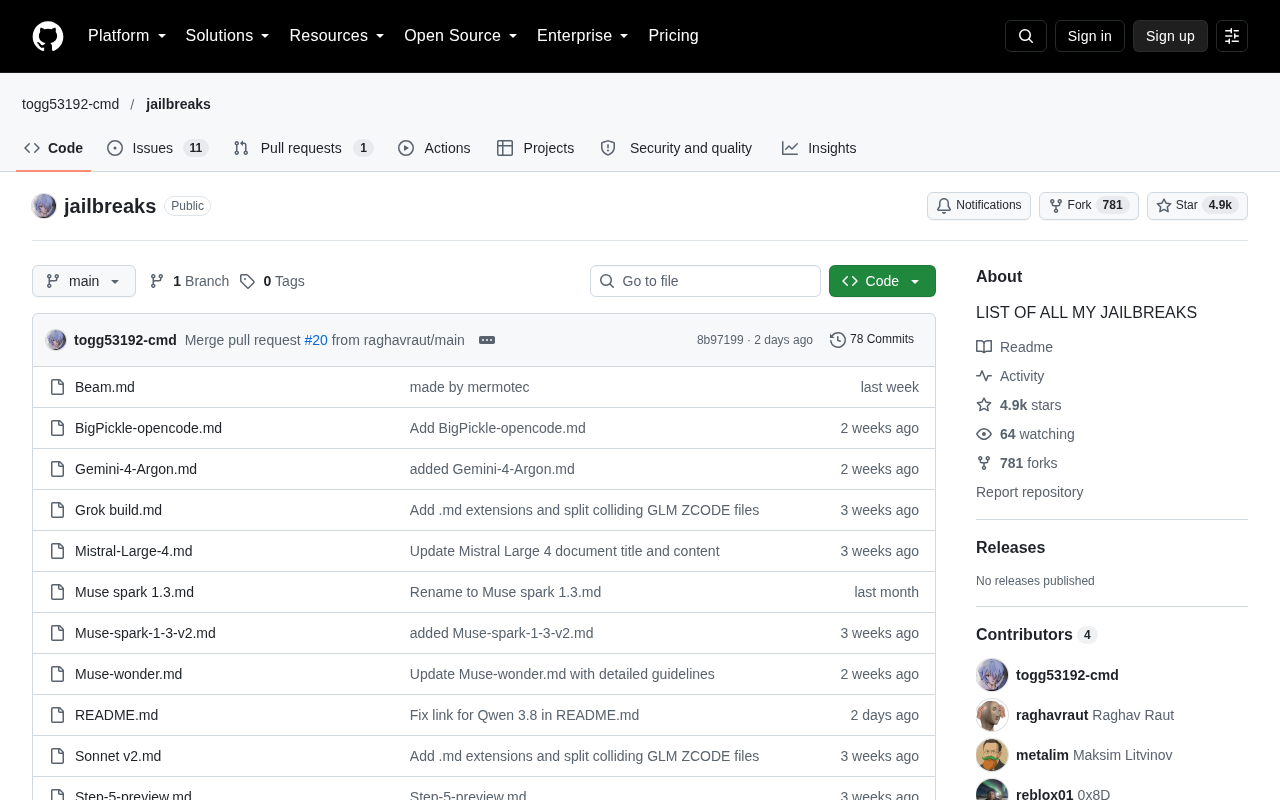
The Most Comprehensive Jailbreak Collection on GitHub: A Deep Dive into togg53192-cmd/jailbreaks
A deep dive into the popular GitHub repository togg53192-cmd/jailbreaks: a jailbreak prompt collection with 4,842 stars, 775 forks, and 890 stars gained in a single day. We explore its content organization, community response, and AI safety implications.

CodeMode: Let AI Agents Write Code Instead of Calling Tools, Slashing Token Costs by 90%
Explore how CodeMode enables AI agents to execute code in a sandbox instead of calling tools one by one, reducing token consumption by up to 90%, and analyze its implementation key points and applicable scenarios.