DeepSeek Quota Wall Pre-embedded in Code: The 48 Hours of Open-Source Migration Tools and Chat Restrictions
DeepSeek pre-embedded quota limits and open-sourced APIs while tightening free chat, reflecting business traffic-splitting under resource contention.
The article reveals DeepSeek pre-embedded quota-restriction logic in its frontend code before November 13; on November 15 old conversations expired after 72 hours of inactivity while new accounts showed a 7-day window. The same week, multiple APIs and client code were open-sourced, forming a "migration tools first, door second" timeline. Rapid quota depletion stems from long conversations' prolonged VRAM occupation with punitive concurrency growth. Free heavy users, paid APIs, and next-gen model training compete for resources; technical cost reduction only lowers unit cost. A top comment reads "not unwilling to pay, but unable to find where to pay," and officials have not responded publicly.
A "Traffic Split" Written into Code Ahead of Time
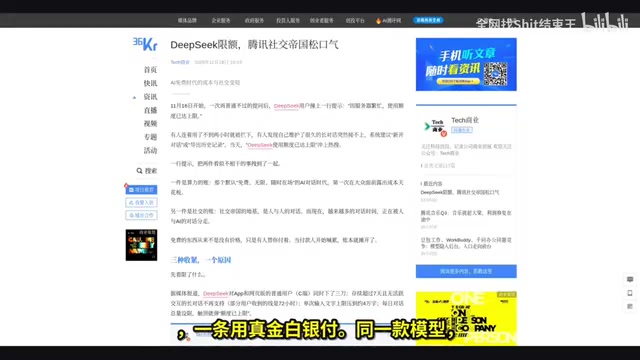
On November 13, a developer inspecting DeepSeekAd's frontend code discovered that the entire quota-restriction logic had already been embedded. Two days later, on November 15, a large number of users found that older conversations began to expire — 72 hours of inactivity and they were cut off. Switching to a different account, however, revealed a 7-day window.
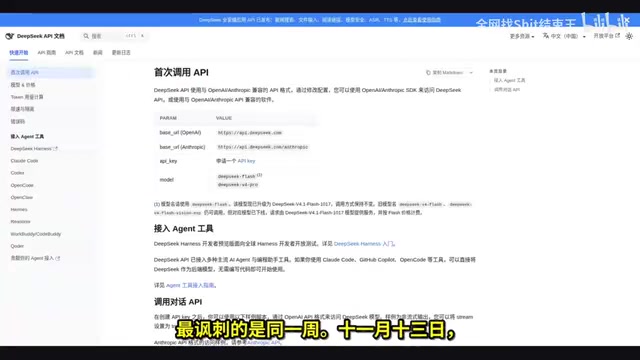
According to a Bilibili creator's breakdown, within the same week DeepSeek opened web search, deep thinking, PDF reading, webpage reading, voice, and other features as APIs, and even open-sourced the chat client code. On one hand, high-profile open-sourcing; on the other, locked conversations — with a pop-up helpfully suggesting "you can export your history to use in other apps." Hand the user a migration tool first, then show them the door — this coincidence in the timeline gives the word "premeditated" a concrete foothold.
Why Quota Depletes Absurdly Fast
What confuses users even more is how quickly quota runs out. Some hit "server busy" after just three or four exchanges; others maxed out at 148,000 characters using the drawing feature. This is not a simple server malfunction.
Long conversations are essentially VRAM black holes: the more turns and the longer the context, the longer the cache must reside in VRAM. A single long drawing task locks up one block of resources, and as concurrency rises, the pressure isn't linear but grows punitively. Officials have stated they've used new attention architectures and disk caching to reduce overhead, but technology can only lower unit cost — it cannot hold back three forces competing for resources simultaneously: free heavy users, paid API calls, and training of the next-generation model.

Context window and VRAM residency: When a large language model processes a conversation, it needs the entire conversation history (i.e., the context) as input. To accelerate inference, the system typically keeps the computed key-value cache (KV Cache) in VRAM to avoid recomputation. The more turns and the longer the context, the larger this cache grows, and it must occupy VRAM for an extended period. VRAM capacity is limited, and when many users hold long conversations simultaneously, VRAM quickly becomes the bottleneck, causing new requests to queue or fail. This is the technical root of "long conversations are VRAM black holes."
Punitive growth: Under concurrency, resource consumption is not simply linear. When VRAM approaches saturation, system scheduling overhead surges, cache hit rates drop, and frequent swapping may even be triggered, causing the per-request processing cost to spike — forming "punitive growth." As a result, a small number of long conversations can drag down the entire service, manifesting as extremely fast quota depletion or frequent "server busy" messages.
Two Paths: Wait for Quota, or Pay Real Money
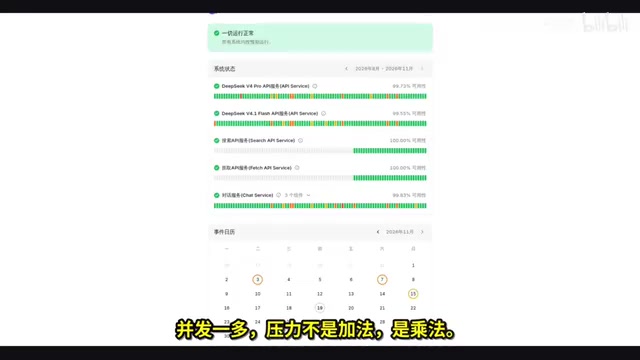
Facing resource contention, DeepSeek has laid out two paths: one paid with waiting and quotas, the other with real money. The same model, two prices.
The most-liked comment reads: "It's not that I don't want to pay — it's that I can't find where to pay." This points to the other side of the problem — users aren't resisting paying for value; rather, the lack of a payment channel makes the free quota the only entry point, and once that narrows, the experience falls off a cliff.
Resource isolation between API and free chat: By opening web search, deep thinking, and other features as APIs and open-sourcing the client code, DeepSeek enables developers to pay per call. The regular chat client typically relies on free quota — both share underlying compute but are billed differently. When resources are tight, the system prioritizes stable throughput for paid APIs, while free chat is subject to quota limits. This dual-track approach is a common business strategy aimed at directing limited resources toward profitable scenarios.
Three Forces That Technical Cost Reduction Can't Hold Back
From an engineering perspective, DeepSeek's situation is not hard to understand. Free heavy users consume large amounts of long-context resources, paid APIs require stable throughput, and training the next-generation model also competes for compute. With all three stacked, any single technical optimization can only ease unit cost — it cannot change the overall shortage.
New attention architectures and disk caching do reduce per-unit overhead, but when concurrency is large enough, the freed-up space is quickly filled by new demand. This is not a server malfunction but a traffic split written in advance: keep those willing to pay, show out those who only want a free ride.
Attention architecture and disk caching: The "new attention architecture" DeepSeek mentions may refer to variants such as sparse attention or linear attention, aimed at reducing the computational complexity of long contexts; disk caching offloads part of the key-value cache to disk to relieve VRAM pressure. But these optimizations mainly lower the compute and storage cost per token — they cannot break through the physical limits of total VRAM and total compute. When free users, paid calls, and model training all grow simultaneously, the saved resources are quickly swallowed by new demand, and the overall shortage persists.
The Signal of Open-Sourcing and Locking Conversations in Parallel
Open-sourcing the API and client code while tightening free chat quotas — these two things happening in the same week send a fairly clear signal. Open-sourcing expands ecosystem call volume, while the quota wall tilts resources toward billable scenarios. For developers, the API opening is good news; for ordinary chat users, the free window is narrowing.
As of the related discussions, officials have not publicly explained the quota rule adjustments. Users can do two things: export their history and migrate to other apps, and watch for whether an explicit paid plan emerges. This traffic split is already written into the code — all that remains is when the communication catches up.
One-line Summary
DeepSeek pre-embedded quota limits, open-sourcing APIs while tightening free chat — a reflection of business traffic-splitting under resource contention.
Paragraph Summary
The article reveals that DeepSeek pre-embedded quota-restriction logic in its frontend code before November 13, and on November 15 older conversations began expiring after 72 hours of inactivity, while new accounts still showed a 7-day window. In the same week, multiple APIs and client code were open-sourced, forming a timeline of "handing over migration tools first, then showing people the door." Rapid quota depletion stems from long conversations' prolonged VRAM occupation, with concurrency pressure growing punitively. Free heavy users, paid APIs, and next-generation model training compete for resources, and technical cost reduction can only lower unit cost. A top comment reads "It's not that I don't want to pay — it's that I can't find where to pay," and officials have not yet responded publicly.
Related articles
Gemini 4 Neon Released: Tops Coding Benchmarks, Gemini 4 World Model Opens Up
Google releases Gemini 4 Neon, topping the coding agent index with million-token context; Gemini 4 world model opens Project Genie; DeepSeek web search goes free; Microsoft unveils an on-device Windows small model; the White House discusses requiring US companies to disclose whether they use Chinese open-source models.
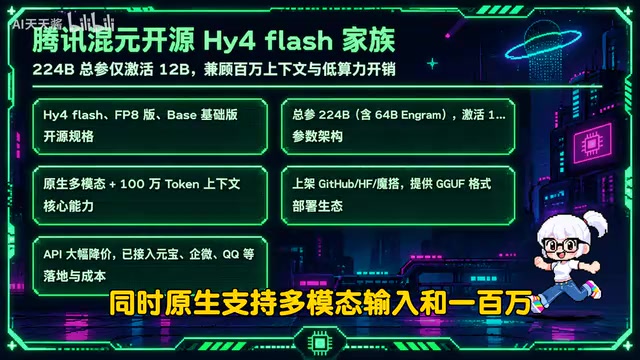
Google Gemini 4 Neon Released: Just $3 per Million Tokens as the AI Price War Escalates
Google releases Gemini 4 Neon at just $3 per million input tokens; Tencent open-sources Hy4 Flash; DeepSeek scraps search-crawling fees; Microsoft unveils new image and voice models; NVIDIA halts H200 shipments to China; Citi says no reimbursement for AI-agent fraud losses. Today's hardcore AI news in one read.
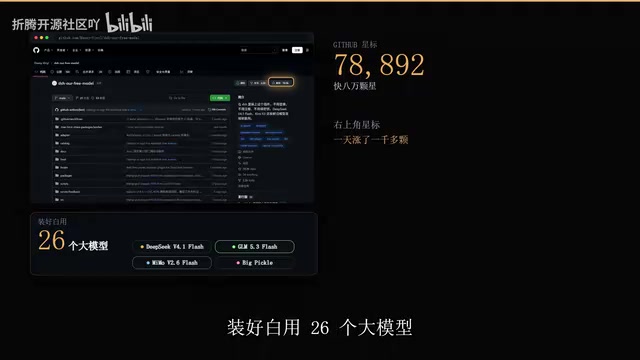
Nearly 80K-Star Open Source Project: Use 26 Large Models Locally for Free, Including DeepSeek and GLM
A Bilibili video introduces a nearly 80K-star open source project that lets you use 26 large models locally for free, including DeepSeek and GLM—no registration or API keys needed, plus a local address for other software to connect.