DeepSeek's New Model + Inference Engine Tested: Open-Source AI Nears the Frontier

DeepSeek's new open-source model tests near frontier closed-source models, and it reveals inference engine optimization details.
Based on a hands-on video by a Bilibili creator, this article comprehensively evaluates DeepSeek's newly open-sourced C.E Flash 1017 model and DeepInfer inference engine. The model uses a 552B-total/16B-active MoE architecture, with mixed results across tasks: earth-circumference explainer video, Unreal Engine 3D game, EDM music creation, frog-finding visual localization, brain tumor identification, deep research reports, and creative ideation — overall about 80% of frontier model level, surpassing closed models at frog-finding but failing entirely on medical imaging. Total test cost was just $6. DeepInfer disclosed details like 155 trillion tokens per day per cluster, 96% input cache hit rate, and ~80% gross margin, and supports both NVIDIA and Huawei Ascend chips — seen as a strong challenge to the closed-source lab competitive landscape.
DeepSeek wasted no time after the holiday, rolling out a major update: a new open-source model, DeepSeek C.E Flash 1017 (named for its October 17 release date), along with an inference engine called DeepInfer. According to hands-on testing by Bilibili creator "AI Search," the model demonstrates capabilities approaching frontier closed-source models on several highly challenging tasks, while DeepInfer publicly reveals core details of large-scale inference optimization for the first time — including a 96% input cache hit rate and roughly 80% gross margin. This isn't just a technical iteration; it could reshape the competitive landscape between open-source and closed-source models.
Model Testing: From Earth's Circumference to 3D Games, Capabilities Approach the Frontier Across the Board
The creator designed a series of highly challenging tasks to probe the model's real-world capabilities. The first task was to produce a minimalist explainer video measuring the Earth's circumference, requiring the model to plan scenes, generate voiceover (via Gemini TTS), and create animations using the open-source Hyperframes tool. The model ran for 36 minutes, consumed about 22 million tokens with a 99% cache hit rate, and the final video quality was "on par with what you'd get from frontier models like Claude and GPT."
The second task was more complex: building a procedural 3D game in Unreal Engine with an ancient Chinese royal aesthetic, generating assets in Blender, and having the model launch a "critic agent" for self-scoring iterations. The model ran 16 rounds, with the critic agent giving a maximum score of only 5.5 out of 10 — short of the 8.5 AAA standard. The creator assessed it as "roughly 80% of frontier model level," though the rendered characters, building variants, and gameplay mechanics like movement, sprinting, and jumping already had a basic framework. This task consumed about 375 million tokens with a 99.5% cache hit rate.
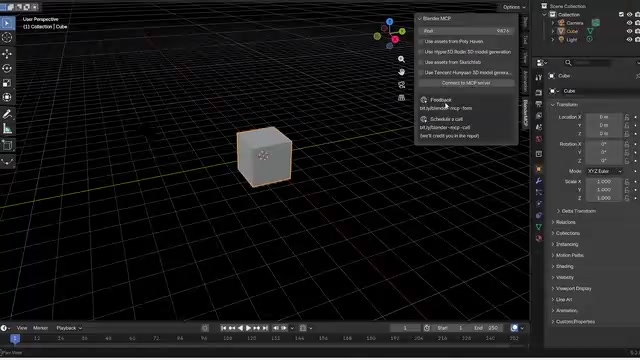
In a music creation test, the model had to autonomously find a DAW (Waveform) and use VST plugins to produce a European pop EDM track. The first round was "pretty bad"; after adjustments based on user feedback, the second round's melody resembled other models on the market. The creator felt it was "not as good as GPT-6 Astra or OPS, but at 80% to 90% of that level."
Hyperframes is the open-source animation tool mentioned in the article — a class of browser-rendering-based programmable animation frameworks where developers describe timelines, layer transforms, and compositing operations in code, then export frame by frame to video. What distinguishes it from traditional editing software is that it's fully scriptable, making it suitable for AI agents to drive via code: the model only needs to generate structured scene and keyframe descriptions to automatically render a finished video. This "code-as-animation" category of tools is an important prerequisite for recent agent-based video production tasks becoming feasible, and it's also one reason such tasks consume enormous numbers of tokens — the model must simultaneously generate planning, code, and asset descriptions.
Vision and Reasoning: Frog-Finding Impresses, Medical Recognition Fails Completely
The most surprising result was the "find the frog" test. The creator uploaded an image containing a hidden frog, without hinting that an animal was present, and simply asked the model to identify and circle it. The model split the image into multiple regions, adjusted contrast and saturation, and even tried to extract EXIF metadata (which had been stripped), ultimately succeeding in locating the frog. The creator said, "This is about the only model I've encountered that can actually find the frog — even Opus or GPT-6 can't."
But in a brain tumor identification task, the model got the tumor type wrong on all six brain scan images. The creator noted that even the best models would typically get only one out of six right, so this result wasn't surprising.
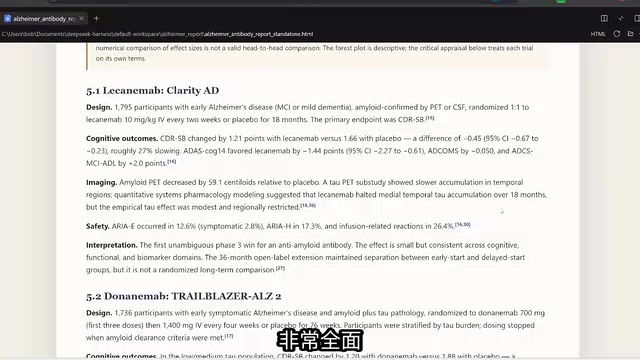
In a deep research task, the model spent 20 minutes generating an HTML report on the propagation mechanisms of beta-amyloid and tau proteins in Alzheimer's disease and Phase III clinical trials of antibody therapies, complete with tables, charts, and full references. The creator rated it "comprehensive yet concise, on par with GPT-6 Astra, far better than OPS5.5."
A creativity test asked for three feasible ideas to improve animal welfare on factory farms. After 10 minutes of thinking, the model proposed concepts like "climate autopilot" and "foraging autopilot," elaborating on problem context, product logic, and expected outcomes — demonstrating strong structured thinking.
EXIF metadata is additional information written into image files by digital cameras and phones at capture time, typically including device model, timestamp, aperture and shutter parameters, and on some devices GPS coordinates. In visual tasks like "find the frog," the model's attempt to read EXIF is a shortcut to "bypass visual reasoning": if the image retained clues about shooting location or time, that might help locate the target. Since this image's metadata had been stripped, that path was blocked, and the model ultimately relied on region segmentation and contrast enhancement of the image itself — which actually better demonstrates that its visual reasoning is genuine rather than dependent on meta-information.
Cost and Specs: 552 Billion Parameters, Total Test Cost Only $6
The entire set of test tasks (including hours-long Blender and game development work) cost only $6 total — the creator topped up $50 and had $44 left over, calling it "absurdly cheap."
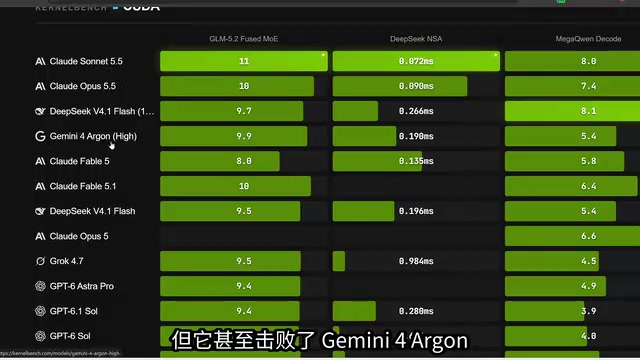
The model uses a mixture-of-experts architecture with 552 billion total parameters and 16 billion active parameters, making it extremely efficient. On benchmarks for agentic coding, general agents, knowledge, and automation, the new version improved by several percentage points over its predecessor, beating open-source models like GLM5.3 and Kimi K3 and performing nearly on par with GPT-5.6 Sol. It ranked third on KernelBench (GPU low-level code writing), behind only the latest Claude model but beating Gemini 4 Argon, Claude Fable, and GPT Leo Astra.
An efficiency comparison chart shows DeepSeekAd sitting at the far left in the "intelligence level vs. per-task cost" coordinate space, with efficiency even exceeding top GPT and Claude models. The model has been open-sourced on Hugging Face and ModelScope, with the full version at about 510GB; the community has already released quantized versions (e.g., Unsloth's 4-bit GGUF at just 233GB), though running locally still requires high-end GPUs.
Mixture-of-Experts (MoE) refers to a model internally composed of multiple independent "expert" feed-forward networks paired with a routing network, activating only a few experts per token. The combination of 552 billion total parameters and 16 billion active parameters in the article is a typical MoE configuration: total parameters determine knowledge capacity, while active parameters determine the compute and VRAM cost of a single inference pass. This is precisely the structural reason for its "high intelligence at extremely low per-task cost." Compared with dense models, MoE can trade a larger total parameter count for broader knowledge coverage while keeping per-token compute relatively small — at the cost of higher VRAM capacity requirements and more demanding expert-parallel communication, which is also why its full weights still reach about 510GB.
KernelBench is a benchmark for evaluating large models' ability to write low-level GPU kernel code; tasks typically require the model to implement operators like matrix multiplication, reductions, and attention in CUDA or Triton, scored by speedup relative to a PyTorch baseline. Such tasks demand extremely high hardware understanding, parallel thinking, and numerical correctness, making it one of the hard metrics for a model's "coding capability ceiling." The model's third-place ranking here indicates it has entered the top tier in systems-level programming, though room for improvement remains.
DeepInfer: Revealing Inference Optimization Secrets, Supporting Huawei Ascend
DeepInfer isn't a new model but the inference engine DeepSeek uses to run models at massive scale in its data centers. The officially disclosed figures are striking: a single cluster processes up to 155 trillion tokens per day, revenue of $38 per GPU-hour, and an estimated gross margin of about 80% (counting GPU costs only). The 96% input cache hit rate means most computation reuses prior results — the key to both high throughput and high profit.
This release matters because every frontier lab treats inference optimization as a top secret — it's the core of how they profit through subscription services. DeepSeek chose to publish it freely, permitting research and commercial use. However, the creator also noted that DeepInfer isn't a complete production system; it lacks caching and load-balancing infrastructure, so its economics can't be directly replicated.
Another key detail is that DeepInfer supports not only NVIDIA chips but also Huawei Ascend chips. The creator's analysis suggests this provides a viable alternative to NVIDIA, which is especially important for Chinese companies — under export restrictions, reducing dependence on NVIDIA means greater supply chain resilience and helps ease global chip shortages and pricing pressure.
Input cache (prefix caching) hit rate refers to the inference server saving the key-value cache (KV Cache) of previously processed prompt prefixes and reusing it directly when a new request contains the same prefix, avoiding recomputation. This is especially effective for agent-type workloads, since system prompts, conversation history, and file contents are heavily repeated across multi-turn tool calls. A 96% hit rate means the vast majority of input token computation is skipped, translating directly into higher throughput and lower cost — the key mechanism explaining its 80% gross margin. Note that cache hits require exact prefix matches, and real deployments also need scheduling and eviction strategies — another reason this engine can't be easily replicated.
Huawei Ascend is Huawei's self-developed AI accelerator chip series (such as the Ascend 910 series), paired with the CANN software stack and MindSpore framework. Making an inference engine compatible with both NVIDIA CUDA and Ascend means implementing dual backends for operators, memory management, and communication primitives — a considerable engineering effort. For Chinese companies affected by export restrictions, this adaptation offers a genuine alternative path, which explains why this detail is seen as the part of the release with industry significance.
Conclusion: A New Height for Open-Source Intelligence
Combining hands-on testing with benchmark data, DeepSeek C.E Flash 1017 has approached GPT-5.6 Sol levels in agentic tasks, deep research, and code generation, even surpassing frontier closed-source models in some scenarios (like finding the frog), though it still lags by about 20% on tasks like 3D games and music creation. Its extreme efficiency and open-source strategy, together with the inference optimization secrets revealed by DeepInfer, constitute a formidable challenge to closed-source frontier labs. The creator summed it up: "With intelligence this strong plus optimization software, the valuation could be in the billions — yet DeepSeek decided to release it for free. That's crazy."
Related articles

Andrew Ng Teams Up with Anthropic: A Complete Walkthrough of the Claude Code Hands-On Tutorial
Andrew Ng and Anthropic launch a Claude Code short course covering clear context, parallel sessions, MCP servers, and three hands-on projects: a RAG chatbot, Jupyter data analysis, and Figma-to-frontend.

Only Three Agent Recommendations for Beginners: ZeroStack, Claude Code, and DeepSeek Harness
Bilibili creator recommends three beginner Agents: ZeroStack for lightweight devices, Claude Code with a mature ecosystem, and DeepSeek Harness for easy plugin integration. This article outlines use cases and practical tips for each tool.

How Does an AI Agent Control Your Computer? A Full Breakdown of Hermes' Three-Layer Toolchain
Bilibili creator Xiaoyou breaks down Hermes' three-layer toolchain for operating a computer: the built-in Terminal, file modification, and code execution foundation; optional web search, vision analysis, speech synthesis, and browser/desktop control; and an external ecosystem freely extended via CLI and MCP—plus why SSH connects but still can't operate.