Only Three Agent Recommendations for Beginners: ZeroStack, Claude Code, and DeepSeek Harness

Bilibili creator recommends ZeroStack, Claude Code, and DeepSeek Harness as three Agents, with their use cases.
This article outlines an AI Agent lineup actually used by a Bilibili creator, highlighting three tools: ZeroStack suits devices under 4GB memory and edge scenarios like phones, development boards, and routers with low resource usage; Claude Code has a mature ecosystem and rich plugin marketplace, supports loop and go commands, but its workflow is slow, so native CLI is recommended; DeepSeek Harness excels in plugin integration for combining multiple tools. It also analyzes trade-offs of Doubao, Codex, MPY: Doubao has virtual desktop control advantages, Codex was abandoned due to lengthy prompts and slow responses. Practical tips emphasize go/loop commands simplify tasks, and recommend prioritizing CLI and using MCP cautiously to avoid token waste.
AI Agent tools are proliferating, but not many are truly suited for ordinary users looking to boost efficiency. A Bilibili creator shared his actual Agent lineup in a video, with clear recommendations: ZeroStack, Claude Code, and DeepSeek Harness. This article combines the video's perspectives to outline the positioning, use cases, and core features of these three tools, while also analyzing the pros and cons of other mentioned Agents.
Recommendation 1: ZeroStack — The Top Agent Choice for Lightweight Devices
If your device has limited memory (under 4GB), or you need to run Agents on phones or edge devices (such as Radxa development boards or routers), ZeroStack is the top choice. It is designed specifically for low-end devices, with low resource consumption, enabling Agents to run on constrained hardware. The creator particularly emphasized that even if your computer has sufficient performance, you may still consider ZeroStack if you find Agents consuming too many resources.
Running Agents on Edge Devices and with Low Resources
Edge devices refer to terminals with limited compute, memory, and storage, such as development boards (Radxa), routers, and old phones. Running AI Agents on these devices traditionally relies on cloud inference, but latency and privacy issues are obvious; when running locally, both the model and the runtime itself must be extremely lightweight. ZeroStack's positioning is to compress runtime overhead so that Agents can complete basic task scheduling and tool invocation in environments with under 4GB of memory. This differs from running a full Agent framework on a PC: the latter can tolerate higher memory usage, while edge scenarios require every MB to count. Therefore, when choosing an Agent, you should first look at the target device's resource ceiling, not just the feature list.
Recommendation 2: Claude Code — A Mid-Range Agent with a Mature Ecosystem
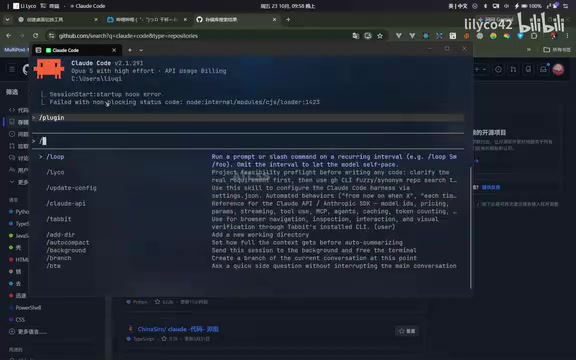
Claude Code is an Agent with a strong official workflow. Although the creator considers its workflow somewhat slow, its ecosystem is very mature. It has a powerful plugin system with a built-in plugin marketplace, offering various SKILLs for frontend, backend, code auditing, and more. Additionally, it supports commands like loop (cyclic work) and go (goal setting), making it convenient for repetitive or goal-oriented tasks. The creator mentioned that using Claude Code via CLI is the more native approach.
Recommendation 3: DeepSeek Harness — A Plugin-Based Agent That's Easy to Integrate
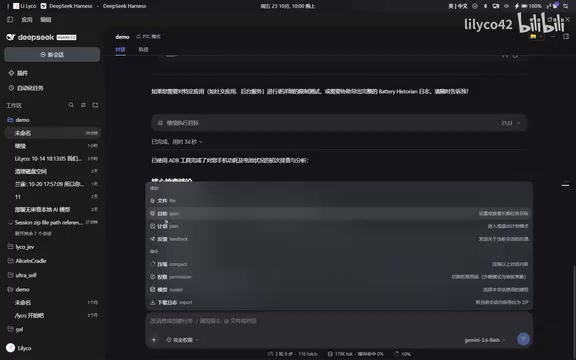
DeepSeekAd Harness's core advantage is its ease of integrating various plugins, allowing flexible extension of Agent capabilities. The creator finds it very useful, especially for scenarios requiring integration of multiple tools. The video did not elaborate further, but emphasized that its integrability is the main reason for its recommendation.
Trade-offs of Other Agents: Doubao, Codex, MPY
Doubao has a virtual desktop feature that can fully control computer software, which most Agents do not yet support. The creator often uses Doubao for web operations and less mentally demanding tasks, such as cleaning up phone junk or saving files to cloud storage. For video processing, he recommends using the DBC plugin or a combination of native ffmpeg and whisper for text recognition and script generation.
Codex was once favored by some developers for its permission system (killer feature), but the creator abandoned it due to lengthy prompts and slow responses. However, feedback issues with Huawei Codex have been quickly fixed. MPY and other Agents were briefly mentioned but not highlighted.
Practical Tips: go/loop Commands and CLI First
The creator demonstrated invoking the go goal via a plus sign or slash for actual tasks such as cleaning up phone junk files, querying financial information, and creating new GitHub repositories. These short prompts can complete operations, reflecting the current improvement in Agent capabilities. He suggests prioritizing CLI (AI-native tools) and using MCP cautiously, because MCP shares context via JSON, which may lead to token waste.
The Relationship Between MCP and Token Waste
MCP (Model Context Protocol) is a protocol that allows Agents to share context with external tools and data sources, typically passing tool descriptions and invocation results in JSON format. The problem is that each interaction may stuff a large amount of tool metadata and historical context into the prompt, causing token consumption to rise rapidly. For models billed by token or with limited context windows, this directly increases costs and squeezes out effective reasoning space. The creator's advice to use MCP cautiously is essentially a reminder to distinguish between "necessary integration" and "excessive sharing": operations that can be done directly with CLI commands are often more token-efficient and controllable than forwarding through an MCP layer.
Summary
For users of lightweight devices, ZeroStack is the top choice; for those seeking a mature ecosystem and rich plugins, Claude Code is a good option; for flexible plugin integration, DeepSeek Harness is worth trying. Doubao has unique advantages in virtual desktop control, while tools like Codex were excluded by the creator due to efficiency issues. Tool selection should combine device conditions and task types, without blindly chasing popularity.
One-line Summary
A Bilibili creator recommends three Agents—ZeroStack, Claude Code, and DeepSeek Harness—along with their use cases.
Paragraph Summary
This article outlines an AI Agent lineup actually used by a Bilibili creator, highlighting three tools: ZeroStack is suitable for devices with under 4GB memory and edge scenarios like phones, development boards, and routers, with low resource usage; Claude Code has a mature ecosystem and rich plugin marketplace, supports loop and go commands, but its workflow is somewhat slow, so native CLI usage is recommended; DeepSeek Harness excels in plugin integration, suitable for integrating multiple tools. The article also analyzes the trade-offs of Doubao, Codex, MPY, and other Agents: Doubao has advantages in virtual desktop control, while Codex was abandoned due to lengthy prompts and slow responses. The practical tips section emphasizes that go/loop commands can simplify task operations, and recommends prioritizing CLI and using MCP cautiously to avoid token waste.
Related articles

AI Digital Twin in Action: Using DOT to Automatically Track Bugs and User Feedback
DOTS engineers demonstrate how AI digital twin DOT collects cross-platform user feedback, categorizes issue themes, opens threads to investigate bug root causes, and submits PRs—showcasing a complete AI agent workflow for defect triage with auditable design.

Why Transistors Are No Longer Flat: The Evolution from Planar to Gate-All-Around
Transistor evolution from planar to FinFET to gate-all-around: why gates went from three-sided to four-sided wrapping to suppress short-channel effects and leakage current, extending Moore's Law.

Swarm Intelligence = a Single RL Agent? A Proof of Multi-Armed Bandit Equivalence
A paper proves that collective decision-making through local imitation in swarms is mathematically equivalent to single-agent reinforcement learning: N blind imitators act as N parallel environment samples, with an effective learning rate of 1/N. This article explains the derivation and implications of the Maynard-Cross Learning algorithm.