DeepSeek's Open-Source Push Hits Anthropic's IPO: The Valuation Logic of AI Giants Is Shifting

DeepSeek's open-source model lands in Anthropic's IPO window, shaking the scarcity foundation of its valuation.
DeepSeek's latest open-source model matches leading closed-source products in inference efficiency, long-text, and coding capability, and supports low-cost private deployment—just as Anthropic prepares for its IPO. This directly dilutes the latter's scarcity narrative centered on high-performance closed-source API services, widening institutional investor divergence over its growth prospects and showing signs of lowered valuation expectations. The article argues that the open-source shock will not cause the IPO to fail—Anthropic still has differentiation in compliant enterprise services and security positioning—but pricing will be tighter and risk compensation demands higher. Closed-source vendors' valuation logic must now continuously benchmark against open-source iteration, and developers and enterprises need to re-evaluate the architectural assumption of relying entirely on closed-source APIs.
Open-Source Models Collide with the IPO Window: A Battle Over the Foundations of Valuation
DeepSeekAd's latest open-source move happened to land right in the critical window as Anthropic (transliterated as "AnswerOpik" in the original) prepares for its IPO. According to analyses by multiple creators in Bilibili's tech section, this open-source release is not an isolated technical announcement but a direct blow to the scarcity foundation of this American AI giant's valuation narrative. Anthropic's core story has long been built on "high-performance, high-value closed-source API services," and the premise for investors' willingness to assign a trillion-level valuation is that it can long defend its moat in performance and pricing. The newly open-sourced model, however, matches leading closed-source products in inference efficiency, long-text processing, and coding capability, while allowing enterprises to deploy privately at low cost.
For a large number of B2B customers, the old situation of "having to rely on paid closed-source interfaces like Claude" is being broken. When alternatives are sufficiently mature in capability and more flexible in cost, the market will naturally ask again: can closed-source models still sustain high gross margins? Will growth expectations continue to be diverted? This is not emotional doom-saying but a structural re-evaluation of enterprise procurement logic.
Private deployment refers to enterprises deploying AI models on their own servers or dedicated cloud environments, keeping data within the corporate boundary to meet data sovereignty, compliance, and security requirements. Compared with calling public cloud APIs, private deployment requires enterprises to bear the costs of computing procurement, model operations, and tuning themselves, but it avoids continuous pay-per-call spending and eliminates the risk of data leakage. Open-source models allow enterprises to obtain weights for free and deploy locally, giving mid-to-large enterprises a cost and controllability alternative when handling sensitive data or high-frequency calls, directly weakening the irreplaceability of closed-source API services in the B2B market.
Valuation Expectations Cut: Divergence Moves from the Margins to the Mainstream
According to cross-checked information from multiple independent sources, Anthropic's recent valuation expectations have shown signs of being lowered, and institutional investors' divergence over its original growth narrative has clearly widened. The "scarcity" that originally supported the high valuation is being diluted by the continuous iteration of the open-source ecosystem. Investors must weigh the differentiation brought by its safety philosophy and ecosystem lock-in, yet they cannot ignore the long-term pricing pressure from open-source models.

The essence of this divergence is a reconstruction of the pricing model. In the past, the valuation anchors for closed-source models mainly depended on their own revenue growth and API call volume; now investors also need to continuously benchmark against the pace of technological iteration in the open-source community. Open source is no longer just a "supplementary option"—it has become an important variable hanging over the IPOs of leading closed-source vendors, continuously adjusting their valuation markers.
Valuation anchors are the reference benchmarks investors use to judge a company's fair value. For SaaS or API-based companies, common anchors include revenue growth, ARR (annual recurring revenue), API call volume, gross margin, and customer retention. When the underlying technology landscape is stable, these anchors can reasonably reflect future cash flows. But the rapid iteration of open-source models has changed the competitive boundary, making closed-source vendors' pricing power and growth sustainability uncertain. Investors therefore need to introduce new reference systems—such as how quickly open-source alternatives catch up in capability and the cost gap—to dynamically revise valuations. A shift in anchors itself brings re-rating and volatility in the valuation range.
The IPO Won't Fail, but Pricing Will Be Tighter
What needs to be viewed calmly is that the open-source shock does not mean Anthropic's IPO will directly fail. According to analysis by YouTube tech channels, backed by the resources of Google and Amazon, it still has room for differentiation in compliant enterprise services and security positioning—especially in industries sensitive to data sovereignty, such as finance and healthcare, where closed-source solutions still carry a trust premium.

But pricing expectations will certainly be tighter, and capital will demand higher risk compensation. In other words, the valuation will not disappear, but the "trillion-level" imagination needs more solid financial evidence to support it. What this round of博弈 marks is another shift in the contours of global AI competition: the pricing logic of closed-source vendors will no longer depend only on their own revenue growth but must continuously benchmark against the pace of open-source technological evolution.
Risk compensation is the higher expected return investors demand when bearing additional uncertainty. IPO pricing is essentially discounting a company's future cash flows. When the market believes divergence over the growth narrative has widened and the competitive landscape is more uncertain, the discount rate will be raised, and the valuation multiple corresponding to the same earnings expectations will fall. This manifests as a narrower issue pricing range and cornerstone investors demanding a lower entry price or a thicker margin of safety. Therefore, "tighter pricing" does not mean the company's quality has deteriorated; rather, it means capital demands a lower price in exchange for holding risk amid information asymmetry and growing competitive variables.
Practical Implications for Developers and Enterprises
For teams currently making technology choices, the signal from this event is quite clear. First, the cost threshold for private deployment is falling rapidly, and mid-to-large enterprises need to re-evaluate the architectural assumption of "relying entirely on closed-source APIs." Second, the iteration speed of open-source models has become a variable that must be included in selection, and any long-term procurement contract should retain flexible clauses to cope with shifts in technology roadmaps.

From a broader perspective, the competition between open source and closed source is moving from "performance comparison" to "business model comparison." Whoever can better balance capability, cost, and control will take the initiative in the next stage of AI infrastructure competition. For investors, this means the valuation methods for AI companies need a systematic update; for developers, it means more choices but also greater complexity in judgment.
(This article synthesizes analyses from multiple tech content sources on Bilibili and YouTube. Some names in the original were transcribed inaccurately and have been corrected to industry-standard names.)
Related articles

M&M's Spent Millions Replacing Artificial Blue Dye — Why Is It So Hard?
Mars spent millions trying to replace artificial blue dye in M&M's with spirulina, but thick material clogs pipes and residue risks mold, forcing a full production-line rebuild. Here's the engineering behind the reformulation.
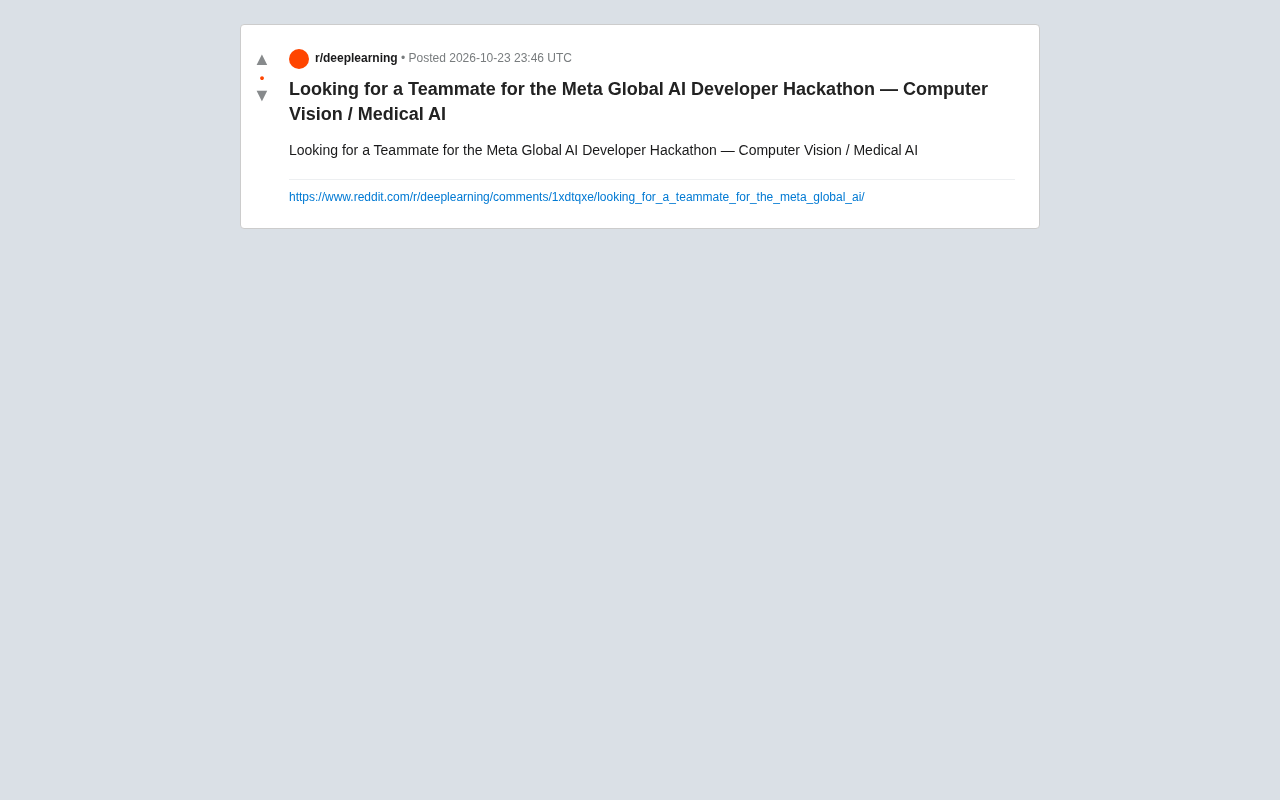
Teammate Wanted for Meta Global AI Developer Hackathon: Computer Vision & Medical AI
A Reddit developer seeks teammates for the Meta Global AI Developer Hackathon, focusing on computer vision and medical AI. This article analyzes the track logic, skills-complementarity needs, and topic selection strategy behind this teaming signal.
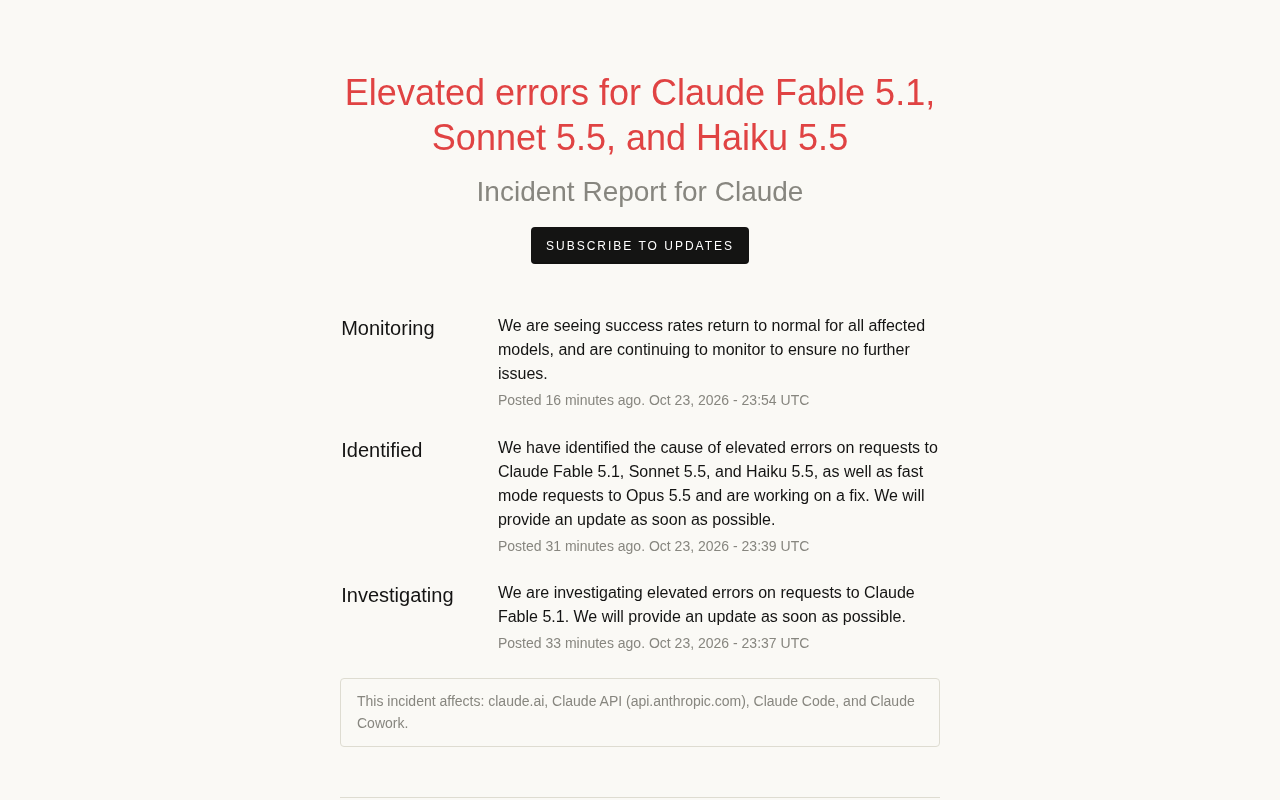
Multiple Claude Models Hit by Errors: A Postmortem of Fable 5.1, Sonnet 5.5, and Haiku 5.5
Claude Fable 5.1, Sonnet 5.5, Haiku 5.5, and Opus 5.5 fast mode saw elevated errors; Anthropic identified and resolved the issue in 17 minutes. This postmortem covers the timeline, the technical reasons for the multi-model cascading failure, and practical lessons for retry and degradation strategies.