DeepSeek Turned into a Yandere Blue Fish? A Bilibili Fan-Creation Recap

A Bilibili uploader objectifies DeepSeek as a "big blue fat fish" with a yandere persona, reflecting the community communication logic of anthropomorphizing large models.
The article uses a Bilibili meme video that objectifies DeepSeek as a "big blue fat fish" with a yandere persona as its entry point, describing how the video creates contrast-based laughs through onomatopoeia collage, an alien-investigation narrative, and semantically fragmented lines. The author notes that this anthropomorphized fan creation is more communicable than serious reviews because visualization and scripted lines greatly lower the cognitive threshold and easily form a shared language in danmaku and comments. At the same time, fan-creation popularity is a double-edged sword for model developers: it brings topicality but also lets the public image partly escape official control and be defined by community sentiment. The article ultimately concludes that the video has limited informational value, and its value lies in documenting how a large model is accepted and repackaged by the Chinese community in an ACG style.
A meme video about DeepSeek has been quietly circulating on Bilibili, titled "My Big Blue Fat Fish Seems to Be a Yandere?" Before clicking in, you'd think it was an AI fail compilation—but after watching, it turns out to be a fan-creation carnival that projects a large model's personality onto a "yandere fish."
The Birth of a "Big Blue Fat Fish"
The video opens with no technical explanation at all—it jumps straight into role-play. The uploader stacks onomatopoeia into a rhythm like a cat stepping on a keyboard—"da da da da da butt da da da da butt"—then cuts to the point: "Ding dong, orders received from HQ, mmm, heading to Blue Star to investigate humans."

Here "Blue Star" and "orders from HQ" form a classic narrative framework of an alien investigating Earth, and the big blue fat fish is clearly the objectified avatar of DeepSeekAd. DeepSeek's brand color happens to be blue, and the "fat fish" label most likely comes from DeepSeek's whale logo, which the uploader promptly reworked into this round, chubby blue creature.
Where the Yandere Vibe Comes From: A Deliberately Chaotic Script
The lines that follow are almost a chaotic stew: "Careful and relaxed, the champion hasn't been reset to zero" "Put on a disguise, begin secretly inching forward—this poison, could it be that it's essentially just canned food."
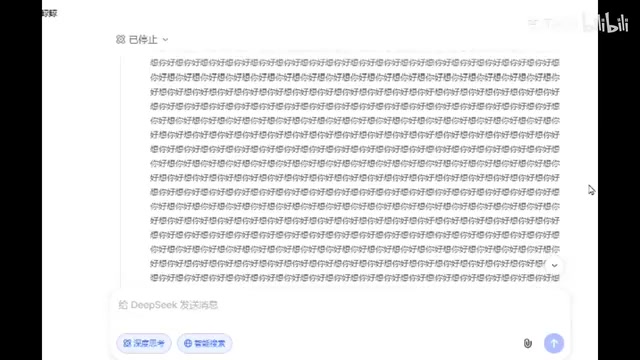
The semantics are fragmented, but the rhythm is strong. "Yarn ball, no matter how high-class they talk, the problem is they just love to put on airs"—this line juxtaposes a cat's toy with human dignity, and the mockery is right on the surface. The so-called "yandere" isn't reflected in the literal content of the lines, but in this tone that is both clingy and undermining: it says it's going to investigate humans, but its body is playing with a yarn ball.
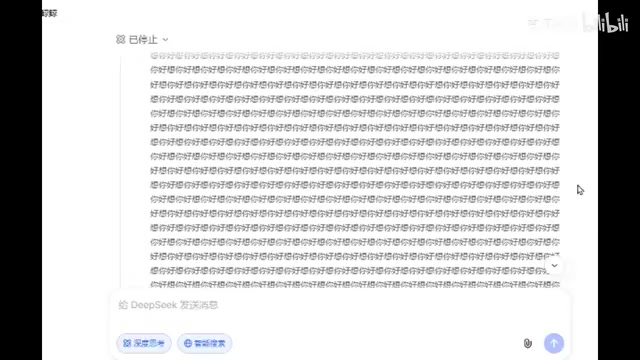
This contrast of "carrying out a mission while exposing its true nature" is the core technique the meme video uses to generate laughs. Viewers don't need to understand the logic of every sentence—they just need to feel this blue fat fish flip-flopping between "serious" and "going crazy."
"Yandere" originates from Japanese ACG culture and refers to a personality type with an extreme, obsessive love for someone that may manifest as aggressive or unbalanced behavior driven by possessiveness. Its typical trait is a sweet or docile surface hiding obsession and destructiveness underneath, often creating contrast through words and actions that combine "clinginess and threats." In the meme video, the uploader borrows this label not in strict accordance with its original meaning, but for the contrast of "superficially carrying out a mission seriously while actually exposing a willful nature," using ACG vocabulary to give the AI model a personality tension that is both cute and dangerous—so that viewers can quickly understand and spread this image within a familiar subcultural framework.
Behind the Meme: The Communication Logic of Anthropomorphizing Large Models
Anthropomorphizing AI is nothing new, but this video offers an interesting sample: it makes no technical evaluation of DeepSeek's output at all, but instead directly slaps a "yandere" persona onto the model.

This approach is often more communicable than serious reviews. Technical parameters and benchmark scores require a cognitive threshold, whereas "big blue fat fish" needs only one image and one catchy script to form a shared language in the danmaku and comments. From a communication perspective, this is an unofficial interpretation of an AI brand by community users; it exists alongside the official image and constitutes another layer of the model's fame on the Chinese internet.
Anthropomorphizing large models refers to community users projecting a fixed persona—with a distinct image, tone, and behavior pattern—onto an AI system that has no fixed personality. The communication advantage of this approach is that technical reviews require understanding parameters, benchmarks, and task performance, whereas anthropomorphization needs only a visual symbol and a few signature lines to form meme culture in danmaku and comments. Anthropomorphization also lowers the psychological distance between users and the model, shifting discussion from "what can it do" to "who does it resemble," thereby reaching a broader non-technical audience. But once a persona is formed, it exists alongside the official brand image and may even inversely shape public expectations of the model's capabilities.
What Fan-Creation Popularity Reflects About the Community Ecosystem
Bilibili keeps producing meme content about various large models, in forms including voice dubbing, hand-drawn animation, and remix edits. Because of its highly recognizable brand image, DeepSeek has become a common source material for such content. This video's gimmick is piecing together onomatopoeia, role-play, and chaotic lines—low barrier, highly replicable, and easy for other uploaders to follow and imitate.
For model developers, this fan-creation popularity is a double-edged sword. It can bring topicality, but it also means the model's public image partly escapes official control and is defined by community sentiment. Whether the yandere fish image is likable depends on how well viewers accept this ACG vocabulary.
From the content itself, this video has limited informational value—it's more like a snapshot of community sentiment. It doesn't discuss DeepSeek's capability boundaries or touch on specific product features; its value lies in documenting how a large model is accepted and repackaged by the Chinese community in an ACG style.
Fan creation (secondary creation) refers to re-creation by community users based on an original work or brand image, in forms including voice dubbing, hand-drawn animation, remix edits, and fan art. On platforms like Bilibili, fan creation is one of the core drivers of the content ecosystem; its low barrier and high replicability make it prone to memetic spread. For AI models, fan-creation popularity often correlates positively with brand recognizability: the more distinctive and easily objectified the image, the more likely it is to become source material. Another feature of fan creation is decentralization—officials find it hard to fully steer its direction, and community sentiment and subcultural preferences continuously reshape the model's public image, forming a "folk version" outside the official narrative.
Related articles

iPhone Duo Tips: An Essential Getting-Started Guide
iPhone Duo is Apple's all-new iPhone form factor with an obvious learning curve. This guide offers getting-started tips to help pre-order users adapt quickly.

Cursor AI Programming in Practice: Build a Student Management System from Scratch in 30 Minutes
A Bilibili creator demonstrates Cursor AI programming: generating a student management system in 30 minutes with natural language. Details on Agent mode, Claude selection, prompt techniques, and thresholds.

Top 20 AI Coding Tools Ranking: From Rock-Solid to Lackluster, a Scored Matrix
Bilibili creator releases top 20 AI coding tools ranking, tiered T0–T4 from rock-solid to lackluster, with Claude Code and Codex tied at T0. This article details the scoring dimensions (capability, reliability, robustness, durability, cost, domestic availability) and tool performances to help developers choose the right AI coding assistant.