Delta Air Lines Flights at Atlanta Delayed Due to System Outage
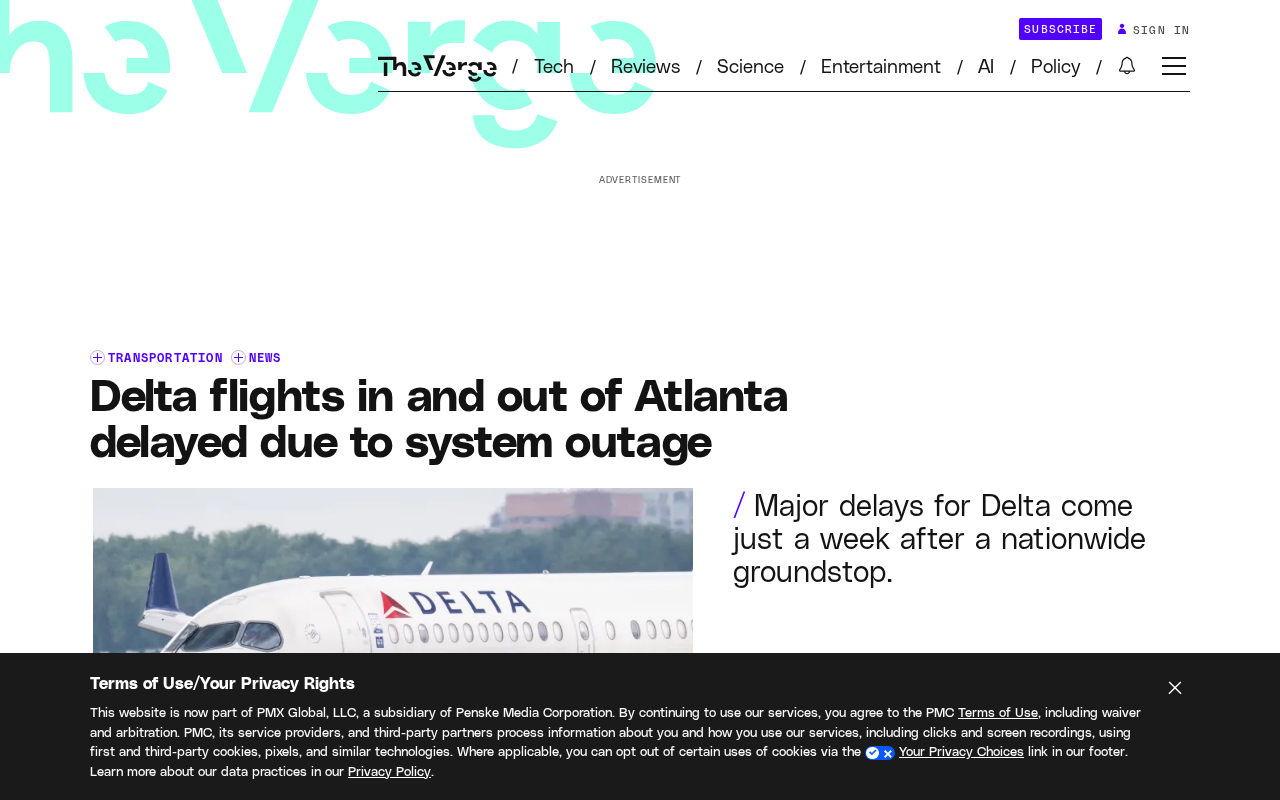
Delta Air Lines flights at Atlanta are widely delayed due to a weight and balance system failure
All Delta Air Lines flights departing from and arriving at Atlanta experienced significant delays on Sunday due to a failure in its aircraft weight and balance calculation system. Weight and balance determines the aircraft's center of gravity position, directly affecting handling safety and fuel efficiency, and is also a prerequisite for dispatch release and manifest signing; the system failure left flights waiting on the ground. As Delta's largest hub and one of the world's busiest airports, Atlanta is prone to ripple effects from delays along three chains: aircraft, crews, and connecting passengers. The report says only Delta is currently affected, but suggests the disruption may spread to other airlines or subsequent flights. The incident once again highlights the stringent requirements that the aviation industry's highly integrated IT systems place on stability and redundancy backup.
According to an RSS source, all Delta Air Lines flights departing from and arriving at Atlanta experienced significant delays on Sunday due to a failure in the system used to calculate aircraft weight and balance.

Root Cause: Why the Weight and Balance System Is Critical
Aircraft weight and balance calculation is one of the core elements of flight safety. It determines the aircraft's center of gravity position, directly affecting handling performance and fuel efficiency. Once this system fails, the airline cannot quickly complete dispatch release, and flights can only wait on the ground. Delta's outage hit exactly at this critical point, causing comprehensive disruption to flights departing from and arriving at Atlanta, its largest hub.
Weight and Balance is a legally required calculation procedure in aviation operations: based on the distribution of passengers, baggage, cargo, and fuel for a given flight, it calculates the aircraft's total weight and center of gravity (CG) position, and verifies whether it falls within the CG envelope specified in the aircraft type manual. A CG that is too far forward increases pitch control burden and cruise drag, while one that is too far aft weakens longitudinal stability and, in extreme cases, may lead to difficulty rotating on takeoff or reduced ability to recover from a stall. Therefore, this calculation is a prerequisite for dispatch release and signing of the Load Sheet, and is typically completed automatically by the Departure Control System (DCS) or a dedicated load planning system, linked with flight loading, fueling sequence, and manifest transmission. Once the system is unavailable, manual fallback procedures exist but are extremely inefficient and difficult to support the release pace of high-frequency flights at a hub airport.
Chain Reaction at the Atlanta Hub
Hartsfield-Jackson Atlanta International Airport is Delta Air Lines' largest hub and one of the busiest airports in the world. According to the original source, only Delta Air Lines is currently affected, but disruptions at [...] suggest the impact may spread to other airlines or subsequent flights. Delays at hub airports often produce ripple effects—connecting passengers miss connections, crew duty time exceeds limits, and subsequent flights queue up—all of which amplify the impact of a single system failure.
Hub-and-Spoke networks make airline operations highly dependent on a small number of large connecting airports. Taking Atlanta as an example, Delta concentrates a large number of wave-based departures here, with aircraft and crews rotating on tight connection schedules. When the release process is blocked, delays do not remain confined to a single flight but spread along three chains: "aircraft tail number—crew duty—passenger connections." A delay in an earlier flight causes subsequent flights using the same aircraft to be pushed back in sequence; when crew flight time limitations (FTL) approach the upper limit, crew replacement is required; and connecting passengers who miss connections trigger rebooking and baggage reprocessing. This ripple effect turns a single point of failure at a hub into network-level disruption.
The Old Problem of System Resilience
This is not the first time the aviation industry has experienced widespread delays due to IT system failures. Systems for weight and balance, dispatch release, and passenger services are highly integrated, and an outage in any one link can bring an entire hub to a standstill. This Delta incident once again reminds us: the more digitalized an airline becomes, the more stringent its requirements for system stability and redundancy backup. The original source did not disclose the specific cause of the failure or the recovery time, but the characterization of "significant delays" is enough to indicate the severity of the impact.
Implications for Travelers
For travelers transferring through Atlanta in the near future, following official airline notifications, allowing more generous connection time, and confirming flight status in advance are practical steps. Recovery times for system-failure-related delays are often uncertain, so actively adjusting travel plans is better than passively waiting.
One-line Summary
Delta Air Lines flights at Atlanta are widely delayed due to a weight and balance system failure
Paragraph Summary
All Delta Air Lines flights departing from and arriving at Atlanta experienced significant delays on Sunday due to a failure in its aircraft weight and balance calculation system. Weight and balance determines the aircraft's center of gravity position, directly affecting handling safety and fuel efficiency, and is also a prerequisite for dispatch release and manifest signing. The system failure left flights waiting on the ground. As Delta's largest hub and one of the world's busiest airports, Atlanta is prone to ripple effects from delays along three chains: aircraft, crews, and connecting passengers. The report says only Delta is currently affected, but suggests the disruption may spread to other airlines or subsequent flights. The incident once again highlights the stringent requirements that the aviation industry's highly integrated IT systems place on stability and redundancy backup.
Related articles

Pure-Code Video Generation Tested: Which AI Model Actually Follows Instructions?
A Bilibili creator tested three AI models' pure-code video generation with unified prompts and three revisions each: Xiaonaomao has a high ceiling but lacks stability, GPT 6.2 Extra models well but only follows half the instructions, and OPAS 5.5 remains the benchmark.

GPT-6 Six-Tier Hands-On Test: Astra Ultra Dominates but Bills Double
GPT-6 six-tier test: Astra Ultra sweeps 3:0 in 3D tasks thanks to sub-agents and runs 14% faster, but hidden backend bills make its real cost 2.6x single-threaded.

GPT-6.2 Astra vs Fable 5.2: Huge Cost-Efficiency Gap Across 12 Real-World Tests
Bilibili creator tests GPT-6.2 Astra vs Fable 5.2 across 12 real tasks: Fable wins 7-5 but costs 7.2x more and takes nearly 5x longer. Token efficiency emerges as the key selection metric.