Disaster and Glory of the Apollo Program: The History We Must Revisit Before Returning to the Moon

Revisiting Apollo's disasters and triumphs as humanity prepares to return to the Moon with Artemis.
This article traces the Apollo program's harrowing journey from the deadly Apollo 1 fire through Apollo 8's high-risk lunar orbit to Apollo 11's historic landing, revealing the hidden disasters, concealed illnesses, and technical gambles behind the triumph. As NASA's Artemis program and commercial partners prepare to return humans to the Moon, these hard-won lessons about overconfidence, systemic failures, and human resilience remain critically relevant.
On July 20, 1969, at 9:56 PM Houston time, Neil Armstrong stepped onto the lunar surface, drawing the curtain on the unprecedented Space Race between the United States and the Soviet Union. National Geographic's documentary Apollo: Back to the Moon retells this enormously expensive and perilous Moon-landing endeavor through a combination of dramatic reenactments, animations, and firsthand accounts. As humanity prepares to return to the Moon—NASA's Artemis program aims to send astronauts back to the lunar surface after 2025, ultimately establishing a sustainable lunar presence in preparation for crewed Mars missions—looking back at this history from half a century ago reveals far more than just the glow of victory. Unlike the Apollo era, Artemis has adopted a deep government-commercial partnership model: SpaceX's Starship was selected as the Human Landing System, and Blue Origin also secured an alternate lander contract. Meanwhile, China's crewed lunar landing program targets around 2030, creating a new round of space competition that forms an intriguing echo of the geopolitical logic behind the U.S.-Soviet Space Race half a century ago.
A National Gamble That Was Nearly Impossible to Win
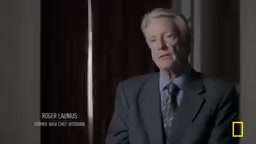
The Apollo program cost nearly $140 billion in today's dollars, with over 400,000 people involved. One engineer in the documentary states bluntly: "Within the timeframe we had, it was nearly impossible." By comparison, NASA's current annual budget is approximately $20 billion, while the investment back then would equate to roughly $60 billion per year—a scale that would be nearly impossible to replicate today.
The starting point of this race traces back to 1957. When the Soviet Union launched the roughly 23-inch-diameter Sputnik satellite into orbit 590 miles above Earth, its "beep-beep" signal became an open provocation against the United States. Even more unsettling was the implication: the ability to launch a satellite meant the capability to deliver nuclear warheads. Against the backdrop of the Cold War, the Space Race was fundamentally a military contest. It was not simply a technology competition but an extension of ideological confrontation within the Cold War framework. When the Soviets launched Sputnik in 1957, American society plunged into what became known as the "Sputnik crisis"—the public suddenly realized the Soviet Union might already be leading in critical technology areas. This panic directly led to the establishment of NASA (1958) and the passage of the National Defense Education Act, which dramatically increased federal investment in science education. From a military perspective, the R-7 rocket capable of putting satellites into orbit could equally carry nuclear warheads to strike the American mainland, meaning the Soviets had achieved a substantive breakthrough in intercontinental ballistic missiles. The Space Race thus became an open demonstration of nuclear deterrence capability.
From Kaputnik to Kennedy's Historic Decision
America's response did not go smoothly. The Vanguard rocket disintegrated and exploded on live television after rising only about two feet, and the next day's headlines humiliated the superpower with the nickname "Kaputnik." The Vanguard program was a satellite launch project led by the U.S. Naval Research Laboratory, competing with the Army Ballistic Missile Agency's Jupiter-C rocket led by von Braun. The Eisenhower administration initially chose Vanguard over military rockets partly to dissociate space activities from a military image. The launch failure on December 6, 1957, played out on national television, and this catastrophic failure forced the government to turn to von Braun's team, which successfully placed Explorer 1 into orbit on January 31, 1958. Von Braun—the former German V-2 rocket engineer—later became the chief architect of the Saturn V launch vehicle, the key vehicle that carried Apollo spacecraft to the Moon.
Meanwhile, the Soviet Union racked up successive victories, with Yuri Gagarin becoming the first human in space.
In 1962, Kennedy delivered his historic speech at Rice University: "We choose to go to the Moon… not because it is easy, but because it is hard." One interviewee in the documentary pinpoints the power of that statement—the key verb is "choose." At that point, America's entire crewed spaceflight experience amounted to only about 20 minutes, yet the nation accepted this nearly impossible challenge.

Lunar Orbit Rendezvous: The Technical Decision That Determined Success or Failure
The success of the Apollo program owed much to one critical technical decision: the Lunar Orbit Rendezvous (LOR) approach. In the early planning stages, NASA internally debated three lunar landing strategies: Direct Ascent (a single massive rocket flying directly to the Moon and back), Earth Orbit Rendezvous (multiple rockets assembling a spacecraft in Earth orbit before heading to the Moon), and Lunar Orbit Rendezvous. The LOR approach was championed by John Houbolt, an engineer at Langley Research Center. Its core concept was splitting the spacecraft into a Command and Service Module (remaining in lunar orbit) and a Lunar Module (descending to the surface), so that only the lighter Lunar Module needed to reach the Moon's surface and return to dock in orbit—dramatically reducing rocket thrust requirements. Although this approach was initially considered too risky—because it required precise orbital docking 240,000 miles from Earth—it ultimately proved to be the only feasible path to achieving a Moon landing by the end of the 1960s.
The Apollo 1 Fire: A Devastating Lesson Paid for with Three Lives
In the rush to beat the Soviet Union to the Moon, NASA and its contractors fell into a working mentality astronauts called "go fever"—a reckless eagerness to push forward. This overconfidence exacted a terrible price.
On January 27, 1967, astronauts Gus Grissom, Edward White, and Roger Chaffee were conducting a live ground test of the Apollo spacecraft. Communications were poor throughout the test, and the crew reported a strange odor inside the cabin. At 6:27 PM, the electrical system detected a short circuit. Within seconds, the cabin—filled with pure oxygen—became an inferno, and all three astronauts burned to death.
The technical roots of this disaster involved multiple systemic flaws. NASA chose to use a pure oxygen (100% O₂) cabin environment rather than an oxygen-nitrogen mixture primarily to reduce spacecraft weight and simplify the life support system. In the low-pressure environment of space, the danger of pure oxygen was relatively manageable, but during ground testing, the cabin pressure exceeded standard atmospheric pressure (approximately 16.7 psi). Pure oxygen under these conditions is extremely flammable—virtually any material ignites instantly. Even more lethal was the Command Module's inward-opening hatch design, which required at least 90 seconds to open, while the fire consumed the entire cabin within 14 seconds.
Ground control personnel recalled: "We were startled by the crew's screams, and then we just listened helplessly as they died." Even more shocking, Grissom had complained just ten days before his death: "That Apollo spacecraft is a lemon—too many problems, it's not safe." A NASA official admitted: "We pushed too hard, too fast… that spacecraft could have killed someone, and the first one did."
The disaster forced the entire Apollo program to halt for nearly two years while the Command and Service Module underwent a complete top-to-bottom redesign. The post-fire investigation committee found over 1,400 design and manufacturing defects. The redesigned Command Module featured an outward-opening quick-release hatch (openable in under 5 seconds), replaced numerous flammable materials with fire-retardant alternatives, and switched to an oxygen-nitrogen mixture during launch, gradually transitioning to pure oxygen after reaching orbit. It was precisely this painful correction that ultimately brought the spacecraft to a near-perfect state.
Apollo 8 Lunar Orbit: The Riskiest Mission of the Entire Program
In the spring of 1968, the CIA learned that the Soviet Union was planning to launch a crewed Zond mission to orbit the Moon before year's end. This intelligence prompted NASA to make a bold decision: with the Lunar Module not yet ready, they moved up the Apollo 9 mission and reconfigured it as the Apollo 8 lunar orbit mission.
One interviewee recalls: "NASA made this outrageous, almost impossible decision… to fly this spacecraft to the Moon, orbit it ten times, and come home. This would change our plans, and it would change humanity." This is considered the highest-risk mission of the entire Apollo program because nearly every step was being attempted for the first time.
32 Minutes of Communication Blackout and the World-Famous "Earthrise" Photo
When the spacecraft flew behind the Moon, the lunar mass became a natural barrier, cutting off communications for 32 minutes. The astronauts never publicly discussed their fears—"that's the pilot's code." When they entered lunar orbit, the four-minute deceleration burn was described as "the longest four minutes of my life": burn too long and you crash into the Moon; burn too short and you drift into the unknown depths of space.

During the fourth lunar orbit, the crew captured the now world-famous "Earthrise" photograph. Interestingly, the exact photographer of this iconic image remains disputed to this day. One interviewee captured its deeper meaning: "When you gaze at that fragile planet, all of human history has played out on that sphere… we must care for it, or we will destroy it."
Space Sickness: A Deliberately Hidden In-Flight Incident
The documentary also reveals a little-known episode. About 18 hours after launch, Commander Frank Borman took a sleeping pill to rest and then suddenly experienced violent vomiting and diarrhea—what is now called "space sickness," formally known in modern aerospace medicine as Space Adaptation Syndrome (SAS). Its root cause lies in the disorientation of the human vestibular system in microgravity: on Earth, the otolith organs in the inner ear use gravity to sense body orientation and acceleration; upon entering microgravity, signals from the vestibular system severely conflict with visual and proprioceptive information, causing nausea, vomiting, dizziness, and spatial disorientation. Statistics show that approximately 60%-80% of astronauts experience varying degrees of Space Adaptation Syndrome during the first two to three days of spaceflight, and the severity bears almost no correlation to a pilot's resistance to motion sickness on the ground—even the most experienced fighter pilots can suffer severe "space sickness."
The cramped cabin became a mess, with astronauts chasing floating debris with tissues "like catching butterflies."
Borman insisted on hiding the situation from Capcom because he knew that if Houston found out, they would immediately abort the mission on health grounds. The flight surgeon did briefly order a return, but within 24 hours Borman had adapted. Interviewees reveal that such situations were actually quite common: "Wally Schirra was sick on Apollo 6 [Note: likely referring to Apollo 7], Borman was sick on Apollo 8… they just didn't like to admit it." In subsequent missions, NASA began equipping astronauts with anti-nausea medication (such as scopolamine) and incorporated parabolic flights (nicknamed the "Vomit Comet") into training to help them pre-adapt to microgravity sensations.

On December 24, 1968, NASA broadcast the crew's footage live to approximately one billion viewers across 64 countries. Inspired by his wife, Borman chose to read from Genesis while in space—making it one of the most-watched single events in history.
Apollo 11 Moon Landing: Armstrong's Appointment with Destiny
Three days before launch, the Soviet unmanned probe Luna 15 had already entered lunar orbit ahead of them. NASA briefly worried about a collision and even dispatched astronaut Frank Borman to contact the president of the Soviet Academy of Sciences—only to fail due to the language barrier. Ultimately, Luna 15 crashed into the Sea of Crises 13 hours after Armstrong took his first step, and the two trajectories never intersected.
It's worth noting that Armstrong's composure stemmed from a life-or-death experience. On May 6, 1968, he lost control while piloting the Lunar Landing Training Vehicle; had he ejected even a second or two later, he would have died. It was precisely this quality of remaining calm under extreme pressure that served as an important criterion for NASA's crew selection, making him the ideal candidate to execute the Moon landing.
The 1202 Program Alarm: A Classic Moment in Computer Science
On July 20, 1969, the Eagle experienced a heart-stopping technical crisis during the final phase of descent. The spacecraft's navigation computer triggered multiple "1202" and "1201" program alarms, indicating that the computer was experiencing "executive overflow" due to processing too many tasks. The AGC (Apollo Guidance Computer) had computing power equivalent to only a basic calculator chip today—it possessed approximately 74KB of storage and 2KB of RAM, running at just 2.048MHz. At the critical moment, the priority scheduling system designed by MIT's Instrumentation Laboratory came into play: the computer automatically dropped low-priority tasks while preserving core functions like navigation and attitude control. Twenty-six-year-old Mission Control engineer Jack Garman determined within seconds that the alarms did not affect safety and instructed the landing to continue. This incident later became regarded in the computer science community as a classic case study in real-time operating system design.
The Eagle landed successfully, and 500 million people worldwide witnessed the moment via satellite. Armstrong spoke his legendary words—which he later said were improvised—a statement that continues to spark discussion to this day.
The Cost Behind the Glory: Lessons Apollo Left for Posterity
Since the Apollo program ended, humanity has never returned to the Moon. The value of this documentary lies not in repeating the glory of "one giant leap for mankind," but in honestly presenting the disasters, fears, and compromises behind that glory: the flames of Apollo 1, the concealed illness of Apollo 8, and the risks of countless "first attempts."
Today, as humanity once again turns its gaze toward the Moon—the Artemis program's next-generation SLS rocket costs approximately $4.1 billion per launch, far exceeding the economics of SpaceX's reusable rockets, sparking ongoing debate about government-led vs. commercial spaceflight approaches—these lessons paid for with human lives, especially the warning that "overconfidence can be fatal," remain worth remembering for every participant in the space age.
Key Takeaways
Related articles

DeepSeek Harness Hands-On Review: Deep Dive into the "Everything is a Plugin" AI Agent Framework
Hands-on review of DeepSeek Harness (DSH), the open-source AI Agent framework with a fully plugin-based architecture. Covers installation, plugin ecosystem, custom plugin creation, and comparison with Codex.

What Is DeepSeek Harness? Dissecting the 7 Core Modules of Agent Architecture
Deep analysis of DeepSeek Harness: not just a product, but an Agent architecture paradigm. Dissecting 7 core modules including tool calling, memory systems, and sandbox environments.

Generate Xianxia Wallpapers with a Single Sentence: A Hands-On Comparison of Three AI Agents with Skill Enhancement
Testing the "Eastern Xianxia Visual Director" Skill across Codex, WorkBody, and Grog to see how a single plain sentence becomes stunning xianxia wallpaper art.