Discord Public Servers to Be Indexed by Search Engines, Raising Privacy Concerns

Discord will make public server messages searchable, sparking debate over context collapse and privacy boundaries.
Discord plans to include messages from publicly discoverable servers in Google, Bing, and other search engine indexes starting this December, marking a shift from a semi-private community to a web-visible platform. The article notes that this change is a natural extension of the Discoverable Servers feature, but for users it crosses the psychological boundary from in-platform public to web-wide public. The core controversy is context collapse: Discord conversations are highly dependent on immediate context and may be misinterpreted once stripped by search engines. Users perceive "public" in layers, while the platform defines content attributes with binary labels, creating an expectation gap. Community operators face dual challenges of traffic opportunities and management responsibilities, and the report does not mention whether an opt-out of indexing is available. The incident reflects the ongoing tension social platforms face between growth expansion and protecting user expectations.
From Closed Communities to Public Indexing: Discord's Search Revolution
According to RSS sources, Discord plans to include messages from publicly discoverable servers in search engine results starting this December. This means that previously relatively closed community conversations will begin to appear in the indexes of search engines like Google and Bing. For Discord, which has long existed in a "semi-private" form, this is a significant shift in product positioning.
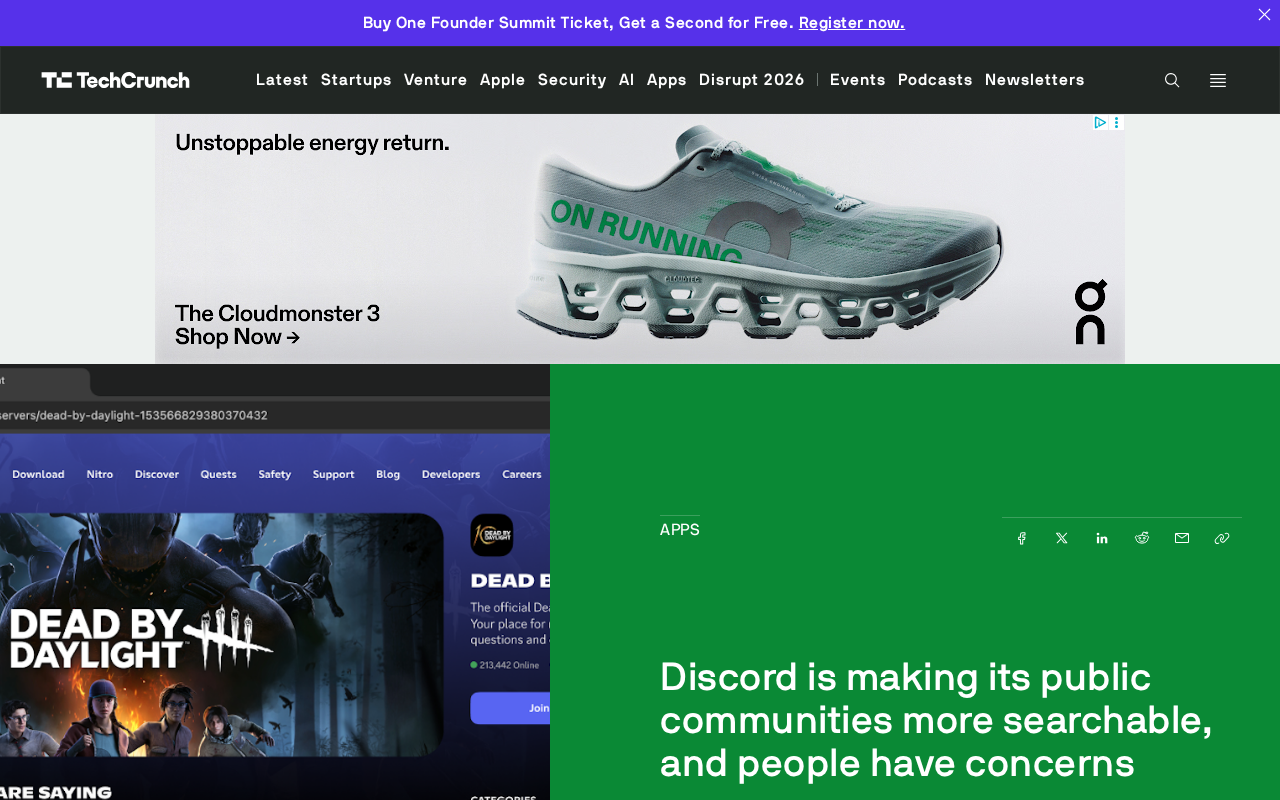
This change didn't happen overnight. Discord has been promoting its "Discoverable Servers" feature in recent years, allowing users to find public communities of interest through the platform's internal directory. Opening this directory further to external search engines essentially expands the visibility of community content from "in-platform discovery" to "web-wide search." For community operators looking to expand their influence, this is undoubtedly a broader traffic funnel; but for ordinary users, the feeling may be entirely different when things they said years ago in a public server suddenly become searchable.
The Core of User Concerns: Context Collapse and Privacy Boundaries
The report points out that this news has raised concerns. The focus of these concerns is not hard to understand: Discord conversations are often highly immediate and context-dependent—a joke, a technical discussion, an emotional outburst—all reasonable within the original channel context, but once stripped of context and displayed by search engines, they may be misinterpreted or even amplified.
This kind of "context collapse" has played out repeatedly in the era of forums and social media. What makes Discord special is that many users treat it as a more private communication space than traditional forums—even though servers are "public," the actual barrier to participation and the atmosphere give users a lower expectation of exposure. When search engines begin crawling this content, a gap emerges between user expectations and the platform's actual behavior.
Context Collapse is a concept in communication studies and social media research, first used by scholars such as danah boyd to describe the phenomenon where social networks compress different audience groups into the same visible space. In traditional face-to-face communication, people adjust their expression based on who is present; but once content is re-aggregated by platform algorithms or search engines, statements originally intended only for a specific circle may be seen by unrelated third parties, leading to misunderstandings, out-of-context quotations, and even online harassment. Discord's channel structure is supposed to maintain context boundaries through topic segmentation and membership thresholds, but the intervention of search engines breaks these boundaries, detaching fragmented conversations from their original discussion threads and increasing the risk of misinterpretation.
The Blurred Zone Between Public and Private
It should be made clear that this change targets "publicly discoverable servers," not private servers or direct messages. From the platform's perspective, since a server has already chosen to be public, being indexed by search engines seems like a logical extension. But user perception often doesn't follow this logic: being public within Discord and being searchable by anyone on the internet are two entirely different levels of exposure.
This cognitive difference is precisely the root of the controversy. Platforms tend to define content attributes using the binary label of "public," while users understand the scope of publicness in layers—public to community members, public to platform users, public to the entire web—each layer carrying different psychological expectations. Discord's adjustment crosses the final layer without leaving users sufficient room to adapt and choose.
Discoverable Servers is an in-platform community directory feature that Discord launched around 2020. Server administrators can proactively choose to list their community in the directory, allowing non-members to browse and join through Discord's built-in discovery page. Joining the directory typically requires the server to meet certain conditions, such as reaching a member count threshold, complying with community guidelines, and enabling content moderation. Previously, this directory was only visible within the Discord app, and users needed to log in to browse it; this adjustment means that content from these already-public servers will be further crawled by external search engines, effectively upgrading "in-platform discoverable" to "web-wide searchable"—this is the key background for understanding the boundaries of the controversy.
Impact on Community Operators
For operators of public servers, this change brings both opportunities and responsibilities. On one hand, external traffic from search engines may help communities gain new members; on the other hand, operators need to re-examine their channel structure and content management strategies, because discussions that previously circulated only within the community may become public records in search engines in the future.
One detail worth noting is that the report does not mention whether Discord offers an option for servers to proactively opt out of indexing. Without fine-grained controls, operators may only be able to choose between "fully public" and "completely disabling discoverability," which presents a dilemma for communities that want to maintain some visibility but don't want to be indexed web-wide.
Search engine crawling of public web content involves technical mechanism differences. Traditional web pages are crawled through HTML code and link structures, while Discord messages are stored in a proprietary client that search engines cannot directly index. Therefore, Discord needs to actively generate publicly accessible web snapshots or API endpoints for crawlers to read. This "server-side rendering" or "static snapshot" approach means the platform can precisely control which channels and which messages enter the index. Technically, it is entirely possible to provide opt-out options by channel or by server, but whether the product design is willing to add this complexity depends on the platform's trade-off between growth and user control. The fact that the report doesn't mention an opt-out mechanism suggests that this technical feasibility has not yet been translated into a product commitment.
Platform Transparency and User Trust
From a broader perspective, this controversy reflects the ongoing tension social platforms face between pursuing growth and protecting user expectations. Search engine indexing can bring traffic and exposure—a natural path for platform monetization and ecosystem expansion; but building user trust often depends on the platform's respect for content boundaries. When a platform unilaterally adjusts visibility rules, even if the rules are literally reasonable, it can erode users' sense of security.
Discord is not the first platform to face such issues. Forums, blogs, and social networks have all experienced similar transitions from closed to open, and each transition has been accompanied by user discussions about privacy and context. The difference is that Discord's real-time conversation nature makes content more fragmented and situational, and its display after being indexed by search engines may be even more jarring.
Conclusion
This December change will push Discord's public communities into a broader internet spotlight. For the platform, it's a continuation of its discoverability strategy; for users, it's a moment to recalibrate privacy expectations. The core of the controversy is not the technical question of "whether public content can be searched," but whether the platform has given users sufficient awareness and choice when changing the rules. While building a bridge between community content and search engines, how to preserve users' trust in their communication spaces will be a question Discord needs to answer seriously.
Related articles
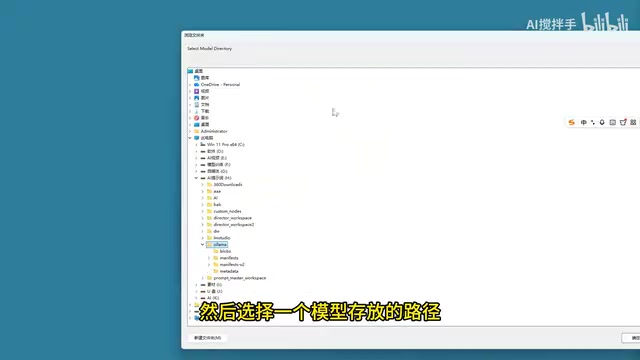
Complete Tutorial: Configuring Ollama Local Models in Director Master
A complete Bilibili tutorial on configuring Ollama local models in Director Master: from installation and model path setup to downloading Qwen and running topic, outline, script, and storyboard workflows.

Director Master Integrates Ollama Local Models: Configuration and Full Workflow Creative Practice
Bilibili tutorial explains how Director Master integrates Ollama local models: install Ollama, set model storage path, pull Qwen via command line, add provider in Agent settings, and run the full short film workflow from topic to storyboard with local Qwen 3.8.

Three Paths to Local LLM Deployment: How to Choose Between Personal, Enterprise, and Specialized Engines
Local LLM deployment has three paths: how to choose between Ollama, LM Studio, and LLaMA.cpp for personal use; the memory reuse differences between vLLM and SGLang for enterprise; and where specialized engines like NIFL, Halogen, and Strix fit. Three questions help you pick the right tool.