Disney+ Updates Terms of Service: Ads Coming to All Subscription Tiers

Disney+ quietly updated its ToS to allow pre-roll ads on all plans, including premium ad-free tiers.
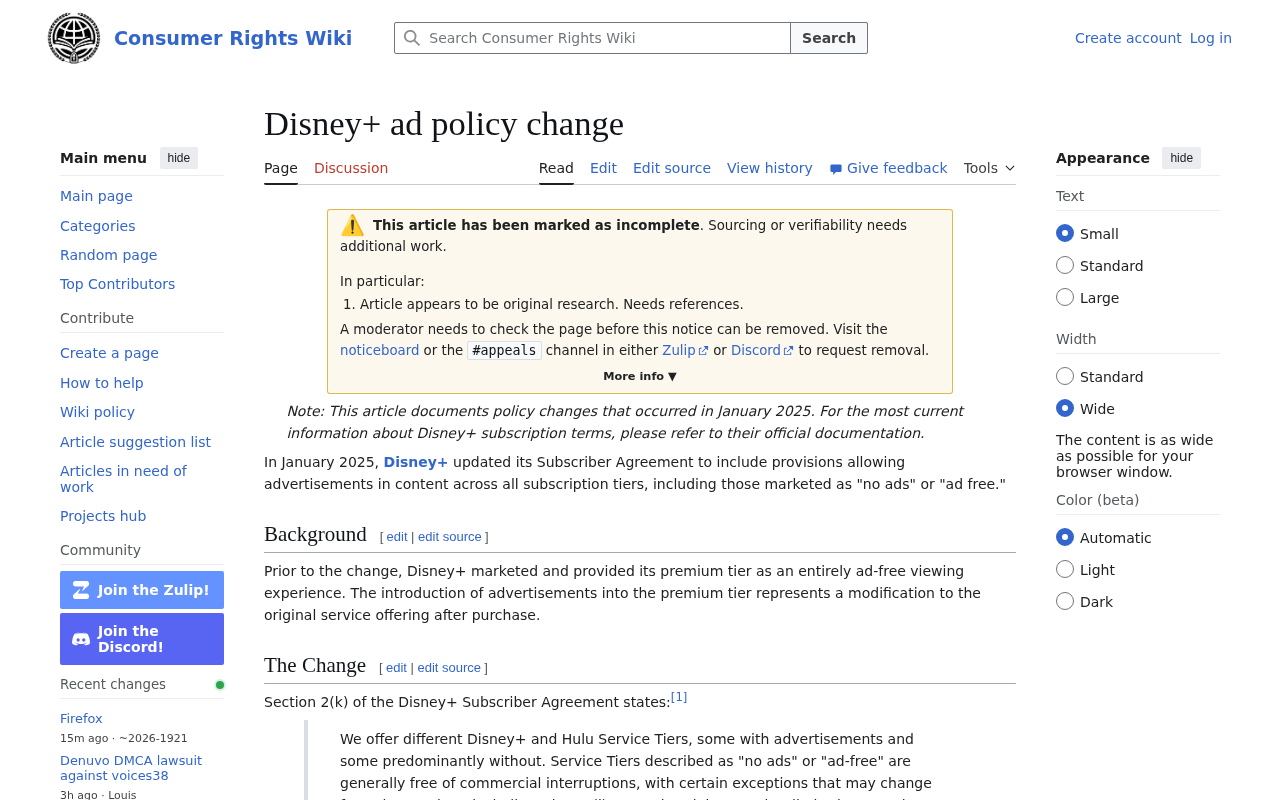
Disney+ has quietly updated its Terms of Service to reserve the right to play ads before films across all subscription tiers — including premium ad-free plans. By drawing a technical distinction between "pre-roll ads" and mid-film interruptions, the platform sidesteps its own "ad-free" promise. The change sparked 241 upvotes and 169 comments on Hacker News, with debate focusing on streaming platforms' pivot to ads and price hikes after reaching scale, the legitimacy of unilateral ToS changes, and precedents already set by Netflix and Amazon Prime.
Overview
Disney+ has quietly updated its Terms of Service to allow advertisements to be inserted before films across all subscription plans — meaning even users who pay a premium for an "ad-free" tier may now encounter pre-roll ads. The policy change sparked considerable discussion on Hacker News, where the post received 241 upvotes and 169 comments, making it a focal point for consumer rights debate.
The news was originally documented by consumerrights.wiki, a site dedicated to tracking Terms of Service changes that negatively impact consumers across major platforms. Disney+'s update was flagged as a textbook case of "ads despite paying," touching a nerve that has long been sensitive in the streaming industry.
What the Policy Change Actually Says
Under the updated Terms of Service, Disney+ reserves the right to play advertisements before feature films, and this clause applies to all subscription tiers — including premium "ad-free" plans. In other words, the price premium users pay to avoid ads does not fully guarantee an uninterrupted viewing experience.
There's a subtle distinction at play here: many streaming platforms already retain the right to show trailers, branded sponsorships, or promotional content for their own properties within "ad-free" plans, drawing a technical line between that content and "ads" proper. Disney+'s updated language exploits exactly this ambiguity, treating pre-roll ads differently from mid-roll interruptions during a film.
Why Users Are Upset
One of streaming's core value propositions — especially compared to traditional cable TV — has always been an ad-free, watch-anytime experience. When users pay more to choose an ad-free plan, they reasonably expect a clean viewing environment. Having that expectation undermined by fine print naturally invites backlash.
Discussion in the Hacker News thread centered on several themes: the widespread pattern of streaming platforms pivoting to higher prices plus ads once they've built a large enough user base, seen by many as a betrayal of early adopters' trust; the legitimacy of unilaterally changing service terms, with users often "agreeing" to new conditions without meaningful notice; and the likelihood that this trend will spread industry-wide, given that Netflix and Amazon Prime have already set similar precedents.
A Broader Industry Trend
Disney+'s move is not an isolated case — it reflects how streaming platforms are chasing profitability as subscriber growth slows. Once user acquisition hits a ceiling, turning to advertising revenue and price hikes becomes almost inevitable. Advertising-based video on demand (AVOD) has expanded rapidly over the past few years, and even premium, originally ad-free subscriptions are gradually being eroded.
For consumers, this creates a practical dilemma: paying more no longer guarantees an interruption-free experience. The definition of "ad-free" is controlled by the platform and can be rewritten with each Terms of Service update. This is precisely where third-party watchdog sites like consumerrights.wiki prove their value — helping users track changes that would otherwise slip by unnoticed.
AVOD (Advertising-Based Video on Demand) and SVOD (Subscription-based Video on Demand) represent the two dominant business models in today's streaming industry. Early platforms like Netflix built their differentiation around "zero-ad subscriptions," but slowing user growth and rising content costs have pushed platforms to introduce AVOD tiers. Netflix launched an ad-supported lower-cost plan in late 2022, with Disney+ and HBO Max (now Max) following suit. This dual-tier structure offers a lower entry price while gradually redefining the boundaries of what "paying for a premium experience" actually means. As ad-supported plans become the industry standard, even the supposedly pristine high-price tiers are starting to be chipped away — Disney+'s latest Terms of Service update is the most recent example of that erosion in action.
What Users Can Do
When it comes to unilateral Terms of Service changes, users' options are genuinely limited. Carefully reading service agreement update notices, following third-party consumer rights platforms, and evaluating a plan's actual value before renewing are the most practical responses. Consumer protection laws in some regions do require platforms to notify users of significant changes and offer the option to opt out or cancel — users can lean on those regulations to protect their interests.
From a broader perspective, this episode is yet another reminder that "ownership" and "experience guarantees" in digital subscription services are always built on agreements the platform can revise at any time. Understanding this fundamental imbalance is a reality every streaming user must come to terms with.
On the legal front, the EU's Consumer Rights Directive and certain U.S. state laws (such as contract term regulations under California's CCPA framework) place some restrictions on significant changes to digital service contracts, requiring advance notice and giving users the right to exit or cancel their subscription. However, the threshold for what constitutes a "significant change" is vague, and since most users never read terms update emails, platforms enjoy considerable room to maneuver in practice. Consumers who believe a change violates explicit promises made at the time of subscription can file complaints with consumer protection agencies (such as the FTC in the U.S. or the CMA in the UK), or pursue legal remedies in jurisdictions with mature class action mechanisms — but the cost-benefit calculus of individual action is typically heavily lopsided.
Related articles

Use Claude Code CLI for Free: One-Click Windows Installation Tutorial
A YouTube Short shows how to install Claude Code CLI for free on Windows in one click. We break down the steps, the free-access mechanism, privacy/security risks of third-party relays, and safer alternatives.

Building AI Agents with Python and the Claude API: Tool Use and MCP in Practice
A hands-on Python AI Agent tutorial with the Claude API: from basic messages.create calls to Tool Use, Agent Loop implementation, the MCP open standard, the Claude Agent SDK, and security best practices.

How Can an Obsidian Vault Sync with a Server-Side AI Agent?
Explore how to sync an Obsidian Vault with server-side AI agents, analyze the feasibility of Obsidian Headless Sync, and present a pragmatic architecture based on Git/Syncthing file-level sync, write-permission isolation, backups, and concurrent-edit handling.