Domestic AI vs. Top Four Overseas Models: Who Claimed the Most Territory?

Claude wins a Paper.io AI coding battle on Bilibili, with Hunyuan taking top honors among domestic models.
Bilibili creator "Turtle Chicken Colosseum" had four domestic AI models — Hunyuan, GLM, DeepSeek, and Xiaomi — face off against Claude, Grok, GPT, and Gemini in a Paper.io territory game, each writing their own bot. After 300 rounds, Claude claimed the championship with 370 points and just one elimination, proving that steady strategy wins. Hunyuan led the domestic field in fourth place overall, while DeepSeek's 400 deaths made it the show's most entertaining underdog. Results are best read as qualitative style indicators, not definitive rankings.
A Creative Competition Using a "Territory Game" to Test AI Coding Skills
Bilibili creator "Turtle Chicken Colosseum" launched their fourth episode with a highly creative format: eight major AI models from China and abroad competing head-to-head. The game mechanic is the classic territory-grabbing battle (similar to Paper.io) — each AI writes its own bot that leaves a "tail" when venturing out and claims enclosed territory upon returning home. Any tiles enclosed become yours, but if another player runs over your tail, you're eliminated. Each bot respawns after ten rounds, with 300 total rounds played, and the winner is whoever holds the most territory at the end.
While it looks like entertainment, this is actually a comprehensive test of AI code generation, strategic planning, and logical rigor. Each model must independently produce a fully autonomous game-playing program — testing not just coding accuracy, but the cleverness of the underlying algorithm strategy.
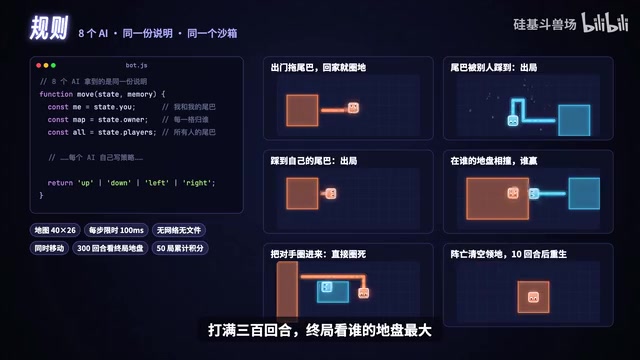
Paper.io is a multiplayer online territory game: players control a block moving across a map, leaving a "tail" trail whenever they leave their home territory. When that trail reconnects with their existing territory, all tiles within the enclosed area become theirs. The deadly rule: while your tail is exposed, if any other player's head or tail touches it, you're instantly eliminated. This creates a natural tension between expansion and defense — aggressive moves let you claim territory fast, but also expose a longer, more vulnerable tail. Bringing this ruleset into AI coding competition demands that models not only produce runnable code, but also implement multi-layered logic including pathfinding, threat avoidance, and opportunity detection. It's a dual challenge of code correctness and algorithmic strategy.
The Lineup: Four Domestic Champions vs. Four Overseas Champions
The domestic competitors this episode are Hunyuan, GLM, DeepSeekAd, and Xiaomi. The overseas camp fields the strongest performers from their respective second-episode outings: Claude, Grok, GPT, and Gemini.
Each bot's "pre-match declaration" had its own personality. Third-episode champion Hunyuan rewrote its territory bot from scratch, aiming to defend its title. GLM entered with the motto "let the map bear witness." DeepSeek recycled its bot from episode two — the one that died 388 times — sticking to the aggressive "measure the land with your body" philosophy. Xiaomi ran into trouble: it used up the time limit on the first attempt and only submitted after a remedial round, embracing the motto "territory is like chess — if you don't patch, you win."
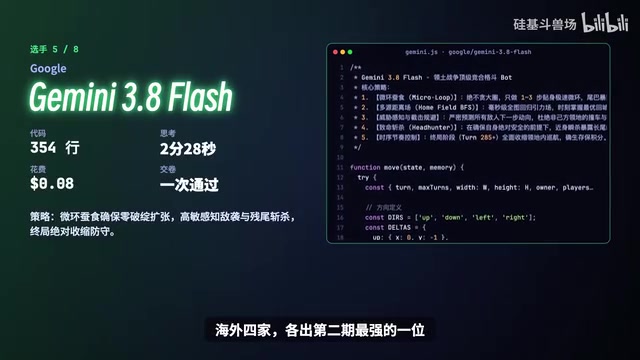
Among the overseas contenders, Grok submitted nearly a thousand lines of code, pursuing a highly detailed approach. Claude leaned into a "steady and methodical, every tile accounted for" strategy. Even before the match began, the difference in code volume and strategic design revealed how differently each model approaches the same problem.
Intense Competition: Strategy Meets Chance
The match was full of drama. DeepSeek was the first to be eliminated — Grok ran over its tail. GLM sliced off 88 tiles from Xiaomi in the chaos, showing strong aggression. DeepSeek stayed true to its "recklessly aggressive" style throughout, dying a total of 400 times across the entire competition.
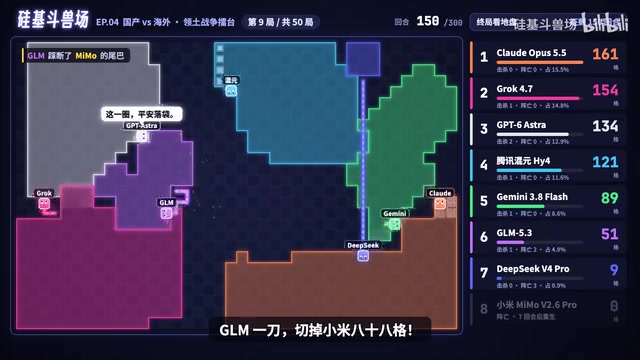
The most gripping showdown was between Hunyuan and Grok. In the final 30 rounds, Hunyuan briefly overtook Grok, but Grok clawed back two bites in a row. In one particular round, Claude won second place over Grok by a single tile — 179 to 178. That one-tile margin perfectly illustrated just how close the strategic execution was between these models.
Final Results: Claude Takes the Crown, Hunyuan Tops Domestic Rankings
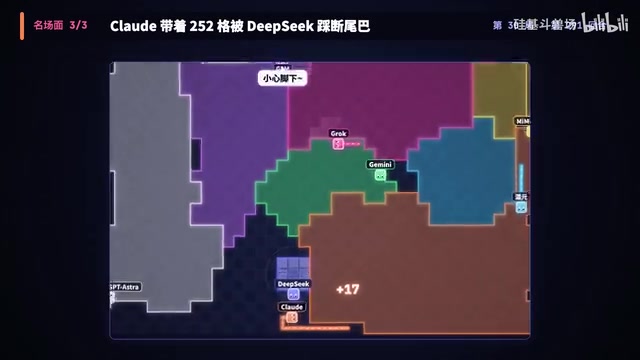
After 50 rounds, the championship went to Claude (referred to as "Cloud" in the show) with a total score of 370 points. Claude was eliminated only once throughout the entire competition — and even that single death was dramatic: it wandered out for a loop and DeepSeek snuck in to sever its tail from behind. "The territory king wins by staying steady" became its defining motto.
Among the domestic competitors, Hunyuan performed best and was crowned "top domestic model," finishing fourth overall. DeepSeek ended up last with 400 deaths, but its recklessly aggressive playstyle became one of the show's biggest highlights. DeepSeek's self-deprecating post-match quip — "finishing last on the leaderboard is nothing to be ashamed of" — captured the entertainment spirit of this kind of test.
The Value and Limitations of This Kind of Fun Test
Using a territory game to compare AI models is essentially a lateral evaluation of AI coding and strategic capability. Its strength lies in being intuitive and engaging — it gives general audiences a visceral sense of how different models stack up. Based on the results, Claude demonstrated clear advantages in consistency and strategic planning, which aligns broadly with its reputation in formal coding benchmarks.
That said, it's worth keeping perspective: in a single game format like this, outcomes are heavily influenced by random factors (collisions, route conflicts), and the sample size is limited. This can't fully represent a model's comprehensive coding ability. The show explicitly emphasized that "all models receive the same prompt, and results are judged by the program" to ensure fairness — but results should still be treated as reference points, not authoritative conclusions.
Overall, this episode offered a lighthearted look at how domestic large language models compare against top overseas models. Hunyuan earning fourth place overall and first among domestic models reflects the ongoing progress Chinese models are making in code generation and strategic design.
In formal AI coding evaluation frameworks, commonly used benchmarks include HumanEval (function-level code generation), SWE-bench (real-world software engineering tasks), and Codeforces competition problems. These benchmarks focus on code correctness, edge case handling, and algorithmic efficiency under relatively controlled conditions. By contrast, territory-game competitions fall into the "multi-agent adversarial" category, where outcomes depend not just on each bot's code quality, but also on random variables like starting position, opponent behavior, and collision timing. As a result, territory-game competitions are better understood as tests of "executing strategy in a noisy environment" — complementary to standardized benchmarks rather than replacements. Viewers should treat the results as qualitative indicators of each model's strategic style, not as quantitative rankings.
Related articles

M&M's Spent Millions Replacing Artificial Blue Dye — Why Is It So Hard?
Mars spent millions trying to replace artificial blue dye in M&M's with spirulina, but thick material clogs pipes and residue risks mold, forcing a full production-line rebuild. Here's the engineering behind the reformulation.
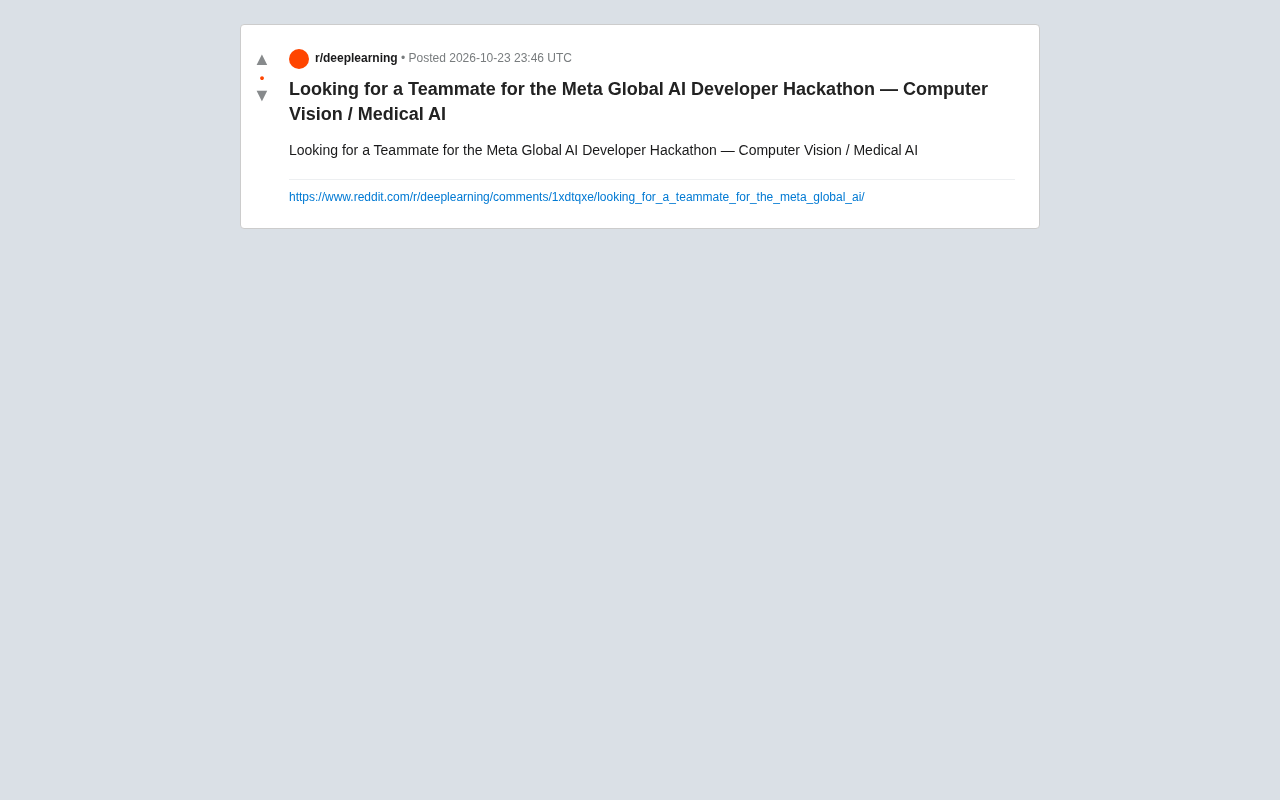
Teammate Wanted for Meta Global AI Developer Hackathon: Computer Vision & Medical AI
A Reddit developer seeks teammates for the Meta Global AI Developer Hackathon, focusing on computer vision and medical AI. This article analyzes the track logic, skills-complementarity needs, and topic selection strategy behind this teaming signal.
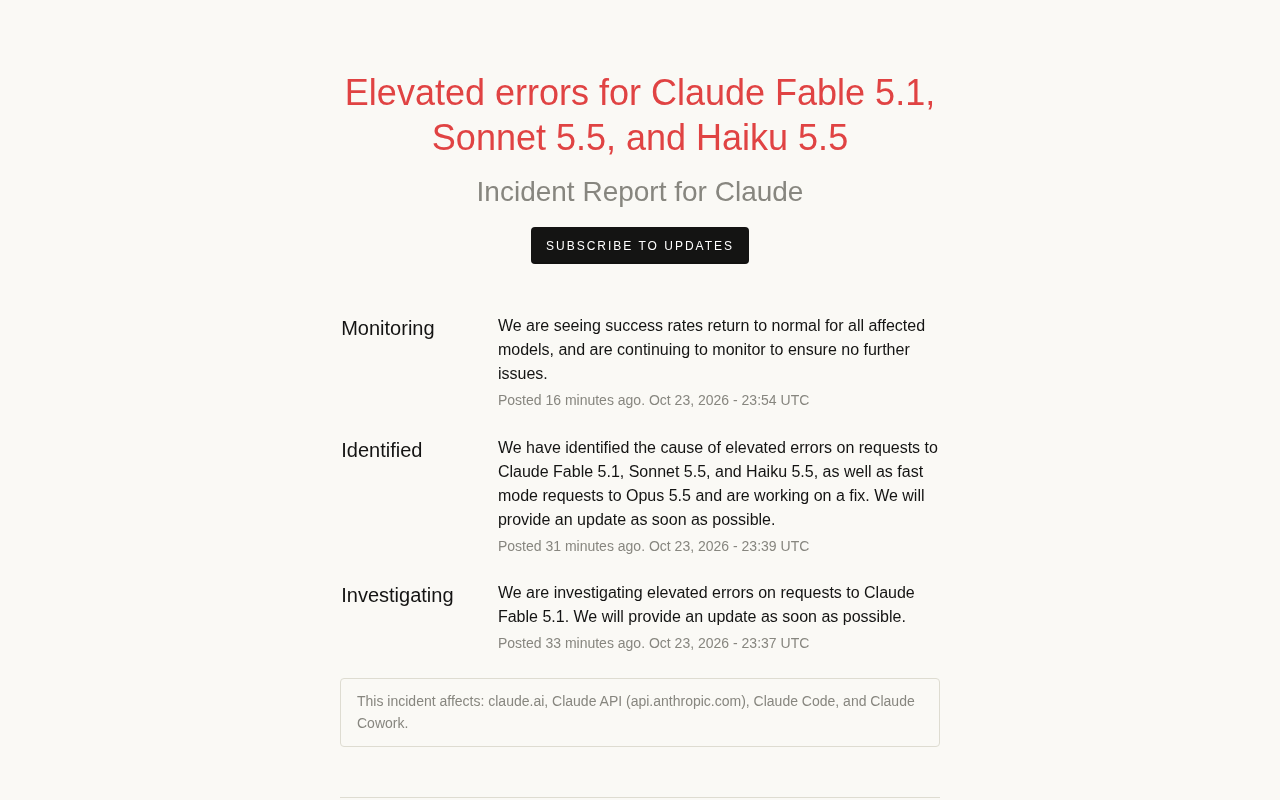
Multiple Claude Models Hit by Errors: A Postmortem of Fable 5.1, Sonnet 5.5, and Haiku 5.5
Claude Fable 5.1, Sonnet 5.5, Haiku 5.5, and Opus 5.5 fast mode saw elevated errors; Anthropic identified and resolved the issue in 17 minutes. This postmortem covers the timeline, the technical reasons for the multi-model cascading failure, and practical lessons for retry and degradation strategies.