Domestic Budget AI Models for Web Novel Writing: A Head-to-Head Comparison of Four Models

A rigorous head-to-head evaluation of four budget Chinese AI models for web novel writing.
Lingxie SoloEnt's team ran four domestic budget AI models — QDAM 3.7 Plus, DeepSeek Feast Pro, LongCat 2.0, and MiniMax Mi3 — through identical automated web novel writing tasks, scored by three professional editors. Results: QDAM 3.7 Plus is best for bulk drafts; DeepSeek Feast Pro excels on priority chapters; LongCat and MiniMax are testing-only for now. All models still require human oversight.
An AI Model Evaluation Designed for Web Novel Authors
For writers new to the web novel industry, choosing the right AI model has always been a headache. The market is flooded with options at varying price points and wildly different capability levels — official marketing materials alone are rarely enough to judge real-world performance. In their second model evaluation, the Lingxie SoloEnt team took a rigorous approach to answer one core question: Does AI-generated content actually feel like a web novel?
Three seasoned human editors served as judges, evaluating each model on identical writing tasks, then scoring the generated opening chapters professionally. The four models tested were QDAM 3.7 Plus, LongCat 2.0, DeepSeekAd Feast Pro, and MiniMax Mi3 — all positioned in the domestic budget or high-value segment.
Market Context for Domestic Budget Models: These four models reflect a significant trend in China's LLM market since 2024 — leading vendors aggressively competing for API market share through pricing. QDAM 3.7 Plus stays competitive via official discounts; the DeepSeek series differentiates through its open-source ecosystem and strong inference performance; LongCat and MiniMax represent vertical competitors focusing on long-context or multimodal capabilities. For content producers, "value" isn't just about per-token cost — it also involves stability (variance), task completion rate, and the combined cost of human editing time.

Methodology: Minimizing Human Intervention
The evaluation used PLAM mode to execute a unified task, with all models facing identical content requirements. After the planning phase, the process switched to ACT automated execution through to first-chapter generation — zero human intervention throughout. This design aims to reveal each model's raw capability in real-world automated production, rather than its "best-case" performance after repeated manual tuning.
PLAM Mode and ACT Automated Execution Explained: PLAM (Planning-Linked Automated Mode) is an AI writing workflow framework that decouples content planning from automated execution. The model first completes structural planning — worldbuilding, character relationship maps, chapter outlines — then switches to ACT (Automated Content Traversal) mode to generate the actual text along the planned path, without any human checkpoints. This design genuinely exposes a model's "self-consistency": whether planning and execution align, whether causal chains are complete, and whether stylistic tone remains stable. By contrast, many AI writing evaluations use a "best result after human tuning" approach, which systematically overstates real-world automated production performance.
The test generated 147 model calls in total — a reasonably large sample that reflects statistical stability across multiple calls rather than single-instance peak performance.
Head-to-Head Comparison of Four AI Writing Models
The evaluation doesn't chase a single "best model for everything" — instead, it emphasizes task-based selection — a point that's especially critical for real content production workflows.
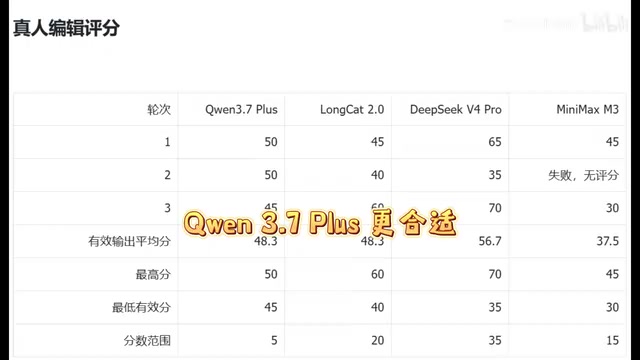
QDAM 3.7 Plus: The Safe Choice for Bulk Draft Generation
If forced to pick one default production model, the evaluation points to QDAM 3.7 Plus (Q1). Its strengths are execution-focused: complete file structure, clear organization, and broad coverage in long-form planning — well-suited for generating large volumes of first drafts.
That said, Q1 has clear weaknesses — it tends to "over-elevate" content, while period details feel thin and the web novel flavor is lacking. "Over-elevation" means the model tends to steer plots prematurely toward grand themes or moralistic expressions, undermining the immersion and immediate gratification that web novel readers expect. In short: it builds a solid skeleton, but the flesh and flavor still need human input.
Worth noting: current official discounts make Q1 the most cost-effective choice for stable output at this price tier — which is the practical reason it's recommended as the default production model.
DeepSeek Feast Pro: High-Ceiling Choice for Priority Projects
For priority projects, the evaluation recommends DeepSeek Feast Pro, citing its significantly higher content ceiling.
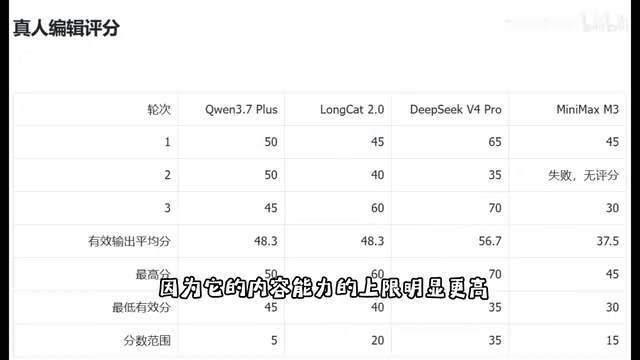
Specifically, DeepSeek excels at long-form structure, character development, portraying social pressure of the era, and restrained use of the "cheat" mechanic; its causal logic between planning and execution is more complete and coherent. These are exactly the qualities that web novel readers can directly perceive as "texture."
The Web Novel "Cheat" (金手指) Mechanic Explained: "Golden finger" (金手指) is a core term in web novel writing, referring to the protagonist's extraordinary abilities, systems, plug-ins, or foreknowledge advantages — the key mechanism driving satisfaction and reader immersion. How it's designed directly determines pacing and genre classification: too powerful or too frequent triggers "invincibility mode" which kills narrative tension; too restrained and readers lose their reading motivation. DeepSeek Feast Pro being praised for "restrained cheat deployment" means the model can control the pacing of ability reveals while maintaining narrative tension — a higher-level narrative judgment in web novel writing that requires deep understanding of genre conventions and reader expectations. It's also an important marker distinguishing "general-purpose language models" from "writing models with genuine genre awareness."
Its drawback is significant output quality variance, which still requires author oversight at key moments. It's therefore better suited for high-quality chapters that warrant manual polish, rather than mindless bulk production.
LongCat 2.0 and MiniMax Mi3: Testing Use Only
By comparison, LongCat 2.0 and MiniMax Mi3 received more cautious assessments. The evaluation found neither offers meaningful advantages in cost or stability, and currently recommends them for testing purposes only — not for integration into formal production workflows.
Facing Reality: AI Still Cannot Replace Human Authors
After completing all four model tests, the evaluation arrived at a sobering conclusion: for now, budget AI models still cannot replace the core work of human authors.
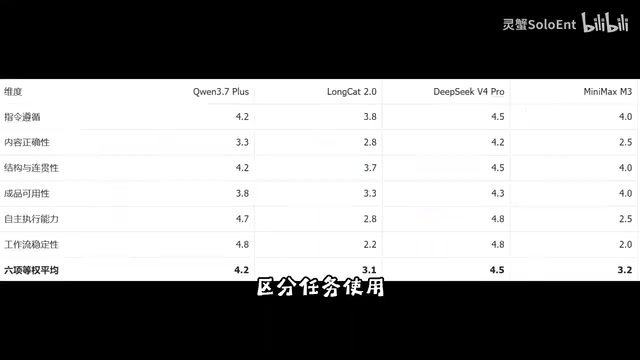
These models are better suited for repetitive and standardized tasks — building structure, generating first drafts, bulk content filling, and similar work. The creative vision, emotional expression, period authenticity, and reader immersion that ultimately determine a work's success still depend on human judgment and craftsmanship.
How to Read This Evaluation Report Critically
It's worth noting that this test reflects the professional judgment of three seasoned editors — not the preferences of all readers. Web novels serve a highly segmented market, and there can be a gap between what editors consider "good" and what readers find "satisfying" — this touches on the classic tension between "expert validity" and "user validity" in content assessment: experts can identify narrative structural integrity and logical consistency, but readers' motivation to keep reading is often driven by more intuitive emotional trigger mechanisms, and the two don't always align. The conclusions should serve as a reference framework rather than an absolute standard.
Practical recommendations for web novel creators:
- Bulk drafts: Prioritize QDAM 3.7 Plus for its structural completeness and low-cost stability;
- Priority chapters: Use DeepSeek Feast Pro, accepting some variance in exchange for a higher content ceiling;
- Human oversight is non-negotiable: Regardless of model choice, period-specific details, pacing of thematic elevation, and web novel tone all require author calibration.
According to Lingxie SoloEnt, the full report has been published on their official website and the Feishu manual — interested authors can access the detailed data there. The evaluation series will also update with head-to-head comparisons of top-tier domestic models, worth following.
Conclusion
The most valuable aspect of this evaluation may not be "which AI model is best" — but rather that through unified tasks, automated execution, and human editor scoring, it provides a reusable framework for evaluating AI writing tools.
Methodological Value of the Evaluation Framework: Most AI writing tool evaluations currently on the market rely on subjective impressions or single-dimension metrics (such as fluency or word count), lacking systematic evaluation methods tailored to vertical use cases. The framework built in this evaluation contains three key elements: unified tasks (controlling input variables), automated execution (eliminating manual tuning interference), and human expert scoring (introducing domain knowledge calibration). This framework closely aligns with "blind evaluation" principles in NLP academic testing, while being adapted for the highly genre-specific context of web novels. In the field of AIGC quality assessment, how to simultaneously account for professional standards and target audience perception remains an insufficiently resolved methodological challenge — and this evaluation's proactive acknowledgment of the editorial perspective's limitations is itself an important component of its framework's honesty and reusability.
In an era overflowing with AI writing tools, rationally distinguishing tasks and understanding model capability boundaries matters more than blindly chasing the newest thing. AI can help you write faster — but writing something that truly moves people still requires an author who can't be replaced.
Key Takeaways
Related articles

Build an AI Super Employee System at Zero Cost: A Full Breakdown of Automated Agent Workflows
A deep breakdown of the AI super employee system demoed on Bilibili: agent orchestration, digital human voiceovers, map and enterprise lead generation, 24/7 customer service, and legal modules. We analyze the business logic and compliance risks behind zero-cost signup to help entrepreneurs judge the real ROI of this AI digital employee system.

The Essential Difference Between Chatbots and AI Agents: Crossing from Conversation to Execution
What's the difference between a chatbot and an AI agent? Based on the MCP series on the Learn Tech channel, this article uses examples like booking flights and summarizing notes to explain: a chatbot only gives answers, while an agent actually completes tasks through a think-act-observe loop. It breaks down the four core components—model, tools, memory, and goal—as well as MCP's role as a bridge, and discusses agents' applicable boundaries and permission risks.

Free GitHub Repo: 342 Hours of AI Courses, from Math to MCP Servers
A free GitHub repo offers 342 hours of AI courses: 523 lessons across 20 phases, from math fundamentals to agent building and MCP servers. Nearly 100,000 learners have started.