dusk bot: A Free, Open-Source Grok Bot Alternative That Turns Your Paid AI Subscriptions into an Intelligent Team
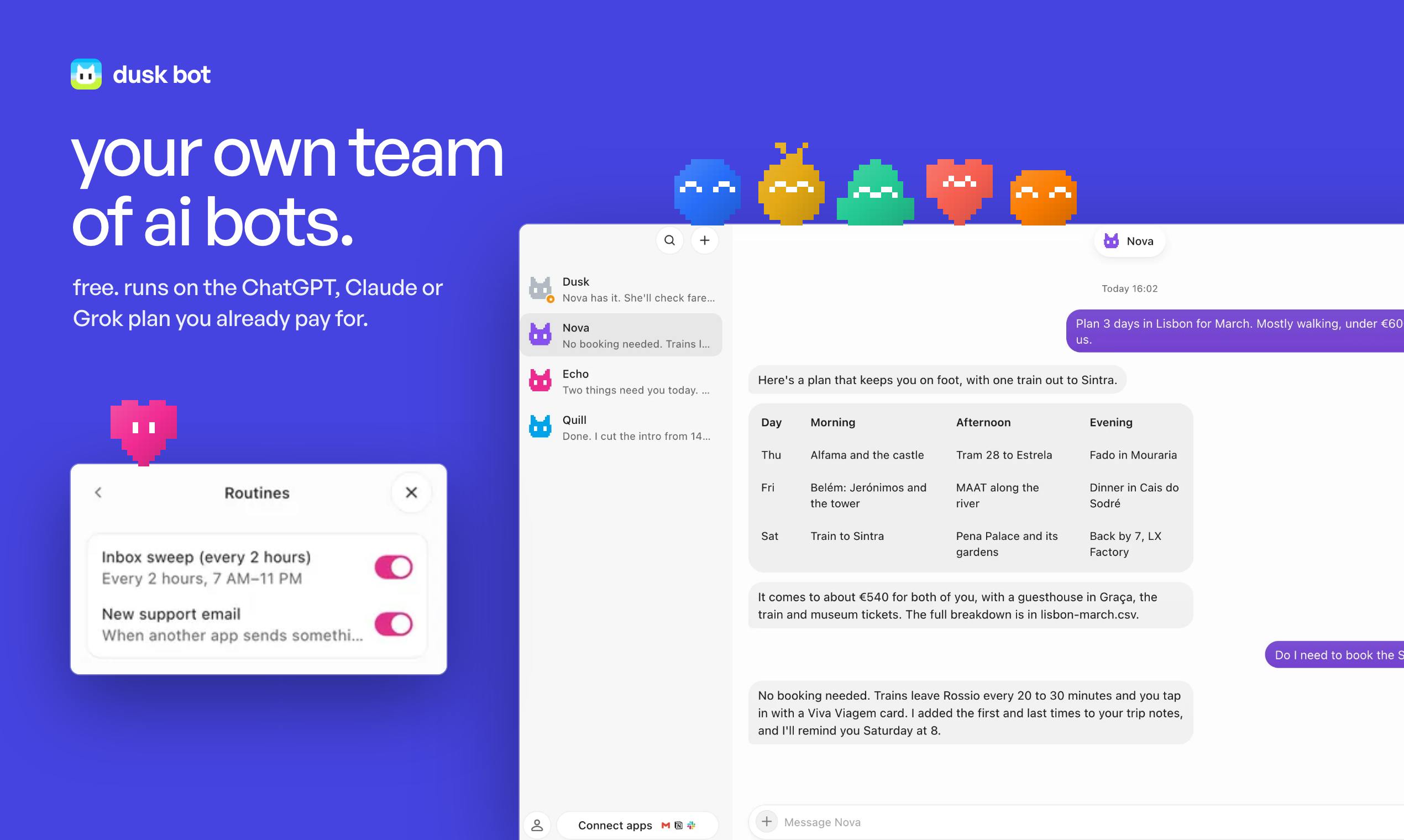
dusk bot reuses existing AI subscriptions to build a memory-equipped, schedulable, collaborative open-source multi-bot team.
dusk bot is the #6 ranked open-source project on Product Hunt, billed as a free Grok bot alternative. Instead of requiring extra API credits, it reuses existing ChatGPT, Claude, Grok, Gemini subscriptions or local models, organizing them into a schedulable, memory-equipped, collaborative bot team. Each bot has its own role, editable memory, and a dedicated "computer" for file and code operations, with scheduled runs and human-in-the-loop confirmation for risky actions. Fully free and open-source with no paywall, it reflects AI's shift from single-chat tools to multi-agent collaboration.
In today's landscape of endless AI tools, one practical problem stands out: you've already paid for ChatGPT, Claude, or Grok, but every interaction still feels like talking to an isolated chat window—no memory continuity, no task division, and no automation. dusk bot, ranked #6 on Product Hunt, aims to solve exactly this pain point. Its tagline is straightforward: "a free, open-source Grok bot alternative"—but its actual capabilities go far beyond that.
Core Philosophy: Don't Replace Your Subscriptions—Amplify Them
dusk bot's cleverest design choice is this: it doesn't require you to purchase additional API credits. Instead, it directly reuses your existing ChatGPT, Claude, Grok, Gemini, Cursor, Copilot, OpenRouter accounts—or even local models. In other words, you're already paying for these services; dusk bot simply helps you organize those capabilities into a schedulable, memory-equipped, collaborative bot team.
According to its Product Hunt page, each bot has a clearly defined "job responsibility," manually editable memory, and its own "computer"—the latter meaning a bot can perform real tasks like file operations and code execution, not just chat. This design pushes AI from "conversational assistant" toward "digital employee."
API Credits vs. Subscription Accounts: API (Application Programming Interface) credits are typically billed separately by call count or token volume—developers pay the provider for each request. Consumer subscription accounts like ChatGPT Plus or Claude Pro, on the other hand, offer flat-rate web/app access without directly exposing API calls. dusk bot's clever workaround bypasses the API billing layer—it replicates the post-login web session and invokes model capabilities through "simulated human interaction," so no additional API key purchase is needed. This lowers the cost barrier, but it also means stability depends on each platform's front-end page changes and may push against the boundaries of service providers' terms of use.
Feature Breakdown: Teams, Memory, and Autonomous Execution
Every Bot Is an Independent Role
Unlike a single AI assistant, dusk bot lets you create multiple bots, each focused on a specific task—one handles email triage, one monitors data, one generates weekly reports. Each maintains independent memory that you can view and edit at any time to correct the bot's cognitive biases. This transparency is especially important in open-source tools—you have full control over what each bot "knows."
Multi-Agent System: A multi-agent system is a collaborative framework composed of multiple agents with autonomous decision-making capabilities. Each agent has independent goals, memory, and tool sets, and can communicate with others and divide tasks. Unlike a single large model "handling everything in one window," multi-agent architecture reduces task complexity through role division and enables parallel processing and error isolation. In dusk bot, each bot is an agent instance—they share the same underlying model service but each maintains independent context memory and execution environment, simulating "team collaboration." This architecture is a typical example of AI applications moving from "monolithic conversation" toward "organized automation."
Scheduled Runs and Risk Confirmation
dusk bot supports scheduled automatic task execution, giving it the ability to "work proactively" rather than passively waiting for your prompts. More importantly, when a bot encounters high-risk operations (like deleting files or sending emails), it confirms with you first rather than acting unilaterally. This "human-in-the-loop" mechanism is a pragmatic safety design in automation tools.
Human-in-the-loop: This concept originates from automation and control system design—introducing human confirmation or intervention at key points in an automated process to balance efficiency and safety. In AI agent scenarios, because models may hallucinate or misjudge, fully autonomous execution of high-risk operations (deleting files, sending emails, executing payments) carries non-negligible risk. dusk bot makes "risk confirmation" a default mechanism, pausing before sensitive actions and requesting user authorization—preserving automation's proactive nature while avoiding irreversible errors. This design also reflects the industry's mainstream consensus on autonomous agent safety: retain human final veto power while capabilities are not yet fully trustworthy.
A Unified Workspace
All bots live in a "calm, refined chat app"—that's the official description. You can interact with your bot team as if chatting with colleagues, viewing their task progress and history. This interface design reduces the cognitive burden of managing multiple bots and avoids the chaos of switching between windows.
Compatibility: Covering Nearly All Major AI Services
dusk bot's compatibility list is extensive: ChatGPT, Claude, Grok, Gemini, Cursor, Copilot, OpenRouter, and local models. It uses your own login credentials rather than requiring an API key—friendlier for ordinary users, though it depends on the stability of each platform's web front end.
One detail worth noting: as a 100% free and open-source project, dusk bot has no "freemium" trap in its business model. You don't pay for premium features, and all code can be audited and modified. For users who prioritize data privacy or want deep customization, this is a key advantage over commercial Grok bot alternatives.
Local Models and OpenRouter: Local models refer to open-source large language models running on your own hardware (e.g., Llama or Mistral deployed via Ollama or LM Studio). Data never leaves your machine—privacy is maximal—but compute constraints usually make them weaker than cloud-based closed-source models. OpenRouter, meanwhile, is a routing platform aggregating APIs from multiple model providers, offering a unified interface to access different vendors' models with usage-based billing. dusk bot supports both access methods, meaning users can flexibly combine "privacy-first," "cost-first," and "capability-first" approaches—for example, using local models for routine tasks and switching to cloud subscription accounts for complex reasoning, thereby building hybrid agent workflows.
Why Is It Worth Watching?
With 99 upvotes and a #6 ranking on Product Hunt, the numbers aren't explosive—and just 3 comments suggest it's still early-stage. Nevertheless, dusk bot represents a trend worth watching: AI tools are shifting from "single-point conversation" to "multi-agent collaboration." Users are no longer satisfied with a universal chat box; they want AI that remembers context, divides work, executes automatically—while remaining controllable and transparent.
dusk bot's open-source nature makes it an experimental sample of this trend. You can try it for free, inspect the code, or even contribute. If you already pay for multiple AI services and want to organize their capabilities, dusk bot offers a zero-additional-cost starting point.
That said, early-stage projects typically come with instability: documentation may be incomplete, features may iterate frequently, and community support may be limited. Interested users should start with simple tasks and gradually explore its boundaries.
Quick Start Suggestions
- Visit the GitHub repository to get the source code (link available on the Product Hunt page)
- Choose an AI service you're already subscribed to and log in
- Create your first bot with a clear task and initial memory
- Set up scheduled runs and observe its behavior under the risk confirmation mechanism
- Adjust memory content and task boundaries based on your experience
For users seeking free, open-source, and controllable AI automation, dusk bot deserves a spot on your toolkit watchlist.
One-line Summary
dusk bot reuses existing AI subscription accounts to build a memory-equipped, schedulable, collaborative open-source multi-bot team.
Paragraph Summary
dusk bot is the #6 ranked open-source project on Product Hunt, positioned as a free open-source Grok bot alternative. Its core innovation: rather than requiring additional API credits, it reuses existing ChatGPT, Claude, Grok, Gemini subscription accounts—or even local models—organizing them into a schedulable, memory-equipped, collaborative bot team. Each bot has independent responsibilities, manually editable memory, and its own "computer" supporting file operations and code execution, with scheduled task runs. For high-risk operations like deleting files or sending emails, bots confirm with the user first, preserving the human-in-the-loop safety mechanism. The project is 100% free and open-source with no paywall, uses your own login credentials instead of API keys, and supports major AI services. Though still early-stage with stability yet to be proven, it represents the evolution of AI tools from single-point conversation toward multi-agent collaboration.
Related articles
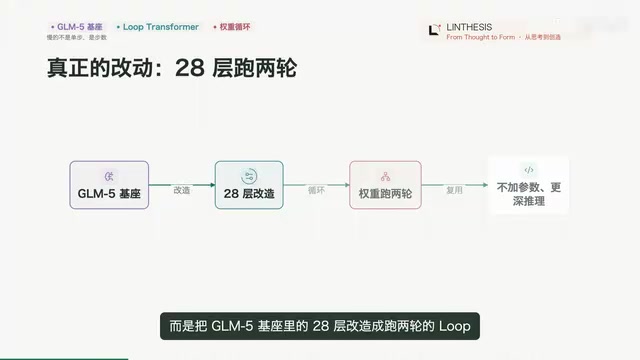
GLM-5.4 Coding Test 4.6x Slower? Unpacking the Loop Transformer Architecture
GLM-5.4 coding test took 431 minutes vs. competitor's 109, 4.6x more steps. We analyze its Loop Transformer architecture, KingBench4 score of 55.3, Max tier's 1.04M token cost, and tier selection advice.
Zhipu GLM-5.4 Quietly Released: A Debut for Loop Transformer Architecture
Zhipu GLM-5.4 quietly lands in coding plans: first Loop Transformer flagship with 750B params, 1M token context, AIM math up from 19.2 to 30.4, and native vision for coding from screenshots.
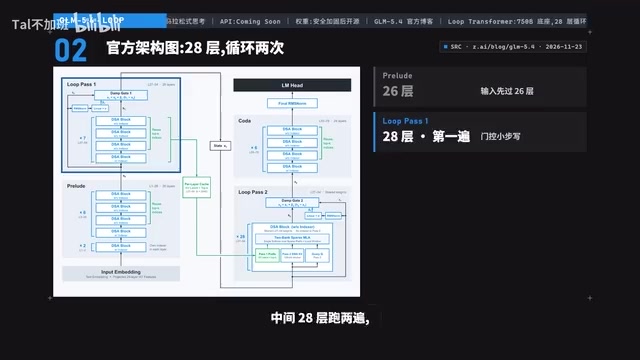
GLM-5.4 Releases 750B Model: Recurrent Transformer Architecture and the 30B Benchmark Controversy
GLM-5.4 releases a 750B model with a recurrent Transformer architecture that runs the same layers twice, claimed to match 2T–3T scale. But the benchmark table tests a 30B small model, not the main model. We break down the architecture changes, benchmark data, four demos, and open-source timeline.