EarthSort: AI Recycling Assistant + Localized Waste Sorting for 750 US Cities
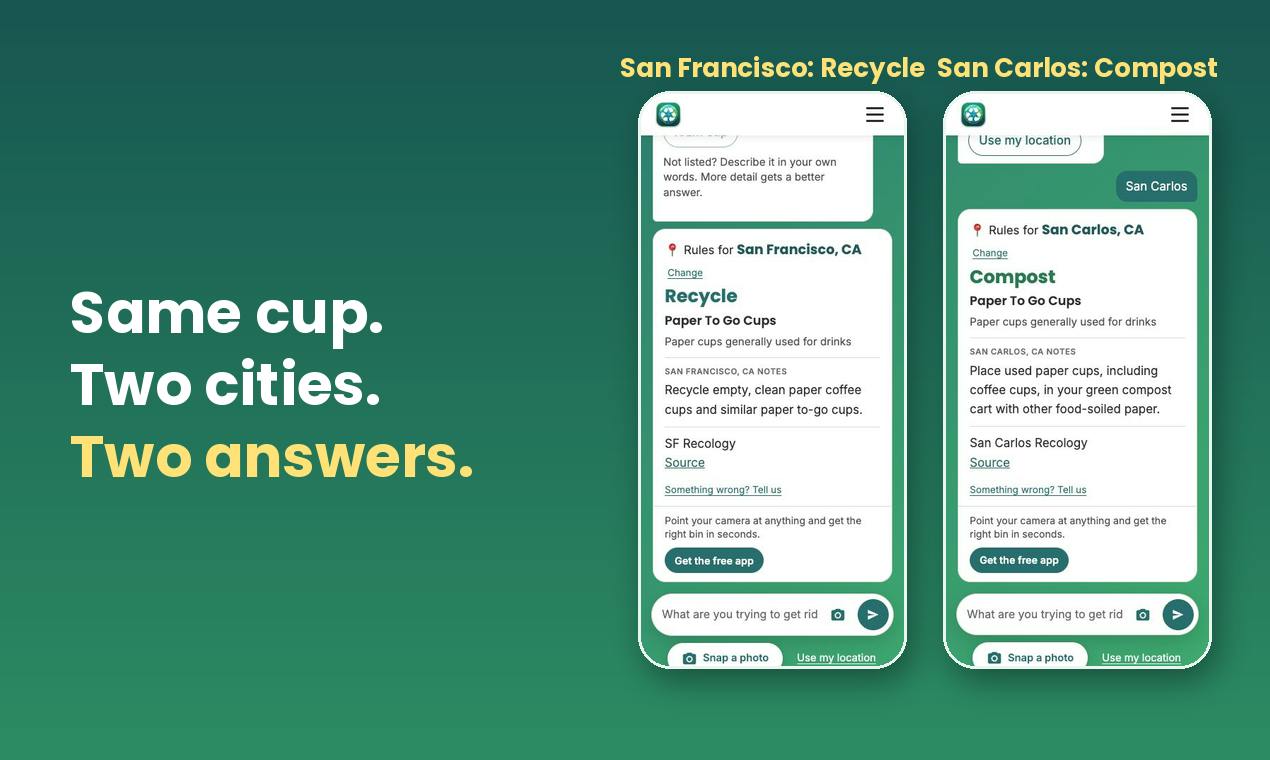
EarthSort combines AI with a city-level rules database to provide localized waste sorting answers for 750+ US cities.
EarthSort addresses the problem that recycling rules vary by city and generic guides often don't apply locally. It offers a web version and free iOS app: users enter an item name or upload a photo to get a sorting answer based on their city's rules, covering over 750 US cities and growing. Its differentiation lies not in pure image recognition but in binding AI recognition to a city-level rules database, automatically matching local sorting standards after identifying an item. On Product Hunt it received 76 upvotes, 9 comments, and ranked 20th for the day; launched by William Neil with a tech stack involving Google Cloud Run, positioned as climate tech. Limitations: currently US-only, and the rules database update mechanism and accuracy are not disclosed.
Why Does Waste Sorting Need to Be "Localized"?
The same coffee cup can be recyclable at home but non-recyclable at the office—the reason is simple: US cities don't have uniform recycling rules, and every city boundary can mean a different sorting standard. Most recycling guide websites only offer generic advice that often doesn't apply in your city.
EarthSort aims to solve this pain point. According to its Product Hunt page, its core philosophy is "Ask EarthSort gives you your city's answer": users simply enter an item name or upload a photo to get a sorting answer based on local rules. The product already covers over 750 US cities, with more being added continuously.
How to Use: Zero-Barrier Web Version + Free App
EarthSort's usage path is very straightforward: visit earthsort.com/ask, enter any item name, or upload a photo directly, and you'll get a recycling answer specific to your city. No app download required—everything can be done on the web.
For on-the-go use, EarthSort also offers a free mobile app with the same functionality as the web version, plus support for taking photos directly with your phone's camera for recognition. Judging from the product category tags, the app is available on iOS and positions itself at the intersection of artificial intelligence and Climate Tech.
The Intersection of AI and a "Local Rules Database"
EarthSort's differentiation isn't pure image recognition, but rather binding AI capabilities to a localized rules database. Traditional sorting tools either rely on generic databases or require users to look up municipal websites themselves; EarthSort's approach is: after recognizing an item, automatically match it to the corresponding city's sorting rules, then output a conclusion.
The key to this model lies in the breadth of coverage and update frequency of the rules database. The product page emphasizes that it offers "local rules covering 750+ US cities" and "adds more cities every day," indicating that its expansion direction is continuously filling in city-level data. For climate tech products, the accumulation of such foundational data often forms a stronger moat than the model itself.
The Engineering Difference Between a Rules Database and a Knowledge Base
A "local rules database" is engineering-wise closer to a structured knowledge base than a machine learning model. A typical approach is to maintain a mapping table of "item—category—disposal method" for each city, along with exception entries (such as coated paper cups or grease-stained pizza boxes), and then have an entity recognition model map user input to standard item names in the table. This means the system's accuracy ceiling depends heavily on the coverage of the mapping table and its ability to resolve ambiguity—for example, "foam plastic" may be recyclable, non-recyclable, or require a dedicated drop-off point depending on the city. For this reason, the rules database needs periodic updates based on municipal announcements, and maintenance costs grow linearly with the number of cities—a real constraint on how fast such products can expand.
Community Validation: Feedback and Product Positioning
On Product Hunt, EarthSort received 76 upvotes and 9 comments, ranking 20th for the day. This data indicates the product gained some attention at launch but is still in an early stage.
According to the Maker info, the product was launched by William Neil, with a tech stack involving Google Cloud Run and artificial intelligence. Classified as climate tech, it aims not just at tool efficiency but at reducing recycling contamination caused by sorting errors at the source.
The Context of Climate Tech
Climate tech refers to technology products and business models aimed at mitigating or adapting to climate change, covering clean energy, carbon management, circular economy, and related areas. Waste sorting tools fall under the "circular economy and waste management" subcategory: they don't directly reduce emissions, but by lowering contamination rates in recyclables, they improve the actual recycling efficiency of reclaimed materials. The industry generally agrees that the biggest loss in the recycling chain comes from "mis-sorting"—a single non-recyclable item mixed into the recyclable stream can cause an entire batch to be downgraded or even landfilled. Therefore, the value of such tools is typically assessed not by model accuracy metrics but by whether they substantially reduce mis-sorting rates—which explains why the granularity of rules data, more than the algorithm, determines product success.
Limitations and What to Watch
EarthSort currently covers mainly US cities, so users in other countries and regions cannot benefit for now. Additionally, the product page doesn't disclose the specific update mechanism of the rules database or how accuracy is validated, so whether sorting results are reliable across different cities in practice still awaits more user feedback.
For those interested in AI application deployment and environmental tech, EarthSort offers a sample worth watching: when AI moves from "generic Q&A" to a combination of "localized knowledge + image recognition," the value of tool-type products often depends on data granularity rather than model scale.
Related articles
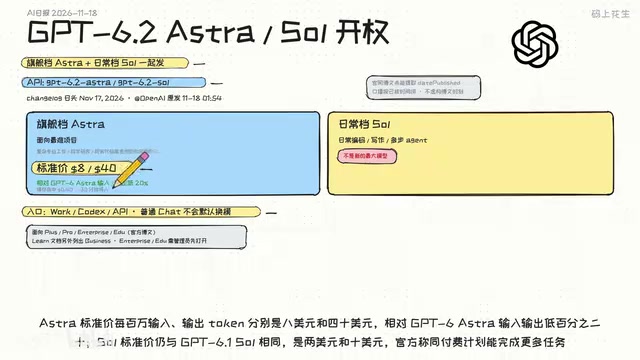
GPT-6.2 Dual-Model Launch, Qwen4-Max Goes GA, and Multiple API Updates
OpenAI launches GPT-6.2 Astra and Sol dual models, Alibaba Cloud's Qwen4-Max goes GA API, Anthropic tests linked billing, DeepSeek opens search API, plus Nov 25 offline reminders.

Why the A321XLR Accepts Higher Takeoff Weights on Ultra-Short Routes
Analyzing why airlines accept the Airbus A321XLR's higher takeoff weight even on ultra-short routes under an hour, from the perspectives of fleet commonality, RCT tank structure, and route network revenue.
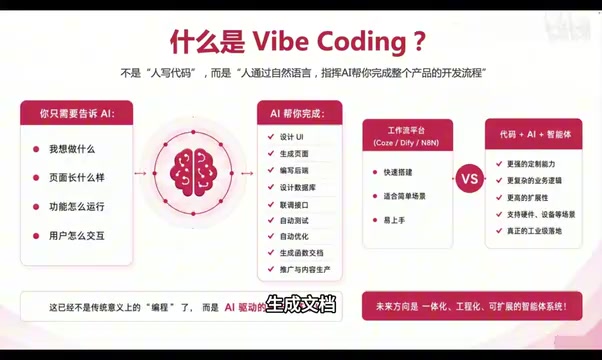
Vibe Coding Full-Stack in Practice: How One Person Builds a Commercial-Grade Product with AI
An analysis of the Bilibili course Vibe Coding Full-Stack in Practice: how one person uses AI to complete requirements analysis, frontend/backend development, MySQL databases, cloud deployment, multi-platform Mini Program execution, and AI-driven operations promotion—mastering one-person-company AI engineering product development.