ElevenLabs vs Azure Speech: A Comprehensive Comparison of Voice Synthesis Quality, Pricing, and Features

A comparison of ElevenLabs vs Azure Speech on voice quality, pricing, and features, with scenario-based recommendations.
This article compares ElevenLabs and Azure Speech, two leading TTS services, across audio quality, pricing models, and feature sets. ElevenLabs leads in naturalness and expressiveness with MOS scores of 4.6-4.8 and supports single-sample cloning from just 3-5 seconds of audio; Azure scores 4.2-4.4 but requires 30 minutes of recordings for training with stronger consistency. On pricing, both free tiers suffice for low-volume prototyping, while ElevenLabs is cheaper for high-volume text generation—Azure's custom neural voice costs up to $16/hour but offers negotiable enterprise discounts. Feature-wise, Azure leads in multilingual coverage (75+), compliance certifications, and ecosystem integration, while ElevenLabs provides sub-second WebSocket streaming and emotion SSML tags. The article also includes Python and curl examples and recommendations for startup prototyping, enterprise compliance, multilingual bots, and narrative audio.
When building voice applications, ElevenLabs and Azure Speech are the two heavyweight options developers encounter most often. Both offer top-tier text-to-speech (TTS) and voice cloning capabilities, but they differ in audio quality, cost, and developer experience. This article compares them across three dimensions—audio fidelity, pricing model, and feature set—to help you decide which service is the better fit for your next project.
Audio Quality: Which Is Closer to a Real Human?
Audio quality is the primary consideration when choosing a TTS service. ElevenLabs uses a proprietary "Prime Voice" architecture trained on massive speech datasets. Its prosody is extremely rich, capturing subtle stresses and natural breathing sounds—making it especially well-suited for storytelling, podcasts, and interactive agents. Azure Speech, on the other hand, is built on Microsoft's deep neural network pipeline with Custom Neural Voice (CNV). Its output is clear with low latency, though its expressiveness may feel somewhat flat in long-form content.
Voice cloning is where the differences are stark: ElevenLabs supports single-sample cloning—just 3-5 seconds of audio yields a highly similar voice; Azure requires at least 30 minutes of high-quality recordings for model training, a higher barrier to entry but with stronger consistency in results. According to independent benchmarks such as Mozilla Common Voice MOS, ElevenLabs consistently scores 4.6-4.8 (out of 5), while Azure typically falls between 4.2-4.4.
If you need voices full of life—such as character dialogue or audiobooks—ElevenLabs currently leads. For scenarios that don't demand high realism, such as IVR prompts or short announcements, Azure Speech remains a reliable choice.
What Is the MOS Score? Mean Opinion Score (MOS) is the most commonly used subjective audio quality metric in speech synthesis, originally from the telephony industry. In evaluation, a panel of listeners rates speech samples on a 1-5 scale (1 being the worst, 5 being close to a real human), and the average is taken. As a rule of thumb, a MOS above 4.0 generally means "good, listenable for extended periods," while above 4.5 approaches human-level. Note that MOS varies depending on the evaluation panel, corpus, and test environment, so cross-platform comparisons should reference results from the same benchmark—such as the Mozilla Common Voice test mentioned above.
Pricing Comparison: What Will Your Bill Look Like?
Both platforms charge based on characters generated or seconds of audio. ElevenLabs offers a free tier with 10,000 characters per month (including voice cloning), standard voices at $0.03 per 1,000 characters, "Prime" premium voices at $0.06 per 1,000 characters, with no hard cap and usage alerts available. Azure Speech's free tier includes 5 hours of standard audio plus 0.5 hours of custom neural voice per month, standard voices at $1 per hour, custom neural voice up to $16 per hour, with negotiable volume discounts for enterprise agreements.
The key takeaway: for low-volume prototyping, both free tiers are enough to get started. For high-volume text generation, ElevenLabs is cheaper, especially when premium "Prime" voices are needed. Azure's higher custom voice pricing stems from data collection and model training overhead, making it better suited for large enterprises with dedicated voice brands.
Feature Set: What Can You Actually Do?
For real-time streaming, ElevenLabs achieves sub-second latency via WebSocket endpoints; Azure provides it through the Speech SDK supporting C#, JS, and Python. On multilingual support, ElevenLabs covers 30+ languages with some voices usable across regions; Azure supports 75+ languages and dialects, offering stronger global coverage. Both fully support SSML 1.1; ElevenLabs additionally offers emotion customization tags (e.g., <emotion type="sad">), while Azure supports prosody, voice selection, and pronunciation hints.
In terms of SDK ecosystem, ElevenLabs offers official Python and Node.js wrappers plus a clean REST API; Azure has mature .NET, Java, Python, JavaScript, and C++ SDKs. On compliance, ElevenLabs is GDPR-compliant and doesn't store data by default; Azure provides ISO-27001, SOC-2, and HIPAA certification at appropriate tiers. For rate limits, ElevenLabs allows 5 requests per second per API key (increase available upon request), Azure allows 10 per second per subscription (adjustable).
If your product needs quick voice cloning for a startup or hackathon, ElevenLabs' "upload a few seconds, get a voice" flow saves significant time. Azure is more advantageous when you need broad language combinations, strict compliance certifications, or deep integration with Azure services (such as Cognitive Search, Bot Framework).
What Is SSML? Speech Synthesis Markup Language (SSML) is an XML-based standard for fine-grained control over TTS output parameters such as pronunciation, speed, pitch, pauses, and volume—similar to HTML for web pages. Developers use tags like <speak>, <voice>, <prosody>, and <break> to describe "how it should be read," and the server synthesizes audio accordingly. It's a universal capability across TTS platforms, with nearly all mainstream engines supporting SSML 1.1. ElevenLabs extends it with emotion tags (e.g., <emotion type="sad">), letting the same text express different emotions; Azure focuses on fine-grained multilingual and proper noun pronunciation control through <prosody> and pronunciation dictionaries (phoneme).
Quick Start Examples
Below is a minimal Python synthesis example using ElevenLabs with a custom cloned voice. The API uses a bearer token generated from the dashboard.
import requests

API_KEY = "YOUR_ELEVENLABS_API_KEY"
CLONE_VOICE_ID = "your-cloned-voice-id"  # obtained after uploading a sample

def synthesize(text: str, voice_id: str) -> bytes:
    url = f"https://api.elevenlabs.io/v1/text-to-speech/{voice_id}"
    headers = {
        "Accept": "audio/mpeg",
        "Content-Type": "application/json",
        "xi-api-key": API_KEY,
    }
    payload = {
        "text": text,
        "model_id": "eleven_monolingual_v1",  # or "prime" for premium voices
        "voice_settings": {
            "stability": 0.75,
            "similarity_boost": 0.85
        }
    }
    response = requests.post(url, json=payload, headers=headers)
    response.raise_for_status()
    return response.content

audio = synthesize(
    "Hey there! This is a demo of ElevenLabs' ultra-natural TTS.",
    CLONE_VOICE_ID
)

with open("demo.mp3", "wb") as f:
    f.write(audio)
print("Saved demo.mp3")
Here model_id selects the underlying neural model, stability controls voice consistency across sentences, and similarity_boost makes the output closer to the cloned voice's timbre. You can get an API key for free from the ElevenLabs signup page.
Azure's REST endpoint is slightly more verbose, but the concept is the same:
curl -X POST "https://<region>.tts.speech.microsoft.com/cognitiveservices/v1" \
    -H "Ocp-Apim-Subscription-Key: YOUR_AZURE_KEY" \
    -H "Content-Type: application/ssml+xml" \
    -H "X-Microsoft-OutputFormat: audio-24khz-48kbitrate-mono-mp3" \
    -d @- <<EOF
<speak version='1.0' xml:lang='en-US'>
  <voice name='en-US-JennyNeural'>
    Hello! This is Azure Speech in action.
  </voice>
</speak>
EOF > azure_demo.mp3
Replace <region> with your Azure region (e.g., eastus). The SSML payload gives you fine-grained control over pitch, speed, and pronunciation.
The Difference Between WebSocket Streaming and REST. The examples above use the REST interface—sending the entire text at once and waiting for the complete audio file, suitable for offline generation or short text. ElevenLabs' sub-second streaming, by contrast, is based on WebSocket: after establishing a long-lived connection, the server synthesizes and pushes audio chunks while the client can receive and play them on the fly. This is crucial for latency-sensitive scenarios like voice agents and real-time conversations, because users don't have to wait for the entire text to be synthesized. Azure Speech SDK similarly supports streaming synthesis over WebSocket, but with the REST endpoint you must send the full SSML payload at once. Which to choose depends on your application's requirements for time-to-first-byte and real-time interaction.
Recommendations: When to Use Which?
- Startup prototypes / hackathons: ElevenLabs—instant cloning, low cost, minimal setup.
- Enterprise products with strict compliance requirements: Azure Speech—comprehensive certifications, Azure AD integration, global data residency.
- Multilingual chatbots: Azure Speech—broader language catalog with built-in language detection.
- Narrative audio (podcasts, audiobooks): ElevenLabs—better expressiveness, low streaming latency.
- Custom branded voices requiring legal approval workflows: Azure Speech—the Custom Neural Voice review process satisfies many enterprise policies.
Conclusion
Both ElevenLabs and Azure Speech have matured into reliable TTS engines serving different developer mindsets. ElevenLabs excels at delivering human-like voices quickly and economically, with single-sample cloning and a clean REST API that lets developers focus on product features rather than data collection. Azure Speech offers a broader ecosystem, enterprise-grade compliance, and deep integration with the Azure cloud stack—well-suited for large-scale, regulated applications. If you want the best audio quality without a steep learning curve, ElevenLabs is currently the clearer choice.
Related articles
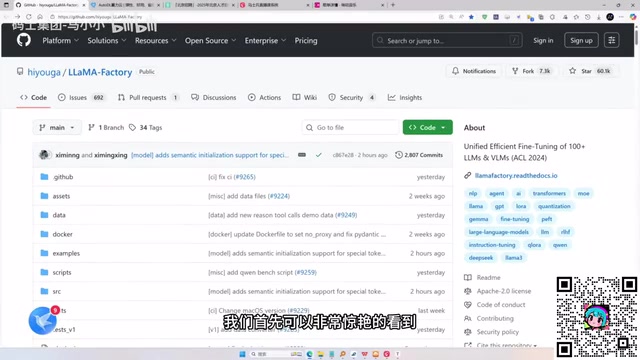
LLaMA-Factory in Practice: A Complete No-Code Guide to Fine-Tuning Large Models
An introduction to LLaMA-Factory, the open-source fine-tuning tool: its 60.1K-star background, supported models and algorithms, local vs. cloud deployment, and CUDA setup steps.

Zeng Ming's Deep Retrospective: Why OpenAI May Not Be the Ultimate Winner — and Why the Corporate System Will Disappear
Zeng Ming's deep retrospective on the AI endgame: model companies are just infrastructure, OpenAI and Anthropic won't be the final winners; the next battle is the Agent entry point standard; the corporate system will disappear as AI restructures collaboration, and only mission-driven companies can survive the cycle.

OpenHands v1.28.0: OpenCode and PI Added as Built-in Agents, API Keys Requestable In-Conversation
OpenHands ships 5 releases in 21 days: v1.27.0 adds OpenCode and PI as built-in agents, v1.28.0 enables in-chat key requests. ACP integration, credential reuse, model list changes, and upgrade advice.