European Supermarket Fridges Hit by Cyberattacks Again: Food Spoilage and Supply Chain Concerns

European supermarket fridges hit by a second wave of cyberattacks within a month, exposing security blind spots in cold chain OT systems.
The article reports that supermarket refrigeration systems in multiple European countries suffered a second wave of cyberattacks within a month, causing food spoilage and supply chain disruption. The author analyzes why fridges are targeted: refrigeration equipment connects temperature control, inventory, and energy scheduling, allowing attackers to remotely tamper with temperatures or forge operational status, causing covert yet severe damage. Attacks also trigger food waste, food safety risks, and cascading supply chain disruptions, with impacts rapidly expanding under just-in-time inventory models. The article notes that retail cybersecurity resources are mostly concentrated on transaction systems and customer data, while OT systems like refrigeration and HVAC remain in protection blind spots with outdated equipment, lack of updates, and insufficient network segmentation. The author recommends strengthening network isolation, least privilege, and real-time temperature anomaly monitoring, emphasizing that cold chain security should be part of the overall cybersecurity strategy.
Incident Overview: Second Wave of Attacks Within a Month
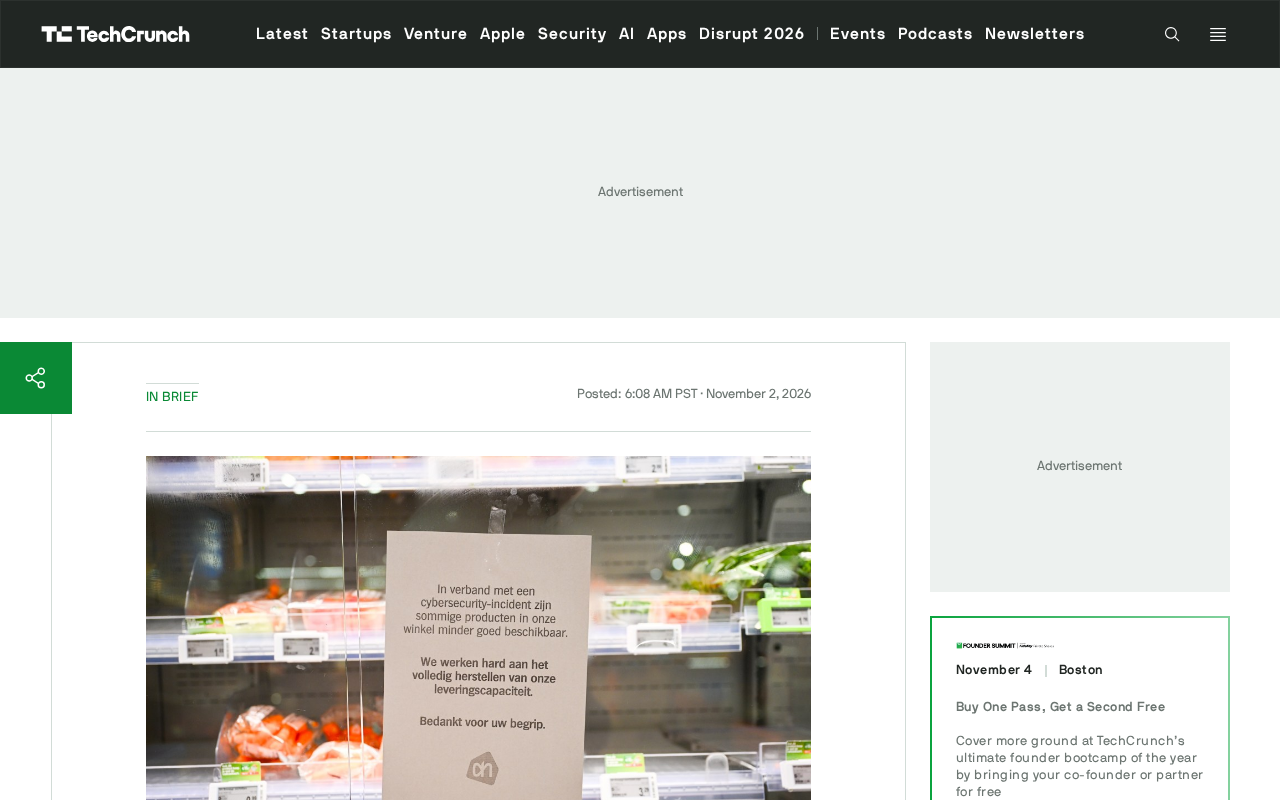
According to RSS sources, supermarket refrigeration systems in multiple European countries have recently suffered a new wave of cyberattacks, causing large quantities of food to spoil and disrupting normal supply chains. This is already the second similar attack targeting supermarket refrigeration equipment within just one month. Although the reports did not disclose the specific affected countries, supermarket brands, or technical details of the attacks, the successive incidents indicate that cyber threats against cold chain infrastructure are becoming more frequent and more destructive.
Why Are Fridges Becoming Attack Targets?
Supermarket fridges may appear to be ordinary equipment, but they are actually connected to multiple functions including temperature control systems, inventory management, and energy scheduling. Once attackers can breach these systems, they can remotely tamper with temperature settings, shut down refrigeration, or even create false operational status alerts, thereby destroying food without anyone noticing. Compared to directly attacking payment systems or stealing customer data, the direct economic losses caused by attacking refrigeration equipment may be more covert, but the impact on food safety and public trust is equally enormous.
The divide between operational technology (OT) and information technology is key background for understanding such attacks. OT refers to hardware and software systems used to monitor and control devices and processes operating in the physical world, including industrial control systems (ICS), SCADA, programmable logic controllers (PLC), and building management systems (BMS). Supermarket refrigeration units, HVAC, elevators, and lighting are typically coordinated by BMS, while point-of-sale terminals and membership systems fall under traditional IT. OT systems were designed with availability and safety as priorities rather than information security: they often use long-lifecycle equipment, proprietary protocols, lack identity authentication mechanisms, and are difficult to deploy with conventional endpoint protection software. With IoT transformation, more and more OT devices are connecting to enterprise IP networks and even cloud platforms, significantly expanding their exposure surface. Once attackers breach the IT side, they can move laterally into the refrigeration control layer through the weak boundary between IT and OT—this is precisely the underlying condition that enables cold chain attacks.
The Chain Reaction of Attacks: From Food Waste to Supply Chain Disruption
Food spoilage not only means direct economic losses for supermarkets but also triggers a series of cascading problems. If contaminated food is not destroyed in time, it may pose food safety risks; supply disruptions can affect the daily shopping needs of surrounding communities, forcing supermarkets to urgently restock or temporarily close certain areas. For modern retail that relies on just-in-time inventory management, once the vulnerability of the cold chain is exploited, the scope of impact expands rapidly.
Just-in-Time (JIT) inventory management is the core logic behind the efficient operation of modern retail and cold chain logistics: goods are replenished as needed close to the point of sale to minimize inventory costs and storage occupation. This model relies on a highly predictable, continuously online cold chain—from distribution center cold storage, refrigerated transport vehicles, to store cold cabinets, forming a seamless temperature-controlled chain. The benefits and vulnerabilities of JIT are two sides of the same coin: it is extremely efficient during normal operation, but any node failure lacks buffer inventory to absorb the impact. When store refrigeration is attacked and large quantities of food spoil, the losses cannot be quickly compensated by surplus from other stores, and replenishment depends on the same logistics information system that may be affected. Thus local failures quickly amplify along the supply chain, manifesting as emergency restocking, temporary store closures, and regional shortages. This also explains why attacks against refrigeration equipment often have destructive power beyond that of a single device.
Blind Spots and Challenges in Security Protection
Traditionally, retail enterprises' cybersecurity resources have been more concentrated on transaction systems and customer data protection, while operational technology (OT) systems such as refrigeration equipment and HVAC often fall into protection blind spots. These devices may run outdated operating systems, lack regular updates, and have insufficient network segmentation. Once breached, attackers can move laterally within the internal network. The emergence of two consecutive waves of attacks suggests that the retail industry needs to re-examine security strategies for IoT devices and OT systems, including strengthening network isolation, implementing the principle of least privilege, and establishing real-time monitoring for abnormal temperature changes.
Network segmentation and the principle of least privilege are two fundamental measures to mitigate such risks. Network segmentation refers to dividing the network into multiple isolated zones by function and trust level (such as IT zone, OT zone, and guest zone), with firewalls or unidirectional gateways between zones, so that attackers cannot freely move laterally after breaching one zone. In retail scenarios, the ideal approach is to place refrigeration and building control equipment in a separate OT network segment, allowing only controlled maintenance channels for access. The principle of least privilege requires that each account, service, and device has only the minimum access permissions necessary to perform its function, avoiding shared administrator accounts or default passwords. Supporting measures also include implementing dual approval and audit logs for critical operations such as temperature setting changes, as well as passive traffic monitoring of OT network segments to detect anomalous commands without affecting device stability.
Conclusion
The successive cyberattacks on European supermarket fridges reveal an easily overlooked security reality: the boundary between the physical and digital worlds is blurring, and any networked device can become an attack entry point. For the retail industry, ensuring cold chain security is no longer just an equipment maintenance issue but an indispensable part of the overall cybersecurity strategy.
One-line Summary
European supermarket fridges hit by a second wave of cyberattacks within a month, exposing security blind spots in cold chain OT systems.
Paragraph Summary
The article reports that supermarket refrigeration systems in multiple European countries suffered a second wave of cyberattacks within a month, causing large quantities of food to spoil and disrupting supply chains. The author analyzes why fridges have become attack targets: refrigeration equipment connects temperature control, inventory, and energy scheduling, and attackers can remotely tamper with temperatures or forge operational status, causing covert yet severe damage. Attacks also trigger food waste, food safety risks, and cascading supply chain disruptions, with impacts rapidly expanding under modern retail's just-in-time inventory model. The article points out that retail enterprises' cybersecurity resources are mostly concentrated on transaction systems and customer data, while OT systems such as refrigeration and HVAC have long been in protection blind spots, with outdated equipment, lack of updates, and insufficient network segmentation. The author recommends strengthening network isolation, the principle of least privilege, and real-time monitoring of temperature anomalies, emphasizing that cold chain security should be incorporated into the overall cybersecurity strategy.
Related articles

The Complete Guide to Choosing Models in Ollama: From Configuration to Quantization Pitfalls
A complete guide to choosing models in Ollama: from checking your hardware to browsing the official library, explaining Tools, Thinking, Vision, and Decision tags, plus trade-offs between parameter size, quantization, and context cache to avoid crashes.

Is Ollama Secure by Default? The Truth About GPU Freeloading and a Self-Check Guide
Ollama binds to loopback by default, but one environment variable or a copied Docker command can expose your GPU. This article explains how GPU freeloading works, the scale of scanning, and DNS rebinding paths, plus a three-layer self-check and fix guide.

Cherry Studio + MCP in Practice: Building Automated AI Agents and a Local Knowledge Base
Based on a Bilibili Cherry Studio tutorial: configure MCP, build automated AI agents for web scraping and report generation, and set up a local knowledge base with Ollama + Qwen3, plus real-world pitfalls.