Extending the C Preprocessor: A Fun Programming Experiment

Community members share how to simulate loops and recursion with macro deferral and conditional compilation, exploring the C preprocessor's limits.
Based on a tech community discussion, this article outlines creative ways to extend the C preprocessor. The preprocessor is a Turing-incomplete text-transformation system that forbids recursive macro expansion and lacks loops, but developers simulate loops, state machines, and simple DSLs using deferral, placeholders, token pasting, and #if conditional compilation. Such methods are mature in Boost.Preprocessor, while community versions emphasize readability and fun. The article stresses that the value lies in understanding expansion order, token boundaries, and standard limitations rather than producing maintainable code.
Title
Extending the C Preprocessor: A Fun Programming Experiment
Meta Description
Explore fun tricks for extending the C preprocessor, including macro recursion simulation and conditional-compilation metaprogramming discussed in the community—ideal for developers interested in compiler principles and macro systems.
Article Content
The C preprocessor is often seen as a simple text-replacement tool, but where exactly are its limits? Recently, a topic titled "Fun Extending the C Preprocessor" sparked discussion in the tech community, where developers shared various creative ways to extend the preprocessor. Based on the community discussion, this article outlines common approaches to preprocessor extension and the technical fun behind them.
The Preprocessor Is More Than Macro Replacement
When people hear "C preprocessor," most immediately think of #define and #include. However, the preprocessor is essentially a Turing-incomplete text-transformation system that runs before compilation. Its limitations—no recursive expansion and no loop constructs—have instead spawned a large number of clever "black magic" hacks. In the community discussion, developers tried to simulate loops, state machines, and even simple DSLs through nested macros, #if conditional compilation, and token pasting. The purpose of such experiments is not engineering practicality, but exploring the limits of the language mechanism.
Common Extension Techniques
Simulating Macro Recursion
The preprocessor forbids direct or indirect recursive expansion of macros, but this restriction can be circumvented through deferral and placeholder tricks. In the discussion, some participants showed how to use alternating sets of macros to achieve a loop-like effect, such as generating repeated code blocks or expanding variadic argument lists. This technique already has mature applications in libraries such as Boost.Preprocessor, but the versions shared by the community focus more on readability and fun.
The core of deferral and placeholder tricks lies in exploiting the preprocessor's "blind spots" in expansion rules. When expanding a macro, the preprocessor first scans and fully expands the arguments, then substitutes the macro body; if the macro body references itself, the preprocessor detects the recursion and stops expanding, leaving the macro name unprocessed. The deferral approach wraps the recursive call in a "placeholder macro" so that it is not recognized as a self-call during the current scan pass, and only expands in the next pass. Common implementations include helper macros such as EVAL, DEFER, and OBSTRUCT: DEFER separates the macro name from the parentheses to prevent expansion in the current pass; EVAL forces multiple scan passes through multiple levels of indirect expansion. The cost of this technique is a sharp drop in macro code readability, and different compilers differ in implementation details such as the number of expansion passes and argument expansion order, so extra care is needed when porting across compilers.
Metaprogramming with Conditional Compilation
#if and defined can be combined to build compile-time Boolean logic. Some participants used this to build simple type checks or configuration selectors, making the same source code behave differently under different compilation options. Although C++ constexpr and template metaprogramming already provide more powerful capabilities, preprocessor metaprogramming in pure C environments still has its unique charm.
Boost.Preprocessor is the most representative preprocessor metaprogramming library in the C/C++ ecosystem. It implements a "preprocessing-time STL" entirely with macros, including data structures such as sequences, tuples, and lists, as well as iteration macros such as BOOST_PP_SEQ_FOR_EACH and BOOST_PP_REPEAT. Its core idea is precisely the deferral and token pasting mentioned in this article: concatenating numbered macro names via BOOST_PP_CAT, then combining multiple expansion passes to simulate loops. The iteration limit supported by Boost.Preprocessor is usually determined by the maximum macro expansion depth allowed by the compiler; early implementations supported up to 256 by default. Such libraries still have practical applications in scenarios that require generating large amounts of repetitive boilerplate code (such as registries, serialization, and reflection simulation), but modern C++ prefers templates and constexpr as replacements.
Why It Is Worth Paying Attention To
The value of such experiments is not in producing maintainable code, but in deepening understanding of the compilation toolchain. When you manually piece together a loop with macros, you gain a more intuitive understanding of the preprocessor's expansion order, token boundaries, and standard limitations. For developers who need to write cross-platform compatible code or maintain legacy C projects, these techniques can occasionally come in handy.
Community Reaction and Takeaways
The topic sparked comments on Hacker News, and participants generally regarded such exploration as falling within the category of "the joy of programming." Some comments noted that although modern languages provide safer abstraction mechanisms, the preprocessor's predictability and zero runtime overhead remain cornerstones of the C ecosystem. Others warned that excessive use of macro tricks harms code readability and should be weighed carefully.
Overall, extending the C preprocessor is an interesting expedition into the language's underlying mechanisms, suitable for developers interested in compiler principles and macro systems.
This article is based on community discussion; the original link is provided at the end.
One-line Summary
Community members share how to simulate loops and recursion with macro deferral and conditional compilation, exploring the limits of the C preprocessor.
Paragraph Summary
Based on a tech community discussion, this article outlines creative ways to extend the C preprocessor. The C preprocessor is essentially a Turing-incomplete text-transformation system that runs before compilation; it forbids recursive macro expansion and lacks loop constructs, but developers simulate loops, state machines, and even simple DSLs through techniques such as deferral, placeholders, token pasting, and #if conditional compilation. These methods already have mature applications in libraries such as Boost.Preprocessor, while community versions focus more on readability and fun. The article notes that the value of such experiments is not in producing maintainable code, but in deepening understanding of expansion order, token boundaries, and standard limitations, with occasional benefits for writing cross-platform compatible code or maintaining legacy C projects. Community reaction generally views this as "the joy of programming," while also warning that excessive use of macro tricks harms readability and requires careful trade-offs.
Related articles

M&M's Spent Millions Replacing Artificial Blue Dye — Why Is It So Hard?
Mars spent millions trying to replace artificial blue dye in M&M's with spirulina, but thick material clogs pipes and residue risks mold, forcing a full production-line rebuild. Here's the engineering behind the reformulation.
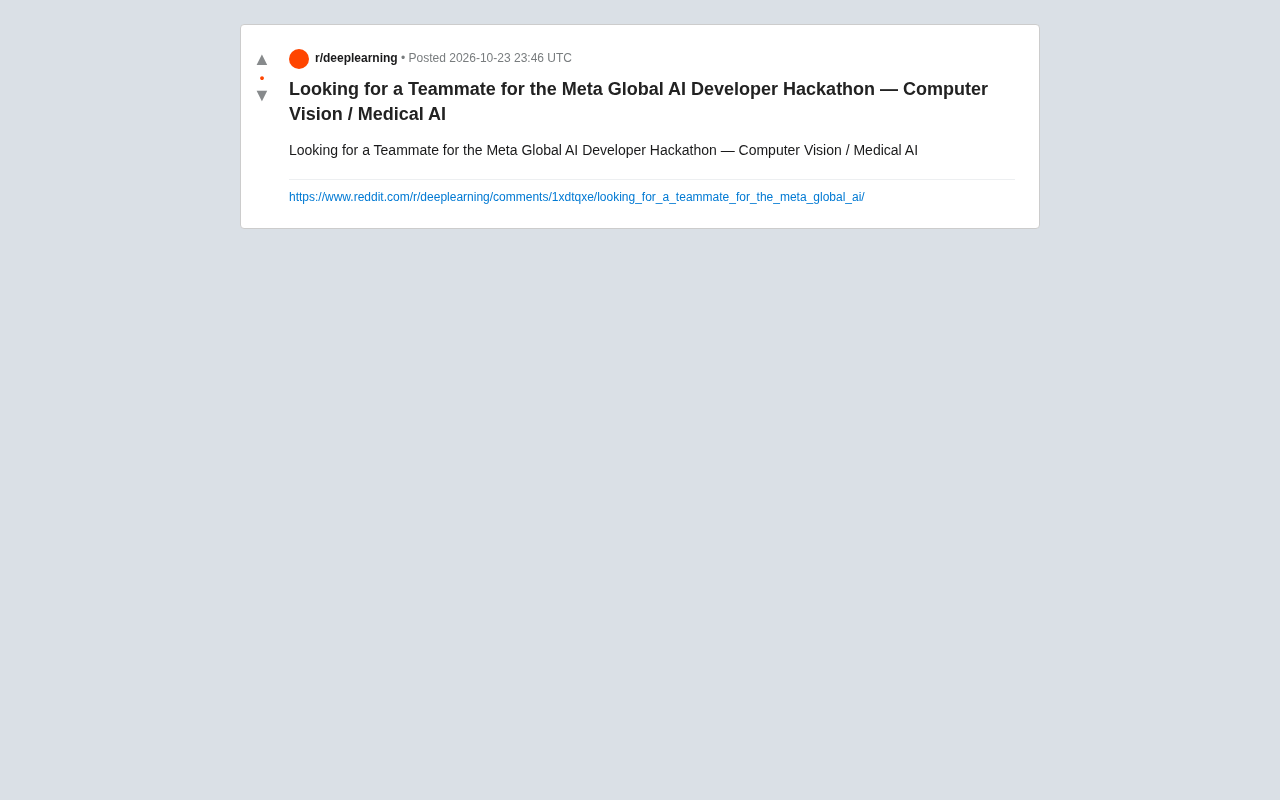
Teammate Wanted for Meta Global AI Developer Hackathon: Computer Vision & Medical AI
A Reddit developer seeks teammates for the Meta Global AI Developer Hackathon, focusing on computer vision and medical AI. This article analyzes the track logic, skills-complementarity needs, and topic selection strategy behind this teaming signal.
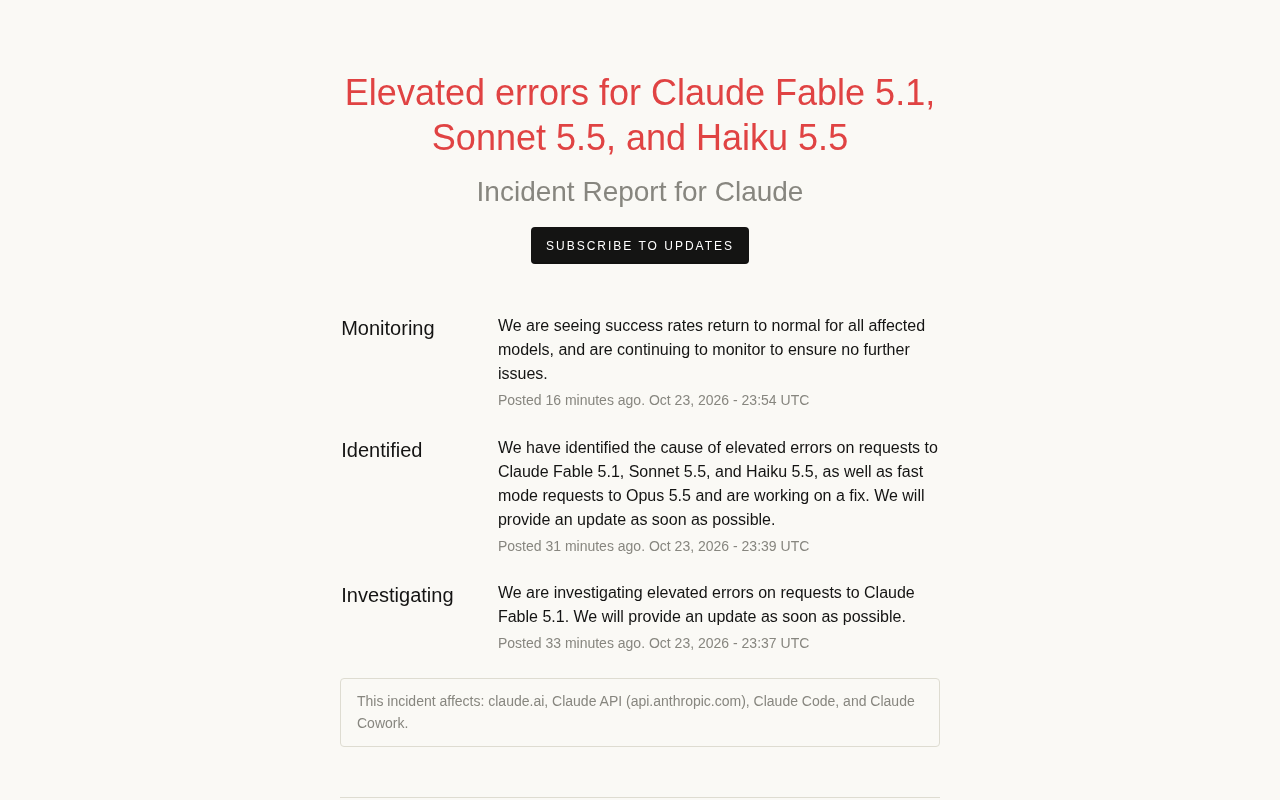
Multiple Claude Models Hit by Errors: A Postmortem of Fable 5.1, Sonnet 5.5, and Haiku 5.5
Claude Fable 5.1, Sonnet 5.5, Haiku 5.5, and Opus 5.5 fast mode saw elevated errors; Anthropic identified and resolved the issue in 17 minutes. This postmortem covers the timeline, the technical reasons for the multi-model cascading failure, and practical lessons for retry and degradation strategies.