FAA Issues National Ground Stop: Sudden Air System Disruption Draws Attention

FAA issues a national ground stop as the tech community focuses on critical infrastructure resilience.
The U.S. Federal Aviation Administration (FAA) issued a National Ground Stop, sparking widespread discussion on Hacker News (494 points, 202 comments). The article outlines the event: a national ground stop is a high-level air traffic control directive typically triggered by system failures, security threats, or extreme weather, with an impact far exceeding localized delays. The tech community views it as a case study in mission-critical system reliability, with discussion focused on single points of failure in air traffic control systems, backup takeover capability, and historical disruption frequency. The article further analyzes the knock-on effects on passenger travel and air cargo, and extends to critical infrastructure resilience, noting the reference value of redundancy design, failure drills, and cross-agency coordination for large-scale AI system development. Key points to watch include the timing of the ground stop's lifting, official explanations of the cause, and system corrective measures.
The U.S. Federal Aviation Administration (FAA) has issued a National Ground Stop, a development that quickly sparked discussion in the tech community. According to the discussion thread on Hacker News, the topic garnered 494 points and 202 comments, reflecting the industry's strong interest in the reliability of aviation infrastructure.
Event Overview: What a National Ground Stop Means
An FAA National Ground Stop is a high-level directive in air traffic control, typically meaning that all or most flights are suspended from taking off during a specific period. Triggers for such directives can include system failures, security threats, extreme weather, or airspace management anomalies.
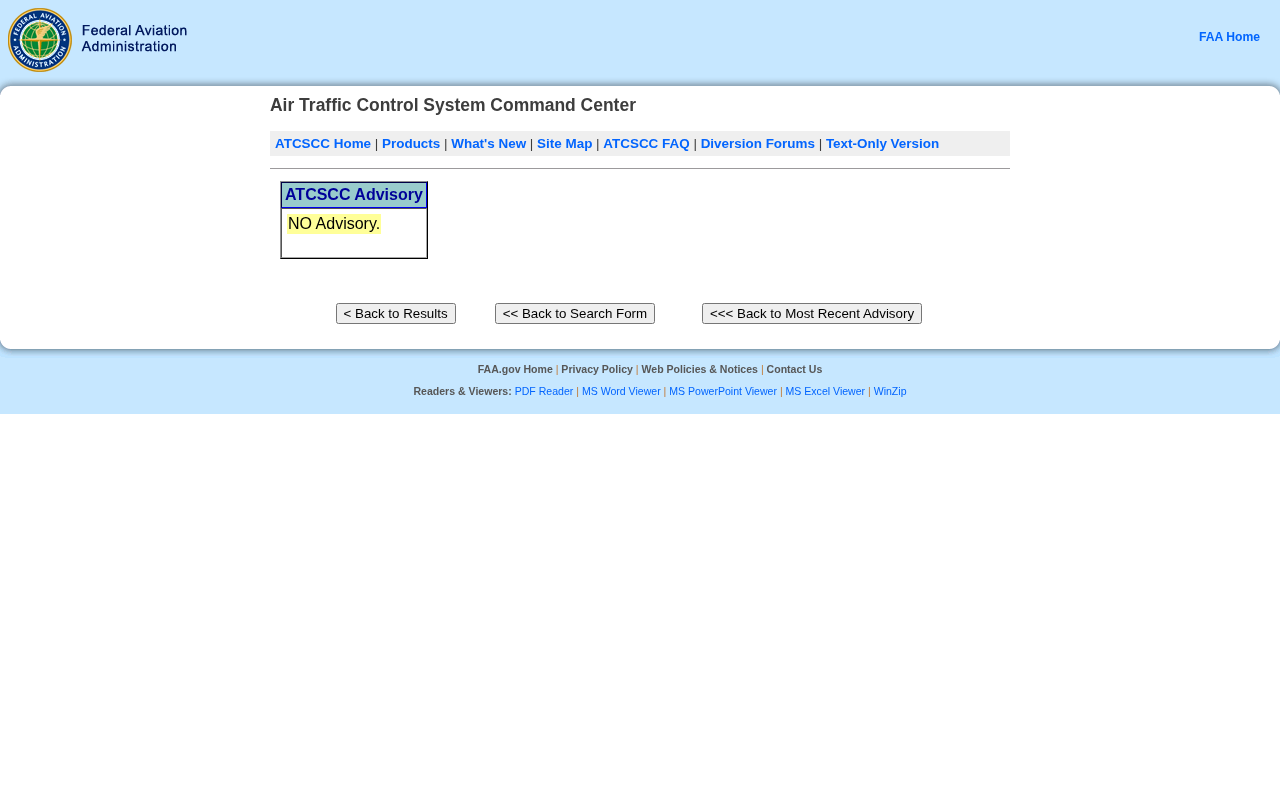
Based on the publicly posted FAA advisory link, this ground stop was issued as an official notice and constitutes an operational directive requiring immediate compliance. For travelers who depend on air travel daily and for businesses across the aviation supply chain, the impact of a national ground stop far exceeds localized airport delays.
The Difference Between a Ground Stop and a Ground Delay Program (GDP)
In the FAA's air traffic control directive system, Ground Stop and Ground Delay Program (GDP) are two concepts that are often confused. A Ground Stop directs flights at a specific airport or region to suspend takeoff—flights already airborne are unaffected—with the goal of controlling the flow into a given airspace. A GDP, by contrast, manages arrival flow by delaying departures on the ground; flights can still take off, just later than scheduled. A Ground Stop is typically used for sudden situations (such as rapid weather changes, runway closures, or system failures) and is a more urgent, more forceful flow management tool. A National Ground Stop is even rarer, meaning the FAA believes some aspect of the entire national airspace system has an anomaly requiring a system-wide pause, with a much higher trigger threshold than a localized stop. Understanding this hierarchy helps gauge the severity of the event.
Focus of the Tech Community
The discussion volume on Hacker News (494 points, 202 comments) shows that this event is not just aviation news but is viewed by tech professionals as a case study in critical infrastructure reliability. Discussions in the comments typically center on several levels: whether the air traffic control system's technical architecture has single points of failure, whether backup systems can take over in time, and the historical frequency of similar disruptions.
For readers in AI and technology, the value of such events lies in revealing how complex systems behave under extreme stress. Air traffic control systems are quintessential real-time mission-critical systems, and their redundancy mechanisms, failover processes, and boundaries for human intervention have many analogies to reliability engineering in AI systems.
Real-time Mission-Critical Systems
Real-time mission-critical systems are those that must operate continuously under strict time constraints and whose failure would cause major consequences. Air traffic control systems are a typical example: radar data processing, flight plan conflict detection, and voice communications with flight crews must all complete within milliseconds to seconds, with no allowance for "downtime maintenance." Such systems typically employ multiple redundancy (e.g., dual hot standby, geographically dispersed data centers), failover mechanisms, and degraded operating modes. Unlike ordinary internet services, mission-critical systems often measure availability targets in "five nines" (99.999%) or higher, and their design emphasizes "fail-safe"—meaning that upon failure the system should导向 a safe state rather than a dangerous one. If AI systems are used in such scenarios, their explainability and failure boundaries will become core engineering challenges.
Immediate Impact on Air Travel and the Supply Chain
The direct consequence of a national ground stop is widespread flight delays or cancellations, disrupted airport operations, and forced adjustments to passenger itineraries. Airline scheduling systems must rapidly restore capacity once the directive is lifted, putting pressure on crew scheduling, aircraft turnaround, and airspace flow management.
From a supply chain perspective, air cargo is also affected. Transport plans for time-sensitive goods (such as medical supplies and fresh produce) may require temporary rerouting or postponement. The ripple effects of such disruptions often persist for some time after the ground stop is lifted.
Rethinking Critical Infrastructure Resilience
This event once again brings the resilience of critical infrastructure to the forefront. National-level infrastructure such as air traffic control, power grids, and financial clearing systems is designed not only for efficient daily operation but also to maintain basic functions or recover quickly under abnormal conditions.
Tech community discussions of such events typically extend to fault-tolerant design of system architecture, the effectiveness of emergency drills, and cross-agency coordination mechanisms. For teams building large-scale AI systems, these discussions offer lessons from traditional mission-critical systems: redundancy is not waste but a necessary cost; the value of failure drills lies in exposing real weaknesses.
Engineering Meaning of Resilience and Fault Tolerance
In systems engineering, resilience refers to a system's ability to absorb disturbances and maintain or restore core functions, covering three dimensions: absorptive capacity (the magnitude of performance degradation when a failure occurs), adaptive capacity (the ability to continue operating in a degraded state), and recovery capacity (the speed of returning to normal). Fault tolerance is the concrete technical means of achieving resilience, including redundancy replication, voting mechanisms, isolation boundaries, and graceful degradation. The difference is that fault tolerance focuses on "not failing," while resilience focuses on "how quickly you recover after failure." For national-level infrastructure, resilience assessment typically involves stress testing, red-team/blue-team exercises, and cross-agency joint drills. Notably, excessive redundancy increases cost and complexity and can even introduce new coordination failure modes, so resilience design is inherently a trade-off rather than accumulation.
Key Points to Watch
The FAA's official advisory is the authoritative source for tracking developments. Information worth watching includes the timing of when the ground stop is lifted, official explanations of the trigger cause, and whether system-level corrective measures follow. For readers concerned with infrastructure reliability, this event offers a window into observing the emergency response processes of national-level systems.
One-line Summary
FAA issues a national ground stop as the tech community focuses on critical infrastructure resilience.
Paragraph Summary
The U.S. Federal Aviation Administration (FAA) issued a National Ground Stop, sparking widespread discussion in the Hacker News tech community (494 points, 202 comments). The article outlines the event: a national ground stop is a high-level air traffic control directive typically triggered by system failures, security threats, or extreme weather, with an impact far exceeding localized delays. The tech community treats it as a case study in mission-critical system reliability, with discussion focused on whether the air traffic control system has single points of failure, backup system takeover capability, and the historical frequency of disruptions. The article further analyzes the knock-on effects on passenger travel and air cargo, and extends to the topic of critical infrastructure resilience, noting the reference value of redundancy design, failure drills, and cross-agency coordination for building large-scale AI systems. Key points to watch include the timing of the ground stop's lifting, official explanations of the cause, and system corrective measures.
Related articles

Zed Editor Releases v1.29.2: Observations on a Routine Version Iteration
Zed editor releases patch v1.29.2, version bump by @JosephTLyons, commit verified via GitHub signature. This article covers the release's basic info, what a patch version means, and practical upgrade advice for users.

Anthropic IPO Questioned: Hacker News Debates Timing of Going Public
A Hacker News post titled "Just say no to Anthropic's IPO" sparks debate on the timing of Anthropic's public listing and AI capitalization, touching on valuation bubbles and mission independence.

Hands-On with the Genie 4 World Model: Directing Worlds in Real Time Like a Puppeteer
Google DeepMind's Genie 4 world model in depth: Special Guest X's hands-on demo of real-time scene direction via prompts, custom interactive apps in Project Genie, and prompts-as-seeds reproducibility.