Hands-On with the Genie 4 World Model: Directing Worlds in Real Time Like a Puppeteer

Genie 4 is a world model, not a video model — turning generation into a real-time interactive, reproducible world.
Based on Special Guest X's experience as a Google DeepMind creative partner, Genie 4 is a world model that "captures a world" rather than a video generator. Users move in first person with arrow keys while directing camera and plot in real time via prompts, choreograph actions, dialogue, and events through Project Genie agents, and rely on prompts-as-seeds for reproducibility — like a puppeteer adjusting each control string.
From "Generating Video" to "Capturing a World"
"It looks like video, but it isn't video — it's a capture of a world." This was the core judgment from Spanish creative studio Special Guest X, a Google DeepMind creative partner, after experiencing Genie 4.
This statement pinpoints the fundamental divide between Genie 4 and mainstream video generation models: video models aim to produce footage for viewing, while world models aim to simulate a reality you can continuously interact with. You describe what you want, Genie turns it into a world in seconds, and then you step inside.
This positioning difference shapes how the tool is used. When watching video, you're a spectator; when entering a world, you're a participant — you can move through the scene, adjust your position, and rewrite the scene in real time as it continues to evolve.
Dual-Channel Operation: Walk with Keys, Direct with Prompts
According to Special Guest X's demo, Genie 4's control system consists of two parallel channels.
The first is the spatial channel: use keyboard keys and arrow keys to move through the world, changing your position and perspective in the scene — the sense of control is close to first-person free-roaming. The second is the narrative channel: intervene in the frame in real time with natural language prompts, e.g. "switch to close-up" pushes the camera in. The key is that both channels are active simultaneously — you're both walking inside the scene and directing it from outside.

This concurrent "direct while walking" experience is something traditional video generation tools struggle to provide. Video model output is a finished, terminal state; Genie 4's output is a continuously running process, where every input immediately changes the direction of the next frame.
Project Genie: Turning Worlds into Customizable Apps
Genie 4's capabilities go beyond roaming. Within the Project Genie framework, you can build applications for specific needs, using built-in agents to generate apps with custom actions, dialogue, and events.
The workflow in the demo is quite intuitive: press one key to make the character turn around, then press another key to assign it a line — "You really think we can pull this off?" — while camera control remains in your hands, and you can then trigger an explosion. Actions, dialogue, events, and camera are broken down into modules you can choreograph item by item.

The significance of this layer is lowering the barrier to creating interactive content. Previously, building an interactive scene required a game engine and scripting system; now the threshold for choreographing actions is reduced to a few key presses and a few prompts.
Prompts as Seeds: Reproducibility as a Key Design
Genie 4's prompt mechanism has an easily overlooked but far-reaching feature: the prompt itself acts as the seed.
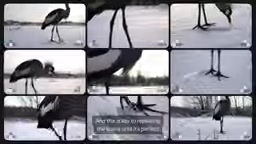
According to the creators, the same prompt always starts the same way — the same composition, executing the same actions in the first few seconds. This determinism brings two direct benefits. First, iterability: you can return to the same starting point repeatedly, adjusting parameters until the scene reaches the desired state, without worrying that each generation will be completely different. Second, trainability: in training environments requiring precise control, a reproducible initial state is a necessary condition.
This distinguishes Genie 4 from creative generation tools that emphasize random diversity. It's more like an experimental apparatus: variables are controllable, results are comparable.
Seed in generative models refers to the parameter that determines the initial value of a pseudo-random number sequence; the same model, same input, and same seed yield deterministically identical output. Genie 4 treats the prompt itself as the seed, meaning determinism comes from semantic input rather than an additional random parameter: no need to record a seed value — just reuse the same sentence, and the same starting composition and initial action trajectory are reproduced. This simplifies version management and reproduction workflows, and makes the prompt serve both as "content description" and "experimental condition identifier."
Reproducibility is a hard requirement in simulation and training scenarios. If the initial state differs on each run, controlled experiments cannot hold, and improvements or regressions in policy are hard to attribute. This is why world models evaluated by simulation standards tend to emphasize deterministic output more than video generation tools sold on creative diversity.
The Puppeteer Metaphor: Real-Time Intervention Precise to the Thread
Special Guest X used an apt metaphor to describe this way of operating — puppeteering.
They said it's like handling a puppet's strings: you adjust each string individually, deciding at which moment and in what way to pull it. It's fairly delicate work, but what you get in return is far more direct, real-time intervention in the scene, and an entirely new level of immersion.
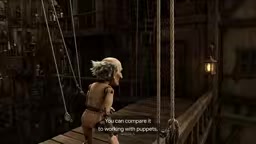
This metaphor reveals how Genie 4 changes the demands on creators. It doesn't promise one-click perfect results; instead it returns control to the human: you can experiment repeatedly, make changes, and watch how everything evolves. The tool's boundary extends from "what to generate" to "how to choreograph."
What a World Model Means
Back to the key assertion: "This is not a video model, but a world model — you're essentially simulating reality, not making video."
This statement deserves serious consideration. Video models are evaluated on image quality and semantic alignment; world models are evaluated more like simulations: whether states are coherent, whether interaction is immediate, whether causality holds, whether the process is reproducible. Genie 4's real-time movement, real-time prompting, reproducible seeds, and choreographable events are all built around this simulation standard.
Of course, the current form still bears a clear creative-tool character — the puppeteer metaphor itself shows that fine-grained choreography still depends on human judgment and repeated tuning. But starting from "capturing a world," the path toward interactive content creation, embodied intelligence training environments, and real-time simulation systems is already clearly visible. For content creators, it offers a brand-new narrative medium; for researchers, it offers a controllable testing ground for worlds.
World Model is a classic concept in reinforcement learning and robotics, referring to an agent's internal representation of environment dynamics: given the current state and action, the model predicts the next state and reward, thereby supporting planning, imaginative rollouts, and policy learning (as in systems like Dreamer and MuZero). Systems like Genie advance this concept from "abstract state transitions in latent space" to "renderable, interactive open worlds," and the two share the same evaluation dimensions — state coherence, causal consistency, and the accuracy of action-conditioned responses. This is where the technical weight of the assertion lies: it reframes generative models from a pixel-domain fitting problem into an environment dynamics modeling problem.
Embodied intelligence training environments refer to interactive simulation platforms for robots or embodied agents. Training such agents requires massive, diverse, and repeatable interaction data, while real-world collection is extremely costly and hard to reproduce. The value of generative world models lies in synthesizing controllable scenes on demand and ensuring the same initial conditions can be replayed repeatedly, making them a source of data and evaluation beyond the real environment.
One-line Summary
Genie 4 is a world model, not a video model — turning generation into a real-time interactive, reproducible world.
Paragraph Summary
Based on Special Guest X's experience as a Google DeepMind creative partner, the article argues that Genie 4's fundamental positioning is a world model that "captures a world," not a video generator producing finished products. Its operation splits into dual channels: arrow keys for first-person movement, and natural language prompts for real-time directing of camera and plot, both active concurrently. Within the Project Genie framework, users can choreograph character actions, dialogue, and events through built-in agents, significantly lowering the barrier to interactive content creation. Prompts act as seeds, ensuring the same input reproduces the same starting composition and initial actions, supporting repeated iteration and precise control in training scenarios. The creative team compares the experience to "puppeteering": adjusting each control string individually in exchange for real-time, direct intervention in the scene. The article argues that world models are evaluated more like simulations — coherent states, immediate interaction, valid causality, reproducible processes.
Related articles

Zed Editor Releases v1.29.2: Observations on a Routine Version Iteration
Zed editor releases patch v1.29.2, version bump by @JosephTLyons, commit verified via GitHub signature. This article covers the release's basic info, what a patch version means, and practical upgrade advice for users.

Anthropic IPO Questioned: Hacker News Debates Timing of Going Public
A Hacker News post titled "Just say no to Anthropic's IPO" sparks debate on the timing of Anthropic's public listing and AI capitalization, touching on valuation bubbles and mission independence.

Nvidia RTX Spark Mini PCs Go on Sale, Asus, Dell, and MSI Lead the Launch
Nvidia's RTX Spark N1X chip expands to desktops, with Asus, Dell, and MSI launching the first mini PCs, followed by Acer, Gigabyte, HP, and Microsoft's Surface Dev Box, accelerating the desktop AI PC ecosystem.