Fable 5.2 Launches on Perplexity: Deep Research Capabilities Surpass Gemini Argon

Perplexity launches Fable 5.2, claiming a lead over Gemini Argon on deep research tasks, highlighting the shift in AI search competition toward research capabilities.
Perplexity recently launched the Fable 5.2 model, which users can directly invoke through the Computer feature or use to create Teammates agents. The company claims that the model beats Google's Gemini Argon by a solid margin on Wide and Deep Research (WANDR) tasks. The article argues that the significance of this news lies not in a version update but in revealing that the competitive focus of AI search products is shifting from chat interaction to deep research capability. Fable 5.2's dual-path integration reflects the trend of embedding models into workflows: Computer handles task execution, while Teammates handles role-based collaboration. The article also cautions that single-source benchmark claims require third-party verification, and a benchmark lead does not equal a real-world experiential advantage.
Perplexity has recently launched the Fable 5.2 model, which users can directly invoke within the Computer feature or use to create Teammates agents. An official tweet claims that on Wide and Deep Research (WANDR) tasks, Fable 5.2 beats Gemini Argon by a solid margin. What makes this news noteworthy isn't just another model version bump, but rather that it reveals a key pivot in the competition among AI search products: deep research capability is becoming the core battleground for model deployment.
Deep Research Becomes the New Capability Yardstick
The name of the WANDR benchmark itself is telling—Wide corresponds to breadth, Deep to depth, and the combination examines a model's comprehensive performance in open-ended research tasks. Such tasks require the model not only to retrieve information but also to integrate across sources, judge relevance, and organize findings into logically coherent conclusions. Perplexity's choice to benchmark against Gemini Argon on this dimension indicates that it positions itself as a "research assistant" rather than a "chat assistant."
Judging from the wording of the tweet, Fable 5.2's lead is described as a "solid margin" rather than a narrow one. In official marketing, such phrasing typically implies that the evaluation gap has some statistical significance, but the specific scores were not disclosed in the original information, and actual performance still requires third-party verification.
Positioning of the WANDR Benchmark: Wide and Deep Research (WANDR) is an evaluation suite specifically designed to assess large language models' performance on open-ended deep research tasks. Unlike benchmarks such as MMLU and GSM8K that focus on knowledge recall or mathematical reasoning, WANDR simulates a real research workflow: given a broad question, the model must autonomously decompose sub-questions, perform multi-round retrieval, cross-validate across sources, eliminate contradictory information, and ultimately produce a structured research report. Its scoring dimensions typically include information coverage, source reliability, logical coherence, and traceability of conclusions. The difficulty with such benchmarks is that there is no single correct answer, and evaluation often relies on LLM-as-judge or human scoring, so interpreting score differences requires more caution than with traditional benchmarks.
Computer and Teammates: Two Usage Paths
Fable 5.2 is integrated into Perplexity in two ways. First, direct invocation within the Computer feature, aimed at ordinary users who need to complete complex tasks; second, creating Teammates through Fable, i.e., letting the model participate in collaboration as a configurable agent role. The latter is closer to an "AI colleague" format, where users can set up different Teammates for different tasks, each taking on specific responsibilities.
This dual-path design reflects a trend: model capabilities are no longer delivered solely through a single chat box, but are embedded into specific workflows. Computer handles task execution, while Teammates handles division of labor and collaboration—together they constitute Perplexity's understanding of an "AI workbench."
The Difference Between Retrieval-Augmented Generation (RAG) and Deep Research: Retrieval-Augmented Generation (RAG) refers to a model retrieving relevant snippets from an external knowledge base before generating an answer, then organizing the response based on those snippets—primarily addressing knowledge timeliness and factual grounding. However, traditional RAG is typically single-round retrieval with snippet stitching, and it tends to break down on complex questions requiring multi-hop reasoning. Deep research tasks, by contrast, require the model to perform multi-round iterative retrieval: assessing information gaps based on preliminary results, launching new rounds of queries, and making trade-offs among conflicting sources. Perplexity's early products focused on single-round RAG retrieval aggregation; the introduction of Fable 5.2 is intended to fill in the layer of multi-round deep reasoning, extending the product from an "answer engine" toward a "research engine."
Competitive Landscape with Gemini Argon
Gemini Argon is Google's representative model in the deep research direction, and Perplexity's decision to actively benchmark against it amounts to challenging Google on its home turf. For Perplexity, model selection has always been a sensitive point in its product strategy—it relies on external models while also needing to establish differentiation. Introducing Fable 5.2 and emphasizing its advantages on research tasks sends users the signal that "we don't just do retrieval aggregation; we also do deep reasoning."
One additional point: a single-source evaluation claim is not sufficient to constitute a definitive conclusion. There is often a gap between a model's lead on a specific benchmark and the experiential difference in real-world usage scenarios. A good WANDR score does not mean superiority across all research-type tasks; users' actual experience also depends on peripheral factors such as retrieval quality, response speed, and citation accuracy.
Teammates and Multi-Agent Collaboration: Teammates are essentially configurable agent personas, each bound to specific system prompts, tool permissions, and knowledge scopes. The core idea of multi-agent collaboration is task decomposition and role division: a coordinator breaks down a complex task among agents with different specialties, and results are aggregated after each completes its part. This architecture can alleviate the problem of overloading a single conversation context, but it also introduces new challenges—information loss during inter-agent transfer, task boundary definition, and consistency verification of results. Perplexity's pairing of Teammates with Computer indicates that its product logic is to encapsulate model capabilities as orchestratable work units rather than merely providing a chat interface.
What It Means for Users
For Perplexity users, the most direct change is an additional optional reasoning backend. For tasks such as in-depth research, competitive analysis, and literature review, Fable 5.2 may deliver more complete output; for everyday Q&A, switching to it may not be necessary. The introduction of Teammates moves "multi-agent collaboration" from concept to usability—users can configure different roles based on task type, reducing the burden of repeatedly switching contexts within a single conversation.
From an industry perspective, the arms race in deep research capabilities is accelerating. As retrieval-augmented generation becomes standard, the key to differentiation lies in "how deep the research goes and how well the integration is done." Fable 5.2's deployment on Perplexity is one step in this race, but far from the finish line.
One-line Summary
Perplexity launches Fable 5.2, claiming a lead over Gemini Argon on deep research tasks, highlighting the shift in AI search competition toward research capabilities.
Paragraph Summary
Perplexity recently launched the Fable 5.2 model, which users can directly invoke through the Computer feature or use to create Teammates agents. The company claims that the model beats Google's Gemini Argon by a solid margin on Wide and Deep Research (WANDR) tasks. The article argues that the significance of this news lies not in a version update but in revealing that the competitive focus of AI search products is shifting from chat interaction to deep research capability. Fable 5.2's dual-path integration reflects the trend of embedding models into workflows: Computer handles task execution, while Teammates handles role-based collaboration. The article also cautions that single-source benchmark claims require third-party verification, and a benchmark lead does not equal a real-world experiential advantage.
Related articles

How Do Cursor, Devin, TRAE, and Copilot Compare on Price? Calculate Your Credits Before You Compare Monthly Fees
Side-by-side comparison of individual and team pricing for Cursor, Devin Desktop, TRAE, and Copilot, breaking down credit rules, third-party model inclusion, overage billing, and practical methods for measuring usage before paying, setting spending caps, and choosing the right tool.
Copilot Retires Three Models: Pro Users Left With Only One Alternative
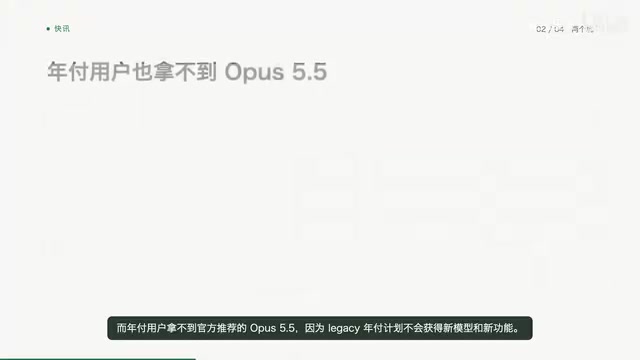
GitHub Copilot retires Claude Opus 4.8, Claude Opus 5, and GPT-5.6 Tera on Nov 16 across Chat, code completion, and Agent mode. Pro users have only GPT-6 Luna left; Legacy annual plans miss Opus 5.5; admins must enable replacements manually.
Gemini 4 Carbon Arrives: The LLM Race Enters the Era of Million-Token Context and Trillion-Parameter Open Source
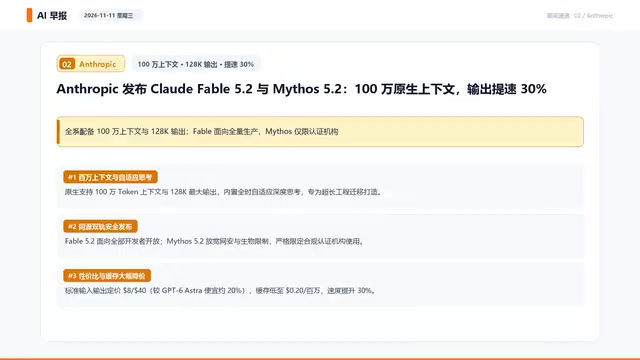
Google launches Gemini 4 Carbon and multi-agent tool Swarm; Anthropic debuts million-context Fable 5.2 and Mythos 5.2; OpenAI releases security-focused GPT-6 Cyber; Mistral and Kimi open-source trillion-parameter models — the LLM race accelerates across the board.