Faceswap Open-Source Face-Swapping Tool: Deep Dive into Technical Principles, Workflow, and Ethical Boundaries

A comprehensive analysis of Faceswap's technology, workflow, and the ethical debates around Deepfakes.
This article provides an in-depth look at Faceswap, one of GitHub's most popular open-source Deepfake projects with ~56K Stars. It covers the three-stage pipeline (Extract, Train, Convert), the autoencoder-based architecture, multiple model options, and the reasons behind its popularity. The piece also explores the ethical controversies, legal landscape, and the technological neutrality debate surrounding face-swapping AI tools.
What is Faceswap
Faceswap is one of the most well-known open-source face-swapping (Deepfake) projects on GitHub, with a bold and straightforward tagline — "Deepfakes Software For All." As a deep learning project built with Python, Faceswap has accumulated approximately 55,968 Stars and 13,410 Forks, with 135 new Stars added daily — a clear testament to its sustained popularity within the developer community.
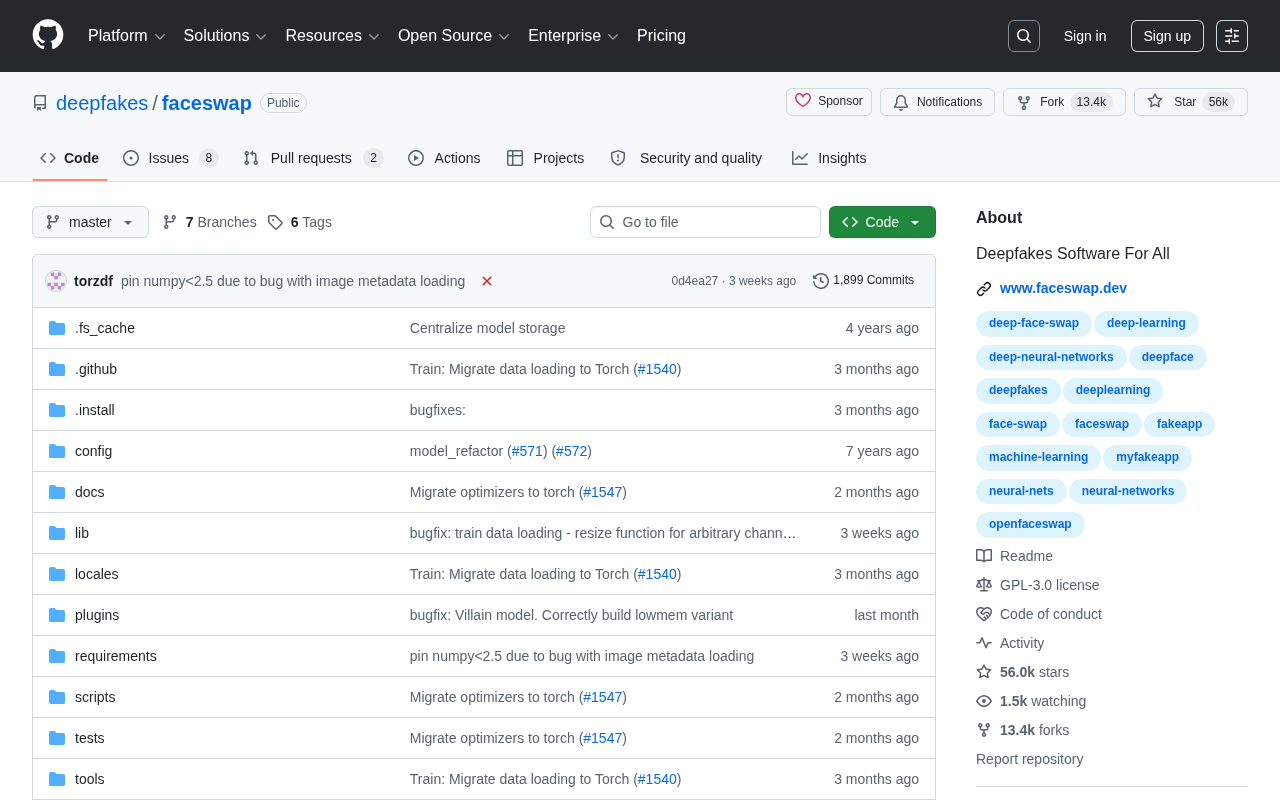
The project's core goal is to enable everyday users to leverage deep learning technology to "transfer" one person's face onto a target individual in a video. Unlike earlier face-swapping techniques that required a professional machine learning background, Faceswap provides a complete toolchain — from data extraction and model training to final synthesis — along with a graphical user interface (GUI), significantly lowering the barrier to entry.
Faceswap Technical Principles and Workflow
Three-Stage Pipeline: Extract, Train, Convert
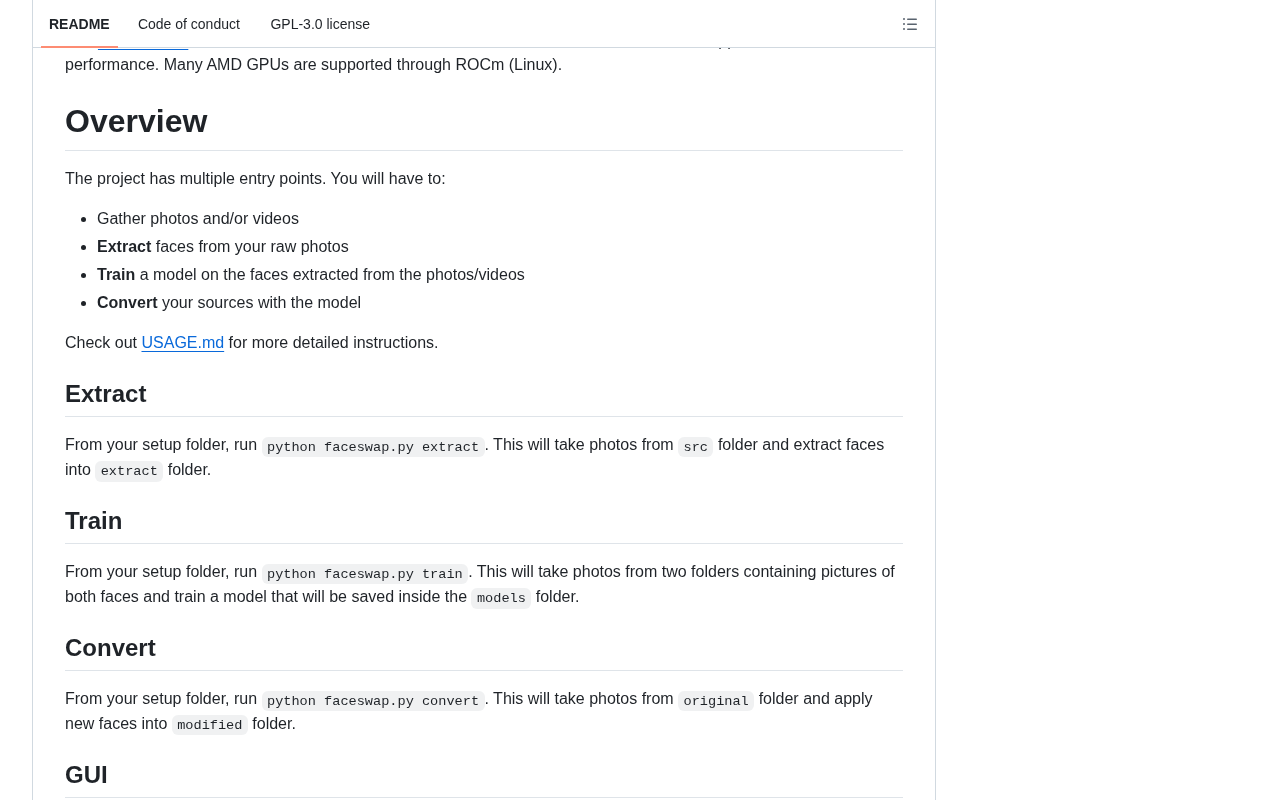
Faceswap's workflow can be summarized in three core stages: Extract, Train, and Convert.
During the extraction stage, the software detects and crops faces from both the source and target videos, while aligning facial landmarks to generate a face dataset for training. The quality of this step directly determines how natural the final face swap will look.
The training stage is the most time-consuming part of the entire process. Faceswap employs an Autoencoder-based neural network architecture: the model learns to encode the facial features of two different people into a shared latent space, then reconstructs faces through their respective decoders. Training typically takes hours or even days and is highly dependent on GPU computing power.
Finally, in the conversion stage, the trained model replaces the face in the target video frame by frame with the source person's face, performing post-processing such as edge blending and color correction before outputting the final synthesized video.
Multiple Model Architectures for Different Needs
Faceswap includes multiple built-in model architectures, ranging from the lightweight Lightweight model to high-fidelity options like Villain and DFL-SAE. Users can choose based on their hardware capabilities and quality requirements. This flexibility makes it suitable for both beginners with limited configurations and professional creators seeking high-definition face swaps.
Why Faceswap is So Popular
Faceswap's popularity stems from several key factors:
- Open-source and free — Unlike some commercial face-swapping applications, it's completely free with transparent code that users can freely audit and modify
- Active community support — The project features comprehensive documentation, tutorials, and forums, allowing beginners to get started step by step
- Cross-platform compatibility — Supports Windows, Linux, and macOS with good compatibility across mainstream GPUs
From a technological evolution perspective, Faceswap represents an important branch of AI-Generated Content (AIGC) in the visual domain. Together with Stable Diffusion, GANs, and other generative technologies, it forms part of the technical foundation for today's digital content creation.
Deepfake Controversies and Ethical Boundaries
Deepfake technology has been accompanied by enormous ethical controversy since its inception. These tools can be misused to create fake news, fabricate celebrity videos, generate non-consensual adult content, and even facilitate fraud and political manipulation. For this reason, the Faceswap project explicitly emphasizes the principle of responsible use in its documentation and states its opposition to using the technology for any illegal purpose or to harm others.
Interestingly, as face-swapping technology has become more widespread, detection and defense technologies against Deepfakes have been developing in parallel. Major tech companies and research institutions are investing resources in developing deepfake detection algorithms, while multiple countries and regions have begun enacting relevant laws and regulations requiring AI-generated content to be labeled.
Reflections on Technological Neutrality
Faceswap's existence once again raises the classic debate about "technological neutrality." Tools themselves are neither good nor evil — what matters is the intent of the user. As an open-source project, Faceswap on one hand promotes education in computer vision and deep learning, helping more people understand how neural networks process images; on the other hand, its potential for misuse is very real. This double-edged sword effect is a common challenge that virtually all powerful tools must confront in the AI era.
Conclusion
As a top-tier open-source project with nearly 60,000 Stars, Faceswap is both a prime example of the democratization of deep learning technology and an important case study in AI ethics discussions. For developers and researchers, it offers an excellent platform for learning about facial synthesis, autoencoder architectures, and computer vision engineering practices. For society as a whole, how to enjoy the benefits of technology while establishing effective prevention and governance mechanisms remains an urgent long-term challenge.
When using tools like these, every user should remember: the greater the power of technology, the greater the responsibility that comes with it.
Related articles

A Developer's Hands-On Test of Doubao Phone Assistant: AI Phones Are Evolving from Chatbot to Agent
A developer's hands-on test of Doubao Phone Assistant — from screen Q&A and calendar actions to server port checks and FFmpeg vulnerability patching — exploring how AI phones evolve from Chatbot to Agent.
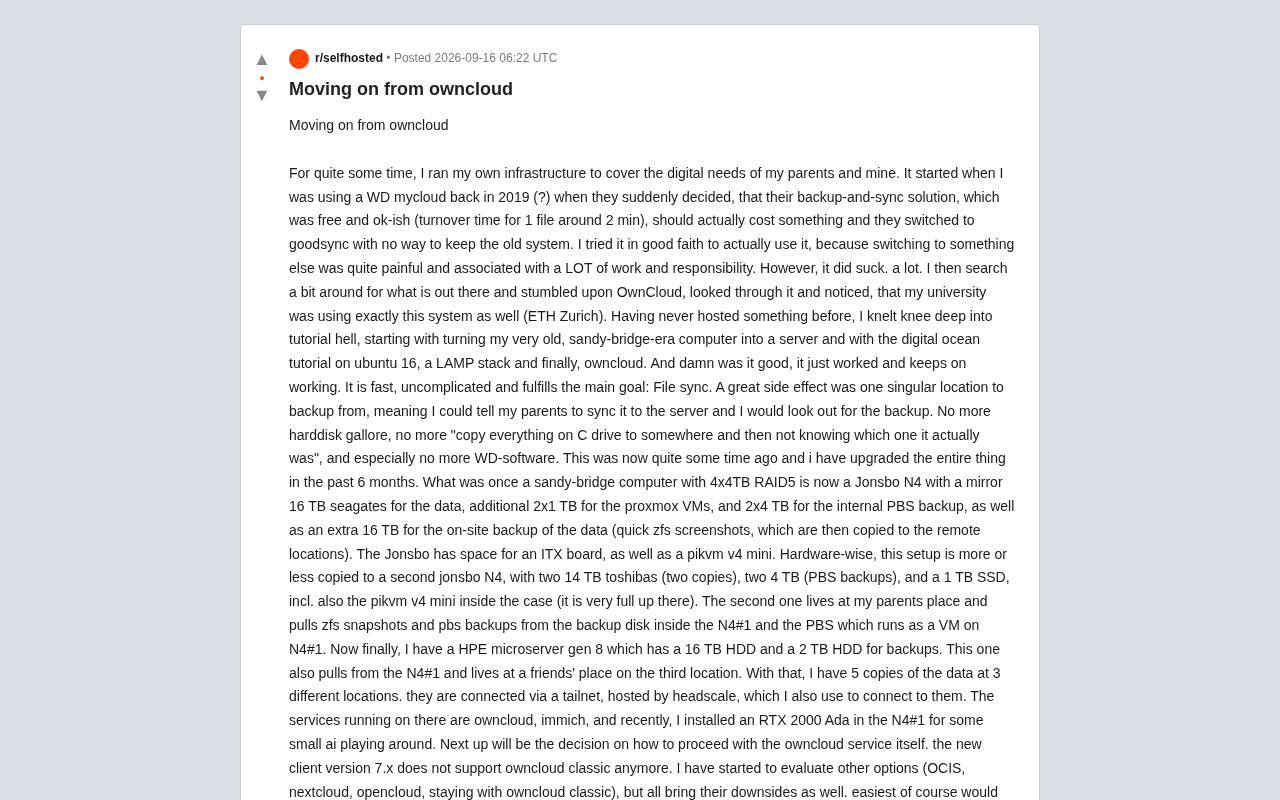
Moving On from ownCloud: Building a 5-Copy, 3-Location Home NAS Backup System
A Reddit user's journey from WD MyCloud to a 5-copy, 3-location ZFS+Proxmox home NAS, and the hard choices facing ownCloud Classic users as the official client drops support.
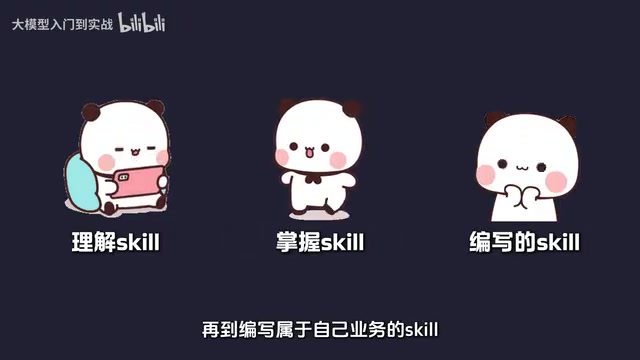
What Are Agent Skills? A Beginner's Guide from Understanding to Customization
What are Agent Skills? This guide breaks down the Skill concept, its role in ecosystems like Claude Code, and a three-step learning path from understanding to customization.