Fake Claude Plugin Infiltrates Cursor: A New Trap in AI Supply Chain Attacks
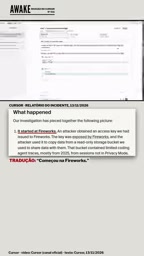
Attackers used Fireworks to plant a fake Claude Code extension in the plugin store, exposing an AI supply chain trust crisis.
Cursor disclosed a supply chain attack in which attackers, through AI vendor Fireworks, listed a fake Claude Code extension that tried to open a backdoor after installation. Cursor stressed the flaw was not in its product and Anthropic did not release the plugin, pointing to the third-party model vendor. The fake plugin behaved normally during the attack to avoid suspicion. Wiz says at least nine AI platforms reported October intrusions, some AI-assisted. Fireworks blamed a credential-reselling gang, though Cursor did not confirm the link.
An Intrusion That Started in the Plugin Store
According to a YouTube channel report, Cursor disclosed a supply chain attack: attackers, through its AI vendor Fireworks, listed a fake Claude Code programming assistant extension in the plugin store. Once installed, the extension attempted to open a backdoor for the attackers to enable further penetration. The scope of impact is still being confirmed, but Cursor stated that a considerable number of users may have received the malicious plugin.
You may not have noticed, but Anthropic did not release a copy of this plugin, and Cursor emphasized that the vulnerability did not originate from its own product. The core issue is this: when AI programming tools rely on third-party model vendors, any link in the supply chain can become an attack surface.
Breaking Down the Attack Chain: Why Fireworks Became the Springboard
As an AI infrastructure vendor, Fireworks provides model inference services for tools such as Cursor. The attackers chose to enter at this layer rather than directly attacking Cursor or Anthropic, which shows that the trust boundaries of the AI toolchain are becoming blurred. As installable components within a program, plugins naturally have the ability to execute code. Once review is lax, they can be used as a vehicle for delivering backdoors.
According to screenshot information, Cursor stated that as many as thousands of people may have received the plugin. Although this number has not been independently confirmed, it reflects the amplifying effect of plugin distribution channels—a malicious extension can reach a large number of developers in a short period of time.
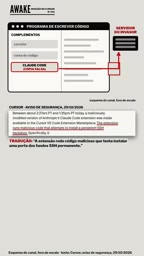
Trust transmission from AI infrastructure vendors
Companies such as Fireworks, Together AI, and Replicate belong to the "model inference as a service" layer: they host inference endpoints for open-source or proprietary models, allowing application developers to call models without building their own GPU clusters. Programming assistants like Cursor send user code and context to these endpoints, which then return completions or agent actions. Because this layer sits between Cursor and the underlying models, it controls API keys, request routing, and plugin/integration distribution permissions. Once attackers gain a foothold at this layer, they can deliver content to all downstream clients under the identity of a "legitimate vendor," while end users still see the familiar branded interface. This is the typical amplifying effect of supply chain attacks: compromise one intermediate node and you can laterally affect many downstream products.
The Fake Claude's Disguise: Operating Normally During the Attack
According to information from Microsoft, the fake Claude Code behaved normally during the attack in order to avoid raising user suspicion. This tactic of "work normally first, then quietly open a hole" is more covert than directly throwing errors or behaving abnormally. Developers often do not continuously monitor a plugin's network behavior after installation, which gives attackers ample operating window.
The incident also exposes a structural problem in the AI programming assistant ecosystem: users trust the Cursor or Anthropic brand, but the code actually running may come from multiple unverified third parties.
Plugin models and code execution permissions
IDE plugins usually run as separate processes or extension hosts and have permissions to read workspace files, initiate network requests, and invoke local commands. Similar to browser extensions, plugin store reviews often focus on feature descriptions and static scanning, making it difficult to cover dynamic runtime behavior. A malicious plugin can maintain normal functionality for a period of time to pass manual review and user observation, then activate backdoor logic under specific conditions (such as a specific project or a specific time window). This "dormant—trigger" pattern makes traditional one-time reviews ineffective, and also explains why "behaving normally during the attack" becomes a standard strategy for attackers. For developers, limiting a plugin's network egress and reviewing its permission list is more practical than relying solely on store review.
More Than One Incident: The October Wave of AI Platform Intrusions
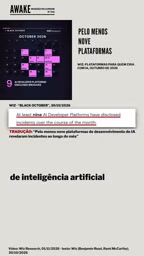
According to security firm Wiz, at least nine AI platforms reported intrusion incidents in October, some of which were carried out with AI assistance. Fireworks attributed its own case to a criminal group that resells stolen AI access, but Cursor did not confirm whether it was the same organization.
This chain of "steal credentials—resell access—launch attacks" is becoming industrialized. According to Google's observations, some services offer so-called unlimited plans for about tens of dollars per month, and Google believes these services are profitable precisely because they use stolen API keys.
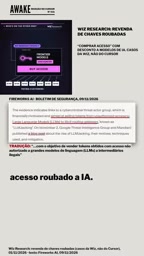
The gray resale market for stolen API keys
Large model APIs are billed by token. Once a key is leaked, attackers can resell it to buyers who need cheap compute, or use it directly for mining-style bulk calls. The "unlimited plans" observed by Google are a product of this model: sellers attract users with monthly fees far below official pricing, while consuming stolen key quotas behind the scenes. This gray market not only causes direct economic losses but also provides a springboard for subsequent attacks—buyers and thieves may be different branches of the same group. For enterprises, key rotation, usage anomaly alerts, and outbound traffic auditing are the main means of detecting such abuse; for platforms, it is necessary to establish key fingerprint tracking and cross-platform blacklist sharing mechanisms.
Implications for Developers
This incident is a reminder for teams that rely on AI programming tools: plugin sources need strict review, the security qualifications of third-party model vendors should be included in assessments, and basic monitoring of tool network behavior should be maintained. AI supply chain attacks will not happen only to Cursor; any IDE or assistant that connects to external model services could become the next target.
As AI tools become more deeply embedded in development workflows, the security defense line must also shift from "trusting the brand" to "verifying the chain."
One-line Summary
Attackers used Fireworks to place a fake Claude Code extension in the plugin store, exposing a trust crisis in the AI supply chain.
Paragraph Summary
Cursor disclosed a supply chain attack: attackers, through its AI vendor Fireworks, listed a fake Claude Code extension in the plugin store that attempted to open a backdoor for attackers after installation. Cursor emphasized that the vulnerability did not originate from its product, and Anthropic did not release a copy of the plugin either; the issue points to the third-party model vendor link. The fake plugin behaved normally during the attack to reduce user vigilance, making it highly covert. Security firm Wiz said at least nine AI platforms reported intrusion incidents in October, some carried out with AI assistance. Fireworks attributed the case to a criminal group that resells stolen AI access, but Cursor did not confirm whether it was the same organization. The incident reminds developers that plugin sources need strict review, third-party vendor security qualifications should be included in assessments, and the security defense line must shift from trusting brands to verifying the chain.
Related articles
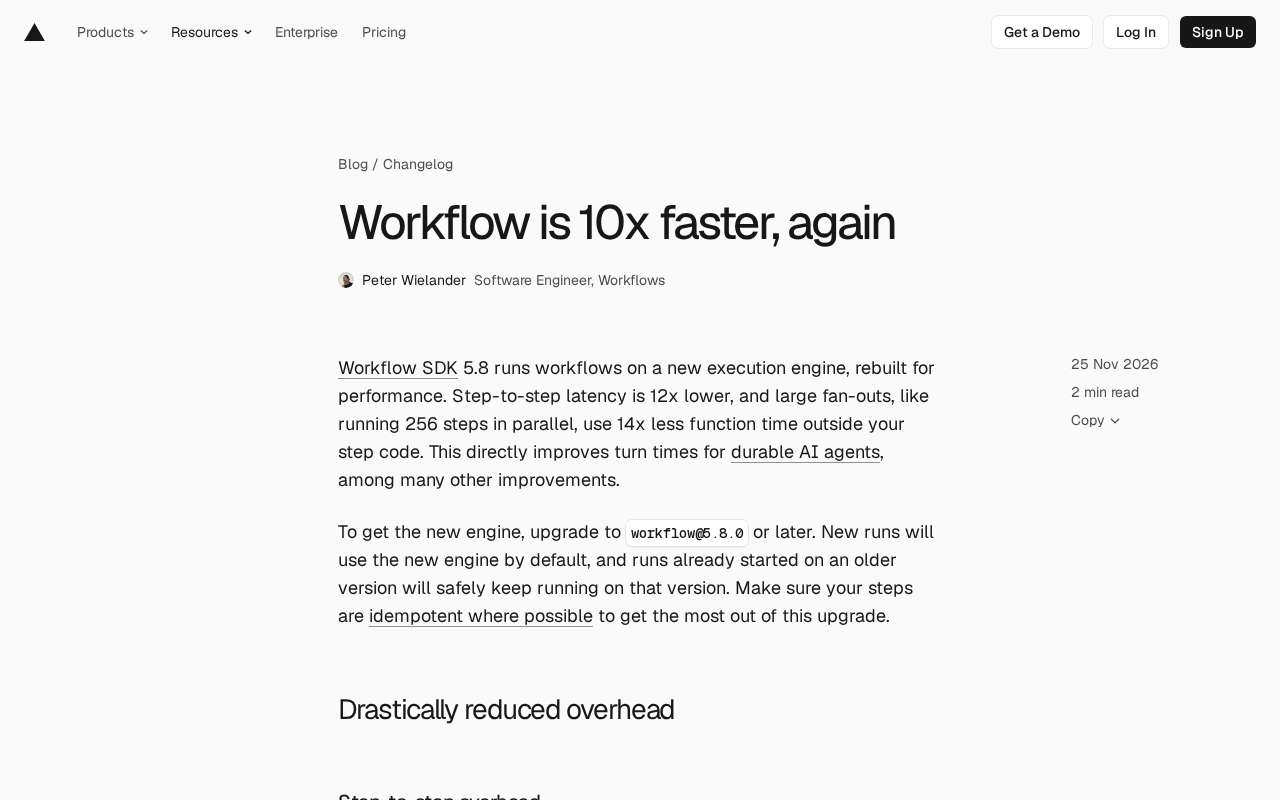
Workflow SDK 5.8 Performance Benchmark: Step Latency Reduced 12x
Workflow SDK 5.8 rebuilds its execution engine, cutting p75 inter-step latency from 85ms to 7ms and 256-way parallel fan-out overhead by 14x, improving durable AI agent turnaround.

David Fincher's New Film Accused of Being AI-Generated? The Truth Behind the Controversy
David Fincher's new film *The Further Misadventures of Cliff Booth* is accused of using AI, with a carriage shot in the trailer sparking controversy. Netflix's acquisition of Ben Affleck's AI company and Fincher's own openness to AI keep suspicions alive. This article sorts out the controversy and the views of all sides.

FCC Clears SpaceX's Space-Based AI Data Centers: A Debate Over Regulatory Boundaries
The FCC approved SpaceX's plan to deploy AI data centers in space but dismissed opponents' key concerns about scientific research impacts as beyond its regulatory authority. This article analyzes the regulatory boundary issues behind the decision, the deeper tensions of space-based AI infrastructure, and its implications for the industry.