Farewell to AI Hallucination Vulnerabilities: Cloudflare's Multi-Agent Audit Skill
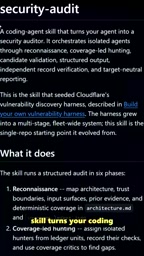
Cloudflare's open-source security audit skill uses three-phase isolated agents—recon, attack, disproof—to reduce AI audit hallucinations.
Cloudflare has open-sourced a security audit skill that tackles AI coding agents' tendency to report nonexistent vulnerabilities. It uses a multi-agent architecture with three isolated phases—reconnaissance, attack, and disproof—where a fresh agent tries to refute each candidate finding, countering confirmation bias. Results are tiered as confirmed, needs validation, or rejected, and unverified leads never receive a severity level, cutting alert noise. Open-sourced under MIT, it installs with one command and is positioned as an automated pre-commit self-check rather than a replacement for professional pentesting.
AI coding agents are getting increasingly capable, but when you ask them to do a security audit, they often confidently report a vulnerability that doesn't exist at all. These "hallucinated vulnerabilities" not only waste time but can also cause teams to lose trust in automated auditing. An open-source security audit skill from Cloudflare attempts to solve this problem through multi-agent collaboration—splitting the audit into three phases: reconnaissance, attack, and disproof, with each phase handled by an independent agent, and unverified leads never being assigned a severity level.
Multi-Agent Phased Auditing: Let AI Attack First, Then Disprove Itself
The traditional approach is to have a single large model directly scan the code and output a list of vulnerabilities. The problem is that models tend to "find something to deliver," fabricating seemingly plausible conclusions even when evidence is insufficient. The core design of this skill is isolated agents: each phase uses a different agent instance with no shared context, preventing assumptions from earlier phases from contaminating subsequent judgments.
According to the introduction from the YouTube source, the entire process has three steps. The first step is Recon, where an agent maps out the codebase structure and flags potential attack surfaces. The second step has hunters launch "attacks" on candidate areas, attempting to construct exploit paths. The third step is the most critical: a completely new agent takes the stage, and its task is not to find vulnerabilities but to disprove—attempting one by one to refute every candidate finding the hunters proposed.
This "attack-defense separation" approach borrows from how human security teams operate: penetration testers and reviewers are ideally not the same person. Agent isolation frees the disproof phase from the hunters' line of thinking, reducing confirmation bias.
Isolated Agents is a pattern in multi-agent system design that refers to creating independent agent instances for different task phases, which do not share conversation history, intermediate state, or reasoning context with one another. Each agent receives only the output results of the previous phase as input, rather than the complete reasoning process. The purpose of this design is to prevent "context contamination"—when a model forms a certain hypothesis in an early phase (for example, "this code may have an injection vulnerability"), subsequent reasoning will unconsciously gravitate toward that hypothesis, producing confirmation bias. Isolated agents force each phase to start from a clean state, making them especially suitable for the disproof step, which requires independent judgment. The cost is that information transfer between agents must be made explicit, and the interface format between phases must be carefully defined during design.
Reconnaissance, Attack, Disproof: Breaking Down the Three-Phase Workflow
The value of the reconnaissance phase is often underestimated. Without a code map, hunters can only try their luck at random locations; with a structured attack surface mapping, subsequent attacks become targeted. The screenshot description mentions "Recon maps the code, hunters attack it," indicating that reconnaissance outputs an actionable code map rather than a vague summary.
The attack phase is executed by hunter agents, which locate suspicious code based on reconnaissance results and attempt to construct specific trigger conditions. The key here is that hunters are only responsible for "proposing hypotheses," not for drawing conclusions.
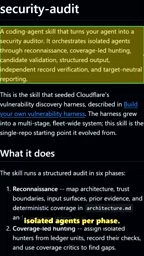
The disproof phase is the quality gate of the entire process. A completely new agent receives the candidate list and tries one by one to find counterexamples: can this input really reach the dangerous function? Is the permission check already covered elsewhere? If conclusive evidence cannot be found, the candidate is downgraded or rejected. The original text emphasizes that "a fresh agent tries to disprove every candidate"—this adversarial verification is more reliable than having the same agent self-check.
Confirmation Bias is a tendency prevalent in human cognition: once a preliminary judgment is formed, one prioritizes finding evidence that supports it while ignoring or discounting contrary evidence. In security audit scenarios, this means that if the same agent first proposes a vulnerability hypothesis and then self-verifies, it will likely focus only on paths that prove the vulnerability exists while missing protections that actually block the attack. Multi-agent auditing counters this bias by assigning "proposing hypotheses" and "verifying hypotheses" to different agent instances—the disproof agent has not invested in the hunters' reasoning and therefore has no psychological motive to defend its own conclusions, making it more likely to find counterexamples.
Three-Tier Conclusions and the Severity Threshold
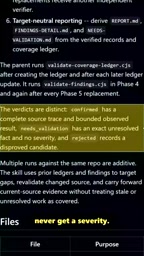
Audit results are divided into three categories: confirmed, needs validation, and rejected. This classification itself is nothing new; what's truly notable is the rule for granting severity levels—unverified leads never receive a severity.
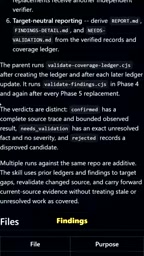
This rule directly targets a common problem with AI auditing: models like to label every finding as high severity, leading to alert fatigue. By binding severity to evidence strength, teams can prioritize confirmed items, have needs-validation items quickly reviewed by humans, and archive rejected items directly. The audit report transforms from "a pile of alerts of dubious authenticity" into a prioritized work queue.
From an engineering perspective, this is also a form of cost control: the disproof agent's workload grows with the number of candidates, but only findings that pass disproof enter human view, reducing the burden of subsequent manual review.
Alert Fatigue is a classic problem in security operations: when a system generates a large number of false positives or low-quality alerts, security personnel gradually become desensitized to alerts, even habitually ignoring or quickly closing them, causing genuine high-severity incidents to be drowned out. AI coding agents are especially prone to exacerbating this problem, because language models tend to rate any suspicious-looking code as "high severity" to appear diligent. Binding severity levels to evidence strength—only findings that pass the disproof phase's test are granted a severity—is essentially an alert noise-reduction mechanism that focuses the team's attention resources on candidates that have undergone adversarial verification.
One Command to Integrate with Existing Coding Agents
Deployment is lightweight. The original text describes it as "Install it with one command, then tell your agent, security audit this codebase"—after installation, trigger the audit directly with a natural language instruction, with no need to configure additional pipelines or write rule files.
The skill is open-sourced under the MIT license, and the original text mentions a community热度 of 67,000 stars (note: this figure is as stated in the source). This indicates it has already garnered considerable attention in the developer community. For teams already using coding agents, the integration cost is nearly zero, making it suitable as an automated pre-commit security self-check.
It should be noted that multi-agent auditing cannot replace professional penetration testing. Its positioning is closer to "reducing low-level omissions and hallucination noise," focusing manual security review efforts on genuinely suspicious findings. If your team is being troubled by false positives from AI auditing, this phased, mandatory-disproof workflow is worth trying.
One-line Summary
Cloudflare's open-source security audit skill uses three-phase isolated agents—reconnaissance, attack, and disproof—to reduce AI audit hallucinations.
Paragraph Summary
Cloudflare has open-sourced a security audit skill aimed at solving the "hallucination" problem where AI coding agents frequently report nonexistent vulnerabilities during security audits. The skill adopts a multi-agent collaboration architecture, splitting the audit process into three phases—reconnaissance, attack, and disproof—with each phase handled by an independent agent instance with no shared context, preventing earlier assumptions from contaminating subsequent judgments. In the disproof phase, a completely new agent specifically attempts to refute candidate findings proposed by hunters, countering confirmation bias. Audit conclusions are divided into three tiers—confirmed, needs validation, and rejected—and unverified leads are not assigned severity levels, thereby reducing alert noise. The skill is open-sourced under the MIT license, installs with a single command, and is triggered via natural language instructions. It is positioned as an automated pre-commit security self-check rather than a replacement for professional penetration testing.
Related articles

distribution.dev: One Campaign, Multiple Developer Sites
distribution.dev is a developer ad network jointly launched by daily.dev and DEV, enabling one campaign across multiple developer sites with ads adapted to each platform's reading environment.
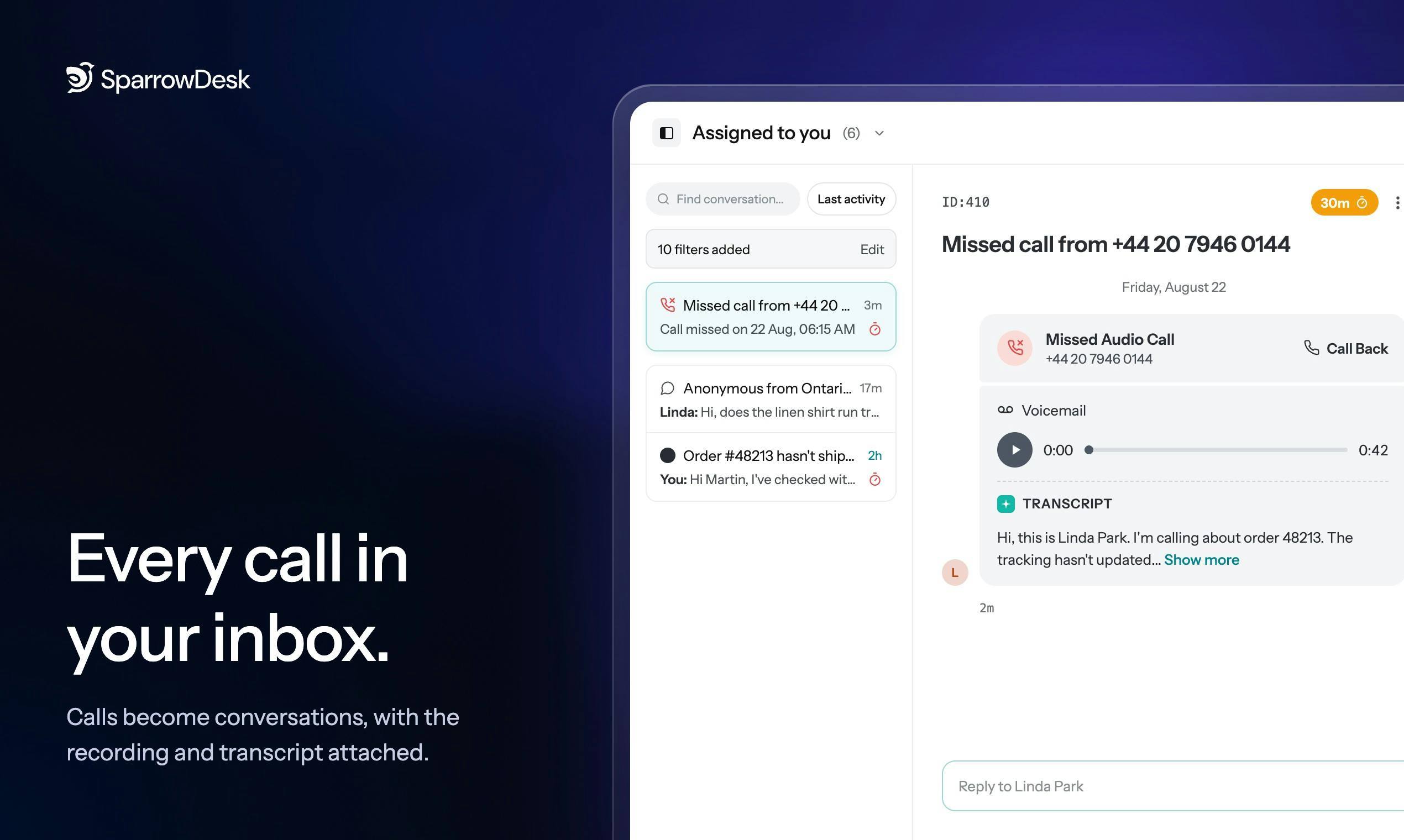
SparrowDesk Puts Phone Support Into an Omnichannel Inbox With Usage-Based Pricing
SparrowDesk launches Phone Calls on Product Hunt, bringing phone support into the same inbox as email, chat, and WhatsApp, with numbers in 51 countries, visual IVR, AI agent routing, call recording and transcription into tickets, and a prepaid Voice Wallet with usage-based pricing that avoids per-seat fees.
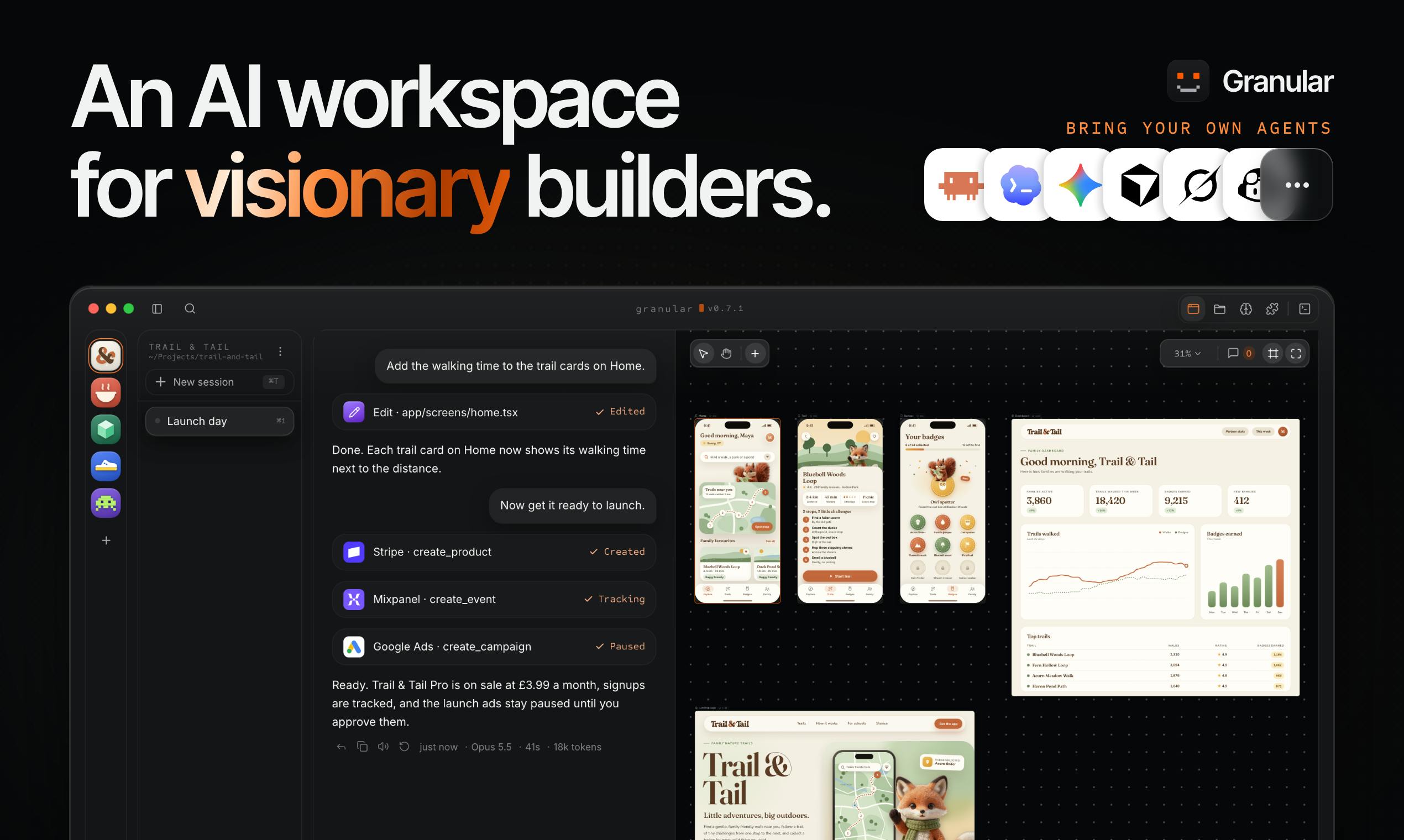
Granular.Build: Putting AI Agents Inside a Visual Workspace
Granular.Build is a visual AI workspace on Product Hunt where boss agents orchestrate specialized agents in parallel, with centralized models, files, and context.