Firebase August Update: AI Logic Security Hardening and CLI Agent Mode Explained
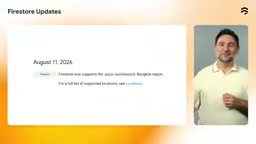
Firebase's August update hardens AI security, adds CLI Agent mode, and sets deprecation timelines for Extensions and ML.
Firebase's August update focuses on three themes: security hardening, AI workflow adaptation, and service lifecycle management. App Check is now enabled by default for all new AI Logic projects, and reCAPTCHA Enterprise adds behavioral bot detection on top of device attestation. The Firebase CLI now detects AI agent processes and automatically switches to non-interactive mode, eliminating automation deadlocks. Firestore security rules gain a visual management interface with history diff and one-click rollback. Deprecation timelines for Firebase Extensions (March 2027) and Firebase ML (June 2027) have been confirmed, prompting developers to plan migrations now.
Firebase's August release brings a series of key changes centered on security, AI capabilities, and agent workflows. From visual management of Firestore security rules, to App Check being enabled by default in AI Logic, to a CLI non-interactive mode designed specifically for automated coding agents — the throughline is clear: make production environments more secure, and make AI and automation pipelines smoother.
Firestore Security Rules Enter the Visual Age
Security rules are essentially Infrastructure as Code, and managing or troubleshooting them has traditionally required a full CI/CD pipeline. After this update, Standard and Enterprise tier users can view, manage, and deploy security rules directly from the Google Cloud Console.
The more practical addition is the new visual timeline capability. When a rule change breaks client queries in production, you can now diff historical rule sets side by side, clone them as new drafts, or roll back immediately — without waiting for an entire CI/CD pipeline to redeploy. This is extremely valuable for fast incident response.
Firestore has also launched in the Bangkok region (asia-southeast3), providing lower regional latency for Southeast Asian users.
Cloud Functions and Extensions: Migration Countdown Begins
The Cloud Functions SDK has been upgraded to 7.3.0, adding secret param configuration options and a set of new lifecycle hooks. Using these new features requires Firebase CLI 15.24.0 or higher.
One important use case for these lifecycle hooks is simplifying the migration away from Firebase Extensions — because the official word is that Extensions will be deprecated and shut down on March 31, 2027. Already-deployed extensions will continue running, but after that date you will no longer be able to update, reconfigure, or uninstall them via the Console or CLI. Developers currently using or publishing extensions should consult the official migration guide now and start decoupling dependencies as early as possible.
Lifecycle hooks are a set of standardized callbacks defined in the Firebase Extensions framework, allowing extensions to execute custom logic when installed, updated, reconfigured, or uninstalled — for example, data migrations, resource cleanup, or version compatibility checks. Cloud Functions SDK 7.3.0 brings a similar mechanism to ordinary Cloud Functions. Developers can use this to insert hooks at key points in the function deployment process — particularly useful for migrating existing extension logic into self-hosted Cloud Functions, preserving the original install and upgrade behavior and reducing migration risk.
Firebase AI Logic: New Models, Tightened Security Defaults

AI Logic now supports the latest Gemini models, including several new versions in the Gemini Flash family, as well as client-side text-to-speech (TTS) capability via the Gemini Flash TTS preview. Developers can call TTS models directly from the client SDK, with support for both the Gemini Developer API and the Gemini API on the Agent platform.
But the real headline here is security. Calling models directly from client applications opens up powerful possibilities — but also serious risks: if handled carelessly, anyone can extract your API key and drain your quota.
To address this, App Check is now enabled by default on all new projects. Every client request must prove it originates from a legitimate, unmodified app binary before it can touch your Gemini quota. This closes the quota-abuse vulnerability at the architectural level.
On the model lifecycle front, the Gemini 2.5 family (Pro, Flash, Flash Lite, and Flash Image) will be retired in October of this year. Developers are advised to upgrade to newer model versions as soon as possible.
App Check is Firebase's application identity verification layer. Its core mechanism works by having an attestation provider on the device generate a cryptographic token before client requests reach backend services, proving the request genuinely comes from an unmodified, legitimately published app binary. On iOS, it uses Apple's DeviceCheck or App Attest by default; on Android, it uses the Play Integrity API. Previously, developers had to manually integrate and enable App Check in their projects. Enabling it by default means new projects are protected from the very first line of code, eliminating the configuration gaps that arise from a "build first, secure later" approach.
Major Version Bumps Across Client SDKs

This update includes a round of major version bumps across all client platforms, covering Flutter, JavaScript, Apple, Android, C++, and Unity. Cross-platform developers should review each platform's changelog and release notes to assess breaking changes before upgrading.
CLI Non-Interactive Mode Optimized for AI Agents
One of the most practically impactful improvements in this update is the optimization for agentified workflows.
If you've ever had an autonomous coding agent or background CI runner grind to a halt because the CLI popped up an interactive prompt, you know exactly how frustrating that deadlock is — the agent is waiting for human input that will never come.
Firebase CLI can now detect when an AI agent process is running and automatically force non-interactive mode, fundamentally eliminating agent loop deadlocks. It's a small change, but one that precisely reflects the reality that AI coding agents are becoming a mainstream development scenario.
App Check Adds reCAPTCHA Enterprise Behavioral Detection
On the security front, App Check is expanding its attestation options with the addition of reCAPTCHA Enterprise, currently available in preview on Apple platforms, Android, and Flutter.
There's an important capability distinction here: device attestation methods like Play Integrity can tell you the device hasn't been rooted, but they can't determine whether a bot is automating requests. reCAPTCHA fills this gap through invisible behavioral scoring — no CAPTCHA challenges for users, no added friction or latency in the user experience.
reCAPTCHA Enterprise behavioral scoring works by analyzing a user's interaction patterns with a page or app — mouse trajectories, touch rhythms, action timing, and other signals — to silently calculate a risk score between 0.0 and 1.0, without displaying any image-based CAPTCHA. This is fundamentally different from the classic reCAPTCHA v2 "I'm not a robot" checkbox: the former is completely invisible to real users, while the latter interrupts the flow in high-risk scenarios. Using reCAPTCHA Enterprise as an App Check attestation provider means that even if an attacker obtains a legitimate device and passes Play Integrity checks, the behavioral patterns of automated scripts will still be identified — creating a two-layer defense at both the device and behavior levels.
Firebase ML Officially Deprecated: Migration Paths
Firebase ML has been officially deprecated and will shut down on June 15, 2027. New projects will no longer be able to enable the service. Two migration paths have been provided:
- On-device TensorFlow Lite models: Migrate to storing and distributing models directly via Cloud Storage;
- Cloud Vision features: Migrate to Firebase AI Logic, or call the Cloud Vision API directly.
Wrap-Up
The priorities of August's update are unmistakable: on one hand, closing the security gaps of direct client-to-model connections through App Check enabled by default and the introduction of reCAPTCHA Enterprise; on the other, adapting the CLI to AI agent workflows with non-interactive mode. The deprecation timelines for Firebase Extensions (March 2027) and Firebase ML (June 2027) are also a reminder for developers to plan their migrations early. For teams building AI-driven applications, these changes are worth factoring into your technical roadmap sooner rather than later.
Related articles
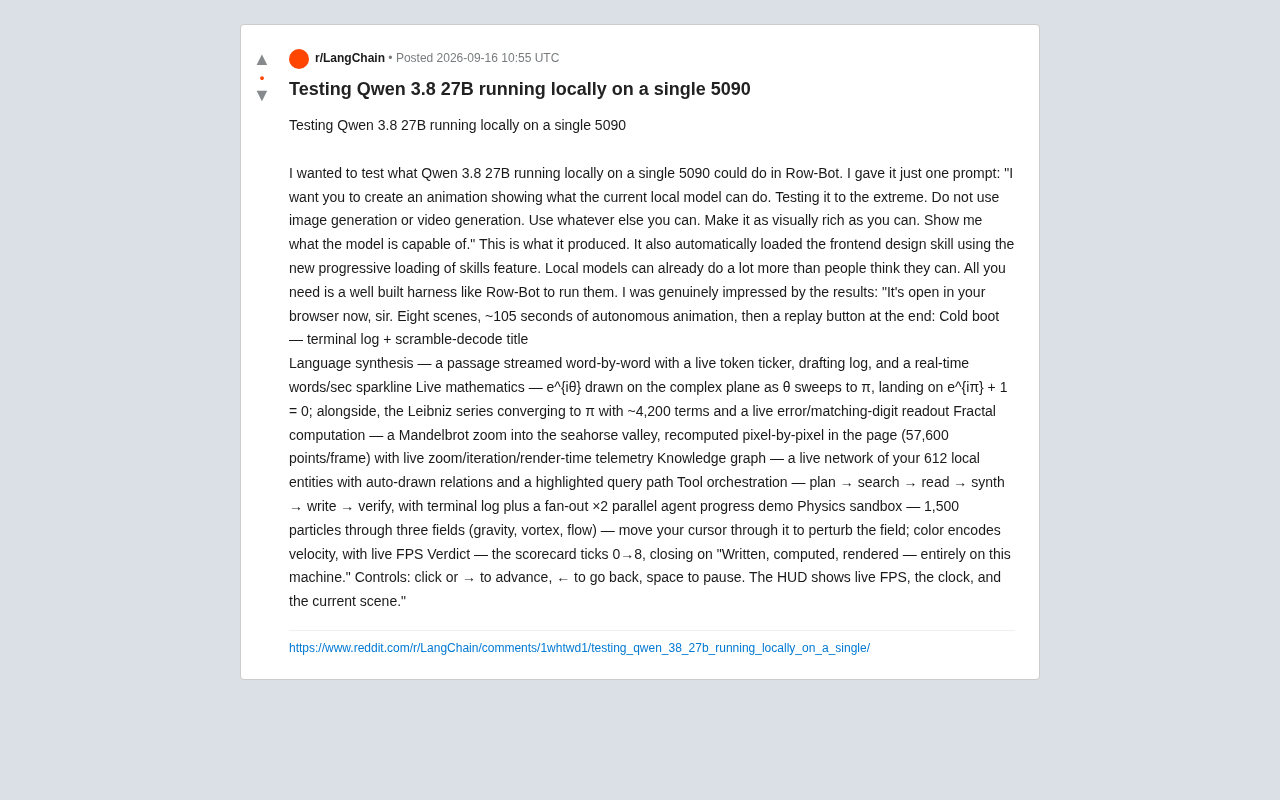
Running Qwen3 27B Locally on a Single RTX 5090: What Can It Actually Do?
A developer runs Qwen3 27B locally on a single RTX 5090 via the Row-Bot Agent framework, generating an 8-scene, 105-second interactive animation from one prompt — including real-time math, fractals, and physics.
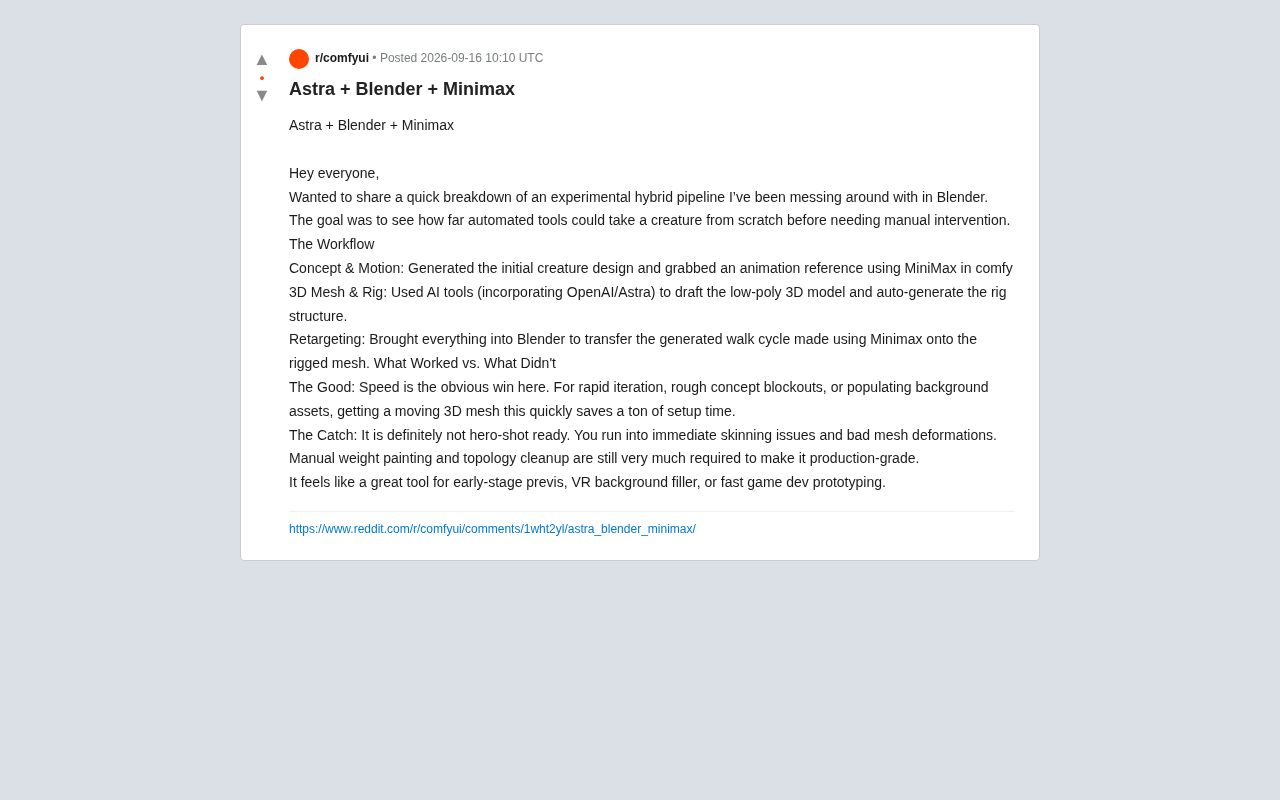
AI Hybrid Workflow in Practice: Auto-Generating 3D Creatures with Astra + Blender + MiniMax
A Reddit creator tests an Astra+Blender+MiniMax hybrid AI workflow for 3D creature animation — from concept to rigging to retargeting. Here's what works and what doesn't.
Apple Reference Image: A New Paradigm for Verifiable Photography
Apple's Reference Image proposal uses on-device cryptographic signing to establish verifiable baselines for real photos, tackling AI-generated image authenticity at the hardware level.