Firebase October Update: CLI Self-Healing, AI Studio for Android Apps, Test Lab Retirement

Firebase's October update focuses on AI-native development and cloud platform integration, with three changes requiring proactive adaptation.
Firebase's October Release Notes cover six product lines—CLI, SDK, AI Studio, Test Lab, AI Logic, and Firestore—all pointing toward an AI-native development experience and unified cloud integration. The CLI adds auto-recovery for interrupted deployments and improved error messages and Hosting API checks; the Admin SDK adds Python, Node, Go, Java, and .NET versions; AI Studio's Firebase integration extends from Web to Android, generating configuration and security rules from natural language; Test Lab is deprecated, closing September 30, 2027, with migration to Google Cloud Developer Device Platform required; AI Logic adds nano banana and Gemini 4 Argon support and updates initialization syntax; Firestore's MongoDB-compatible mode supports natural language queries, with text and geospatial search plus DML now GA.
Firebase publishes a batch of updates each month through its Release Notes video. The October edition, hosted by Rachel Myers, covers CLI, SDK, AI Studio integration, Test Lab migration, and multiple product lines across AI Logic and Firestore. Individually, none of these changes is revolutionary, but taken together they reveal that Firebase is shifting its focus toward an "AI-native development experience" and "unified cloud platform integration." Here's a breakdown by module, along with thoughts on which changes will actually affect day-to-day development.
CLI: Turning Deployment Failures from "Stuck" into "Recoverable"
The most practical item in this CLI update is automatic recovery after an interrupted deployment. When Wi-Fi drops or a build timeout interrupts a deployment, the CLI now automatically cleans up the pending deployment state, preventing developers from being stuck in a half-finished release process. For teams that frequently push code over unreliable networks, this effectively eliminates a common class of "mysterious failures."
Error messages have also been improved in a targeted way. When adding Firebase to a project for the first time, the CLI now provides clearer error information instead of throwing an opaque stack trace. Support for function kits and migration tooling has also been added, helping migrate existing Firebase extensions to function kits; Secret Manager and .env files now support overriding secrets. Support for the Hosting API has likewise improved—when creating a web app, it checks the default Hosting site and verifies the authentication initialization state.
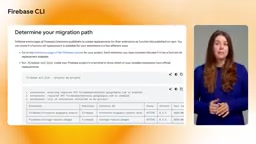
All these changes point toward reducing "configuration-phase friction." Firebase's onboarding threshold has never been particularly high, but there are plenty of hidden pitfalls during the scaling phase. Proactive safeguards at the CLI level are more effective than ten lines of caveats in the documentation.
SDK: Admin SDK Expands Multi-Language Support Across the Board
New versions have been released for Android, iOS, JavaScript, and C++. The highlight is the Admin SDK—used in trusted environments such as Cloud Functions or self-hosted servers. This batch of updates brings new topic subscription capabilities to Cloud Messaging, and adds new Admin SDK versions for Python, Node, Go, Java, and .NET.
The significance of multi-language coverage isn't "one more option"—it's that server-side tech stacks no longer need to compromise for Firebase. When backend teams primarily use Go or .NET, the maturity of the Admin SDK directly affects their willingness to adopt the Firebase ecosystem.
The key difference between the Admin SDK and client SDKs lies in the runtime environment and permission model: client SDKs run on user devices and are constrained by security rules; the Admin SDK runs in trusted environments such as Cloud Functions, Cloud Run, or self-hosted servers, and has admin-level privileges that bypass security rules. As a result, Admin SDK version iterations often involve capabilities such as service account credentials, token issuance, and batch operations. When upgrading, pay attention to credential rotation and least privilege to avoid exposing admin permissions to untrusted code paths.
AI Studio: Configure Firebase for Android Apps with Natural Language
Developers building Firebase apps in Google AI Studio now get a substantial expansion: the integration extends from web-only to also supporting Android apps. Developers can use natural language prompts to automatically configure Firebase Authentication and Cloud Firestore, with security rules generated as well.

The value of this update lies in turning "scaffolding" from manual configuration into a one-sentence description. Auto-generated security rules deserve particular attention—it's an efficiency gain, but it also means the quality of the default configuration directly determines the app's security baseline. The rule logic still needs a manual review before launch.
Test Lab Retirement: The Migration Window Is Now Clear
Firebase Test Lab has officially entered the deprecation process, with a shutdown date set for September 30, 2027. Teams relying on it for device testing need to migrate their workflows to Google Cloud's Developer Device Platform. The official rationale for migration is that the new platform has built-in advanced sharding capabilities, better reliability, and a faster, more robust test pipeline. A migration guide is already available, and completing the transition before the shutdown date is recommended.

The time left for teams may seem ample, but device testing is often deeply embedded in CI pipelines. Migration involves adjustments to scripts, credentials, and report formats, so the earlier you schedule it, the safer you'll be.
Firebase Test Lab provides automated testing services on real and virtual devices, supporting Instrumentation and Robo tests on a managed device matrix and outputting screenshots, logs, and video reports. It is typically integrated into CI through the Gradle plugin or gcloud CLI, with results returned as matrix reports. When migrating to the Developer Device Platform, in addition to credentials and project configuration, you'll also need to watch for differences in test report structure and how sharding strategies are configured—both affect result-parsing scripts in CI.
AI Logic: New Model Support and Initialization Syntax Changes
Firebase AI Logic has added support for several models. On the image generation side, you can call the latest nano banana model—Rachel demonstrated it live in the video by generating a "dog dressed as a banana." On the text side, support for Gemini 4 Argon has been added. Note that Gemini 4's token limits and thinking levels differ from previous versions, and the official recommendation is to evaluate for your specific use case before going to production.
AI Logic's initialization syntax has also been updated, with the goal of shedding Vertex AI branding. Developers currently using the agent platform Gemini API need to update their codebases to adopt the new syntax.

Unbundling branding usually means adjustments to the underlying call paths. These kinds of changes won't throw an error to remind you—they'll simply fail after some upgrade, making them something you need to proactively check for.
AI Logic is Firebase's generative AI access layer for client applications. It wraps calls to the Gemini family of models and provides client SDKs, App Check integration, and usage monitoring. Its difference from calling Vertex AI directly is that AI Logic uses the Firebase project as its identity boundary, authenticates via Firebase App Check, and has its quotas and billing tied to the Firebase side. The initialization syntax adjustment is precisely about decoupling this "Firebase-native" call path from Vertex AI's branding and endpoints. As a result, old code may fail silently after endpoint or authentication changes and needs to be proactively migrated to the new syntax.
Firestore: Natural Language Querying and Search Capabilities Go GA
Firestore's MongoDB-compatible mode has several developments this time. Query Data capabilities are now supported, allowing developers to build data agents that query the database using natural language. Text search and geospatial search are now generally available (GA) in Cloud Firestore and Enterprise Edition. The Data Manipulation Language (DML) is also GA, introducing insert-related verbs and supporting document querying and updating within a single pipeline.
Natural language querying combined with data agents is the item in this batch most aligned with the "AI application development" positioning. Handing query intent to a model to translate into database operations can significantly lower the barrier for non-expert users to access data, but it also pushes control over permission boundaries and query costs to the forefront.
MongoDB-compatible mode lets Firestore be accessed through MongoDB drivers and query syntax, making it easy for applications with existing MongoDB stacks to migrate smoothly. DML (Data Manipulation Language) borrows SQL-style verbs such as insert and update, allowing document writes and updates to be completed directly within a query pipeline, reducing round trips between reads and writes. GA for text search and geospatial search means these capabilities have moved out of preview and come with formal SLAs and stability commitments, so they can be confidently used in production search scenarios.
The Direction These Updates Reveal
Looking at all six areas together, Firebase's evolution path is fairly clear: the CLI and SDK are shoring up infrastructure reliability, AI Studio and AI Logic are compressing the startup cost of AI applications, and Test Lab's retirement folds device testing into Google Cloud's unified narrative. For developers, three things require action in the short term—check the AI Logic initialization syntax, evaluate whether Gemini 4 fits existing use cases, and schedule the Test Lab migration. Most other updates fall into the "upgrade and benefit" category.
One-line Summary
Firebase's October update focuses on AI-native development and cloud platform integration, with three changes requiring proactive adaptation.
Paragraph Summary
Firebase's October Release Notes cover six product lines—CLI, SDK, AI Studio, Test Lab, AI Logic, and Firestore—all pointing toward an "AI-native development experience" and "unified cloud platform integration." The CLI adds automatic recovery for interrupted deployments and improves error messages and Hosting API checks; the Admin SDK adds multi-language versions for Python, Node, Go, Java, and .NET; AI Studio's Firebase integration extends from Web to Android, enabling natural language generation of configuration and security rules; Test Lab is officially deprecated, shutting down on September 30, 2027, with migration to Google Cloud Developer Device Platform required; AI Logic adds support for nano banana and Gemini 4 Argon and updates its initialization syntax; Firestore's MongoDB-compatible mode supports natural language querying, and text and geospatial search plus DML are now GA.
Related articles

Thunderduck: Building a Modular Data Warehouse for AI Agents
Thunderduck is a DuckDB-based modular data warehouse giving AI agents isolated engines, cross-source SQL across Postgres, BigQuery, Iceberg & S3 without ETL, pre-query pricing, and managed cloud, BYOC, or on-prem deployment.

Cosyra: Control Your AI Coding Agent Remotely via a Cloud Terminal on Your Phone
Cosyra is a mobile programming tool for iPhone and Android that lets you launch and control AI agents running on a cloud Ubuntu terminal—no VPS needed. We analyze its positioning, how it differs from mobile IDE approaches, trade-offs of the cloud terminal model, and who it's for.

Zerg Client: A Coding Agent That Opens Its Own Terminal Panes
Zerg Client is a coding agent harness that drives its own terminal panes, running interactive programs like Vim and htop, with nested agents and models. A look at its positioning, pane mechanics, and target users.