Fireworks Partners with Alibaba Cloud to Launch Qwen3 Flagship Models
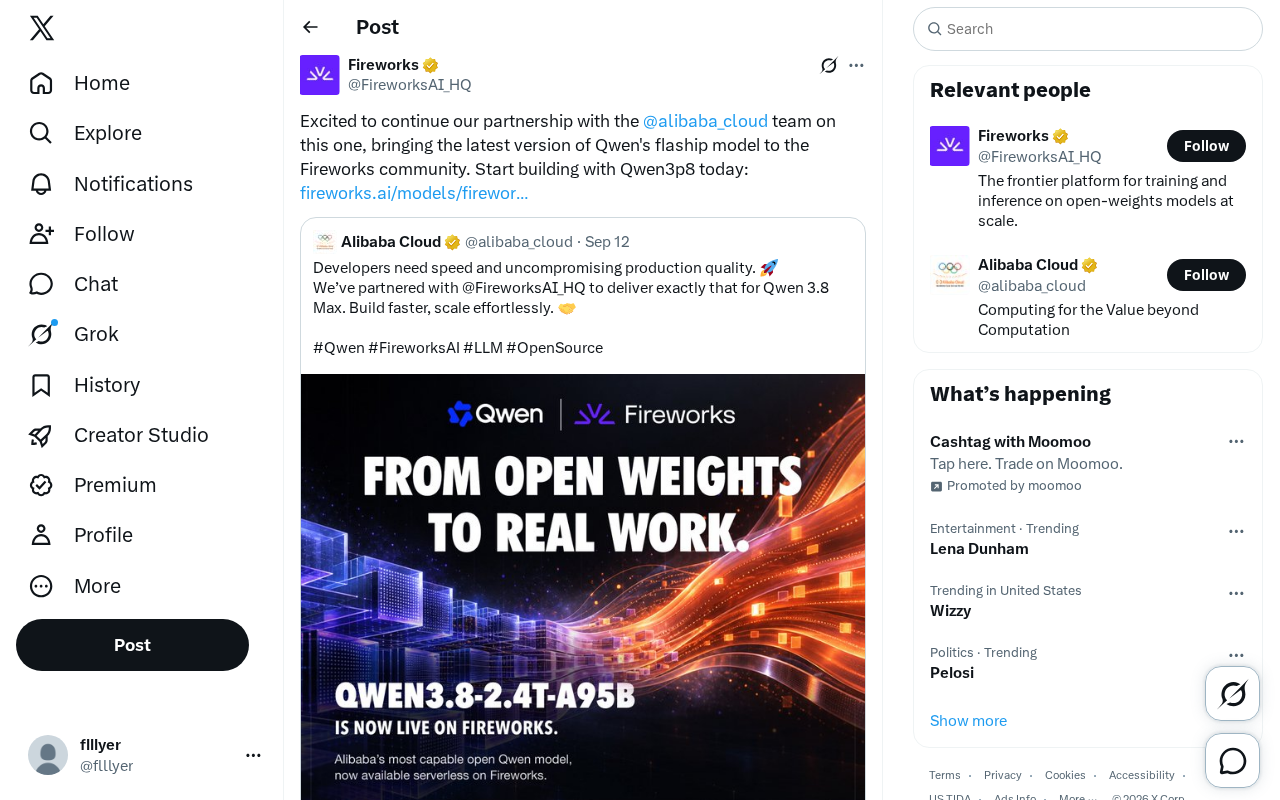
Fireworks and Alibaba Cloud team up to make the latest Qwen flagship models available via API on the Fireworks inference platform.
AI inference platform Fireworks has announced a continued partnership with Alibaba Cloud, bringing the latest Qwen flagship models to its platform so developers can build applications via API without managing their own GPU infrastructure. Known for strong bilingual Chinese-English performance and permissive open-source licensing, the Qwen series complements Fireworks' low-latency, high-throughput inference strengths — enriching its model portfolio while lowering the barrier for developers to access high-quality LLMs. The partnership reflects a broader trend in LLM commercialization: model providers expand reach through third-party inference platforms, while platforms attract users with premium models, creating a mutually beneficial ecosystem.
Fireworks and Alibaba Cloud Deepen Partnership
AI inference platform Fireworks has announced a continued partnership with the Alibaba Cloud team, bringing the latest flagship models from the Qwen series into the Fireworks community. Developers can now call and build applications on top of Qwen's newest models directly through the Fireworks platform.
At the heart of this collaboration is opening up Alibaba Cloud's proprietary large language model capabilities through Fireworks — a platform renowned for high-performance inference — lowering the barrier for developers to access high-quality open-source models.
Fireworks AI is a cloud platform focused on accelerating large model inference. Its core technical strengths lie in optimizing low-level GPU scheduling and customizing inference engines to achieve lower time-to-first-token (TTFT) and higher tokens-per-second (TPS) throughput compared to mainstream cloud providers. Its business model resembles "Model-as-a-Service," targeting development teams that want to call open-source models without maintaining their own GPU infrastructure. The platform supports popular open-source models including Llama and Mixtral, and offers advanced features such as fine-tuning and function calling — positioning it for production-grade applications where inference performance and cost efficiency matter.
Why the Qwen Flagship Models Matter
The Qwen series is Alibaba Cloud's family of large language models that has gained widespread attention in the open-source community for its permissive licensing and continuously improving performance. Making flagship versions available on third-party inference platforms means more developers can experience and deploy these models without building their own GPU clusters.
For Fireworks, adding Qwen also enriches its model portfolio. Fireworks has always emphasized low-latency, high-throughput inference services, and incorporating Qwen gives teams that need bilingual Chinese-English capabilities or domain-specific reasoning more options to choose from.
The Qwen series has been continuously updated since 2023, covering a range of parameter scales from billions to hundreds of billions, with specialized sub-series such as Qwen-Coder for code generation and Qwen-VL for multimodal understanding. Alibaba Cloud uses relatively permissive open-source licenses (such as the Qwen License or Apache 2.0) that allow commercial use, making it a significant alternative to the Llama series for enterprise-grade open-source model adoption. In third-party benchmarks, Qwen flagship models have demonstrated strong performance in Chinese comprehension, mathematical reasoning, and coding tasks — particularly competitive in bilingual Chinese-English scenarios, which is a key reason international inference platforms have been eager to integrate them.
Value for Developers
Based on the announcement, Fireworks is inviting developers to "start building with Qwen today." This kind of platform-hosted model deployment typically delivers several immediate benefits:
- Ready out of the box: No need to handle model weight downloads, environment setup, or hardware scheduling — just call the API.
- Elastic costs: Pay per usage, avoiding the fixed investment of building your own inference infrastructure.
- Ecosystem integration: Works alongside other toolchains and fine-tuning capabilities available on the platform.
For teams evaluating open-source LLM options, partnerships like this reduce the cost of experimentation, allowing faster validation of model performance in real-world business scenarios.
The Trend Behind Platform Partnerships
The bundling of model providers with inference platforms is becoming a common path to commercializing large language models. Model providers expand their reach through third-party channels, while platforms enhance their appeal with high-quality models — a mutually beneficial arrangement. The ongoing collaboration between Fireworks and Alibaba Cloud is a prime example of this trend.
As competition intensifies between open-source and proprietary model camps, who can offer the most seamless access experience and the most stable inference performance will often determine which platform developers ultimately choose.
Note: This article is based on a brief announcement from Fireworks' official social media. For specific model version details, pricing, and performance benchmarks, please refer to the official documentation.
Related articles
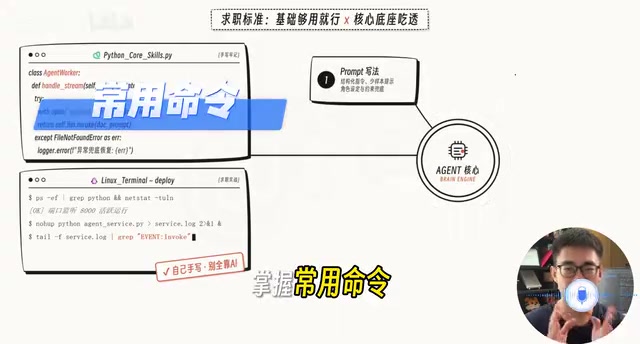
AI Agent Developer Job Hunt Guide: Four Hard Standards to Clear Before You Apply
A practical guide for landing AI Agent developer roles: four measurable standards — project runs, problems debuggable, solution explainable, interviews survivable.
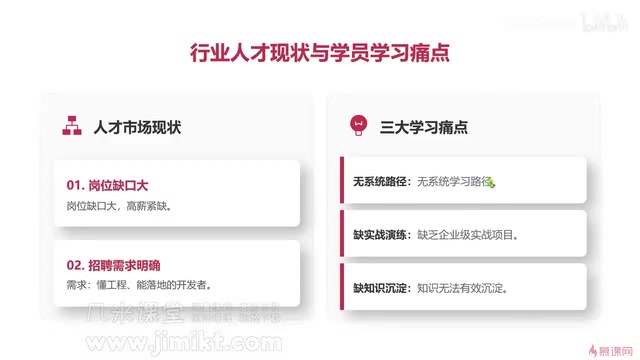
Multi-Agent Development Guide: From Monolithic AI to Team Collaboration in Practice
A beginner's guide to multi-agent development covering core advantages, common learning pain points, enterprise tech stacks, and engineering methodology for AI developers.
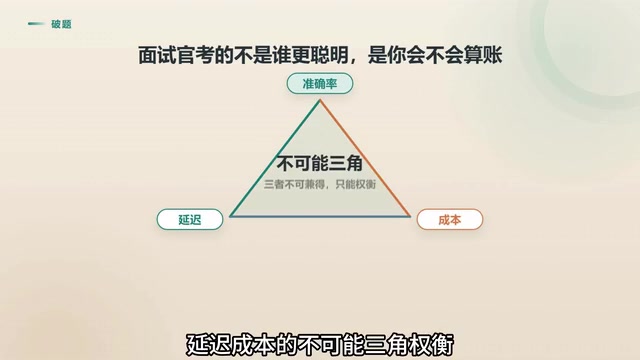
Agent Skill Routing: Retrieval vs. LLM vs. Two-Stage Architecture Compared
Retrieval or LLM for Agent skill routing? Compare coarse-filter vs. fine-select architectures on latency, accuracy, and cost — with 4 key production considerations.