#LLM inference
2126 related articles

·1 min
Predictive KV Replication: Breaking Through the Bursty Traffic Bottleneck in LLM Inference
Deep dive into predictive speculative KV replication: how anticipating bursty traffic and pre-replicating KV Cache can reduce LLM inference tail latency.
Read more →

·3 min
LLM Inference Speed Formula: Memory Bandwidth Determines Your tokens/sec
Learn why memory bandwidth (GB/s)—not VRAM size—determines local LLM inference speed. Get the tokens/sec formula, GPU bandwidth comparisons, and a practical card selection hierarchy.
Read more →

·3 min
LLM Inference Speed Formula: Memory Bandwidth Determines Your tokens/sec
Why memory bandwidth (GB/s), not VRAM size, determines local LLM inference speed. Includes tokens/sec formula, GPU bandwidth comparison, and a practical card selection framework.
Read more →

·3 min
Is LLM Inference Really That Expensive? Breaking Down the Cost Reduction Logic of GPU Compute and Inference Frameworks
Analyzing real LLM inference costs: from B200 GPU compute gains, vLLM framework optimization to MTP multi-token prediction, explaining why serving costs are widely overestimated.
Read more →

·3 min
Production-Grade LLM Inference Deployment: A Practical K8s Handbook
Complete guide to deploying production-grade LLM inference on Kubernetes, covering GPU scheduling, vLLM engine selection, autoscaling, observability, and cost optimization.
Read more →

·3 min
Is LLM Inference Actually Profitable? Breaking Down the Cost Structure and Business Logic of Large Model Inference
A deep dive into LLM inference cost structure and profitability models—from GPU throughput, MoE architecture, and KV Cache to scale effects—revealing the business logic behind API price wars.
Read more →

·3 min
Apple Silicon LLM Inference Speed Benchmarks: A Complete Guide to Local Large Model Performance on Mac
In-depth analysis of Apple Silicon local LLM inference speed benchmarks covering M-series memory bandwidth, model quantization, MLX framework optimization, and Mac configuration guidance.
Read more →

·2 min
Kimi K3 Launches on Telnyx Inference API: A New Path for Chinese LLMs Going Global
Moonshot AI's Kimi K3 is now available on Telnyx Inference API. Explore how Chinese LLMs are entering global developer ecosystems through third-party inference platforms.
Read more →
·3 min
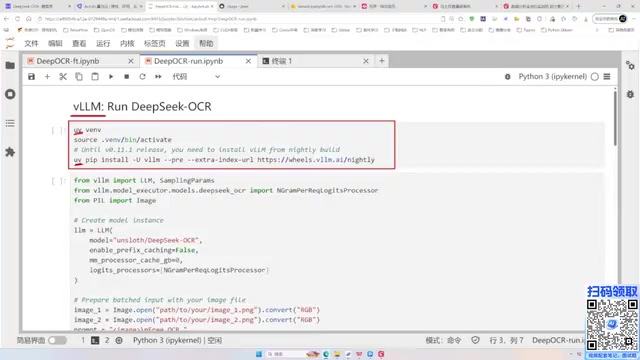
DeepSeek-OCR Deployment & Fine-Tuning in Practice: From vLLM Inference to Unsloth Fine-Tuning
Complete guide to DeepSeek-OCR from vLLM inference deployment and Unsloth model loading to fine-tuning, covering cloud server setup, GPU selection, and code examples — all on a single 4090 GPU.
Read more →

·3 min
D-Flash: The Secret Behind 3.5x LLM Inference Speedup with Diffusion Drafting
D-Flash uses fast diffusion parallel drafting and target feature KV injection to solve the autoregressive Drafter latency bottleneck in speculative decoding. 16 tokens in just 6ms, up to 3.5x speedup on HumanEval, surpassing EAGLE3 and MTP.
Read more →

·2 min
D-Flash: How Diffusion Drafting Delivers 3.5x Faster LLM Inference
D-Flash solves the autoregressive drafter latency bottleneck in speculative decoding via fast diffusion parallel drafting and target feature KV injection. 16 tokens in just 6ms, up to 3.5x speedup on HumanEval, beating EAGLE3 and MTP.
Read more →
Goku: A Browser-Based LLM Inference En…
·2 min
Goku: A Browser-Based LLM Inference Engine and Model Manager Built on WebAssembly
Goku is a browser-based LLM inference engine built on WebAssembly and wllama, enabling local AI inference, model management, and offline use — no cloud API needed.
Read more →

·2 min
vLLM Inference Framework Deep Dive: A Practical Guide to High-Concurrency DeepSeek Deployment
A deep dive into vLLM's five core features — KV cache management, continuous batching, and distributed inference — plus a full setup guide for deploying DeepSeek on a cloud server.
Read more →

·4 min
DSpark Open Source: DeepSeek's Inference Acceleration Tech That Doubles LLM Speed
DeepSeek and Peking University open-source DSpark, an inference acceleration technology using semi-autoregressive architecture and dynamic scheduling to boost LLM speed by 50%+ and double GPU concurrency without quality loss.
Read more →
Java Local LLM Inference: Low-Latency …
·2 min
Java Local LLM Inference: Low-Latency LLM Deployment with Panama FFM
Learn how Java and OpenJDK Panama FFM API enable local LLM inference. Explore the technical foundations, JVM ecosystem benefits, and low-latency AI deployment in enterprise Java systems.
Read more →

·3 min
DeepSeek Open-Sources DSpark: 50%–400% LLM Inference Speedup Without Retraining
DeepSeek open-sources DSpark, delivering 50%–400% LLM inference speedup with no retraining or quantization, via semi-autoregressive drafting and confidence-scheduled verification.
Read more →

·2 min
llama.cpp Milestone: The Open-Source Evolution of Local LLM Inference
llama.cpp hits a new milestone, growing from a solo hobby project into core local AI inference infrastructure. Explore its iteration speed, GGUF quantization, and how AI coding agents are reshaping open-source development.
Read more →

·2 min
Production LLM Deployment Guide: Model Selection, GPU Configuration, and Inference Engine Breakdown
A comprehensive decision framework for production LLM deployment: model selection (open-source vs. API), GPU VRAM configuration, and inference engine comparison including vLLM and TensorRT-LLM.
Read more →

·4 min
From Enter to First Token: Decrypting the Full LLM Inference Pipeline (Autoregression, KV Cache & Decoding Strategies)
From pressing Enter to the first character appearing, what happens inside an LLM? This article breaks down autoregressive generation, KV cache acceleration, and decoding strategies like temperature, Top-k, and Top-p.
Read more →
Mesh LLM: A Practical Exploration of B…
·3 min
Mesh LLM: A Practical Exploration of Building a P2P Distributed AI Inference Network with iroh
Mesh LLM leverages the Rust P2P framework iroh to integrate compute from scattered nodes, exploring a viable path for decentralized LLM inference. This article analyzes its architecture, challenges, and prospects.
Read more →