First Look at Solaris: The Interface World Model and a New Direction for Interactive AI

Solaris is an early-stage project extending AI world model concepts to UI interaction prediction, with limited public details so far.
Solaris is a recently surfaced AI project positioned as an "interface world model" in its "folaris flavor" variant. The core idea is to enable AI to build internal predictions of UI states and action outcomes — letting it mentally rehearse clicks and form submissions rather than relying on brittle scripts. This direction has clear potential for automated testing, accessibility, and GUI agent scenarios. However, public information remains scarce and the technical origins of folaris are still unclear, making this article primarily a conceptual background overview rather than a definitive product assessment.
What Is the Solaris Interface World Model
Solaris is a project that recently surfaced on social media, drawing attention from a segment of AI practitioners. According to the original post, Solaris is described as an "interface world model," with the specific implementation labeled as the "folaris flavor" variant. Because publicly available information remains extremely scarce, this article will contextualize the concept using established technical threads, while being upfront about the gaps in what is currently known.
A "world model" is a hot research direction in AI: it refers to an AI system that builds an internal representation of its environment — capturing both current states and the rules governing how they evolve — so that it can predict the consequences of its own actions. The "interface world model" extends this idea to user interface (UI) interaction, meaning the model attempts to understand and predict how UI elements change in response to user actions.
The concept of world models traces back to cognitive science, before being systematically adopted by reinforcement learning researchers. Around 2018, David Ha and Jürgen Schmidhuber's paper World Models brought the idea into the deep learning mainstream. Its core insight was to have an agent first learn a compressed internal representation of its environment, and then train policies cheaply inside a "hallucinated environment," or dream. In recent years, as large vision-language models (VLMs) have matured, the scope of world models has expanded — from pixel-level game environments to real-world video prediction (e.g., Google's Genie and research competing with Sora), and now to concrete UI interaction scenarios. This evolution shows that the "interface world model" is not some idea conjured out of thin air, but rather the natural convergence of two technical threads: world model research and GUI understanding.



The Technical Significance of Interface World Models
Traditional UI automation typically relies on scripts or hard-coded rules, making it brittle and difficult to generalize. The value of an interface world model lies in enabling AI to "rehearse" the outcomes of UI actions the way a human would — predicting where a button click will navigate, or what feedback will appear after a form is submitted. This predictive capability is critical for building more reliable AI agents.
If Solaris is indeed advancing along these lines, it could serve use cases in automated testing, accessibility assistance, and broader desktop/web agent scenarios. The recent surge of interest in browser-operating agents, GUI automation models, and similar directions all point to the same core need: enabling AI to genuinely "read" and "navigate" human-computer interfaces.
The GUI automation space already has several noteworthy predecessors. Google DeepMind's AndroidWorld, Microsoft's UFO (a Windows GUI agent), and academic projects like Mind2Web and ScreenAgent have all attempted to enable models to understand interface states via screenshots or accessibility trees and then execute actions. A shared bottleneck across these approaches is that the model can only "see" the current frame — it lacks any forward-looking prediction of what an action will produce. This makes multi-step tasks error-prone and difficult to self-correct. The key breakthrough that interface world models promise is precisely this: if a model can internally "simulate" the result of a click or text input before acting, it can complete planning without actually touching the interface, dramatically reducing trial-and-error costs and paving the way for safer autonomous agents.
Interpreting "Folaris Flavor"
The publisher specifically labeled this as the "folaris flavor," suggesting that Solaris may be a variant or derivative of an existing project or methodology called "folaris." In software contexts, "flavor" typically denotes different versions built on the same core idea — possibly diverging in training data, model architecture, or application focus.
Unfortunately, the information currently available is not sufficient to confirm the specific origins or technical details of folaris. Early-stage projects like this often circulate first within small communities as demos or repositories, with more complete technical documentation following later. Developers who are tracking this space should monitor the original publication channels for updates.
A Direction Worth Watching
Interface world models represent a microcosm of AI's broader evolution from "passive understanding" toward "active interaction." Regardless of how complete Solaris ultimately turns out to be, the direction itself reflects the industry's strong demand for AI systems that are both interactive and predictable.
For developers and researchers evaluating projects in this space, a few key dimensions are worth examining: How accurately does the model represent interface states? How reliably does it predict the outcomes of actions? And can it generalize to interface layouts it has never seen before? These are the critical metrics for assessing whether an interface world model has real practical value.
It bears emphasizing that, given the extremely limited source material currently available, this article is primarily a contextual overview of the "interface world model" concept rather than a verified assessment of Solaris's specific capabilities. A more in-depth judgment will only be possible once additional information becomes public.
Related articles
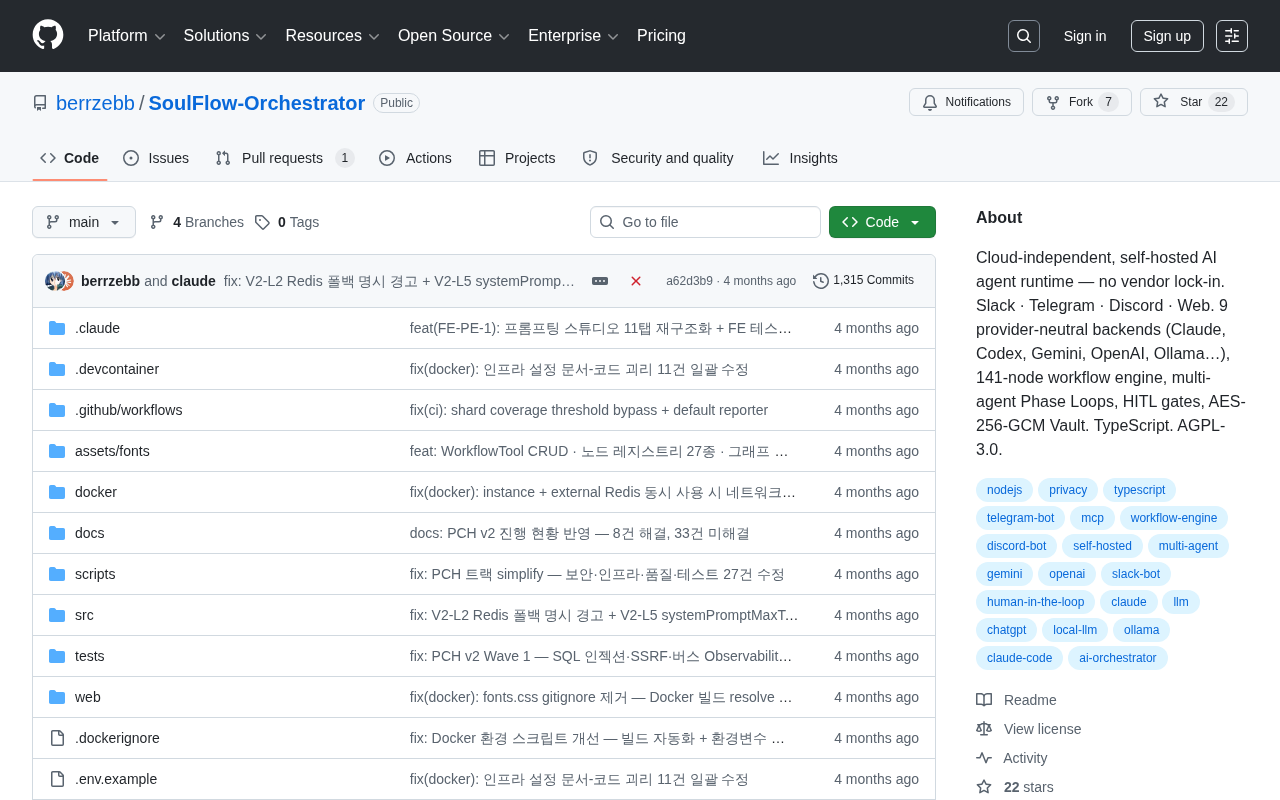
SoulFlow-Orchestrator: A Self-Hosted, Vendor-Lock-In-Free AI Agent Runtime
SoulFlow-Orchestrator is an open-source, self-hosted AI agent runtime with no vendor lock-in. Supports 9 neutral backends (Claude, OpenAI, Ollama), 141-node workflow engine, multi-agent loops, and HITL gates.
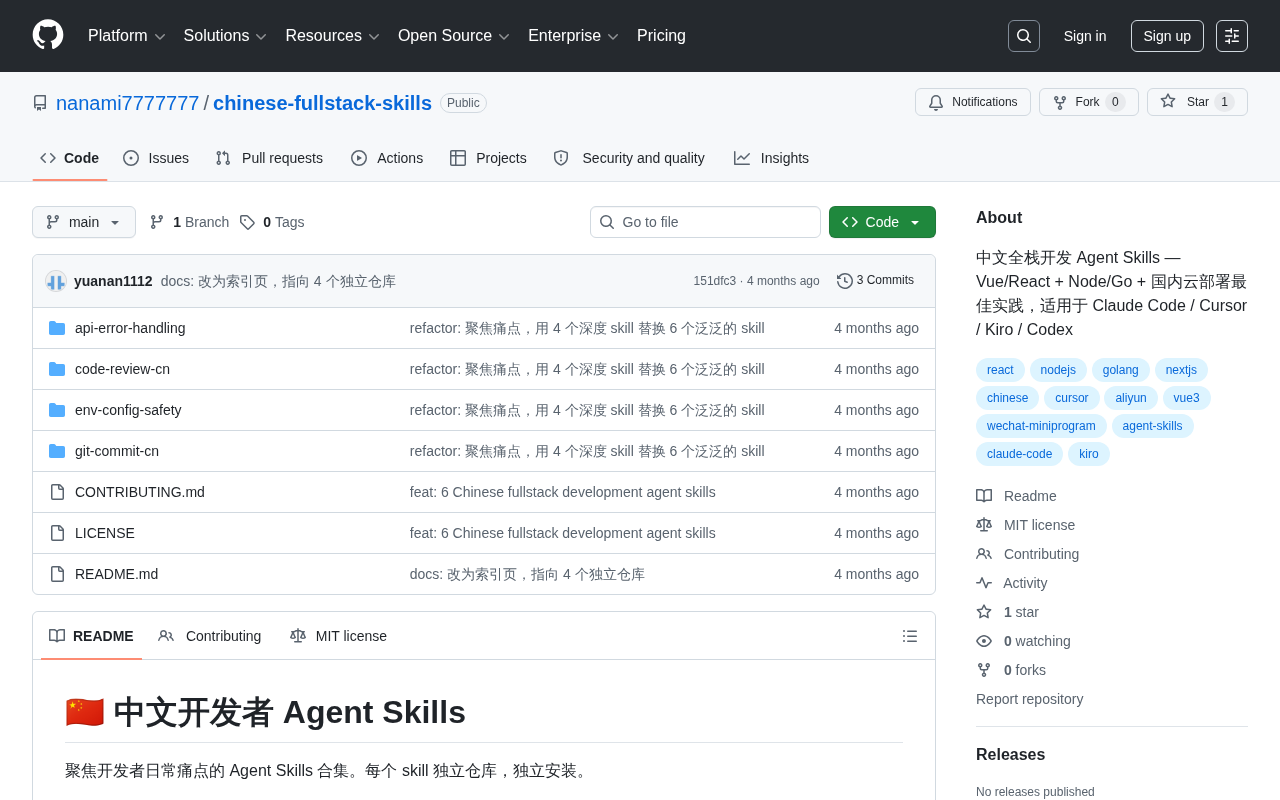
Chinese Full-Stack Agent Skills: A Skill Library Tailored for Domestic AI-Assisted Development
chinese-fullstack-skills is an Agent Skills library for Chinese full-stack development, covering Vue/React, Node/Go, and domestic cloud deployment best practices. Compatible with Claude Code, Cursor, Kiro, and Codex.
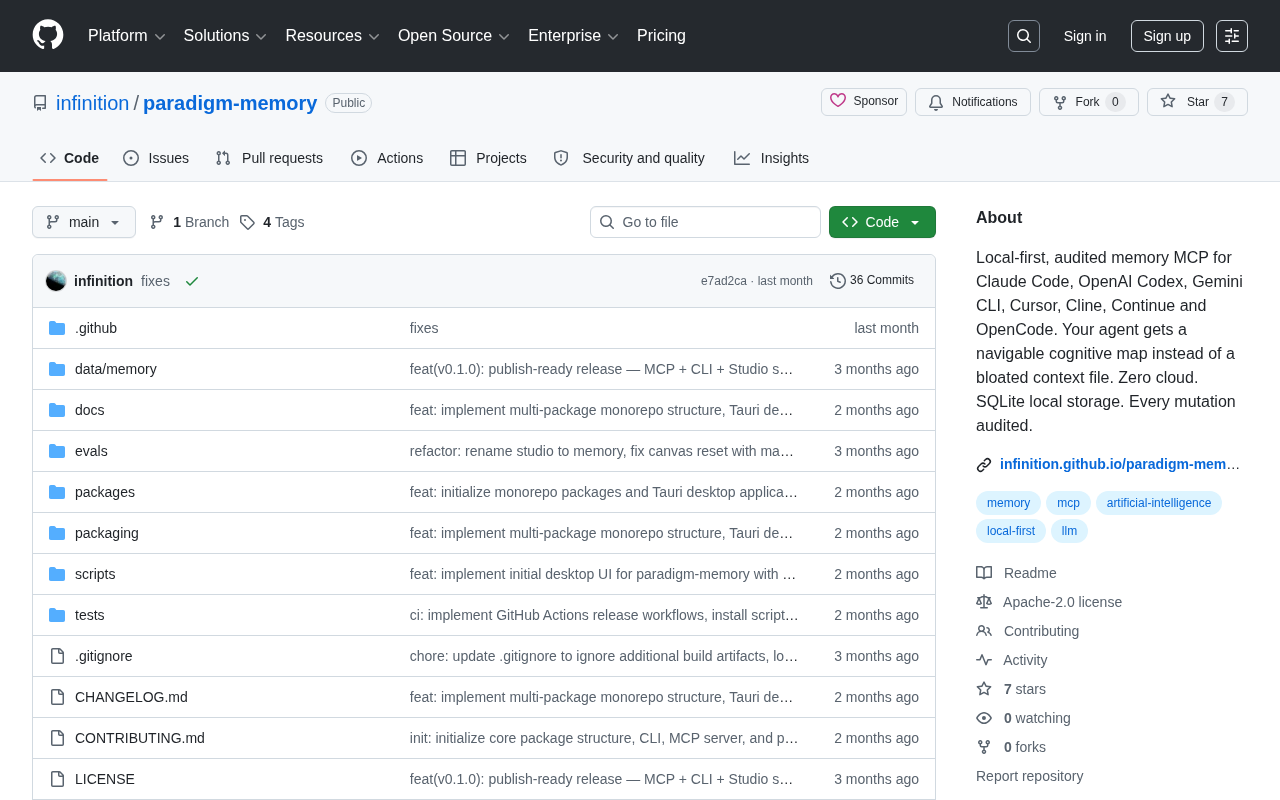
Paradigm Memory: A Local-First Memory System for AI Coding Assistants
paradigm-memory is a local MCP memory tool for Claude Code, Cursor, and Cline. It uses SQLite local storage, zero cloud, full audit trails, and a navigable cognitive map instead of bloated context files.