Flipkart CEO Kalyan Krishnamurthy to Step Down, IPO Outlook Uncertain

Flipkart CEO Kalyan Krishnamurthy will step down next week, adding further uncertainty to the IPO outlook.
According to an RSS source report, Flipkart CEO Kalyan Krishnamurthy will officially step down next week while the company's IPO plan remains uncertain. Product and technology head Balaji Thiagarajan will lead alongside the board until a successor is named, aiming to maintain stability during the transition. A CEO departure at a key listing milestone is typically seen as a governance risk signal, potentially affecting market perceptions and prompting a more cautious IPO timetable.
Article Content
Indian e-commerce giant Flipkart is going through a leadership shake-up. According to an RSS source report, CEO Kalyan Krishnamurthy will officially step down next week, at a time when Flipkart's closely watched IPO plan remains uncertain.

Leadership Transition Arrangement
According to the original report, Flipkart's head of product and technology, Balaji Thiagarajan, will lead the company together with the board until a successor is found. This interim arrangement indicates that Flipkart hopes to maintain business stability during the transition while searching for a suitable long-term leader.
Krishnamurthy's departure comes against the backdrop of an IPO process that has yet to become clear. As one of India's most valuable startups, Flipkart's listing plan has long attracted market attention, and the CEO change undoubtedly adds a new variable to that process.
Kalyan Krishnamurthy is one of Flipkart's most important executives in recent years. He worked at Flipkart early in his career, later left briefly to join Tiger Global, and returned in 2017 as CEO. He led the company's defensive counterattack in the fierce subsidy war with Amazon India and pushed Flipkart to sell a controlling stake to Walmart for about $16 billion. He continued as CEO afterward, overseeing business integration, expanding grocery e-commerce and fashion categories, and repeatedly amid reports of IPO preparations. His departure is therefore not just a routine personnel change, but signals the end of a phase at Flipkart centered on "capital operations + business integration." The successor will face an entirely new challenge: how to take the company to the public market.
IPO Uncertainty Intensifies
Although the original report did not disclose a specific IPO timeline or valuation details, it clearly stated that Krishnamurthy's departure comes amid "IPO uncertainty." For a company preparing to go public, a CEO leaving at a critical moment is usually seen by investors as a governance risk signal.
Flipkart's IPO has long been regarded as an important bellwether for India's tech ecosystem. This leadership change may affect the market's assessment of the company's governance stability and may also prompt the board to take a more cautious approach to the listing timetable.
For a company planning an IPO, a CEO departure around the time of filing a prospectus is typically viewed as a governance risk signal. Regulators and investors will focus on management stability, strategic continuity, and key-person dependence; investment banks may also adjust valuation ranges or postpone the issuance window as a result of underwriting assessments. Flipkart's major shareholders include Walmart and several global funds, and the board needs to balance successor selection, the pace of financial disclosure, and market communication. Historically, many tech companies that changed CEOs on the eve of an IPO chose to delay listing to wait for the new management to complete a period of performance validation. This may be one of the practical options Flipkart faces.
Challenges During the Transition
Balaji Thiagarajan's interim leadership arrangement means Flipkart will rely on his product and technology background to maintain operational continuity. In India's increasingly competitive e-commerce market, maintaining consistency in strategy execution is crucial.
The board will play a key role during the transition, ensuring that daily operations are not affected while advancing the search for a successor. The length and outcome of this process will directly affect Flipkart's performance during the IPO window.
Editorial View
A CEO departure on the eve of an IPO is a signal worth watching in corporate governance. Flipkart needs to complete its leadership transition quickly and convey stable expectations to the market. Whether Balaji Thiagarajan can steady the ship during the transition and whether the board can quickly find a suitable successor will be key variables determining Flipkart's listing prospects. For investors watching Indian tech stocks, senior leadership developments in the coming weeks deserve close attention.
One-line Summary
Flipkart CEO Kalyan Krishnamurthy will step down next week, adding further uncertainty to the IPO outlook.
Paragraph Summary
According to an RSS source report, Kalyan Krishnamurthy, CEO of Indian e-commerce giant Flipkart, will officially step down next week, while the company's IPO plan remains uncertain. Head of product and technology Balaji Thiagarajan will lead the company together with the board until a successor is determined, in order to maintain business stability during the transition. The article notes that a CEO departure at a key listing milestone is usually seen by investors as a governance risk signal, which may affect the market's assessment of Flipkart's governance stability and prompt the board to be more cautious about the listing timetable. The length of the transition, the outcome of the successor search, and senior leadership developments will be key variables determining Flipkart's listing prospects.
Related articles
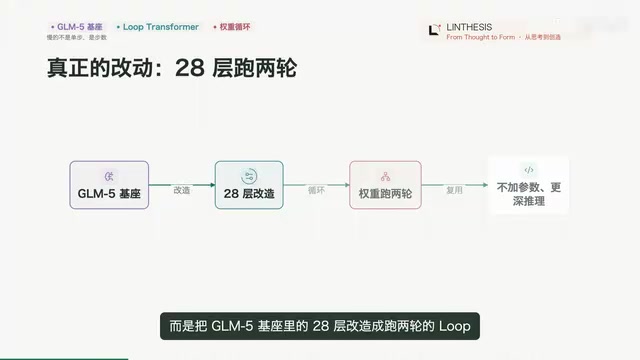
GLM-5.4 Coding Test 4.6x Slower? Unpacking the Loop Transformer Architecture
GLM-5.4 coding test took 431 minutes vs. competitor's 109, 4.6x more steps. We analyze its Loop Transformer architecture, KingBench4 score of 55.3, Max tier's 1.04M token cost, and tier selection advice.

Zhipu GLM-5.4 Quietly Released: A Debut for Loop Transformer Architecture
Zhipu GLM-5.4 quietly lands in coding plans: first Loop Transformer flagship with 750B params, 1M token context, AIM math up from 19.2 to 30.4, and native vision for coding from screenshots.
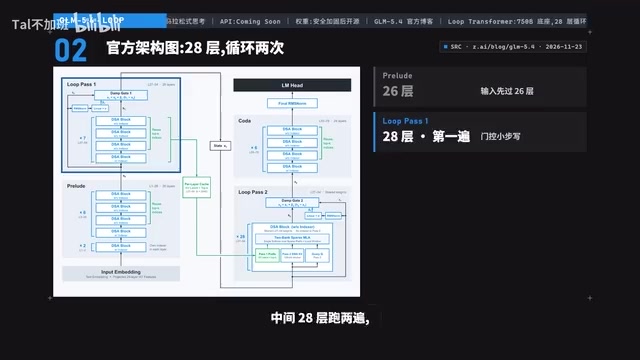
GLM-5.4 Releases 750B Model: Recurrent Transformer Architecture and the 30B Benchmark Controversy
GLM-5.4 releases a 750B model with a recurrent Transformer architecture that runs the same layers twice, claimed to match 2T–3T scale. But the benchmark table tests a 30B small model, not the main model. We break down the architecture changes, benchmark data, four demos, and open-source timeline.