Flipper One Opens Pre-Orders: A $399 Linux Pocket Computer

Flipper One crowdfunds at $399, pivoting from a wireless testing tool to an open-source Linux pocket computer.
Flipper Devices has launched Kickstarter pre-orders for the Flipper One at $399, with shipping expected in July 2027. Positioned as an open-source Linux multi-tool for high-performance computing and IP networking, it runs general Linux software and connects directly to IP networks, targeting network engineers, operations staff, and portable Linux developers. At $399 it enters the mini PC range, with open-source customizability as its key differentiator. However, key specs remain unannounced, and the two-year delivery cycle carries risk—ordering cautiously is advised until full specifications are revealed.
Months after first unveiling the Flipper One, Flipper Devices has officially launched pre-orders via Kickstarter. The device, officially described as "an open-source Linux multi-tool built for high-performance computing and IP networking," is priced at $399, with shipping expected to begin in July 2027. Compared with the Flipper Zero that made the company famous, the Flipper One represents a clear leap in positioning—from a portable wireless experimentation tool to a genuine Linux computer that fits in your pocket.
From Flipper Zero to Flipper One: A Leap in Positioning
The Flipper Zero's success lay in cramming RFID, infrared, Sub-GHz, and other wireless protocol testing capabilities into a toy-like little box, attracting a large community of hardware enthusiasts and security researchers. But it is fundamentally a specialized device with limited computing and networking capabilities.
The Flipper One takes a different path. The official description emphasizes "high compute" and "IP networking," meaning it is no longer merely a peripheral-style debugging tool, but a host machine with a full Linux environment, capable of running general-purpose software and connecting directly to IP networks. This shift expands its potential user base from hardware hobbyists to network engineers, operations staff, and developers who need a portable Linux environment.
According to Flipper Devices' official statement, the Flipper One is "an open-source Linux multi-tool built for high-performance computing and IP networking." This positioning puts it in direct competition with other pocket computers on the market, but its open-source nature is its key differentiator.
Sub-GHz refers to radio frequency bands below 1 GHz, commonly found in license-free ISM bands such as 315 MHz, 433 MHz, 868 MHz, and 915 MHz. A large number of low-power devices communicate in this band—garage door remotes, wireless doorbells, weather stations, car keys, and more. Because these signals typically use simple modulation schemes and fixed encoding, Sub-GHz is one of the most accessible areas of wireless security research: packet capture, replay, and protocol analysis have a relatively low barrier to entry. The Flipper Zero has a built-in Sub-GHz transceiver module that can record and replay such signals, which is an important reason it quickly became popular among hardware enthusiasts. Understanding this helps clarify what the Flipper One's pivot to IP networking means—it gives up the specialized niche of "physical-layer wireless sniffing" in favor of higher-layer network protocol stacks and general-purpose computing.
What the $399 Price Tag Means
At a pre-order price of $399, the company itself acknowledges it is [more expensive than previously expected] (the original text begins with "more expensive than" without fully specifying the comparison point). For a Kickstarter project, this price point has entered the territory of mature mini PCs or high-end development boards.
The pricing reflects a shift in the hardware cost structure: integrating a processor capable of supporting "high-performance computing," complete network interfaces, and a usable battery and cooling system into a pocket-sized device results in material costs far higher than those of low-power wireless tools like the Flipper Zero. Open-source hardware projects typically struggle to amortize costs through scale, so higher prices for early batches are almost inevitable.
For potential buyers, the key question is whether this device can replace existing portable Linux solutions. If it merely "runs Linux," $399 has limited appeal; if it offers differentiation in network interfaces, expandability, and the open-source ecosystem, the price can be justified.
A Design Orientation Toward IP Networking
The official messaging repeatedly emphasizes the keyword "IP networking," which is the key clue to understanding the Flipper One. Traditional Flipper products focus on non-IP wireless protocols such as Sub-GHz, RFID, and NFC; IP networking means Ethernet, Wi-Fi, routing, packet capture, network testing, and similar scenarios.
These capabilities have direct value for network operations and security auditing personnel: a portable device that can run the standard Linux networking toolchain saves the burden of carrying a laptop. The open-source nature allows users to trim the system, write scripts, and customize network functions—flexibility that closed-source pocket computers struggle to offer.
However, the details officially disclosed so far remain limited. Key specifications such as the specific processor model, number of network interfaces, memory and storage configuration, and battery life have not yet been provided in the source material, and these will directly determine its usability in real-world network scenarios.
The IP networking toolchain refers to the full set of network diagnostic and testing software that runs in a standard Linux environment, with typical examples including tcpdump (packet capture), Wireshark/tshark (protocol analysis), nmap (port and service scanning), iperf3 (bandwidth testing), traceroute, dig, and others. What these tools have in common is their dependence on a complete operating system kernel network stack, substantial memory, and available storage space—precisely what microcontroller devices like the Flipper Zero cannot provide, and the reason the Flipper One emphasizes "high-performance computing." For network engineers, whether the device can run this standard toolset as-is, whether it supports monitor mode and promiscuous-mode packet capture, and whether the network ports are gigabit—these matter more for practical usability than processor benchmarks.
Shipping in 2027: The Risks Behind a Long Cycle
The biggest uncertainty with Kickstarter pre-orders comes from the delivery timeline. The Flipper One is not expected to ship until July 2027, leaving a considerable gap between payment and receipt.
For hardware crowdfunding projects, a long cycle means the supply chain, component prices, and even product definition may change. Flipper Devices has a track record of successfully delivering the Flipper Zero, which provides some backing for the project's credibility, but the Flipper One's hardware complexity is notably higher, and engineering risk increases accordingly.
Users willing to place an order now are essentially paying a premium for "an open-source Linux pocket computer two years from now" while assuming the risk of delivery delays. For price-sensitive users or those with urgent needs, waiting for the official launch and third-party reviews may be the safer choice.
Kickstarter's crowdfunding mechanism deserves a separate explanation: the platform uses an "All-or-Nothing" rule, under which a project must reach its funding goal within a set period for funds to be collected; if it falls short, backers are fully refunded. Once successful, backers' payments go directly to the project creator, and the platform does not guarantee final delivery. The essence of crowdfunding is therefore a hybrid of "pre-order + investment," with backers bearing the risk of product delays or even failure. Hardware projects are especially prone to delays in areas such as tooling, certification (FCC/CE), and mass-production yield, and delays of one to two years are not uncommon historically. This also explains why a project creator's past delivery record becomes a core basis for assessing credibility.
Who Should Pay Attention to This Device
Based on the official positioning, the Flipper One's target audience can be roughly divided into three categories: developers who need a portable Linux environment, engineers engaged in network testing and security auditing, and geek enthusiasts passionate about open-source hardware.
If you already use a Flipper Zero and want more computing and networking power, the Flipper One is a natural upgrade path; if you just want a cheap mini Linux host, there are already more mature options on the market. The $399 pre-order price buys open-source customizability and the continuity of the Flipper ecosystem, not merely hardware specifications.
Until the full specifications are officially announced, staying informed and ordering cautiously is the rational approach to long-cycle crowdfunding projects like this.
One-line Summary
The Flipper One crowdfunds at $399, pivoting from a wireless testing tool to an open-source Linux pocket computer.
Paragraph Summary
Flipper Devices has launched Kickstarter pre-orders for the Flipper One at $399, with shipping expected in July 2027. Unlike the Flipper Zero, which focuses on RFID, infrared, and Sub-GHz wireless protocol testing, the Flipper One is positioned as "an open-source Linux multi-tool built for high-performance computing and IP networking," capable of running general Linux software and connecting directly to IP networks. Its target users expand from hardware hobbyists to network engineers, operations staff, and portable Linux developers. At $399, it has entered the mini PC and high-end development board range, with open-source customizability as its core differentiator. However, official key specifications such as processor, interfaces, memory, and battery life have not yet been announced, and the roughly two-year delivery cycle brings risks of supply chain and product definition changes. The article recommends ordering cautiously until full specifications are revealed.
Related articles
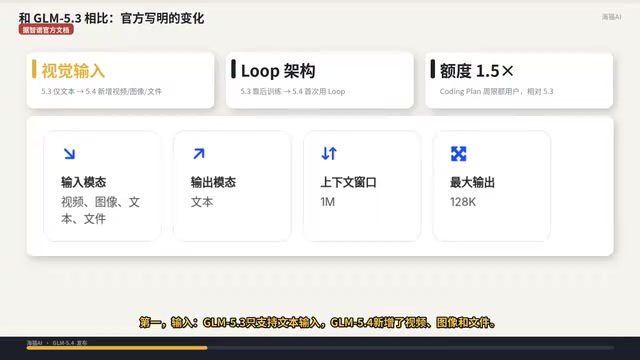
Zhipu GLM-5.4 Released: Loop Transformer Runs 28 Layers Twice
Zhipu releases GLM-5.4, the first Loop Transformer flagship: 28 layers run twice for 2-3T-equivalent intelligence, plus video and image input. API and open weights not yet released.

GLM-5.4 Coding Test 4.6x Slower? Unpacking the Loop Transformer Architecture
GLM-5.4 coding test took 431 minutes vs. competitor's 109, 4.6x more steps. We analyze its Loop Transformer architecture, KingBench4 score of 55.3, Max tier's 1.04M token cost, and tier selection advice.

Zhipu GLM-5.4 Quietly Released: A Debut for Loop Transformer Architecture
Zhipu GLM-5.4 quietly lands in coding plans: first Loop Transformer flagship with 750B params, 1M token context, AIM math up from 19.2 to 30.4, and native vision for coding from screenshots.