Floppy Emu Hardware Failure Analysis: Lessons from a Deep-Dive Troubleshooting

Floppy Emu failure analysis reveals universal embedded hardware troubleshooting methodology.
Floppy Emu emulates floppy disk drives for classic machines like the Apple II and Macintosh, using SD cards to replace aging magnetic media by precisely reproducing drive electrical signals. This article uses a Floppy Emu failure report as a springboard to outline a general framework for embedded hardware troubleshooting — covering power stability, signal integrity, physical component failure, and firmware edge cases — while tracing the standard analysis workflow from symptom reproduction through root cause validation. It also highlights how publicly sharing troubleshooting processes serves as a vital community asset in retro hardware preservation.
Introduction
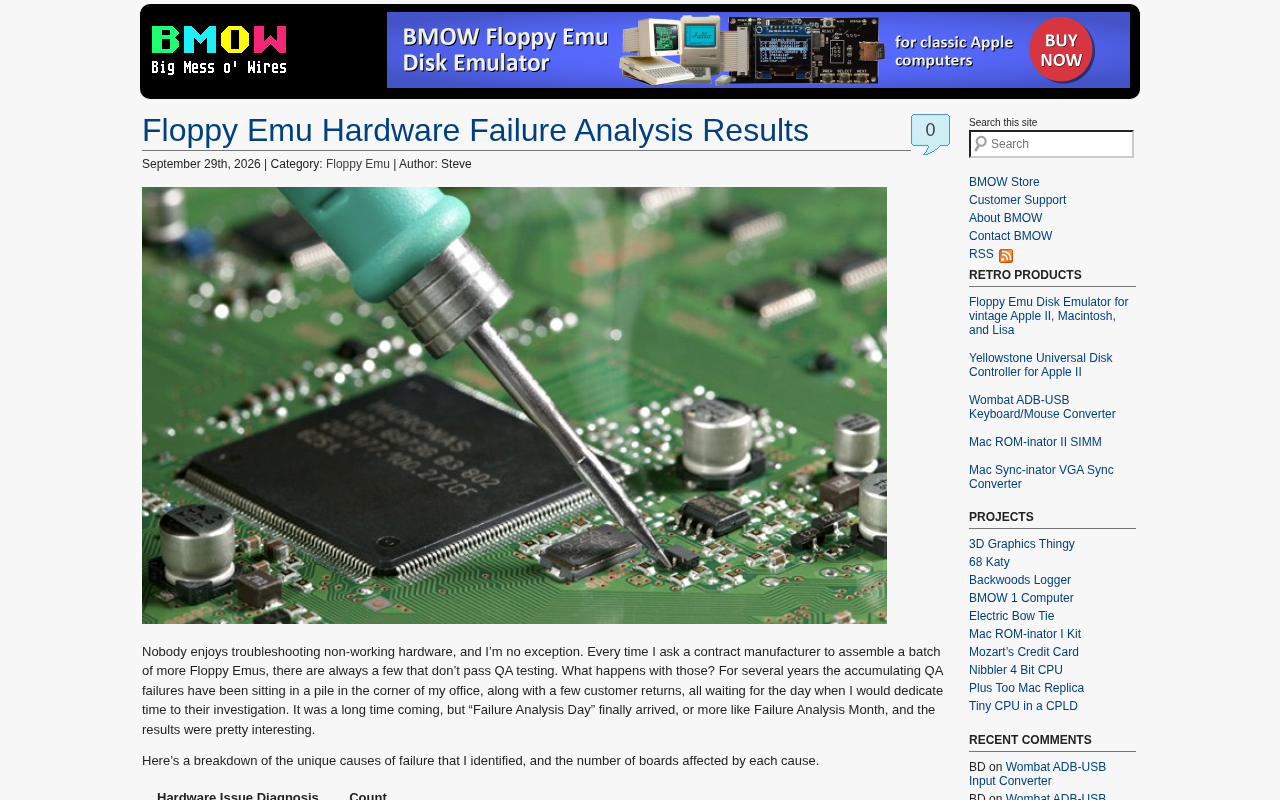
Floppy Emu is a well-known hard disk/floppy disk emulation device in the retro computing enthusiast community, primarily serving as a storage replacement for classic machines like the Apple II and Macintosh. A report on a Floppy Emu hardware failure analysis recently sparked discussion on Hacker News. While the original source material is limited in detail, hardware failure analysis is an engineering topic well worth exploring in depth.
This article draws on the themes of that report to outline general methods and approaches for hardware failure analysis, helping readers understand the value of this kind of diagnostic work.
What Is Floppy Emu
Floppy Emu is a floppy disk emulator designed for vintage computers. It stores disk image files on an SD card and simulates the electrical signals of a real floppy disk drive, allowing Apple machines from decades past to read data from modern storage media.
For retro computing hardware, original floppy disk drives have long been discontinued, and magnetic media degrades over time. Emulation devices like Floppy Emu have significantly extended the usable lifespan of these classic machines, giving them a loyal following in the collecting and preservation community.
From a technical implementation standpoint, the core challenge of Floppy Emu lies in accurately reproducing the electrical protocols of floppy disk drives. Take the Apple II as an example: its Disk II drive communicates with the host via the dedicated IWM (Integrated Woz Machine) chip using a highly customized signal format. Floppy Emu must use a microcontroller to generate GCR (Group Code Recording) encoded signals in real time that meet strict timing requirements — even minor timing deviations can cause the host to fail to recognize the disk. This demanding real-time constraint makes Floppy Emu's firmware design far more complex than a typical SD card reader, and is one reason its hardware failure analysis carries unique technical depth. Floppy Emu currently supports multiple modes, including Disk II 5.25-inch, 3.5-inch HD floppy, and Apple Hard Disk 20 emulation, each with different signal precision requirements.
The Significance of Hardware Failure Analysis
For any embedded hardware product, failure analysis is a critical part of product iteration and quality assurance. When a device behaves unexpectedly, a systematic investigation can pinpoint the root cause rather than simply swapping out components.
Common Sources of Hardware Failures
Failures in embedded devices typically stem from the following areas:
- Power issues: Voltage instability, insufficient power supply, or aging capacitors are common culprits behind abnormal device behavior.
- Signal integrity: In timing-sensitive scenarios like floppy signal emulation, signal jitter or voltage level mismatches can cause read/write failures.
- Component failure: SD card slots, connectors, microcontrollers, and other parts can sustain physical damage after prolonged use.
- Firmware-hardware interaction: Some failures that appear hardware-related actually stem from firmware logic that mishandles edge cases.
General Approach to the Analysis Process
Professional failure analysis typically follows a progressive path from symptom to root cause: first reproduce the issue, then use tools like oscilloscopes and logic analyzers to capture signals, gradually narrow the scope of suspicion, and finally isolate the failure point and validate the fix. This methodology offers valuable lessons for any hardware project.
Oscilloscopes and logic analyzers are the two core tools for hardware troubleshooting, each serving a distinct purpose. Oscilloscopes excel at capturing analog signal waveforms — voltage levels, rise-time slopes, and ringing — making them ideal for diagnosing power supply ripple or signal integrity issues. Logic analyzers use digital sampling to decode protocol timing, making them suited for verifying that SPI, I2C, and other bus communications meet their specifications. In a device like Floppy Emu, where the SD card communicates with the microcontroller over SPI, a logic analyzer can capture the full command-response sequence when intermittent read/write failures occur, helping determine whether the card itself is timing out or whether the host controller's timing violates the SD specification. For hobbyists, an entry-level logic analyzer — such as an open-source solution based on the Cypress FX2, paired with PulseView software — is capable of handling most initial embedded protocol investigations at a fraction of the cost of professional instruments.
Lessons for Retro Hardware Maintenance
Maintaining vintage computing equipment comes with unique challenges: original documentation is scarce, spare parts are hard to find, and community knowledge is scattered. For open or semi-open projects like Floppy Emu, a failure analysis report is itself a valuable community asset.
Publicly sharing the troubleshooting process not only helps users facing the same issues resolve them quickly, but also provides data to support future hardware revisions. This culture of engineering transparency is the foundation on which many hobbyist hardware projects continue to evolve.
The retro computing community has developed several systematic mechanisms for preserving knowledge in the face of scarce documentation. Bitsavers.org hosts scanned copies of a large number of original technical manuals, while the Internet Archive preserves digitized versions of early magazines and software. For hardware repair, the community has also developed standardized practices such as "same-model parts swapping" and recapping — the latter specifically addressing electrolytic capacitor aging, which is particularly common in maintaining machines like the Macintosh Plus and SE. The SMD electrolytic capacitors on these models' motherboards widely develop leaks after decades, corroding PCB traces and causing all manner of failures. Floppy Emu's public failure reports are a continuation of this tradition of community knowledge sharing.
Conclusion
Although the original source material for this discussion is limited, the Floppy Emu hardware failure analysis touches on a universally applicable engineering theme: how to improve hardware reliability through systematic investigation. For readers interested in embedded development and retro computing, following the complete version of such analysis reports will yield far more hands-on detail and practical experience.
Readers who want to dig deeper are encouraged to visit the project's official channels for the full analysis results, including specific failure data and solutions.
Related articles

Free Unlimited Claude Code Solution: Agnes AI + CC Switch Setup Guide
No paid subscription needed — pair the free AI platform Agnes AI with the open-source tool CC Switch to provide a backend for Claude Code, enabling unlimited free calls to text, image, and video models. This guide covers the full setup, test results, and usage boundaries.

A Complete Zero-Cost Guide to Getting Started with Claude Code for Beginners in China
A beginner's guide to Claude Code for users in China: two installation methods (command line and IDE plugin), full configuration steps for replacing the official API with the free domestic LongCat model, and a hands-on demo of building a small tool with natural language, plus tips.

When the NSA Gets Involved: The AI Supply Chain Crisis Behind Open-Source CVEs and API Key Hijacking
Multiple open-source projects disclosed severe CVEs in one day, PHP flaws alarmed the FBI, and Railway and OpenCode were breached with API keys stolen. This article breaks down the vulnerability window, AI-accelerated exploitation, and the AI supply chain crisis behind the API key black market, with a developer defense checklist.