FlowTask 2.0: Building a Unified Enterprise Memory Layer for AI Agents

FlowTask 2.0 builds a unified enterprise memory layer to give AI Agents real-time context across communication channels.
FlowTask 2.0 tackles a critical AI Agent deployment challenge: fragmented enterprise context scattered across Email, Slack, WhatsApp, and other channels. By creating a unified "Company Brain" with minute-level updates, an approval layer for privacy control, and multi-Agent connectivity, it aims to reduce repetitive context-feeding costs and serve as foundational infrastructure for the Agent era.
As enterprises accelerate their adoption of AI Agents, a repeatedly overlooked yet critically important question has surfaced: Where exactly should AI Agents get their real enterprise context from? FlowTask 2.0, which recently landed at #9 on the Product Hunt leaderboard, is attempting to answer this question with its "Company Brain" concept. It garnered 150 upvotes and 15 comments, categorized across productivity tools, developer tools, and artificial intelligence.
Enterprise Data Fragmentation: The Real Pain Point in AI Agent Deployment
Anyone driving AI adoption within an enterprise hits the same bottleneck: company information is highly fragmented. Critical communications are scattered across Email, Slack, WhatsApp, LinkedIn, and various other channels. Project decisions, customer conversations, and internal consensus are distributed across different tools with no unified "memory layer."
This problem is known in information management as "Data Silos," and it has worsened dramatically with the explosive growth of SaaS tools. Statistics show that a mid-sized enterprise uses an average of over 130 SaaS applications, while large enterprises may exceed 300. Each tool forms an independent data store with little native interoperability between them.
Data silos aren't a new phenomenon of the AI era — they're a structural challenge that has persisted throughout the history of enterprise digitization. From the ERP integration wave of the 1990s, to SOA (Service-Oriented Architecture) attempts in the 2000s, to the rise of the API economy in the 2010s, each generation of technology has tried to solve the inter-system communication problem. But the fragmentation of communication data has its own unique characteristics: unlike transactional data with clear schemas, or documents with well-defined boundaries, it exists in the form of conversation flows, where decision signals are often implicit within multi-turn interaction contexts.
Traditional solutions include ETL (Extract-Transform-Load) pipelines and iPaaS (Integration Platform as a Service, such as Zapier and MuleSoft), but these primarily address structured data synchronization. Their capability for handling unstructured communication records — such as implicit decisions in chat messages or subtle consensus in email threads — is extremely limited. The emergence of AI Agents makes this problem even more urgent, because Agents need to understand contextual semantics, not just move data fields around.
FlowTask 2.0's core proposition is to aggregate communications and data scattered across various locations into a single unified place, making them directly accessible to AI Agents. The product's official description states that it aims to connect a company's "leftover" communications and data across all channels, forming a continuously updated information hub.
The logic behind this is quite straightforward: how smart an AI Agent can be largely depends on how much accurate, timely enterprise context it has access to. If background information needs to be re-fed with every call, it's not only costly but also error-prone.
Core Mechanism: Unified Context and Real-Time Updates
Reducing Agents' Repetitive Labor Costs
One key value proposition FlowTask 2.0 emphasizes is reducing the cost of context. In practical LLM usage, every interaction requires stuffing relevant background into the context window, which not only consumes tokens and increases costs but also makes it difficult for Agents to maintain long-term cognitive consistency.
To understand the severity of this pain point, one must understand the context window mechanism of large language models. The context window refers to the maximum number of tokens a model can process in a single inference — GPT-4 Turbo supports 128K tokens, Claude 3 supports 200K tokens, but larger windows mean higher computational costs. Token pricing is based on input/output volume. When every call requires injecting large amounts of background information, cumulative costs become substantial. Taking GPT-4 Turbo as an example, input tokens cost $10 per million tokens and output costs $30 per million tokens. If each Agent call requires injecting 50K tokens of background context, an enterprise processing 1,000 requests daily would face input token costs alone of $15,000 per month. And this doesn't include embedding computation, vector retrieval, or the exponential cost growth from context accumulation in multi-turn conversations.
More critically, research shows that LLMs exhibit a "Lost in the Middle" phenomenon when processing very long contexts — retrieval accuracy for information positioned in the middle of the context drops significantly. This means that even if more information can technically be crammed in, the model's actual utilization efficiency diminishes. While Google's Gemini 1.5 Pro supports a 1-million token window, its "pay-per-token" model means the economic viability of ultra-long contexts remains to be proven.
By establishing a unified enterprise information layer, FlowTask aims to let AI Agents read needed information directly from this "brain" rather than requiring users to repeatedly copy-paste and re-explain. Its technical implementation likely relies on RAG (Retrieval-Augmented Generation) architecture — first slicing enterprise data and converting it into vectors via embedding models stored in vector databases, then using semantic retrieval to find the most relevant fragments when an AI Agent needs information, and injecting them into the LLM's context window for reasoning.
Since RAG was proposed by Meta AI in 2020, it has become the mainstream paradigm for enterprise AI applications. Its core workflow includes: document chunking, vector embedding, vector storage (e.g., Pinecone, Weaviate, Chroma), semantic search, and context injection. The advantage of this architecture is that it leverages LLM reasoning capabilities without requiring expensive fine-tuning. However, RAG faces special challenges in communication data scenarios: conversation semantics depend on temporal ordering and participant relationships, and simple text chunking may fragment complete conversational context; coreference resolution in multi-party conversations (e.g., "the plan he mentioned") requires additional preprocessing; and the abundance of colloquial expressions in conversations may reduce embedding semantic matching precision. If embeddings fail to correctly capture the semantics of enterprise-specific terminology, Agents will hallucinate or miss critical information.
The official description mentions "don't have to repeat," targeting precisely this pain point.
Minute-Level Updates to Keep Agent Cognition in Sync
More noteworthy is its real-time design. According to the product description, records are continuously updated "minutes by minutes," allowing connected AI Agents to stay synchronized accordingly.
This means enterprise information isn't a static snapshot but a dynamically maintained knowledge foundation. When teams make new decisions in Slack or confirm new requirements in email, Agents can theoretically perceive these changes relatively quickly — which is particularly important for scenarios requiring real-time business handling (such as customer service, sales, and project coordination).
However, the engineering complexity of achieving minute-level data synchronization across heterogeneous platforms should not be underestimated. First is the API limitation issue — most SaaS platforms have strict rate limiting on API calls. For example, Slack's API is limited to 1 call per minute on the free tier, and Gmail API has 250 quota units per user per day. Second is the challenge of data format standardization: Slack has a Channel/Thread hierarchical structure, WhatsApp uses end-to-end encrypted flat conversations, and LinkedIn messages have unique metadata structures. Unifying these heterogeneous data into a semantically understandable format for Agents requires extensive parsing and transformation work.
From a technical implementation perspective, CDC (Change Data Capture) technology originally evolved from the database domain (e.g., Debezium's database log-based change capture) for real-time tracking of data changes and pushing incremental updates to downstream systems. In communication data scenarios, CDC implementation typically takes two paths: push-based via Webhooks (such as Slack's Events API) and pull-based via polling (such as periodically checking Gmail's History API). Each has trade-offs — Webhooks offer better real-time performance but depend on platform reliability and network stability, while polling offers better controllability but introduces latency and consumes API quotas. For WhatsApp Business API, message delivery requires going through Meta's Cloud API or partner BSPs (Business Solution Providers), with availability and latency subject to Meta's infrastructure. Additionally, there are Webhook reliability issues to handle (message loss, duplicate pushes, out-of-order delivery), as well as strategic choices between incremental and full synchronization. Event-driven architecture is a common solution for such problems, but its application in communication data scenarios remains immature.
Approval Layer Design: Resolving the Personal vs. Work Data Mix-Up
A particularly product-minded detail in FlowTask 2.0 is the "approval layer." When you connect channels like Slack, WhatsApp, and email that are used for both personal and work purposes, an unavoidable question arises: How do you prevent personal chats from being mixed into the enterprise knowledge base?
The official description explicitly states that through an added approval layer, "personal and works chats don't gets mixed." This touches on the sensitive territory of enterprise data governance and privacy boundaries. For any product that connects private communication tools into a unified system, permission and filtering mechanisms are the critical threshold determining enterprise adoption.
Aggregating employee communication data into a unified system involves multiple regulatory compliance requirements. In the EU, GDPR (General Data Protection Regulation) clearly stipulates data minimization and purpose limitation principles — enterprises cannot process employees' private communications without explicit consent. GDPR Article 35 also requires a mandatory DPIA (Data Protection Impact Assessment) for data processing activities that may pose high risks to individuals' rights and freedoms. Assessment content includes: the necessity and proportionality of data processing, risks to data subjects' rights, proposed safeguards (such as pseudonymization, encryption, access controls), data retention strategies, and cross-border transfer compliance.
In the United States, state privacy laws (such as CCPA/CPRA) also impose strict constraints on the collection and use of personal data. Additionally, end-to-end encrypted platforms like WhatsApp may have terms of service that prohibit bulk scraping and storage of message content by third-party systems. Enterprises deploying such systems must also ensure compliance with industry-specific regulations (such as MiFID II communication recording requirements in finance, or HIPAA requirements in healthcare). Notably, the passage of the EU AI Act in 2023 adds further compliance dimensions — AI systems processing employee data may be classified as "high-risk" systems, requiring additional transparency and human oversight requirements.
From this perspective, the approval layer isn't just a feature — it's a trust design element. It determines whether users are willing to hand their real, complete communication data over to this "brain." The granularity of the approval mechanism (whether by channel, by conversation, or by message), the ease of approval, and the remediation mechanisms for misjudgments will all directly impact user adoption willingness and data completeness.
Positioning Analysis: The Infrastructure Battle of the Agent Era
FlowTask 2.0 operates in one of the hottest spaces right now: providing enterprise-level context infrastructure for AI Agents. It can simultaneously connect multiple AI Agents ("connect it with any ai agents simultaneously"), playing the role of a middle layer between Agents and enterprise data.
This space is rapidly forming a competitive landscape. Current major players include: LangChain/LangSmith providing Agent development frameworks and observability tools; Dust.tt focusing on connecting internal enterprise knowledge to LLMs; Glean building an enterprise AI search and knowledge management platform that has achieved over $4.5 billion in valuation; Mem.ai and Notion AI entering enterprise knowledge integration from the notes/document management angle; and more foundational infrastructure like Unstructured.io specializing in parsing and preprocessing unstructured data. FlowTask's differentiation lies in its entry point through "communication data" rather than documents or knowledge bases. The uniqueness of communication data is that it often contains the latest decision signals and interpersonal relationship graphs, but is also the most sensitive and hardest to structure.
It's worth noting that the "Company Brain" concept FlowTask represents is converging with knowledge graph technology. Traditional knowledge graphs (such as entity-relationship networks stored in Neo4j graph databases) excel at representing structured organizational knowledge, while vector databases excel at handling unstructured semantic similarity retrieval. The new generation of GraphRAG (such as Microsoft's 2024 solution) attempts to combine both — first using LLMs to extract entities and relationships from text to build knowledge graphs, then enhancing retrieval precision and context completeness through graph structures. This hybrid architecture is particularly suited for communication data scenarios, because interpersonal relationships, project ownership, and decision chains within organizations are inherently graph-structured.
This positioning carries several layers of meaning worth examining:
- Horizontal connectivity: It doesn't bind to a single Agent but serves as a universal data hub that can theoretically serve different AI applications and workflows. This is analogous to the relationship between databases and applications — Agents come and go, but enterprise "memory" should persist.
- The double-edged sword of data centralization: A unified company brain is powerful, but it also means heavier security and compliance responsibilities from data centralization. Whether the approval layer can truly achieve fine-grained control will be key to the product's success or failure. A data breach would have an impact far exceeding that of a single tool's data leak.
- The engineering challenge of real-time synchronization: Minute-level updates sound ideal, but achieving stable, low-latency synchronization across multiple heterogeneous channels (email, Slack, WhatsApp, LinkedIn) involves non-trivial engineering complexity. Especially under real-world factors like network fluctuations, API changes, and platform policy adjustments, ensuring data consistency and completeness represents the biggest leap from concept to productization.
Conclusion: Right Direction, But Enormous Execution Challenges
FlowTask 2.0 has identified a real problem in AI Agent deployment — context fragmentation and repetitive feeding. Its proposed "Company Brain" concept is clear, and the approval layer design demonstrates an understanding of enterprise data governance.
However, as a product just starting out on Product Hunt (150 votes, ranked #9), it is currently gaining attention more at the concept and vision level. The real test lies in: multi-channel data integration stability, real-time synchronization reliability, and the maturity of approval and privacy controls.
For teams exploring AI Agent deployment, FlowTask 2.0 at least offers a noteworthy approach: rather than having each Agent fight independently and repeatedly acquire context, it's better to build them a unified, real-time, controllable enterprise memory layer. This may be the next important infrastructure piece of the Agent era — just as the cloud computing era needed unified data lakes, the Agent era also needs a unified context layer. Whoever finds the optimal balance between data freshness, privacy compliance, and multi-Agent compatibility may become the definer of this new infrastructure layer.
Related articles
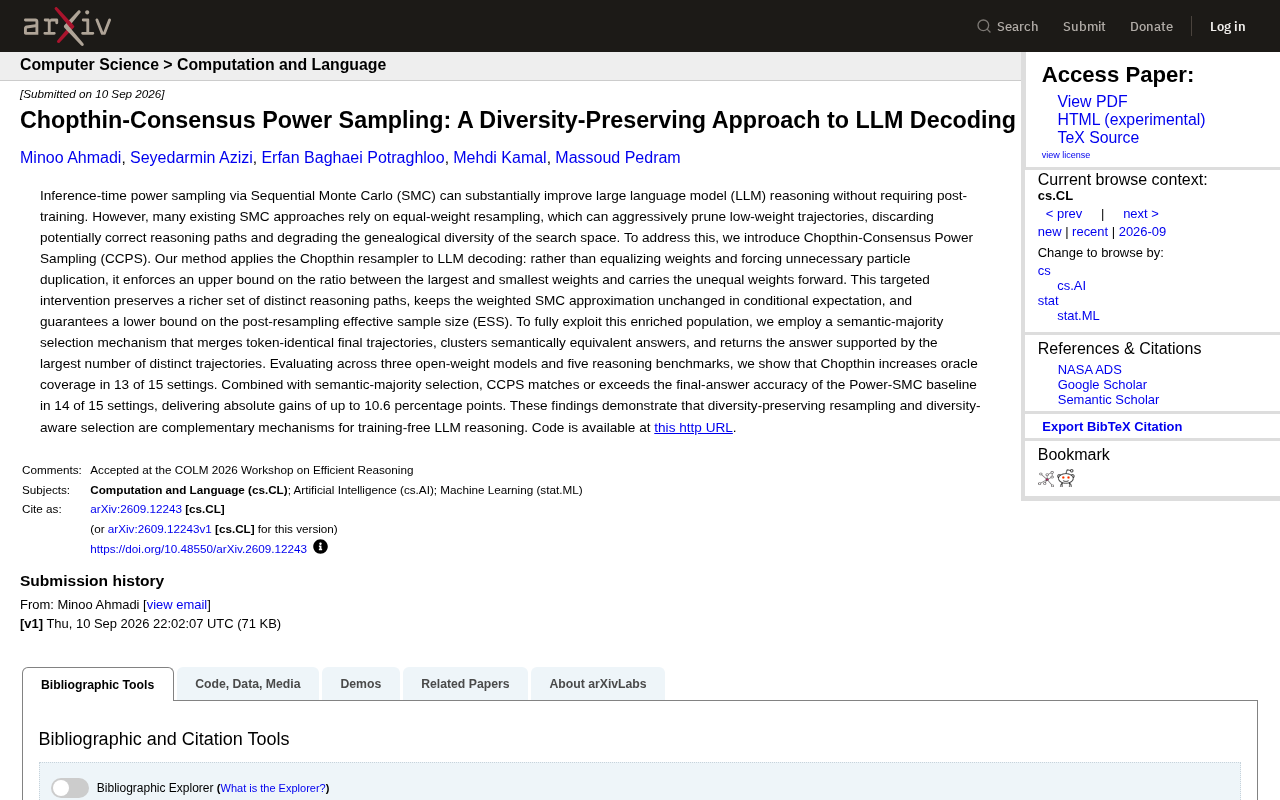
CCPS Sampling: Preserving Reasoning Diversity to Boost LLM Performance Without Fine-Tuning
A new arXiv paper proposes CCPS, which boosts LLM reasoning accuracy without any training by preserving reasoning diversity via Chopthin resampling and semantic majority selection — achieving up to 10.6pp absolute gains.
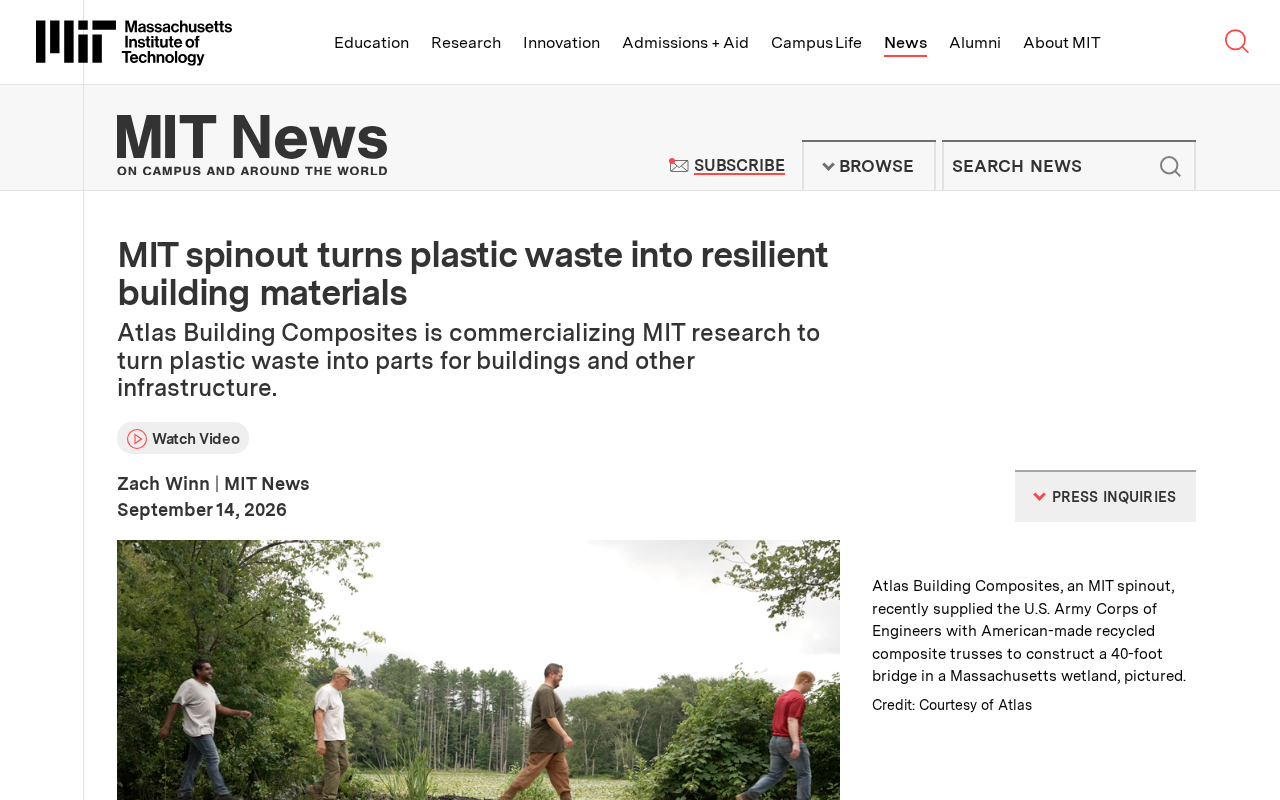
MIT Spinout Transforms Plastic Waste into High-Resilience Building Materials
MIT spinout Atlas Building Composites converts plastic waste into resilient structural components for buildings and infrastructure, pioneering a high-value recycling pathway.
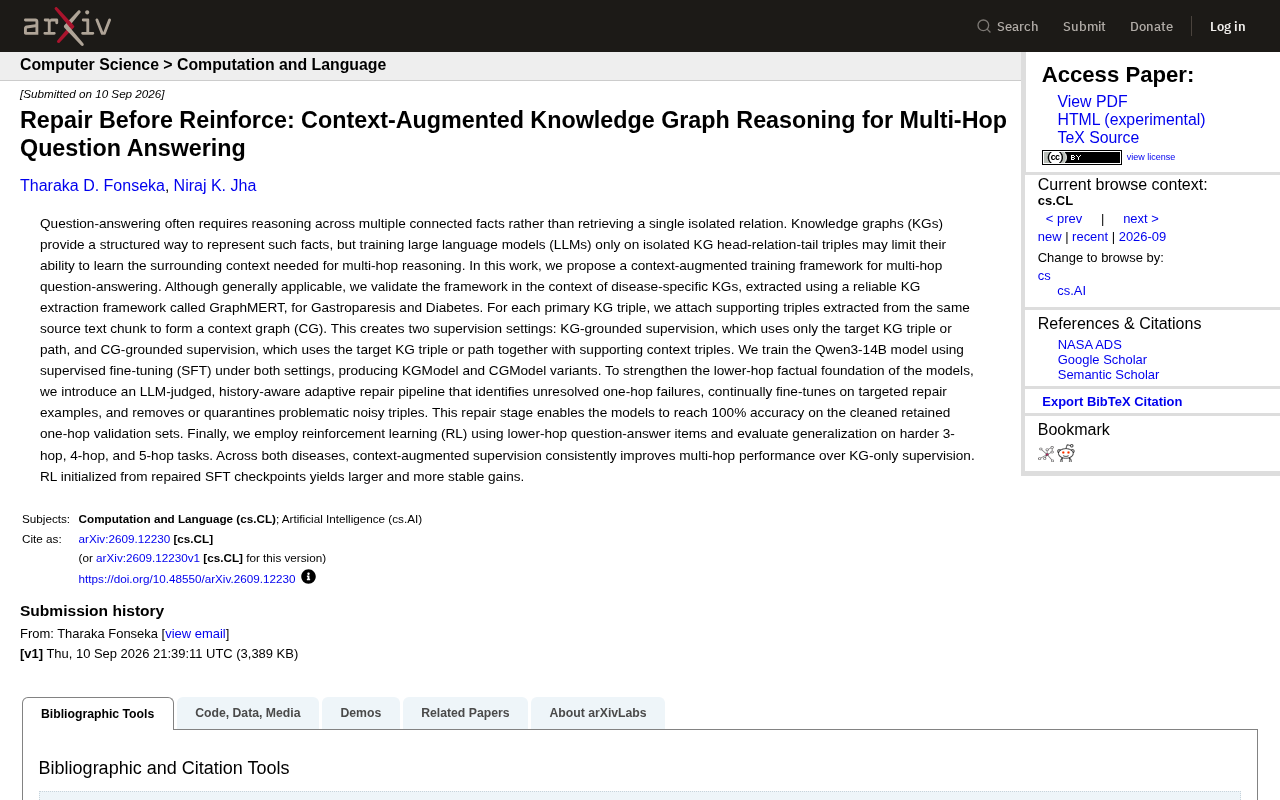
Repair Before Reinforce: Context-Augmented Knowledge Graph Reasoning Tackles Multi-Hop QA
New arXiv paper proposes a context-augmented KG reasoning framework using a "Repair Before Reinforce" strategy to improve LLM multi-hop QA. Validated on Gastroparesis and Diabetes KGs with Qwen3-14B, achieving 100% single-hop accuracy after repair.