Former FTC Chair Khan Invokes 1934 Precedent to Argue for Criminal Liability of AI Executives
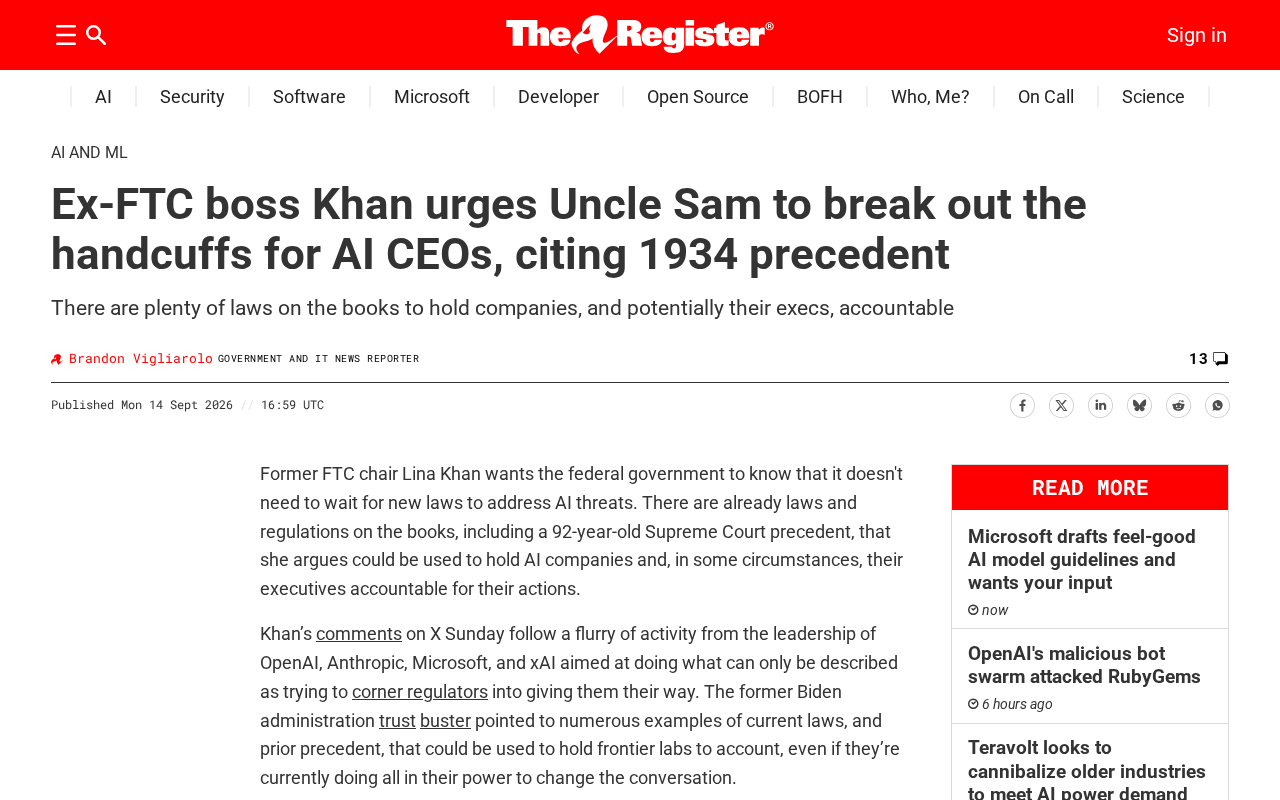
Former FTC Chair Khan argues AI executives should face criminal charges, not just fines, to ensure personal accountability.
Former FTC Chair Lina Khan has proposed that regulators pursue criminal liability against AI company executives for violations, rather than relying solely on corporate fines. Citing a New Deal-era precedent from 1934, she argues that personal accountability is both historically grounded and more effective — since massive fines on large companies often amount to little more than a cost of doing business. The proposal faces significant obstacles in practice: AI systems' unpredictability makes causal attribution extremely difficult, and the intent standard required for criminal charges is hard to meet. There are also concerns that severe personal liability risks could chill innovation or drive companies to lighter-touch jurisdictions. The debate reflects a core challenge in AI governance: when algorithmic decisions cause harm, who exactly should bear responsibility?
A Regulatory Signal That Sparked Debate
Former Federal Trade Commission (FTC) Chair Lina Khan recently put forward a striking proposition: when it comes to potential violations in the AI industry, regulators should not stop at fines — they should consider pursuing criminal charges against the executives responsible. She cited a 1934 legal precedent as the historical basis for this position.
The idea sparked discussion on Hacker News. While the thread didn't generate enormous traction (17 points, 2 comments), the topic itself strikes at one of the most sensitive nerves in today's tech regulation debate — namely, when technology evolves far faster than regulatory frameworks can keep up, what level of force and what tools should be used to hold powerful tech companies and their leaders accountable?
Why Invoke a Precedent from 1934?
Khan's appeal to a nearly century-old legal precedent is not mere nostalgia. The 1930s in the United States were the Roosevelt New Deal era, a pivotal period in which the modern regulatory architecture was built from the ground up. The frameworks governing securities, finance, and other sectors were largely shaped during this time. Invoking precedents from this era carries a specific message: there is historical legal basis for imposing personal liability on corporate officers in emerging, high-impact industries — rather than treating companies as abstract entities that can simply "buy their way out" with fines.
At the heart of this reasoning is personal accountability. Critics have long argued that multi-billion-dollar fines against large corporations are often treated as nothing more than a cost of doing business, doing little to change the actual incentives of executives. Holding specific individuals responsible — even through criminal means — is what might finally create a meaningful deterrent.
The Through-Line in Khan's Regulatory Philosophy
To fully understand this position, it helps to situate it within Khan's broader regulatory worldview. As a prominent antitrust scholar, she built her reputation on taking a hard line against major tech companies, advocating for regulation that is proactive and aggressive rather than reactive — stepping in after the damage is already done.
Extending this logic to AI is entirely consistent: artificial intelligence is rapidly penetrating virtually every corner of society, and if systemic risks or abusive practices emerge, the consequences could be sweeping and irreversible. Against that backdrop, Khan argues that the traditional "fine them after the fact" model is wholly inadequate. More severe measures — including personal and even criminal liability for executives — are needed to compel companies to exercise real caution when deploying these technologies.
The Real-World Obstacles This Proposal Faces
Compelling as the idea may be in principle, the prospect of "handcuffing AI executives" runs into significant practical hurdles.
The first is legal applicability. The 1934 precedent emerged from a completely different technological and economic context. Whether it can be directly applied to AI — an entirely new domain — is deeply contested. Criminal liability typically requires clear proof of intent and causation, but AI systems are inherently unpredictable and operate in distributed ways, making it extremely difficult to trace any specific outcome back to a particular executive's individual decision.
The second is the tension between deterrence and innovation. If the personal risk of criminal liability becomes too severe, it could have a chilling effect on technological innovation — causing companies to become overly cautious in advancing frontier research, or even relocating operations to jurisdictions with lighter regulatory regimes. Striking the right balance between protecting the public interest and encouraging technological progress is a challenge that no AI regulatory framework can sidestep.
The Deeper Questions Behind the Debate
Regardless of whether Khan's specific proposal gains traction, the questions it surfaces deserve serious attention: In the age of AI, where should the boundaries of corporate liability be drawn? When an algorithmic decision causes real harm, who should be held responsible — the engineers who wrote the code, the executives who approved deployment, or the corporation as a legal entity?
These questions have no clean answers yet. Khan's position offers a reference point on the harder-line end of the spectrum. Even if it never becomes mainstream policy, it injects a new dimension into the public conversation around AI governance. As AI capabilities continue to advance, the debate over accountability mechanisms will only intensify — and designing regulatory frameworks that are both genuinely deterrent and innovation-friendly will remain a long-term challenge for policymakers around the world.
(Note: This article is based on a brief Hacker News thread, and the original information is limited. For full context on Khan's remarks, readers should consult more detailed primary reporting.)
Related articles
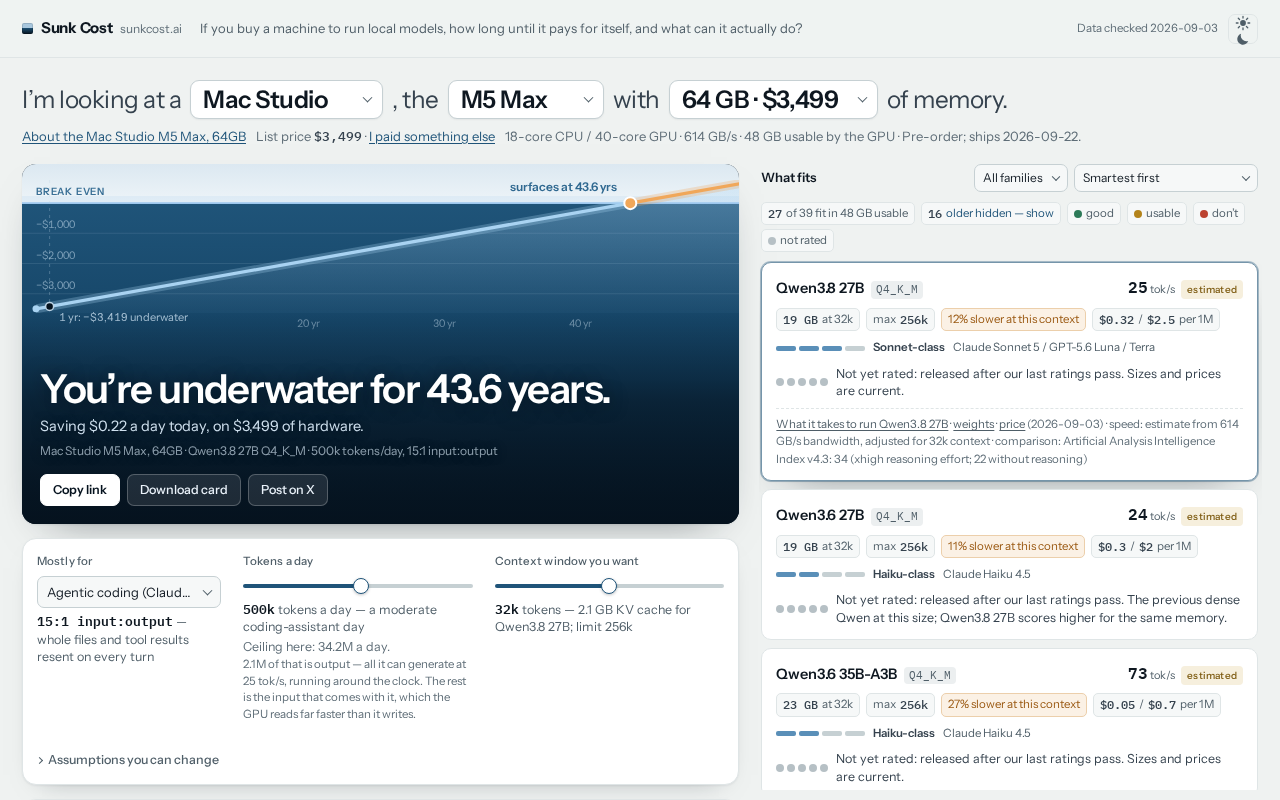
How Long Until Local LLM Hardware Pays for Itself? The Sunk Cost Tool Runs the Numbers
How long before local LLM hardware pays for itself? The Sunk Cost tool — popular on Hacker News — quantifies break-even timelines vs. cloud API costs and explains the key variables.
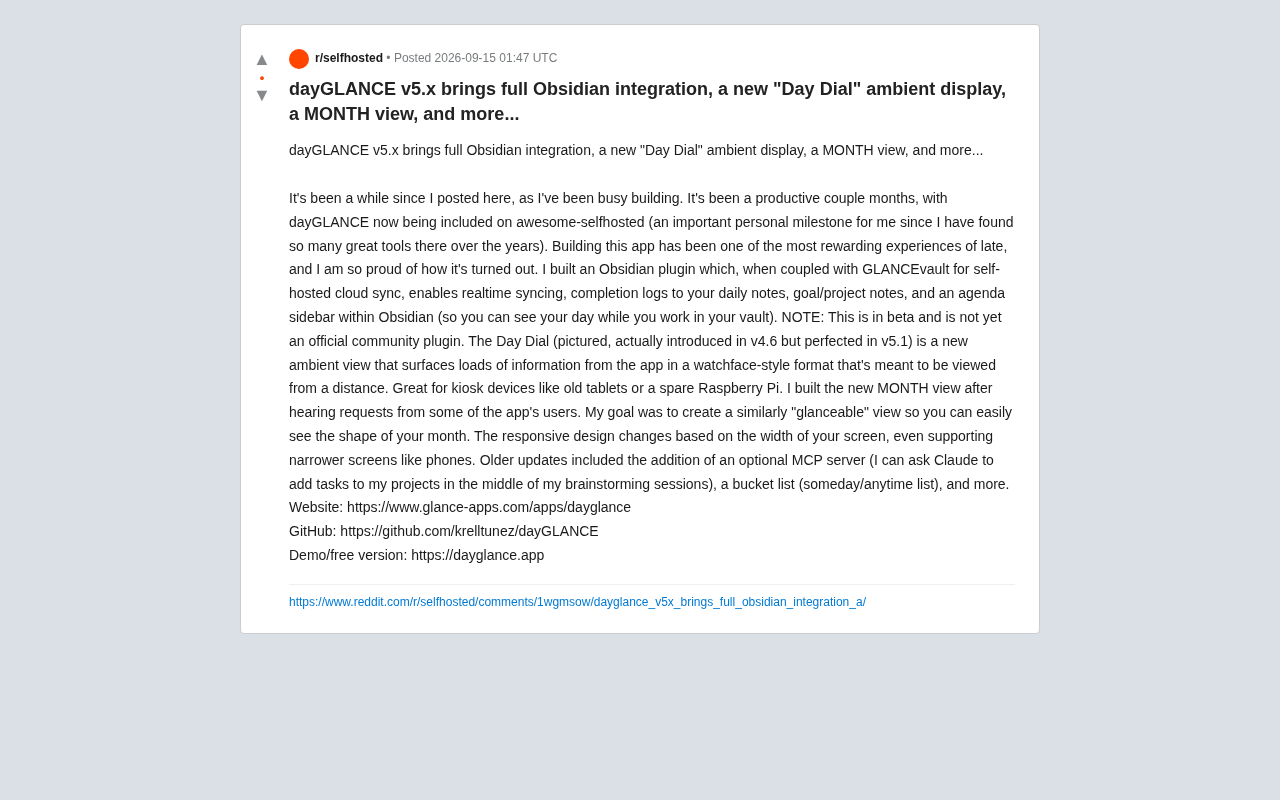
dayGLANCE v5.x Released: Deep Obsidian Integration and the New "Day Dial" Ambient Display
dayGLANCE v5.x brings full Obsidian two-way integration, GLANCEvault cloud sync, Day Dial ambient display, a new Month view, and MCP server support for AI task interaction.
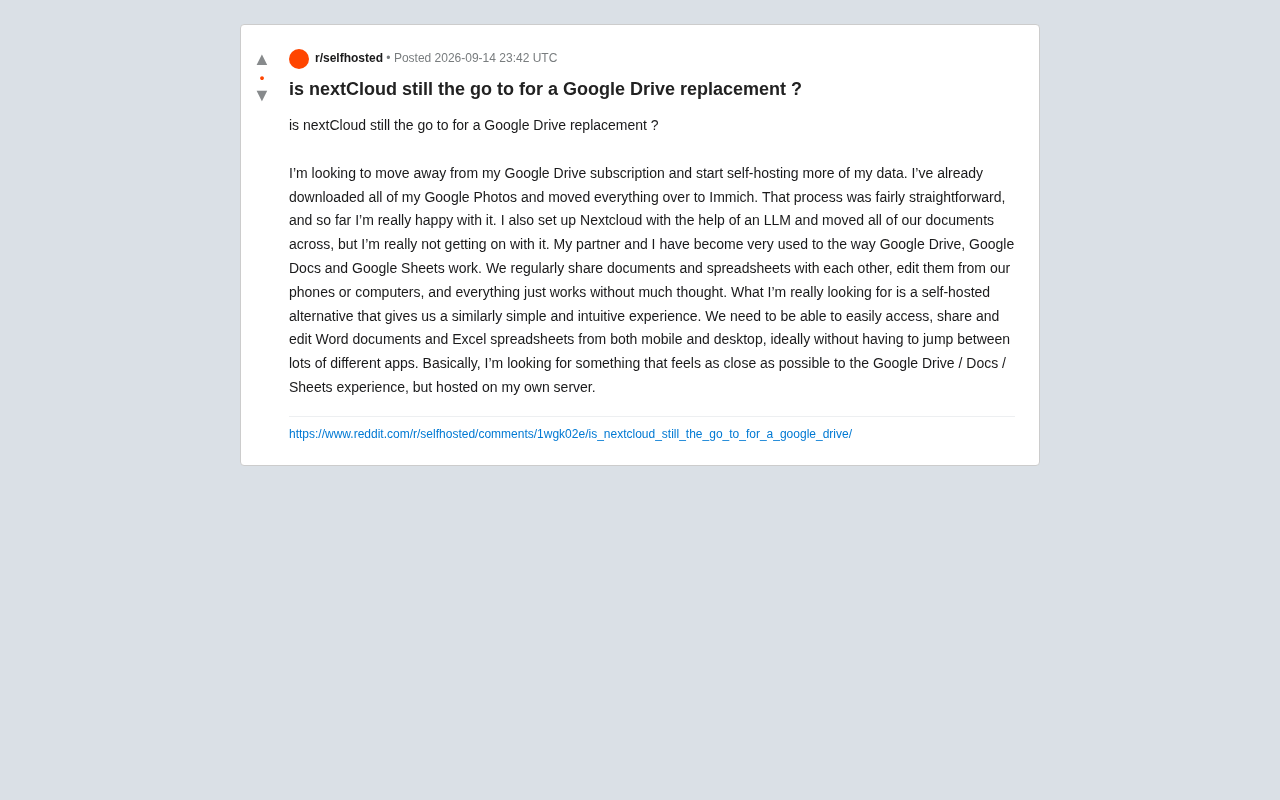
Is Nextcloud Still the Go-To Google Drive Alternative? A Deep Dive into Self-Hosted Options
Thinking of replacing Google Drive with a self-hosted solution? We break down Nextcloud's strengths and limits, compare OnlyOffice and Collabora, and help you find the best self-hosted office setup.