How Long Until Local LLM Hardware Pays for Itself? The Sunk Cost Tool Runs the Numbers
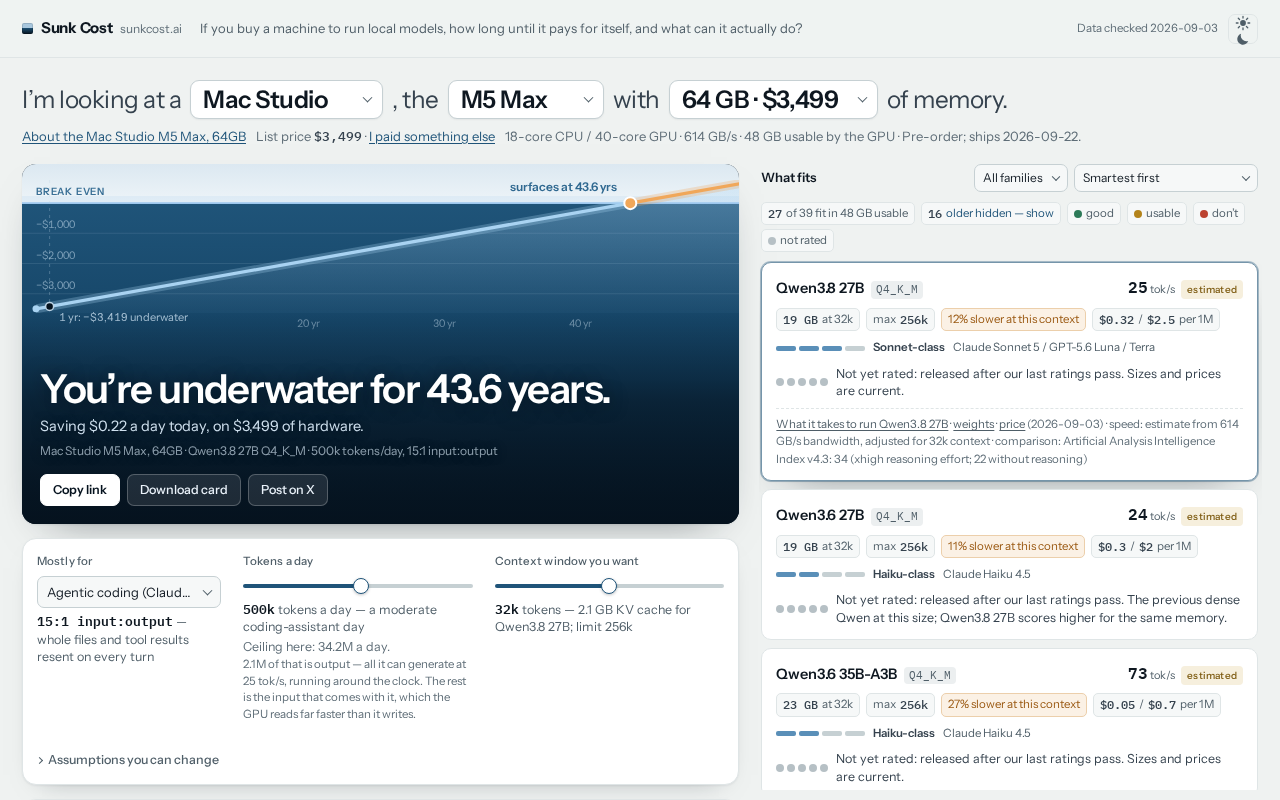
The Sunk Cost tool calculates when local LLM hardware breaks even against cloud API spend — and usage volume is the deciding factor.
Sunk Cost is a Hacker News-featured tool that calculates how long it takes for local LLM hardware to break even against ongoing cloud API costs. The analysis breaks down one-time hardware purchases, ongoing electricity and depreciation, and per-token API pricing — concluding that usage intensity is the decisive factor: heavy users save money by self-hosting, while light users are better off with APIs. The article also highlights that pure financial ROI is only part of the picture, with data privacy, latency control, and fine-tuning freedom representing non-monetary values that often matter just as much.
The Unavoidable Question: Is Running Your Own LLM Worth It?
As open-source large models continue closing the gap with their closed-source counterparts, more developers and teams are asking a practical question: instead of paying for API access indefinitely, would it make more sense to buy hardware and run models locally? A project called Sunk Cost — featured in a Show HN post that earned 35 upvotes and 56 comments — was built specifically to answer that question. It attempts to quantify exactly how long it takes for a local LLM setup to "break even."
Breaking even is fundamentally a comparison problem: at what point does the one-time investment in local hardware (GPU, full build, electricity, etc.) cross over with the ongoing cost of calling cloud APIs? Sunk Cost turns that fuzzy intuition into a calculable number.
The Core Variables Behind the Break-Even Calculation
Determining whether local deployment is cost-effective requires breaking costs down into a few clear categories.
One-Time Costs
The biggest item is hardware. Running mainstream open-source models typically requires high-VRAM GPUs, and prices range enormously — from consumer-grade cards to multi-GPU workstations. This is the classic "sunk cost" (which is exactly where the project gets its name) — once spent, the money is gone, and you can only recover it by spreading it across future usage.
VRAM requirements vary dramatically across popular open-source models and are the central constraint in hardware selection. As a rough guide: a 7B-parameter model running at 4-bit quantization needs around 6–8 GB of VRAM and can run on a consumer single-card setup (e.g., RTX 3080 or 4070); a 13B model needs 12–16 GB; and a 70B model often requires multiple GPUs or professional-grade cards (such as an A100 or the 24 GB RTX 4090). Quantization techniques (GGUF, AWQ, GPTQ, etc.) can significantly reduce VRAM usage, though usually at the cost of some accuracy. Beyond the GPU, the full system also needs adequate system RAM, fast NVMe storage, proper cooling, and a stable power supply — meaning the total build cost often runs 50–100% higher than the GPU price tag alone.
Ongoing Costs
Local operation is not zero-cost. Electricity is the most direct expense: a high-power GPU running at full load for extended periods produces a noticeable electricity bill, and regional price differences can significantly change the math. There's also hardware depreciation, maintenance, and the potential waste of idle capacity.
The Baseline: API Costs
Cloud APIs charge per token — the more frequently and heavily you use them, the faster costs accumulate. For high-volume, high-frequency inference workloads, API costs add up quickly. For occasional use, the pay-as-you-go model is actually more economical.
Most major cloud APIs charge input and output tokens separately, with output tokens typically priced higher. As of 2024, GPT-4o costs roughly $5 per million input tokens and $15 per million output tokens; open-source models like Llama 3, accessed through third-party inference providers, can cost as little as $0.1–$0.5 per million tokens. A typical conversational exchange might consume 500–2,000 tokens, which gives a concrete sense of everyday usage costs. For batch tasks like code generation or document processing, a single call can consume tens or even hundreds of thousands of tokens — costs accumulate far faster than in casual chat scenarios, which is precisely where break-even calculators are most valuable.
The Key Insight: Usage Volume Is Everything
The logic behind these tools leads to one simple but important conclusion: whether local hardware pays off depends almost entirely on how intensively you use it.
For heavy users or teams running models constantly at high volume, the marginal cost of local inference is extremely low. The upfront investment can be amortized over a reasonable period, making it cheaper in the long run. Conversely, if you only call the model occasionally, expensive hardware sits idle most of the time — the break-even horizon stretches out to the point of irrelevance, and continuing to use APIs is the rational choice.
This also explains why HN comment threads tend to be divided: different users have vastly different usage patterns, electricity rates, and hardware choices, so there's no universal answer to "should I self-host?" The value of a tool like this lies precisely in plugging in those individual parameters to get a personalized calculation — not in delivering a one-size-fits-all verdict.
The Hidden Factors That Get Overlooked
Pure financial break-even is only part of the decision. There are several considerations around local deployment that are hard to put a dollar figure on but carry real weight:
- Data privacy and compliance: Running locally means data never leaves your environment. In sensitive industries, this alone may be worth far more than any electricity savings.
- Latency and availability: No dependency on networks or third-party services means more predictable response times and no exposure to provider rate limits, price hikes, or outages.
- Freedom of model choice: You can freely load and fine-tune any open-source model rather than being constrained by an API provider's model catalog.
- Opportunity cost and technical overhead: Setting up and maintaining a local environment takes time and operational effort — costs that calculators typically ignore.
In other words, tools like Sunk Cost calculate the purely economic break-even point. But real decisions are usually a blend of financial and non-financial considerations.
Fine-tuning is another significant value of local deployment that pure cost calculations typically overlook. By fine-tuning an open-source model on a private dataset, you can tailor it to specific business contexts, proprietary terminology, or output formats — something standard API calls simply cannot provide. A fine-tuned model can often achieve near-large-model performance on specialized tasks at a fraction of the parameter count, further lowering the inference hardware bar. For teams with large amounts of domain-specific data — in law, medicine, or finance, for example — the strategic value of local fine-tuning capability may be the single most important driver of a self-hosting decision, far outweighing a simple API cost comparison.
Why Tools Like This Actually Matter
The rise of Sunk Cost reflects a broader maturation of the local LLM ecosystem — declining hardware costs and improving open-source model quality have gradually transformed self-hosting from a hobbyist experiment into a commercially viable option. The fact that a simple break-even calculator can spark this much discussion is because it directly addresses a real decision that a large number of developers are wrestling with.
If you're evaluating this for yourself, don't let the word "break-even" oversimplify your thinking. Start by honestly assessing your actual usage volume and growth expectations. Plug in your local electricity rates and the real specs of the hardware you're considering. Then factor in non-monetary values like privacy and control. The calculator gives you a number — but the final call still depends on your specific situation.
Note: This article is based on analysis of the Hacker News Show HN post and its discussion thread. For the specific calculation model and parameter settings used by the tool, refer to the project's actual page.
Related articles
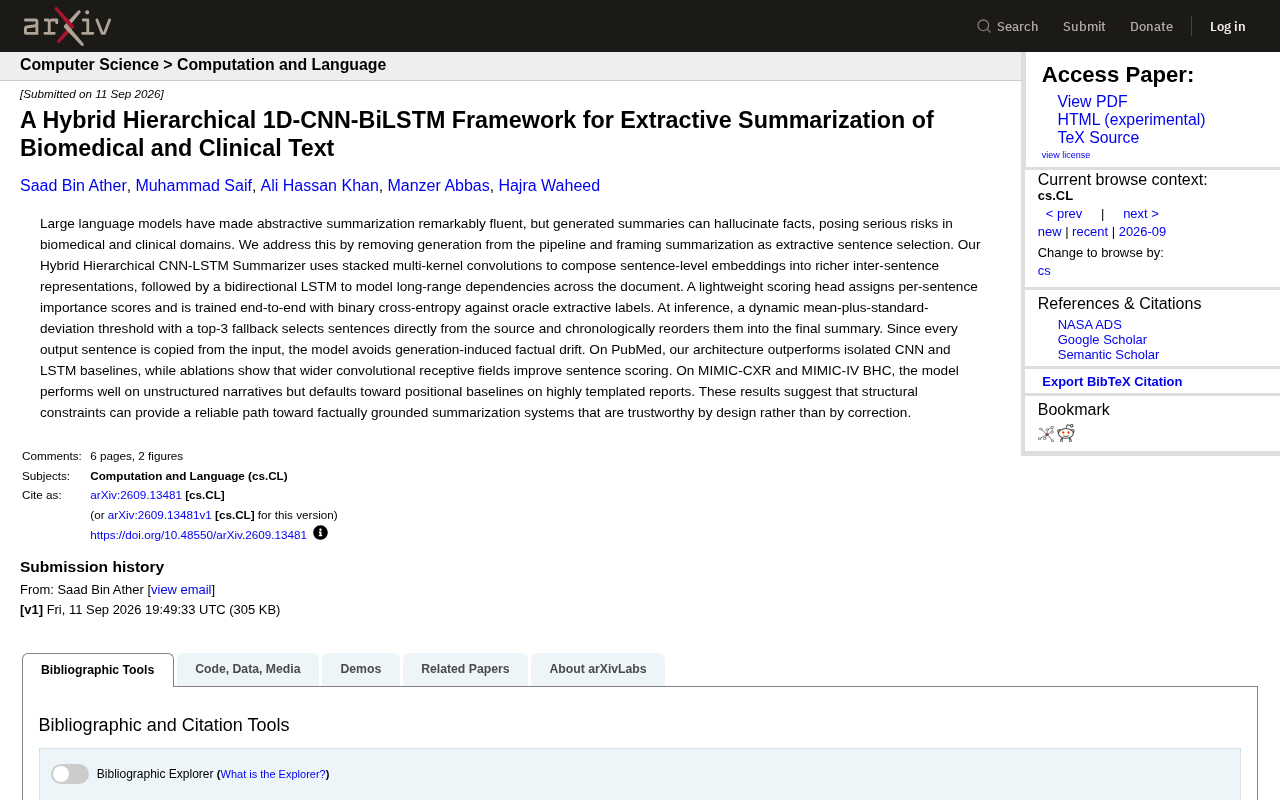
A New Framework for Extractive Summarization: How CNN-BiLSTM Tackles Hallucination in Medical Text
An arXiv paper proposes a Hybrid Hierarchical CNN-BiLSTM extractive summarization framework that eliminates generation to prevent hallucination in biomedical and clinical text, validated on PubMed and MIMIC datasets.
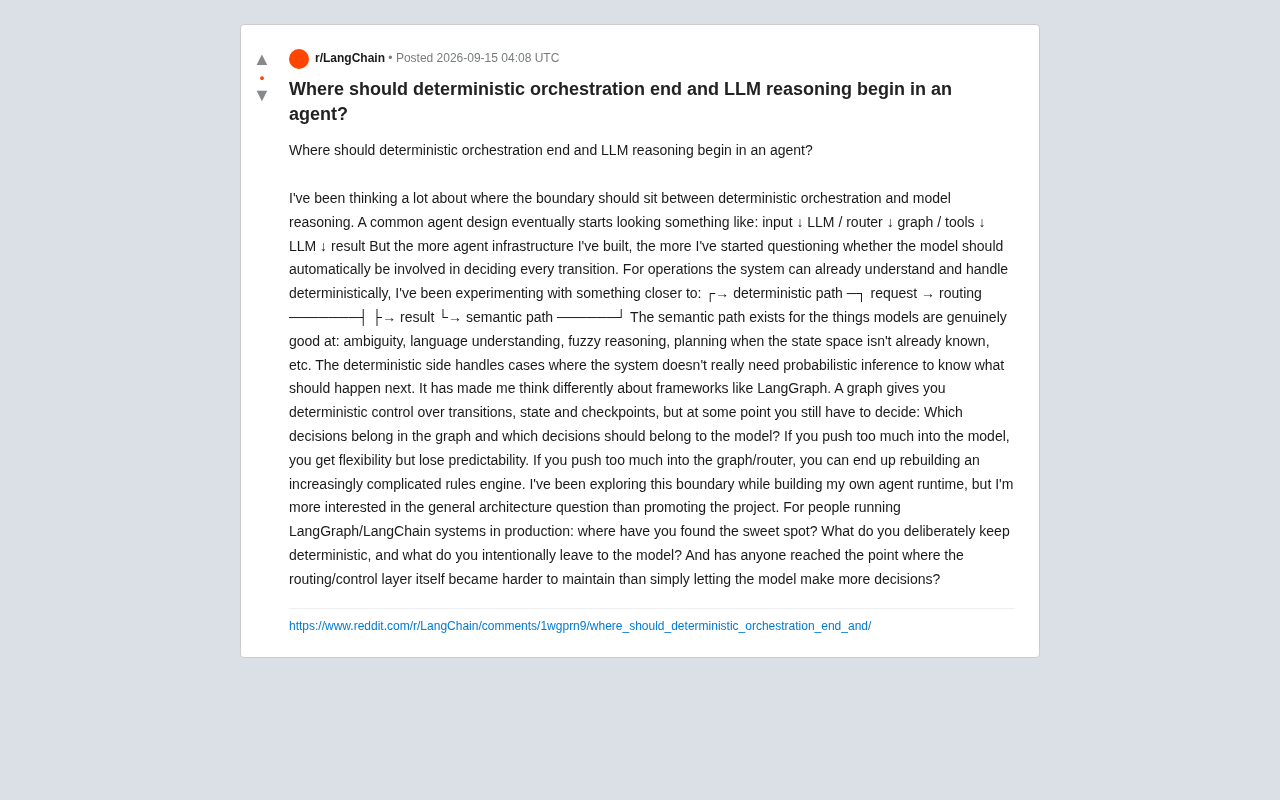
The Core Architecture Decision in AI Agents: Where Should You Draw the Line Between Deterministic Orchestration and LLM Reasoning?
Where should you draw the line between deterministic orchestration and LLM reasoning in AI Agent architecture? This article analyzes linear pipelines vs. forked paths, and what belongs to the graph vs. the model in LangGraph-based systems.
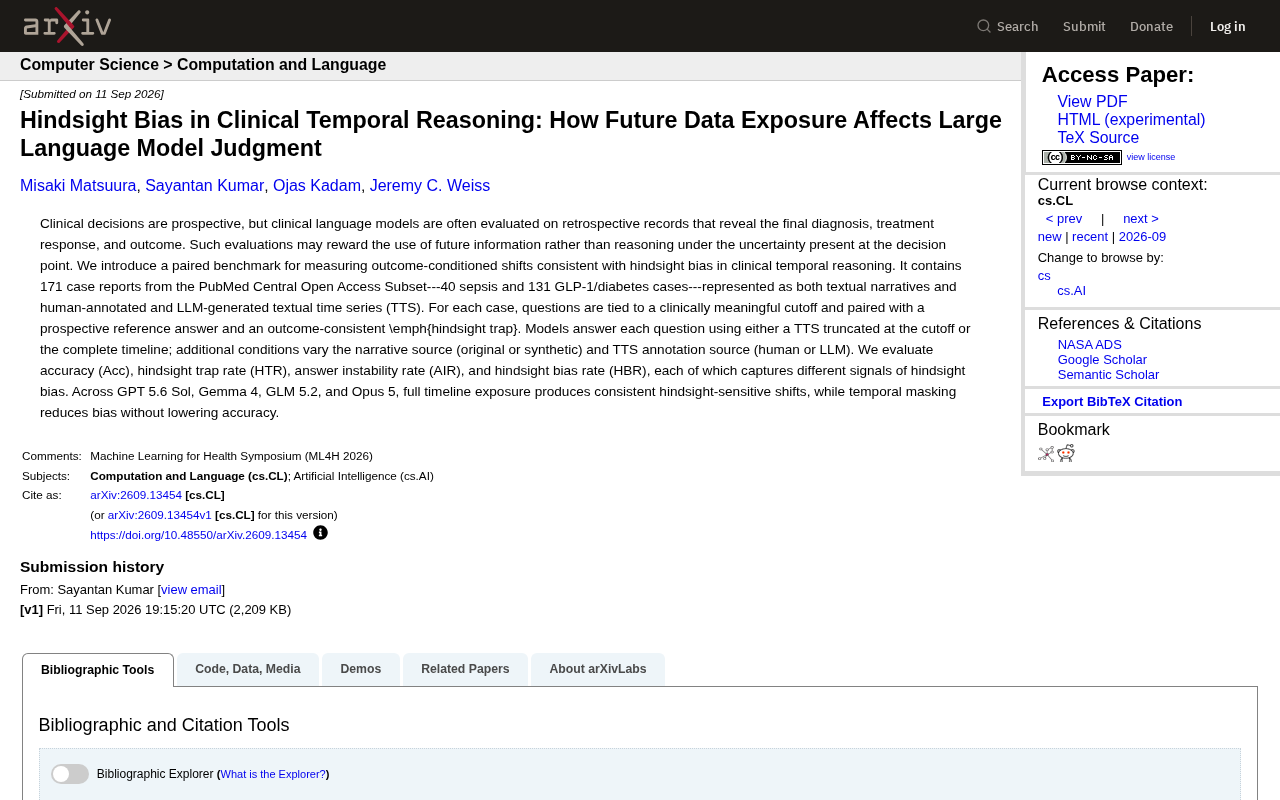
Hindsight Bias in Clinical Temporal Reasoning: How Future Data Skews LLM Judgment
New arXiv research reveals hindsight bias in clinical LLMs: exposure to full outcome timelines causes systematic answer shifts, while temporal masking reduces bias without hurting accuracy.