Free Access to Gemini Coding Models: Methods, Risks, and Alternatives

A video claims you can use Gemini coding models free via a third-party page to build a game, but it lacks authorization and hints at detection evasion.
The article reviews a YouTube creator's demo of using a third-party page on a non-Google domain to "freely" call a Gemini model said to have coding capabilities and generate a working four-player online Ludo game. It notes the demo provides no verifiable account authorization, API source, or terms, and that the creator's requirement for a fresh Google account and avoiding repeated attempts suggests detection evasion. It further analyzes risks of credential or API key interception and conversation retention on unofficial pages, comparing safer options like official free quotas, student and developer programs, and local open-source code models, concluding that account and data security costs far exceed subscription fees.
A YouTube creator recently posted a video demonstrating how to access a model supposedly capable of Gemini-level coding through a third-party webpage without subscribing to Google AI Pro or Plus, then used it to generate a working four-player online Ludo game. The video is also packed with subscription pitches, so its credibility warrants careful scrutiny.
What the Video Shows
According to the creator, on the official Gemini page, free accounts can only see a limited number of models, default to Auto mode, and some coding-related capabilities require unlocking; Pro accounts, by contrast, can see more model options, including model versions geared toward everyday development and coding.
The "free path" he offers is: open a new browser tab, type a specific keyword provided in the video into the search box, and navigate to one of the webpages in the search results. That page allegedly provides a playground, history, and other entry points, and can call a model said to have strong coding capabilities.
In the demo, he enters the prompt "Ludo game," the page begins outputting code, and he then downloads the generated code and opens it locally, showing features like dice rolling and toggling between human and computer opponents, claiming it runs properly.
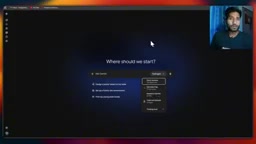
Auto mode is a routing mechanism enabled by default for ordinary users on the official Gemini interface: after a user submits a request, the system automatically decides which underlying model to call based on the task type (such as text Q&A, code generation, image understanding, etc.), rather than letting the user choose manually. The intent behind this design is to lower the barrier to use, but the cost is that users lose explicit control over the model version and cannot determine which specific version any given answer came from. For coding tasks, differences in model capability can directly affect whether generated code runs, so the video creator treats "only seeing Auto mode" as a capability limitation and uses it as motivation for seeking "more model options." It should be noted that Auto mode itself is not a paywall but a product-level routing strategy.
Doubts from Multiple Perspectives: The Authenticity of the Third-Party Entry Point
The entire demo in the video relies on a webpage on a non-Google official domain. The creator claims the page can access more advanced models but shows no verifiable account authorization, API call source, or terms of service.
By common sense, Google's paid model capabilities are typically tied to its account subscription system, and whether an unknown webpage can legally and reliably provide equivalent capabilities is clearly questionable. Tutorials like this for "free access to paid AI" are not uncommon on video platforms, and a considerable portion point to phishing pages, shared account pools, or gray-market services that steal API keys.
The creator himself also admits that before use you need a "fresh Google account" and cannot try repeatedly, or the system will flag you—this requirement itself implies that the path is not an officially designed method of use but some temporary means of evading detection.
API keys are credentials issued by cloud service providers to developers, used to identify identity, meter usage, and bill when making programmatic calls. Once a key leaks, others can impersonate that identity to consume quota and even incur charges. For this reason, legitimate services usually require keys to be used only in controlled environments and support rotation and revocation at any time. When a tutorial guides users to paste a key into an unknown webpage, it is effectively handing that credential to the page operator, a risk far greater than leaking a single conversation. Likewise, account credentials (username and password, session cookies) submitted on a non-official domain may be used to take over the account. This is also a key signal for judging whether such "free entry points" are trustworthy: official channels never require users to hand credentials to a third-party page.
Account Security and Data Risks
When demonstrating saving the conversation, the video mentions you can choose to enable Google Drive or use a temporary chat, and explains that in temporary mode the conversation record is deleted after the browser is closed.
What deserves elaboration here: if users enter Google account credentials on a non-official page, the credentials may be intercepted; if users follow the video's suggestion to paste API keys or set up paid billing on a third-party page, the risk is even higher. Even if only entering prompts, the conversation content may be retained by the page operator.
The creator's suggestion to use temporary chat actually indirectly shows that such sessions are not persistent or traceable, and users can hardly know where the content they entered goes.

Temporary chat (ephemeral session) is a mode that does not write conversations to history; content is discarded after the window is closed, and its design goal is privacy protection rather than security. It solves the problem of "don't leave it in my account history" but does not change which servers the data passes through during generation or whether it is recorded by logging systems. Therefore, enabling a similar mode on a third-party page does not offset the page operator's visibility into the input content. In other words, temporary sessions reduce retention at the local and account levels, not exposure along the transmission path. Understanding this distinction helps judge whether the video's claim that "using temporary chat is safer" holds up.
If You Just Want to Try AI Coding at Low Cost, What Are More Prudent Approaches?
Use official free quotas. Major AI vendors generally provide a certain amount of free model access for basic accounts. Although capabilities involve trade-offs, the source is clear and account security is controllable. For learning-oriented coding practice, basic models are usually sufficient.
Watch for official student or developer programs. Some platforms offer discounts or credit grants to students and developers. Such channels have public application processes and terms, and are far more reliable than unknown "free entry points."
Local or open-source code assistants. If you are cost-sensitive and have some hardware, open-source code models and local inference tools are another path, at the cost of deployment barriers and generation quality that you must weigh yourself.
Be wary of "free access to paid models." Any scheme that asks you to use a "brand-new account," evade detection, or enter credentials on a non-official page should be regarded as high risk. Genuine official free policies do not require users to hide.
Conclusion
The core message of this video—using a third-party webpage to call an advanced coding model "for free"—lacks verifiable official basis, and its operational requirements reveal characteristics of evading detection. Generating a demo Ludo game does not prove that the path is safe or compliant.
For developers, the security cost of accounts and data is far higher than a subscription fee. To experience AI coding, going through official channels, making good use of free quotas, and following legitimate student and developer programs are directions more worth investing time in.
Related articles
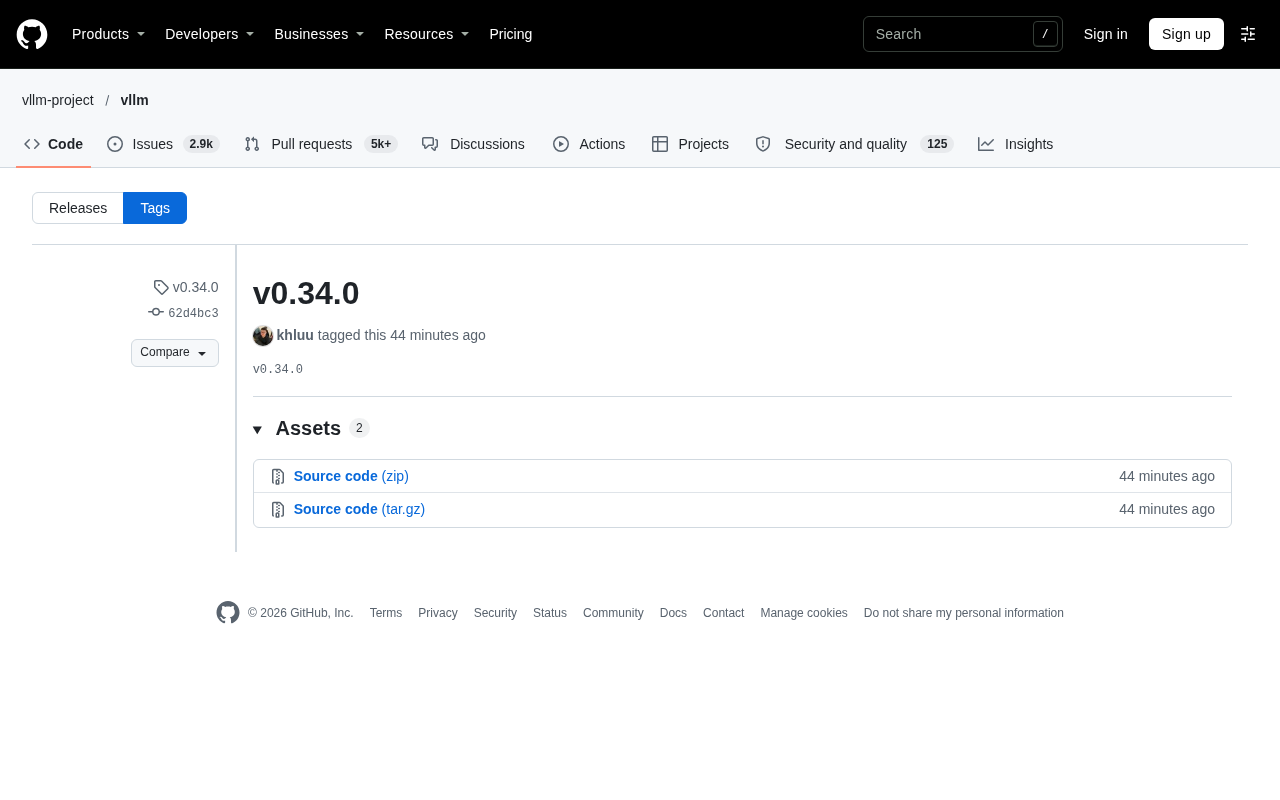
vLLM v0.34.0 Released: The Inference Engine Levels Up Again
vLLM releases v0.34.0, tagged by khluu with two asset files. This article reviews the release info and how developers should cautiously evaluate upgrades given missing release notes.

Gemini 4 Argon Lands on Anti-Gravity: How Multi-Agent Systems Are Reshaping the Development Workflow
Google's agent-first platform Anti-Gravity integrates Gemini 4 Argon, using multi-agent looping workflows to generate 3D worlds from text, turn photos into racing games, and enable end-to-end hardware design, now available on desktop, CLI, and Android Studio.
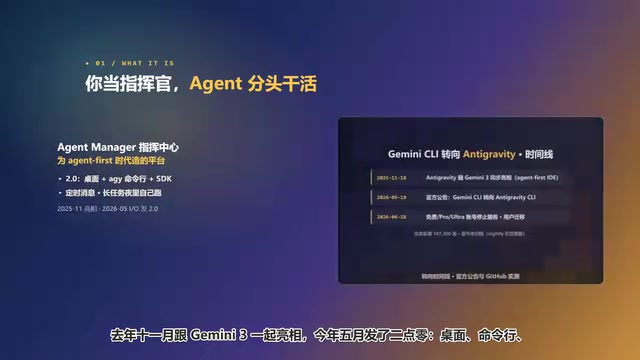
Antigravity Deep Dive: The Agent Command Center After Gemini CLI's Retirement
Google pivots its 107k-star Gemini CLI, migrating users to Anti-Gravity. This article breaks down its Agent Manager multi-agent collaboration, browser self-verification, Artifacts evidence chain, quota pricing, and migration pitfalls, analyzing which developers it suits.