Free Open-Source Tool Rejected: The Community Controversy Sparked by r/DnD's AI Ban
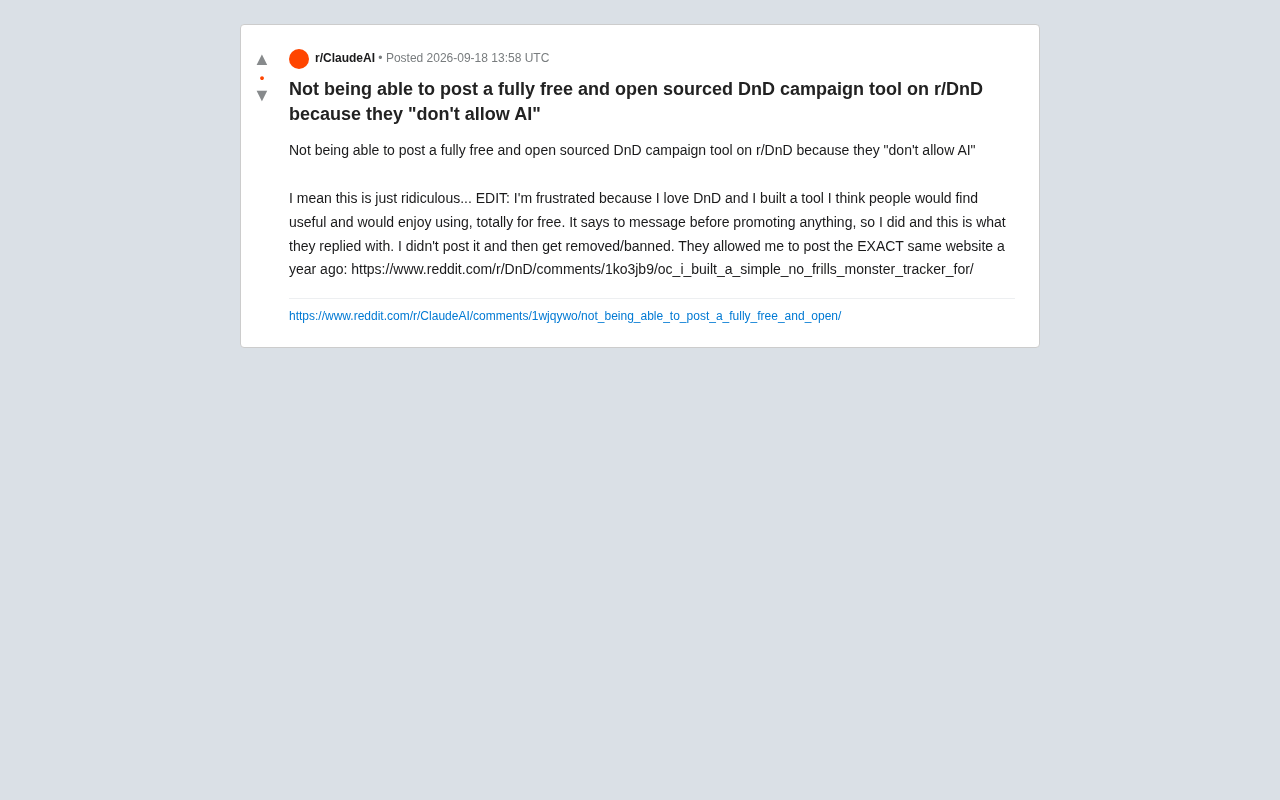
A free open-source DnD tool got blocked by r/DnD's blanket AI ban, sparking debate over AI tools vs. AI content.
A developer submitted a free, open-source DnD campaign management tool to r/DnD — only to be rejected pre-post by moderators citing a "no AI" policy, even though the same tool had been approved just a year earlier. The incident exposes a core tension in creator communities: policies originally targeting AI-generated artwork now sweep up functional software that merely used AI-assisted coding. For developers, the "AI" label alone has become a distribution hazard; for community managers, blanket bans risk shutting out valuable open-source contributors — making the distinction between tools and generated content an urgent issue to resolve.
A developer shared their frustrating experience on Reddit: after building a completely free, open-source campaign management tool for Dungeons & Dragons, they hoped to share it with fellow enthusiasts — only to be turned away by r/DnD's "no AI content" policy. The incident sparked considerable discussion in the community and reflects a growing trend of tightening restrictions on AI-assisted creation across creator spaces.
What Happened
The developer followed the community rules — the subreddit requires messaging moderators before promoting any content, so they did exactly that. The mods rejected their request, citing a "no AI" policy. What made it especially frustrating was that they hadn't posted and been removed or banned after the fact — they were blocked at the pre-approval stage.
What made it even more puzzling: the same website had been approved for posting just a year earlier. The developer included a link to that earlier post — a "simple, no-frills monster tracker" — which had gone through without issue and received community engagement. Within just one year, the same tool from the same author received completely different treatment.
r/DnD is one of Reddit's largest Dungeons & Dragons communities, with over 3 million subscribers. It's a central hub where DnD players share campaign stories, find game resources, and discuss mechanics. The Dungeon Master (DM) is the player responsible for building the world, driving the narrative, and voicing all non-player characters — the core organizer of the tabletop experience. Campaign management tools are designed specifically for DMs, typically covering monster stat tracking, combat turn management, NPC record-keeping, and similar functions. They are productivity software that assists with game flow, fundamentally different in purpose from AI tools that generate narrative content.
Why the Developer Feels Frustrated
Based on the edits the author added to the post, the emotional core wasn't about wanting to force promotion — it was the frustration of putting in real effort and having it go unrecognized. The author emphasized that the tool is "completely free" and "open source," built out of genuine love for DnD. For many independent developers, sharing their work with the most relevant vertical community is the most direct path to early users and feedback. Being rejected by the most fitting community means the project loses nearly all access to its target audience.
The "open source" and "free" labels matter here. They're supposed to signal a community-friendly project — no commercial monetization intent, code publicly auditable. Yet under a blanket AI ban, those attributes earned no goodwill.
The Community Anxiety Behind "No AI" Policies
r/DnD is far from alone. Over the past year or two, countless creator communities, art platforms, and content forums have introduced rules restricting or outright banning AI-generated content. The motivations usually come in layers:
- Pushback against AI art: The DnD community relies heavily on hand-drawn illustrations, maps, and character art. Many users and moderators hold strong objections to AI-generated images, fearing they'll crowd out human artists.
- The enforcement cost of distinguishing: Once AI content is permitted, moderators struggle to judge case by case what counts as "reasonable AI assistance" versus "low-quality spam" — so a blanket ban becomes the easier path.
- Community identity: Tabletop gaming culture places deep value on human creativity and collaboration. AI is seen by some members as a threat to that handcrafted spirit.
The problem is that these policies are often broadly worded. Does "no AI" mean banning AI-generated artwork, or does it extend to any mention of software tools that happen to use AI? A campaign management tool — even if AI assisted the coding process — is fundamentally functional software, not AI-generated creative content. That ambiguity in the policy language is the root of this conflict.
AI image generation tools like Midjourney and Stable Diffusion spread rapidly between 2022 and 2023, flooding creative communities with AI-generated DnD-style illustrations and directly impacting freelance illustrators who depended on commissions. Against this backdrop, large-scale protests erupted on ArtStation and many creator communities quickly tightened their policies. r/DnD's ban took shape in this wave — its original core target was AI-generated character art, maps, and scene illustrations being mass-produced and widely distributed in the community, not functional software tools. The context in which a policy is written often determines whether its language is precise enough, and plants the seeds of enforcement ambiguity down the line.
The Line Between AI Tools and AI-Generated Content
What this incident really invites us to discuss is the boundary between "AI tools" and "AI-generated content."
A piece of software that helps a DM track monster HP and manage campaign progress is a fundamentally different thing from a character portrait generated by Midjourney. The former is a productivity tool for improving efficiency; the latter is what community debate actually centers on. If community rules lump both into the "AI" category and ban them without distinction, they risk shutting out open-source projects that are genuinely valuable to the community.
This is also a lesson for developers building tool-based products: in today's climate, the "AI" label itself can become a distribution barrier. Even if a product has nothing to do with generative AI in any meaningful sense, the keyword alone can trigger a community's defensive response. Learning how to clearly communicate to a community — "I built a tool, not an AI content farm" — is becoming an essential skill.
From a technical classification standpoint, AI applications broadly fall into two categories: Generative AI, which directly produces text, images, audio, and other content (Midjourney and ChatGPT belong here); and AI-assisted development tools, such as GitHub Copilot providing code completion suggestions while a developer writes — the developer's output is functional software, not AI-generated content itself. If this developer's campaign management tool only used AI assistance during coding, the final deliverable is a runnable application where users never interact with any AI-generated output. Conflating these two forms is precisely the enforcement blind spot in many communities' AI bans.
Takeaways for Creators and Communities
For developers, a few practical approaches are worth considering:
- When introducing a project, clearly define its functional purpose and address or contextualize any AI-related components upfront;
- Prioritize communities that are more welcoming to tool-based content (such as indie dev or tabletop software-focused vertical forums);
- Keep a complete record of communications — if policy inconsistencies arise, you'll have grounds for a rational appeal.
For community managers, this incident is also a reminder: blanket policies are cheap to enforce but may turn away well-intentioned contributors. More nuanced rules — for example, distinguishing between "AI-generated art/text content" and "functional software that uses AI technology" — could find a better balance between protecting community culture and embracing tools that genuinely add value.
This isn't just one developer's personal frustration. It's a microcosm of how the entire creative ecosystem is being forced to redraw the lines of what it will and won't accept, in the face of the AI wave.
Related articles

Which ChatGPT Plan Should You Choose? A Full Breakdown of Go, Plus, and Pro Subscriptions
Not sure which ChatGPT plan to pick? This guide breaks down Go, Plus, and Pro pricing, Codex quota differences (5x vs 20x), and how to pay with Alipay step by step.
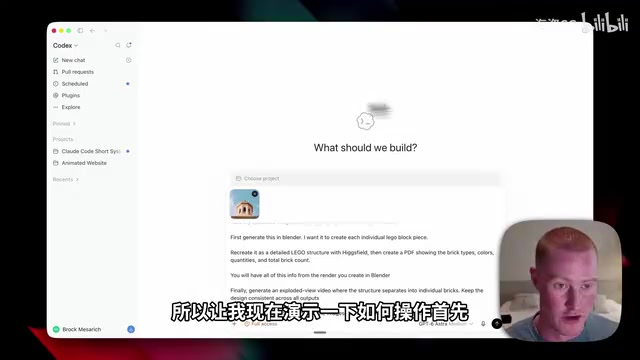
ChatGPT Astra + Blender + Higgsfield: Testing an AI 3D Creative Workflow
A Bilibili creator tests a ChatGPT Astra + Blender + Higgsfield AI 3D workflow, turning a LEGO image into interactive 3D models, detailed PDFs, and cinematic videos.
GPT-6 Astra Promo Breakdown: The Future of Multi-Task AI Agents
A deep dive into the GPT-6 Astra promo: from progressive creative workflows and multi-task parallelism to cross-app operations and legal drafting — analyzing the vision and real-world challenges of next-gen AI Agents.