GPT-6 Astra Promo Breakdown: The Future of Multi-Task AI Agents
Breaking down the GPT-6 Astra promo: AI is evolving from chatbot to multi-task agent, but real-world friction is carefully hidden.
A viral "GPT-6 Astra" promo showcases scenarios like circle-to-3D-rocket modeling, parallel multi-tasking (eBay listings, food orders, court bookings), and legal drafting to paint a vision of next-gen AI. This article dissects the underlying technical logic: multi-turn context retention, the core difference between Agents and Chatbots, the three-layer capability requirements for real-world action execution, and AI's role as a "first-draft assistant" in professional legal contexts. The author also cautions that the promo's performative nature naturally filters out real-world friction — treat it as a capability roadmap, not a product promise.
A promotional video titled "GPT-6 Astra" has been circulating online, showcasing the next generation of AI assistants and their capabilities in multi-task processing, cross-application operations, and creative generation. The video uses a series of natural language instructions to sketch out a vision of an "all-purpose assistant." Setting aside its promotional nature, the interaction patterns it presents are worth dissecting carefully — they reflect a clear trend of AI products evolving from "conversational tools" to "action agents."
From Drawing a Circle to Building a Rocket: Progressive Creative Workflows
The opening demo is deliberately restrained: the user asks to "draw a small yellow circle," the AI completes it instantly; instructions then layer on top of each other — turn the circle into a rocket porthole, add detail, and finally export it to Blender to generate a 3D model. The key to this creative chain isn't any single capability, but rather continuous context retention.
The AI's ability to interpret highly context-dependent references like "take this" and "make it more detailed" shows that the system maintains a consistent understanding of the current working object across multiple rounds of interaction. This "progressive refinement" workflow is actually the norm in real creative work — very few people can articulate all their requirements upfront; most prefer to iterate as they go.
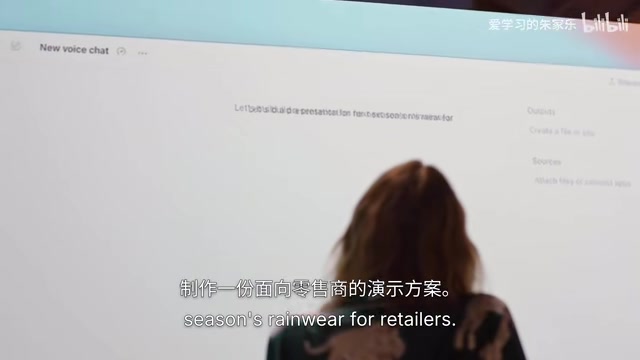
A similar scenario in the video involves creating a presentation for a retailer's upcoming raincoat season. The user asks for something "high-end, colorful, and fun," then follows up with "change the background color to something that complements the raincoats." The AI responds to these vague aesthetic instructions (high-end, fun), demonstrating an understanding of design semantics rather than mechanical execution.
Parallel Tasks: The Core Narrative of AI Agents
The most thought-provoking design choice in this promo is the deliberate showcase of multi-task parallelism. While the user has the AI list an old desk on eBay, they simultaneously ask it to build a 3D asteroid-dodging game, order takeout (beef rice bowl), draft a legal authorization agreement template, and find a tennis court — multiple task threads advancing in parallel without blocking each other.
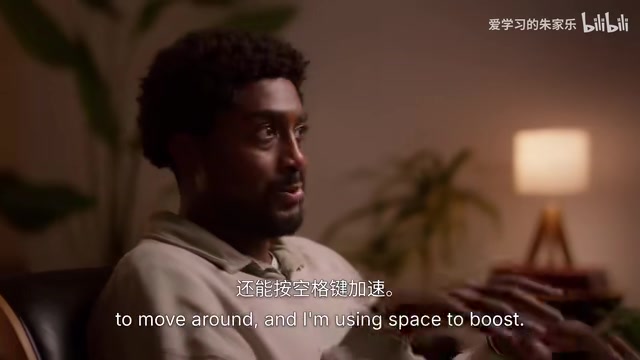
This narrative intentionally contrasts with today's mainstream AI "one question, one answer" serial mode. The signal it sends is clear: future AI assistants will operate like a team capable of handling multiple tickets simultaneously, rather than a chatbot that can only focus on a single conversation. This requires task scheduling, state management, and asynchronous execution capabilities — and it's the fundamental difference between the concept of an "Agent" and a "Chatbot."
A word of caution: a promo is, after all, an idealized demo. Every task in the video gets an instant, error-free response, but in reality, cross-platform operations (logging into eBay, placing food orders, booking venues) involve extensive identity verification, payment authorization, and permission boundary issues — which happen to be the biggest obstacles to deploying AI Agents in the real world.
Agent vs. Chatbot — A Key Distinction
Traditional chatbots are essentially stateless Q&A systems — each conversation ends when it ends, with no proactive triggering of external actions. An AI Agent's defining characteristics are: persistent goals, the ability to decompose complex tasks into sub-steps, the capacity to call external tools (APIs, browsers, file systems), and dynamically adjusting subsequent behavior based on execution results. Multi-task parallelism further requires a task scheduler — similar to an OS process manager — maintaining a separate state machine for each independent task, advancing them asynchronously outside the main conversation thread, and returning results as notifications upon completion. Mature Agent frameworks in academia and industry (such as ReAct, AutoGPT, and OpenAI Function Calling) can already implement single-task tool-calling chains, but stable scheduling for multi-task parallelism remains an active area of engineering research.
Cross-Application Operations and Local File Access
The video demonstrates the AI's ability to call external services and access local resources. When listing the eBay desk, the user asks to "use that photo from my downloads folder" and specifies noting "minor damage" in the description. When looking for a tennis court, the AI can locate it to the specific Lower Haight neighborhood and ultimately "book a 5 PM slot."
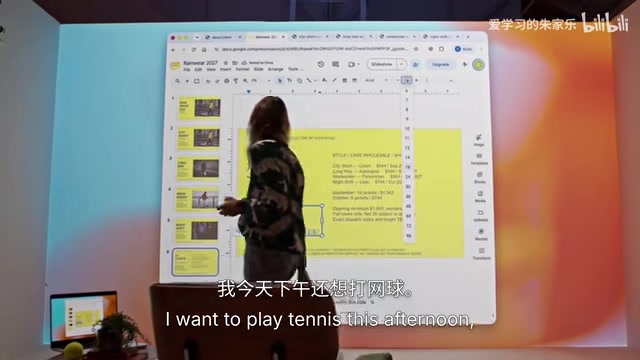
These operations require the AI to bridge three layers of capability: reading the local file system, calling third-party APIs or simulating browser operations, and executing actions with real-world consequences (placing orders, booking reservations, listing items). The last of these — "executing real-world actions" — is the most sensitive, involving deep questions of user trust and security authorization. The promo glosses over this entirely, but in a production product, it will be the deciding factor.
On "Executing Real-World Actions"
There are typically two technical paths: one is through officially open API interfaces (requiring permission applications and handling OAuth authorization flows); the other is the "Computer Use" approach using computer vision combined with simulated mouse and keyboard input (as seen in Anthropic Claude's feature of the same name). The latter doesn't require the target application to open an interface, but carries higher stability and security risks. Both paths face the "authorization boundary" problem: when AI executes payments, lists items, or books venues on behalf of users, the question of who is liable if something goes wrong (double charges, erroneous descriptions causing disputes) still lacks clear legal and product standards. This is precisely why mainstream AI companies launching Agent features universally adopt a "step-by-step manual confirmation" rather than "fully automated execution" strategy — the development of technical capability and trust infrastructure are simply not in sync.
Professional Use Cases: Precise Legal Document Editing
The video also includes a notably in-depth professional demo: the user asks the AI to generate a template authorization agreement for a law firm, then further requests to "revise the limitation of liability clause to be more favorable to the licensor." The AI responds that it has "narrowed the licensor's liability cap."
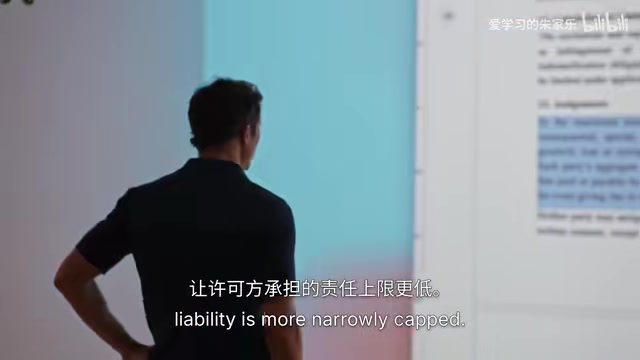
This detail hints at the AI's understanding of domain-specific terminology (limitation of liability, licensor) and its ability to make directionally biased edits to legal text. For professional services industries like law and finance, this kind of "draft → revise → revise again" iterative capability has genuine practical value. That said, this is just a demo — in real-world use, professional documents still require expert human review. The AI's role is closer to "first-draft assistant" than "decision-maker."
How to Rationally Evaluate Official Promo Videos
Taken together, the "GPT-6 Astra" promo paints an idealized vision of an AI Agent: multi-task parallelism, cross-application operations, a blend of creativity and professional capability, and natural, coherent instructions. These capability directions are consistent with the industry's trajectory, but the performative nature of promo videos demands a clear head.
Promo videos naturally cherry-pick the smoothest success cases, hiding failures, delays, and blocked permissions. Every task in the video executes perfectly, while real-world AI Agents still frequently stumble when handling payments, identity verification, and complex web interactions. It's reasonable to treat the promo as a "signpost for capability direction" — treating it as "an imminent product promise" is another matter entirely.
What's truly worth paying attention to is this: the continuous context retention from drawing a circle to building a rocket, asynchronous multi-task scheduling, and the boundary of AI's ability to execute real-world actions — these are the core metrics for judging whether the next generation of AI assistants has genuinely arrived.
Related articles
Robinhood Executive to Speak at TechCrunch Disrupt 2026 on Winning the Modern Financial Consumer
Robinhood VP of Product Marketing Abhishek Fatehpuria will speak at TechCrunch Disrupt 2026 on winning the modern financial consumer. Early-bird saves up to $200 before Sept 25.
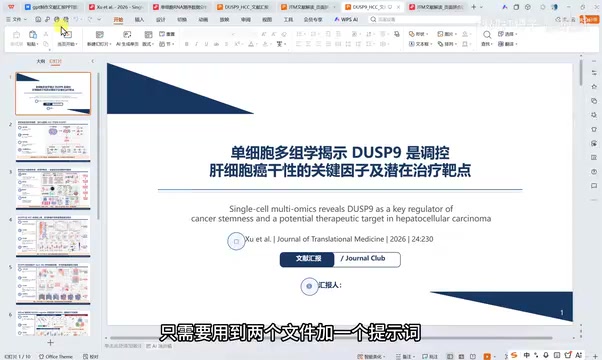
Using ChatGPT to Batch-Generate Editable Academic Slides: A Practical Efficiency Tool for Researchers
A complete workflow for batch-generating editable academic PPTs with ChatGPT: upload a PDF and template, use a structured prompt to render slides as images, then convert to editable format — all in under 30 minutes.
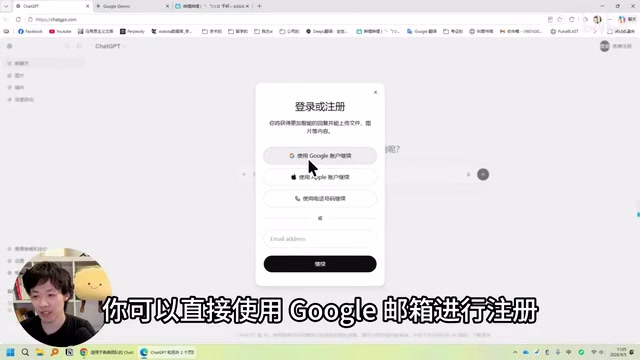
GPT-6 Full Power Guide: Unlocking Ultra Thinking Intensity via GPT-work
Step-by-step guide to using GPT-6 at full power: Apple ID registration, Plus/Pro subscription, and unlocking GPT-6 Ultra max thinking intensity via GPT-work client.