From a Nebraska Farm to Galaxy Clusters: Megan Donahue's Path in Astronomy

Nebraska farm girl Megan Donahue was inspired by her local library and became an astrophysicist studying galaxy clusters.
This article tells the story of astrophysicist Megan Donahue '85. Growing up on a small Nebraska farm, she developed a passion for physics at age 12 through popular science books at her local library. Today she is a professor at Michigan State University, using X-ray and optical data to study the formation and evolution of galaxy clusters. Her experience highlights the importance of early informal science learning, shows that geographic and economic backgrounds should not be barriers to scientific participation, and emphasizes the irreplaceable role of female role models and popular science books in inspiring scientific aspirations.
A girl who grew up on a small farm in Nebraska discovered a wider world through books at her local library, and today she studies galaxy clusters to understand how the universe works. The story of Megan Donahue '85 is not only a portrait of personal perseverance but also a testament to the power of curiosity and persistence in scientific exploration.
The Universe Comes Alive in the Library
Donahue's childhood had no telescopes or observatories; her universe initially existed between the pages of library books. At age 12, she happened upon a popular science book on physics, and from that moment her passion for the field was ignited. In a small town where information was not readily available, the library became her only channel to the outside world. She read voraciously, moving from basic physics to astronomical phenomena, gradually building an understanding of the laws of nature. This experience shows that scientific awakening often does not depend on expensive equipment but arises from the right book at the right time and a mind willing to explore.
From the Farm to Research on Galaxy Clusters
Today, Donahue is a professor of astrophysics at Michigan State University, focusing on the study of galaxy clusters. Galaxy clusters are the largest gravitationally bound structures in the universe, containing hundreds to thousands of galaxies, and the distribution of their hot gas and dark matter is crucial to understanding the large-scale structure of the cosmos. Her work involves using X-ray observations and optical data to analyze the formation and evolution of galaxy clusters. From the farmland of Nebraska to distant galaxy clusters, her research path illustrates how basic science can expand from microscopic curiosity to macroscopic cosmic scales.
Galaxy Cluster is one of the largest gravitationally bound structures in the universe, with a typical mass between 10^14 and 10^15 solar masses. It contains hundreds to thousands of galaxies, an intracluster medium (ICM) with temperatures reaching tens of millions of kelvins (emitting strong X-ray radiation), and a dominant component of dark matter. The hot gas within galaxy clusters shines in X-rays through bremsstrahlung radiation, making X-ray observations (such as those from the Chandra and XMM-Newton satellites) a core method for probing cluster mass and the distribution of hot gas. Galaxy clusters are also often used as cosmological probes: the evolution of their number density with redshift is highly sensitive to the nature of dark energy and the expansion history of the universe, which is one reason researchers like Donahue focus on cluster formation and evolution.
Dark matter is a form of matter that does not emit light, does not interact significantly with electromagnetic radiation, but influences the motion of visible matter through gravity, accounting for about 27% of the total energy density of the universe. On galaxy cluster scales, dark matter provides the additional gravity needed to sustain the high-speed motions of galaxies (with velocity dispersions of up to about 1000 km/s); without it, clusters would fly apart under their own dynamics. Astronomers infer the existence and distribution of dark matter indirectly through multiple methods, including gravitational lensing, the temperature distribution of X-ray gas, and galaxy velocity dispersions. Galaxy clusters are therefore called "laboratories for dark matter."
Lessons from a Scientific Path
Donahue's experience conveys several key messages: early scientific interests are often cultivated in informal settings; geographic and economic backgrounds should not be barriers to scientific participation; and the advancement of women in astrophysics requires more visible role models. Her story also reminds educators and parents that libraries and popular science books play an irreplaceable role in inspiring scientific aspirations. For young people who aspire to study astronomy, Donahue's path proves that from any starting point, continuous learning and passion can lead to the stars.
(Note: This article is based on public reports; specific research details can be found in her academic publications.)
Informal learning in science education refers to learning that takes place outside the school classroom, such as in public libraries, museums, science exhibitions, and popular science books. Research shows that many scientists cite informal reading or hands-on exploration in childhood as a key trigger for their career choices, because such settings allow learners to explore autonomously according to their interests, free from curriculum pacing and exam pressure. For resource-poor rural areas, public libraries are often a low-cost channel for accessing science books and journals, and they have unique value in bridging gaps in science education resources.
One-line Summary
Nebraska farm girl Megan Donahue was inspired by her local library and grew up to become an astrophysicist studying galaxy clusters.
Paragraph Summary
This article tells the story of astrophysicist Megan Donahue '85. Growing up on a small Nebraska farm, she developed a passion for physics at age 12 through popular science books at her local library. Today she is a professor at Michigan State University, using X-ray and optical data to study the formation and evolution of galaxy clusters and explore the large-scale structure of the universe. The article notes that her experience reveals the importance of early informal science learning, shows that geographic and economic backgrounds should not be barriers to scientific participation, and emphasizes the irreplaceable role of female role models and popular science books in inspiring scientific aspirations.
Related articles
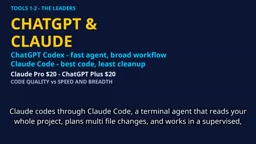
2026 AI Coding Tools Comparison: Claude, ChatGPT, Gemini — Which Is the Best?
A 2026 comparison of five mainstream AI coding tools — Claude Code, ChatGPT Codex, Gemini, DeepSeek, and GitHub Copilot — on real projects, pricing, and code quality, to help you decide where that $20/month should go.

ChatGPT Codex Can Clone Any Software? Testing the Risks and the Truth
YouTube shorts claim ChatGPT Codex or Claude Code can clone Adobe, Excel, and Figma for lifelong free use. We break down the feasibility, legal risks, and DM-funnel tactics—and explain what AI coding tools are truly good for.

Kilo Code Is Free to Install but Charges for API: Cost Estimation and Configuration Guide
Kilo Code is free to install, but connected AI models are billed per token. This guide covers VS Code extension and CLI setup and shows how to estimate API costs.